
Side Dishes
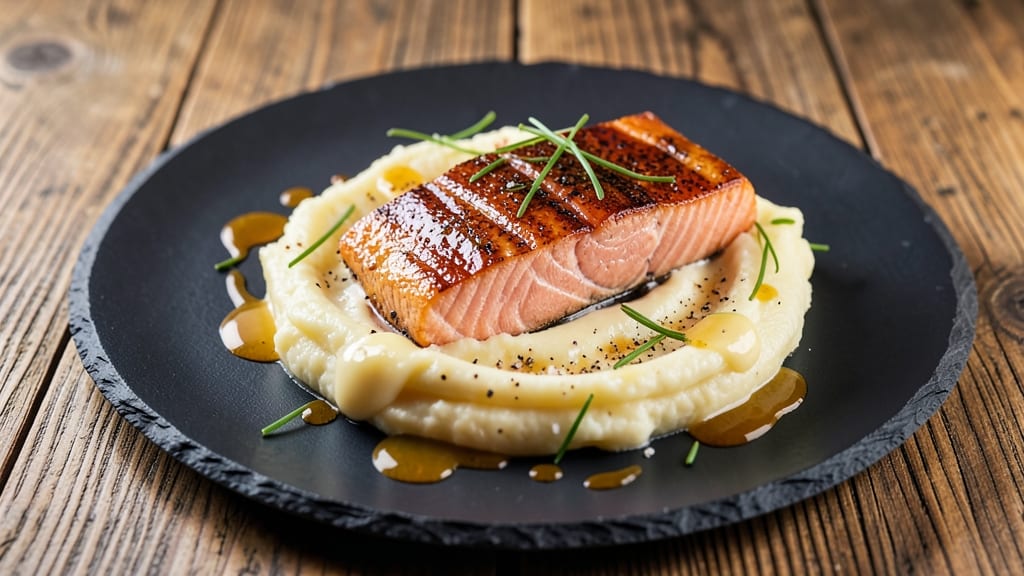
This salmon and mashed potatoes recipe delivers the perfect balance of protein and comfort—pan-seared salmon with crispy skin and tender flesh paired with velvety, lumpy-free mash. The secret lies in precise timing and technique, something I perfected after years of testing in my Boston kitchen where every meal matters.
My Nonna always said good food starts with patience, and that's exactly what this dish requires.
The key to restaurant-quality results at home is searing the salmon skin-side down until golden, then finishing in the oven for even cooking. For the mash, I use Yukon Gold potatoes boiled until tender, then mashed with butter, warm milk, and a touch of cream—never overworked, just until smooth.
The texture is what makes this dish special: creamy yet light, with just enough body to hold the salmon's rich flavors.
What you'll end up with is a plate that looks as impressive as it tastes: perfectly cooked salmon with flaky centers and crisp edges, resting on a bed of buttery mash that's neither too heavy nor too light.
The contrast between the delicate fish and the comforting potatoes creates a meal that feels both elegant and satisfying—ideal for weeknight dinners or special occasions when you want to impress without stress.
Serve with steamed green beans or roasted asparagus for a complete meal, or add a simple salad for freshness. The beauty of this dish is its versatility—it works for casual family dinners or when you're hosting guests who expect something special. Here's how to make it perfectly every time.
Ingredients for salmon and mash potato
Four salmon fillets, creamy Yukon Golds, and just a handful of pantry staples.
| Ingredient | Amount | Notes |
|---|---|---|
| Center-Cut Salmon Fillets 🐟 | 4 whole | Skin-on, 6-8 oz each |
| Yukon Gold Potatoes 🥔 | 2 ½ lb | Russet works too |
| Unsalted Butter 🧈 | ¾ cup | Cold, cut into pats |
| Heavy Cream 🥛 | ½ cup | Full-fat for creaminess |
| Whole Milk 🥛 | ½ cup | Warmed slightly |
| Salt 🧂 | 1 ½ tsp | Kosher or sea salt |
| Black Pepper 🌶️ | ½ tsp | Freshly ground preferred |
| Garlic Cloves 🧄 | 4 cloves | Minced for mash |
| Extra-Virgin Olive Oil 🫒 | 2 tbsp | For searing salmon |
| Lemon Juice 🍋 | 1 tbsp | Freshly squeezed |
| Fresh Dill 🌿 | ¼ cup | Chopped, for garnish |
| Green Beans 🥦 | 1 lb | Trimmed, for serving |
The salmon makes or breaks this dish, so center-cut fillets with skin are non-negotiable—they stay together better and give you that perfect crisp. I grab mine at Whole Foods or the seafood counter at Trader Joe's—look for bright pink flesh and no fishy smell. For the potatoes, Yukon Golds are ideal, but Russets work in a pinch if that's what you've got. The key is even-sized pieces—cut them into chunks before boiling so they cook uniformly. My Nonna always said 'consistency is everything,' and she was right.
No heavy cream? Half-and-half or whole milk will work, though the texture won't be quite as rich. Fresh dill is ideal, but dried dill at one-third the amount gets you close if you're in a hurry. The salmon skin can be tricky—pat it completely dry with paper towels before searing, or it won't crisp up. For the mash, I always warm the milk slightly (just until it's lukewarm) because cold milk makes the potatoes gummy. And trust me on the butter—full-fat, cold, and cut into pats melts into the potatoes like a dream.
Salmon cooks fast—keep it skin-side down for 4-5 minutes until golden, then flip for 2 minutes. The potatoes can be boiled ahead and reheated in the oven while you finish the salmon. Store leftovers in the fridge for 3 days, but honestly, the mash reheats better than the salmon. I always make extra potatoes because they're so versatile—great for sandwiches or breakfast hash later. The green beans? Just steam them for 5 minutes and toss with a little olive oil and salt—they add freshness without overpowering the main event.
Why You'll Love This Recipe
- Here’s what sold me: the salmon stays juicy while the mash gets that velvety texture from heavy cream and milk. The butter? Don’t skimp—it’s the secret to that just-right richness that feels indulgent but isn’t over the top. (Yes, even on a Tuesday night.)
- One-Pot Magic: I swear by this trick—boil the Yukon Golds whole, then mash them right in the pot with butter and cream. No extra bowls, no fuss. That creamy, buttery mash? It’s the kind of comfort food that makes you question why you ever ordered takeout.
- Rich Without Effort: Here’s what sold me: the salmon stays juicy while the mash gets that velvety texture from heavy cream and milk. The butter? Don’t skimp—it’s the secret to that just-right richness that feels indulgent but isn’t over the top. (Yes, even on a Tuesday night.)
- Leftovers That Shine: This dish actually improves the next day. Reheat the salmon gently, and the mash? Just a splash of milk to loosen it up. I’ve packed it for lunches, served it at dinner parties, and even frozen portions for lazy Sundays. It’s my go-to for when I don’t want to cook twice.
Step-by-step instructions for pan-seared salmon with buttery mashed potatoes
Here's how to create restaurant-quality salmon and mash using just a few simple techniques.
Prepare the Yukon Gold Potatoes for Creamy Mash
Start by peeling the 2.5 lb yukon gold potatoes and cutting them into even 1-inch chunks. Place them in a large pot and cover with cold water by about 1 inch. Add 1 tsp of the 1.5 tsp salt and bring to a boil over high heat. Once boiling, reduce to medium-high heat and cook for 12-15 minutes until the potatoes are fork-tender.
Drain the potatoes thoroughly and return them to the pot. Add the 0.5 cup whole milk and 0.5 cup heavy cream, then mash with a potato masher or ricer until smooth. The milk and cream should blend in completely, creating a velvety texture. Keep the mash warm over low heat while you prepare the salmon.
Sear the Salmon Fillets to Perfect Doneness
Pat the 4 whole center-cut salmon fillets dry with paper towels—this ensures a good sear. Season both sides generously with the remaining 0.5 tsp salt and 0.5 tsp black pepper. Heat 1 tbsp of the 2 tbsp extra-virgin olive oil in a large skillet over medium-high heat until shimmering.
Place the salmon skin-side down in the skillet and cook for 4-5 minutes until the skin is crispy and golden brown. Flip carefully and cook for another 3-4 minutes until the salmon reaches an internal temperature of 145°F. Remove from the skillet and let rest on a plate for 5 minutes—this keeps the juices inside.
Finish the Mashed Potatoes with Butter and Garlic
While the salmon rests, return the mashed potatoes to the pot. Add the 0.75 cup cold unsalted butter, cut into small pats, and the 4 minced garlic cloves. Stir over low heat until the butter melts completely and the potatoes are fully combined. Taste and adjust seasoning if needed—the potatoes should be rich, creamy, and perfectly seasoned.
Transfer the mash to a serving bowl and cover to keep warm. This is where the magic happens—the butter and garlic infuse into the potatoes, creating that luxurious, lumpy-free texture we all love.
Prepare the Green Beans and Garnish the Salmon
Trim the ends off the 1 lb green beans and blanch them in boiling salted water for 2-3 minutes until tender-crisp. Drain and set aside. In a small bowl, mix the 1 tbsp lemon juice with the 0.25 cup chopped fresh dill to create a bright, herby garnish.
Drizzle the salmon with any remaining olive oil from the skillet and spoon the lemon-dill mixture on top. Serve the salmon alongside the creamy mashed potatoes and blistered green beans for a complete, elegant meal.
Pro Tips For Making Salmon And Mash Potato
- Boil Potatoes Whole: I learned this the hard way—peeling and chopping Yukon Golds first leads to a gummy mess. Boil them whole in salted water (skin-on) until fork-tender, then drain and smash directly in the pot with butter and cream. The skins add texture, and you skip the sticky mash stage entirely.
- Skin Salmon Dry: Pat those fillets thoroughly with paper towels—no wet spots. I used to skip this, and the butter would slide off or steam the skin instead of crisping. A dry surface = perfect golden crust every time, even with center-cut pieces.
- Don’t Overmix Mash: Once you add butter and cream, give it three firm presses with a potato masher or ricer. Overworking it turns mash into glue. My grandmother swore by this, and she was right: lumps mean creaminess, not perfection.
- Finish Salmon Skin-Side Down: Start salmon skin-side down in a cold pan, then increase heat to medium. The skin renders fat first, basting the fillet as it cooks. I was skeptical until I tried it—no flaking, no dry edges, and the butter pools beautifully for serving.
Best sauces and condiments for this recipe
Lemon-Dill Sauce
Skip the store-bought stuff and make a quick lemon-dill sauce that brightens every bite. Mix 2 tbsp fresh dill, 1 tbsp lemon juice, 1 tbsp olive oil, and a pinch of salt.
Drizzle over the salmon just before serving—it cuts through the richness while keeping things fresh. I always make extra because it’s perfect on grilled chicken or roasted veggies too. 🍋
Garlic-Herb Butter
Infuse your mash with flavor by stirring in ¼ cup softened butter mixed with 2 minced garlic cloves and 1 tsp chopped parsley. Warm the butter gently before adding it to the potatoes so the garlic doesn’t burn.
This trick transforms plain mash into something restaurant-worthy without extra effort. My Nonna swore by this method—she called it the "secret of a good meal."
Creamy Hollandaise
For a fancier touch, serve the salmon with a homemade hollandaise—just whisk 3 egg yolks, 1 tbsp lemon juice, and ½ cup melted butter over a double boiler until thick. Season with salt and pepper, then drizzle over the salmon.
It’s richer than the lemon-dill sauce but pairs beautifully with the buttery potatoes. If you’re nervous about making it from scratch, Hellmann’s Hollandaise is a decent shortcut. 🥚
Spicy Sriracha Aioli
Add a kick with a spicy sriracha aioli—mix ¼ cup mayonnaise, 1 tsp sriracha, and ½ tsp lemon juice. Spread a thin layer on the salmon or serve it on the side for dipping.
The heat balances the richness of the fish and mash, and it’s surprisingly easy to make. I like to add a pinch of smoked paprika for depth. 🌶️
Classic Béchamel
For a heartier option, make a light béchamel by melting 2 tbsp butter, whisking in 2 tbsp flour, then slowly adding 1 cup warm milk until smooth.
Season with salt and pepper, then swirl it into the mash before serving. This adds a silky texture and extra richness—perfect if you love your potatoes decadent. 🧈
Quick Mustard Sauce
Whisk together 2 tbsp Dijon mustard, 1 tbsp honey, and 2 tbsp olive oil for a tangy-sweet sauce that cuts through the salmon’s richness. Drizzle lightly over the fish or serve it on the side for dipping.
It’s a great way to add brightness without overpowering the dish. I keep this in my fridge for quick weeknight meals. 🍯
Nutrition facts
Frequently asked questions
Can I use frozen salmon for this recipe?
Thaw frozen salmon overnight in the refrigerator before cooking. For best results, pat it completely dry with paper towels to ensure a perfect crispy skin. Never thaw at room temperature, as this can promote bacterial growth. The texture will be just as good as fresh salmon when cooked properly.
How do I make my mashed potatoes extra creamy?
Use a mix of warm milk and heavy cream (equal parts) and add cold butter cut into pats at the end. Warm the milk slightly before mixing—cold milk makes potatoes gummy. For ultra-smooth texture, use a potato ricer instead of a masher. My Nonna's trick? A splash of warm milk while mashing prevents lumps.
What's the best way to reheat leftovers?
Reheat salmon gently in a 350°F oven for 8-10 minutes with a splash of water to keep it moist. For mash, warm in a saucepan over low heat with a pat of butter, stirring constantly. Microwaving can make salmon dry—never microwave salmon with skin on. The potatoes reheat better than the fish, so make extra if you plan to save leftovers.
Can I substitute russet potatoes for Yukon Golds?
Yes, but russets will be slightly fluffier. For creamy texture, boil russets 5 minutes longer (until very tender) and add 2 extra tbsp butter to compensate. Yukon Golds stay creamier because of their lower starch content. If using russets, mash them more thoroughly to achieve that velvety consistency.
What's the secret to crispy salmon skin?
Pat the skin completely dry with paper towels—this removes moisture that prevents crisping. Use a hot, dry skillet (no oil needed on skin side) and cook skin-side down for 4-5 minutes until golden brown. Never move the salmon during the first 3 minutes—patience is key! The skin should be crisp enough to stand up to a fork.