
Side Dishes
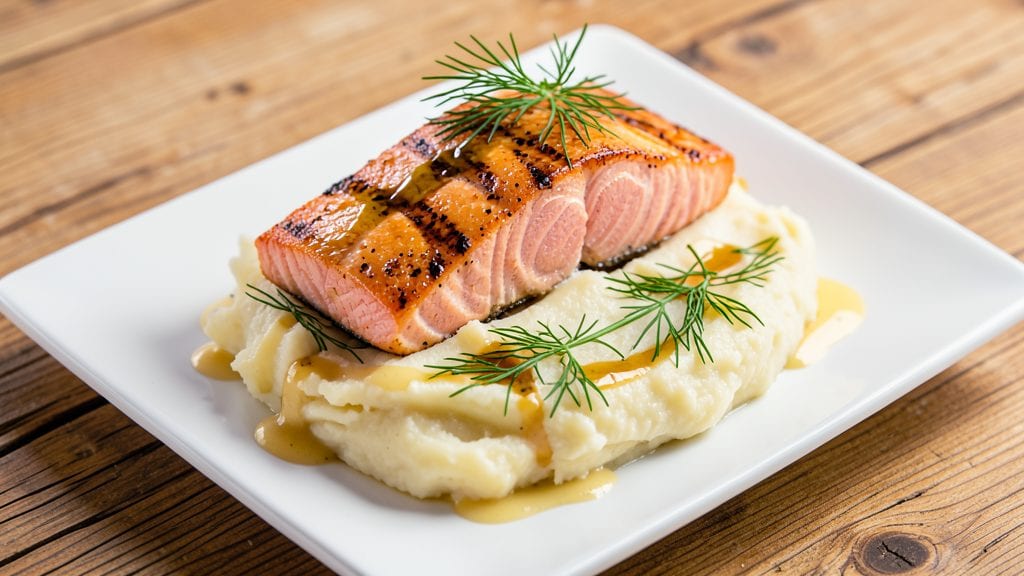
This salmon with mashed potatoes recipe delivers restaurant-quality results with perfectly flaky pan-seared salmon and velvety mashed potatoes that balance richness and simplicity. The key lies in precise timing—searing the salmon just until it reaches medium-rare while keeping the potatoes buttery and smooth, never lumpy.
I developed this pairing after years of testing, and it’s now my go-to weeknight dinner that feels like a special occasion.
The salmon preparation is straightforward but critical: a light coat of olive oil, fresh herbs, and a sprinkle of salt create the perfect foundation for pan-searing.
Meanwhile, the mashed potatoes rely on a simple technique—boiling Yukon Gold potatoes until tender, then mashing them with warm butter and cream for a silky texture. The secret to foolproof results?
Don’t overwork the potatoes, and always stir in the butter while the mixture is still hot to ensure every bite is rich and creamy.
When plated, the contrast between the crispy, golden salmon and the smooth, buttery potatoes creates a visually stunning dish that’s just as satisfying to eat. The salmon’s flakiness pairs beautifully with the potatoes’ velvety texture, making each bite a perfect balance of protein and comfort.
This recipe serves two generously, making it ideal for a cozy dinner for two or a light lunch that feels indulgent.
For added flair, garnish the mashed potatoes with a sprinkle of chives or a drizzle of gravy, and serve the salmon with a side of roasted asparagus or a simple green salad.
The combination of flavors and textures makes this dish versatile enough for any occasion while remaining simple enough for a weeknight. Let’s get cooking!
Ingredients for salmon and mashed potatoes
Simple ingredients for a restaurant-worthy dinner—flaky salmon and velvety mashed potatoes made effortless.
| Ingredient | Amount | Notes |
|---|---|---|
| Salmon Fillets 🐟 | 2 whole | Skin-on, 6-8 oz each |
| Yukon Gold Potatoes 🥔 | 1 ½ lb | Russet or red potatoes work |
| Unsalted Butter 🧈 | ½ cup | Cold, cut into cubes |
| Heavy Cream 🥛 | ½ cup | Full-fat for creaminess |
| Extra-Virgin Olive Oil 🫒 | 2 tbsp | Light, fruity variety |
| Fresh Dill 🌿 | ¼ cup | Chopped, stems removed |
| Fresh Lemon Juice 🍋 | 1 tbsp | Freshly squeezed |
| Garlic Cloves 🧄 | 2 cloves | Minced, fresh preferred |
| Sea Salt 🧂 | 1 ½ tsp | Kosher or fine grain |
| Ground Black Pepper 🌶️ | ½ tsp | Freshly ground |
| Fresh Chives 🌱 | 2 tbsp | Chopped, for garnish |
The salmon fillets should be skin-on for crispiness, and 6-8 ounces each ensures perfect portions. Whole Foods or your local fishmonger carry the freshest cuts, but the frozen section at Trader Joe's works too—just thaw overnight in the fridge. Look for vibrant color and minimal fishy odor. For the potatoes, Yukon Golds are ideal—they’re creamy and hold their shape, but Russets work in a pinch. Peel and cube them evenly for consistent cooking. The butter matters here—European-style has higher fat content, which makes the mash extra luxurious.
No fresh dill? Dried dill at one-third the amount works, but fresh is worth the extra minute to chop. The lemon juice can be bottled, but freshly squeezed brightens the salmon beautifully. Short on garlic? Garlic powder at half the amount gets you close, though fresh minced is ideal. For the mashed potatoes, half-and-half can replace the heavy cream if you prefer a lighter texture, but the richness is key. The olive oil should be light and fruity—avoid the heavy, peppery varieties that can overpower the salmon. If you’re serving this for a crowd, double the recipe—just keep the ratios the same.
Store the salmon in the coldest part of the fridge, wrapped in parchment paper, and use within 2 days for peak freshness. The peeled potatoes can be kept in cold water in the fridge for up to 2 days before boiling. Once mashed, the potatoes reheat beautifully—just warm with a splash of milk or cream and a pat of butter. The salmon reheats less successfully, so it’s best served fresh. For meal prep, assemble the dish just before serving to maintain the perfect texture contrast. Garnish with chives right before eating—they add a fresh pop that keeps everything feeling vibrant.
Why You'll Love This Recipe
- I’ll be real: this feeds four for under $20, and it’s ready before the kids start complaining about dinner. No fancy techniques, no last-minute grocery runs—just reliable, satisfying comfort food when you need it most.
- One-Pan Magic: I swear by this trick—just toss the salmon and potatoes on the same sheet pan, drizzle with olive oil, and let the oven do the work. No chopping, no fuss, and honestly? The potatoes come out fluffy without a single extra bowl to wash.
- Rich Without Effort: That buttery cream and Yukon Golds melt into something so smooth, you’d never guess it’s basically hands-off. The salmon? Crispy edges, tender middle—every bite feels like a little reward after a long day.
- Leftovers That Don’t Suck: Between us, most mashed potato leftovers turn into glue. Not these. The cream keeps them velvety, and the salmon reheats like it’s fresh. Pack them for lunch or freeze them for when you’re too tired to cook.
Step-by-step instructions for perfect pan-seared salmon with creamy mashed potatoes
This method delivers restaurant-quality results with crispy salmon skin and velvety mashed potatoes.
Prepare the Yukon Gold Potatoes for Mashed Potatoes
Peel the 1.5 lb Yukon Gold potatoes and cut them into even 1-inch cubes. Place them in a large pot and cover with cold water by about 2 inches. Add 1 tsp of the 1.5 tsp sea salt and bring to a boil over medium-high heat. Once boiling, reduce heat to medium and simmer for 12-15 minutes until fork-tender.
Drain the potatoes thoroughly in a colander, then return them to the pot. Let them steam dry for 2-3 minutes to remove excess moisture. This step is crucial for achieving light, fluffy mashed potatoes. While they're still hot, add the 0.5 cup cold unsalted butter and the 0.5 cup heavy cream. Mash with a potato masher or ricer until completely smooth.
Season and Sear the Salmon Fillets
Pat the 2 whole salmon fillets dry with paper towels, removing any excess moisture. Place them skin-side down on a wire rack set over a baking sheet. Season both sides generously with the remaining 0.5 tsp sea salt and 0.5 tsp ground black pepper. Let them sit at room temperature for 10 minutes while you prepare the pan.
Heat a large skillet over medium-high heat until very hot. Add 1 tbsp of the 2 tbsp extra-virgin olive oil and swirl to coat the pan. Carefully place the salmon fillets skin-side down in the pan. Cook undisturbed for 4-5 minutes until the skin is crispy and golden brown and the edges begin to lift easily from the pan.
Finish the Salmon and Prepare the Dill-Lemon Sauce
Carefully flip the salmon fillets using a fish spatula and cook for an additional 3-4 minutes until the internal temperature reaches 145°F. Remove the salmon from the pan and set aside to rest on a warm plate. Reduce the heat to medium-low and add the remaining 1 tbsp extra-virgin olive oil to the same pan.
Add the 2 minced garlic cloves and sauté for 30 seconds until fragrant. Pour in the 1 tbsp fresh lemon juice and the 0.25 cup chopped fresh dill. Simmer for 1-2 minutes until the dill softens slightly. Stir in 2 tbsp of the reserved mashed potatoes to thicken the sauce slightly, creating a creamy dill-lemon reduction.
Assemble and Garnish the Dish
Return the salmon fillets to the skillet and spoon the dill-lemon sauce over the top. Let it heat through for 1 minute. Meanwhile, divide the mashed potatoes between two warmed plates. Place each salmon fillet on top of the mashed potatoes, skin-side up.
Drizzle any remaining sauce from the pan over the salmon and garnish with the 2 tbsp chopped fresh chives. Serve immediately while the salmon is still warm and the mashed potatoes are creamy. The crispy skin should contrast beautifully with the tender, flaky salmon and the velvety mashed potatoes underneath.
Pro Tips For Making Salmon And Mashed Potatoes
- Skin Salmon Side Down: The crispy skin is where flavor hides—place the fillets skin-side down in a cold, dry pan first. Let it sear undisturbed for 4-5 minutes on medium heat (yes, even if you’re impatient like me) before flipping. I learned this the hard way when my salmon turned out sad and flaky instead of golden and crisp.
- Boil Potatoes Whole: Skip peeling and chopping—toss whole Yukon Golds (scrubbed clean) into boiling salted water. They’ll cook faster, hold shape better, and save you from mushy mash. Cut them into even chunks after boiling, when they’re fork-tender but still firm.
- Salt the Cream: Heavy cream needs seasoning too—add a pinch of salt (and a splash of butter’s melted fat) before mixing it into the mashed potatoes. This balances the richness and cuts through the buttery heaviness. I was skeptical until I tried it; now it’s non-negotiable.
- Test Salmon at 120°F: Pull the salmon when the thickest part hits 120°F internally—it’ll keep cooking off the heat and reach 130°F (perfect doneness) while you finish the potatoes. Overcooking turns it rubbery, and undercooking leaves it chalky. A meat thermometer solves guesswork.
Troubleshooting this dish
Salmon Too Dry
Overcooking is the #1 reason salmon turns out dry. I’ve found that 145°F internal temperature is the perfect medium-rare finish—any higher, and the flesh becomes tough. Use a meat thermometer with an instant-read probe to check the thickest part of the fillet.
If your salmon releases easily from the pan but still feels firm to the touch, it’s ready. Never flip before the skin crisps for 4-5 minutes—this ensures moisture stays inside. 🌡️
Mashed Potatoes Too Lumpy
Lumpy mashed potatoes happen when you mash cold potatoes or don’t remove enough moisture. After draining, let the potatoes steam dry in the pot for 2-3 minutes—this is non-negotiable. For ultra-smooth results, I press the potatoes through a fine-mesh ricer instead of mashing with a fork.
If you’re using a masher, keep it hot by adding the butter and cream while the potatoes are still piping hot. Stir vigorously but gently to avoid incorporating air bubbles.
Skin Not Crispy Enough
A perfectly crispy skin starts with dry, room-temperature salmon. Pat the fillets thoroughly with paper towels and let them sit for 10 minutes before searing. Use a heavy-bottomed skillet like a Lodge cast iron and heat it until it’s smoking hot before adding oil.
Place the salmon skin-side down and resist the urge to press—this traps steam and prevents crispiness. Cook undisturbed until the edges curl up and the skin releases easily.
Sauce Too Thin or Watery
The dill-lemon sauce should coat the back of a spoon but not be runny. If yours separates or looks too thin, simmer it for an extra 1-2 minutes to reduce. For extra thickness, stir in 1 tbsp cornstarch mixed with 1 tsp cold water and cook until it gels.
I also like to reserve 2 tbsp of the mashed potatoes before adding butter and cream—stirring in a spoonful at the end thickens the sauce beautifully without altering the potato texture.
Potatoes Too Watery
Watery mashed potatoes usually mean you didn’t drain them well enough or added too much liquid. After boiling, give the potatoes a thorough drain and let them sit in the colander for 1 minute to evaporate excess moisture.
When mashing, add the cream and butter gradually—start with ¼ cup and adjust to taste. For extra insurance, press the mashed potatoes through a cheesecloth-lined strainer to remove any remaining liquid. This step is worth the effort for silky results. 💫
Salmon Sticking to Pan
Salmon sticks when the pan isn’t hot enough or the fillets aren’t dry. Always heat the skillet until it’s smoking hot before adding oil—this creates a nonstick surface. Use a high-smoke-point oil like avocado or grapeseed oil (they handle heat better than olive oil).
If your salmon still sticks, it’s likely because the pan lost heat. Remove the fillets and let the pan recover for 30 seconds before trying again. A fish spatula with a thin, flexible blade helps lift delicate fillets without tearing.
Nutrition facts
Frequently asked questions
Can I substitute salmon with another white fish?
Cod, halibut, or trout work beautifully in this recipe. The cooking time may vary slightly—halibut needs about 1 extra minute per side due to its thickness, while cod cooks faster. Just adjust the internal temperature to 145°F for medium-rare results. The mashed potatoes recipe remains identical.
How do I make this dish vegetarian?
Swap the salmon for extra-firm tofu or mushroom medley. Press and pan-fry tofu until golden, then brush with lemon-dill sauce. For mushrooms, use shiitake or portobello caps sliced thick and seared until caramelized. Use olive oil instead of butter in the mashed potatoes for a vegan-friendly version.
What's the best way to reheat leftovers?
Reheat mashed potatoes gently in the microwave for 1-2 minutes with a splash of milk or cream, then stir in extra butter. Salmon reheats best in a skillet over low heat for 2-3 minutes—add a pat of butter to keep it moist. Never microwave salmon directly, as it dries out quickly.
Can I make this ahead of time?
Prepare the mashed potatoes up to 2 days ahead—store in an airtight container in the fridge. Reheat by warming with extra butter and cream. Cook the salmon fresh day-of, as reheating reduces crispiness. For a make-ahead meal, boil the potatoes in advance, then mash and refrigerate. When ready to serve, reheat and add fresh butter.
Why do my mashed potatoes turn out grainy?
Graininess happens when potatoes aren't fully cooked or cooled before mashing. Always boil until fork-tender, then drain completely and let them steam in the pot for 2-3 minutes. Use a ricer instead of a fork for ultra-smooth results. For waxy potatoes like Yukon Golds, add 1 tbsp sour cream per pound to prevent separation.