
Appetizers
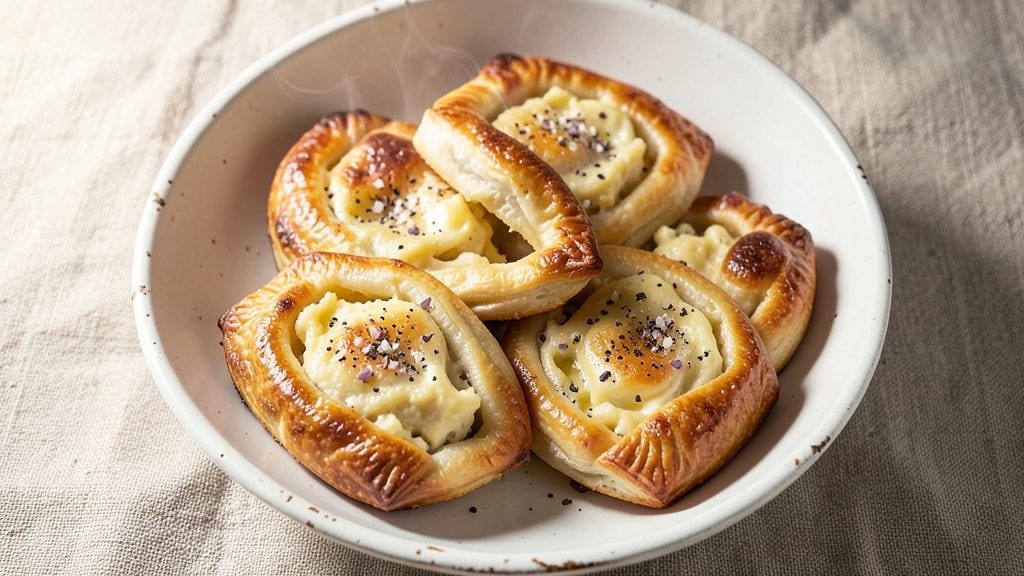
This potato empanada recipe delivers the perfect balance of flaky pastry and hearty mashed potato filling—every bite combines crisp edges with tender, savory goodness.
I developed this version after testing countless techniques to achieve that signature crispness without sacrificing the dough's delicate texture, and the secret lies in a precise fold and the right cooking method. The filling transforms simple potatoes into a rich, herby-spiced center that pairs beautifully with the golden-brown crust.
The key to success starts with the dough: a blend of flour, butter, and ice water that creates layers so delicate they melt in your mouth.
For the filling, I use Yukon Gold potatoes boiled until perfectly tender, then mashed with garlic, scallions, and a touch of cream cheese for extra richness. The combination of crispy edges and creamy filling makes these empanadas impossible to resist—whether served as an appetizer or a satisfying main dish.
What makes this recipe stand out is the foolproof folding technique that ensures no leaks, paired with a choice of baking or air-frying for a lighter finish. The result is a golden, flaky pastry that hugs the filling just right, creating a handheld meal that feels both rustic and refined.
Perfect for game day, potlucks, or a cozy weeknight dinner, these empanadas are designed to impress without the fuss.
Serve them warm with a dollop of sour cream or a sprinkle of chimichurri for that extra burst of flavor. The dough can be made ahead and stored in the fridge, so you can assemble and cook them whenever you're ready. Let’s get started on creating these irresistible bites!
Ingredients for potato empanada
Flaky dough and creamy spud filling—just 13 ingredients for golden, handheld magic.
| Ingredient | Amount | Notes |
|---|---|---|
| All-Purpose Flour 🌾 | 4 cups | Sifted for light texture |
| Unsalted Butter 🧈 | 1 cup | Cold, cubed for flaky layers |
| Ice Water 💧 | ½ cup | Chilled, for dough elasticity |
| Yukon Gold Potatoes 🥔 | 3 lbs | Peeled, boiled until tender |
| Cream Cheese 🧀 | 8 oz | Room temperature, for richness |
| Garlic Cloves 🧄 | 4 cloves | Minced, for savory depth |
| Scallions 🧅 | ¼ cup | Thinly sliced, fresh preferred |
| Salt 🧂 | 1 ½ tsp | Fine sea salt, adjust to taste |
| Black Pepper 🌶️ | ½ tsp | Freshly ground for warmth |
| Dried Thyme 🌿 | 1 tsp | Or 1 tbsp fresh thyme leaves |
| Egg 🥚 | 1 whole | Beaten, for egg wash |
| Olive Oil 🫒 | 1 tbsp | For brushing dough |
| Sour Cream 🥛 | ½ cup | For serving, optional |
The butter is non-negotiable here—European-style like Plugrá or Land O’Lakes makes all the difference. Grab it from the freezer section at Whole Foods or Trader Joe’s if you want to splurge. For the potatoes, Yukon Golds are your best bet—they mash smooth and hold their shape. If you can’t find them, Russets work in a pinch, but they’ll be grittier. The flour? King Arthur or Bob’s Red Mill are my go-tos for consistent results. And that ice water? Use actual ice cubes—no warm water shortcuts here.
No cream cheese? Cottage cheese blended smooth works in a bind, though it’s not the same. Fresh thyme is ideal, but dried at half the amount is fine if that’s what you’ve got. Short on scallions? Green onions or chives do the trick. The dough can be made ahead and stored for 3 days wrapped in plastic, but don’t let it sit out too long—it gets gummy. For the filling, if you’re in a rush, instant mashed potatoes cut in half with regular mashed potatoes will save time (though they won’t be as rich).
These keep surprisingly well—3 days in the fridge if stored in an airtight container. Reheat in the oven at 375°F for 10-12 minutes to restore that crispy edge. Freeze uncooked empanadas for up to 2 months—just bake straight from frozen, adding 5 minutes to the cooking time. I like to assemble them the night before and bake fresh the next day. The dough gets more tender as it rests, so it’s worth the wait.
Why You'll Love This Recipe
- No-Roll Dough Trick: I swear by this butter-and-flour shortcut—just mix, press, fold. The ice water keeps it from sticking, and honestly? My empanadas stay flaky even when I rush.
- Creamy Crispy Magic: That Yukon Gold filling—roasted until tender—meets the creamy cheese and crispy edges. It’s the kind of combo that makes you close your eyes mid-bite.
- Lunchbox Hero: Pack these for work or school. They reheat beautifully, and between us, my kids grab them before I do. (Yes, even on a Tuesday night.)
- Dollar Stretch: Flour, butter, potatoes—these are pantry staples that won’t break the bank. I’ve made 12 empanadas for under $8, and they feed a crowd without guilt.
Step-by-step instructions for potato empanadas
Here's how to create those irresistible flaky pastries filled with creamy potato goodness.
Make the Flaky Dough
In a large bowl, combine the 4 cups all-purpose flour and 1.5 teaspoons salt. Cut in the 1 cup unsalted butter using a pastry cutter or your fingers until the mixture resembles coarse crumbs with pea-sized butter pieces. This creates pockets that will melt during baking, giving you that signature flaky texture.
Gradually add the 0.5 cup ice water, 1 tablespoon at a time, mixing gently with a fork until the dough just comes together. Avoid overmixing—this develops gluten and makes the pastry tough. Once combined, turn the dough onto a lightly floured surface and knead it just 8-10 times until smooth. Wrap tightly in plastic and refrigerate for at least 1 hour (or up to 24 hours). Chilling relaxes the gluten and makes rolling easier.
Prepare the Potato Filling
Peel and dice the 3 lbs Yukon Gold potatoes into ½-inch cubes. Boil them in salted water for 10-12 minutes until fork-tender, then drain well. In a large skillet, heat the 1 tablespoon olive oil over medium heat and sauté the 4 minced garlic cloves and 0.25 cup sliced scallions for 1-2 minutes until fragrant.
Add the cooked potatoes to the skillet along with the 8 oz room-temperature cream cheese, 1 teaspoon dried thyme, 0.5 teaspoon black pepper, and remaining 0.5 teaspoon salt. Mash everything together with a potato masher until the mixture is smooth but still has some texture. Remove from heat and let cool completely before filling the empanadas—this prevents steam from making the pastry soggy. The filling should be thick enough to hold its shape when packed into circles.
Assemble and Shape the Empanadas
Preheat your oven to 375°F and line two baking sheets with parchment paper. Roll out the chilled dough between two sheets of parchment paper to ⅛-inch thickness. Cut 5-inch circles using a round cutter or glass, rerolling the scraps as needed. You should get about 12 circles for 12 empanadas.
Place 1 tablespoon of potato filling in the center of each circle, leaving a ½-inch border around the edges. Fold the dough over the filling and press the edges together firmly, sealing with a fork or by pinching. Brush the tops with the beaten egg for a golden finish. Arrange the empanadas on the prepared baking sheets, leaving 1 inch between them for even browning.
Bake to Golden Perfection
Bake the empanadas for 20-25 minutes until the pastry is deep golden brown and puffed in spots. Rotate the pans halfway through for even cooking. The edges should be crisp while the filling remains warm and creamy inside. If the tops brown too quickly, tent loosely with foil for the last 5 minutes of baking.
Let the empanadas cool for 5 minutes before serving—this allows the filling to set slightly and makes them easier to handle. Serve warm with the 0.5 cup sour cream on the side for dipping. The contrast between the flaky, crisp pastry and the creamy potato filling is what makes these empanadas irresistible. Store leftovers in an airtight container at room temperature for up to 2 days or freeze for 1 month.
Pro Tips For Making Potato Empanada
- Boil Potatoes Until Fork-Tender: Yukon Golds need to be soft enough to mash with minimal effort—not mushy, not undercooked. Test by piercing with a fork: if it slides in like butter, they’re ready. Overcooking turns them gluey, and no one wants a filling that oozes through the dough.
- Chill Dough Before Rolling: Warm dough sticks like a nightmare. Wrap the rolled-out circles in plastic and refrigerate for 15 minutes—this firms them up so they don’t tear when you cut or fold. (Yes, even if you’re impatient like me.)
- Skip Pre-Cooked Butter: Cold butter in the dough = flaky layers. Cut the unsalted butter into tiny cubes (pea-sized) and fold them into the flour quickly—then work fast to avoid melting. The goal is pockets of cold fat, not a greasy mess.
- Press Fillings Tight: Loose filling = soggy bottoms. Pack the potato-cream cheese mix into the dough firmly, leaving a ½-inch border. Brush the edges with water before folding—this seals the seal better than glue. (Your empanadas will thank you.)
Essential equipment for potato empanada
Dough Essentials
Start with a stand mixer fitted with the paddle attachment for mixing the dough—it distributes the cold butter evenly without overworking the flour. I use my KitchenAid Artisan Series for consistency, but a hand mixer works too.
For cutting butter into flour, a pastry cutter or even two forks works, but I find a bench scraper helps keep everything contained. 🧈
Rolling Tools
Roll out the dough between two sheets of parchment paper to prevent sticking and make cleanup easier. A rolling pin is a must, but I prefer a French-style rolling pin (like OXO Good Grips) for better control.
For cutting circles, a 5-inch round cutter or a glass works—just make sure it’s sharp to avoid tearing the dough.
Filling Prep
A potato masher is essential for achieving that perfect creamy texture in the filling. I also use a microplane to zest garlic cloves for extra flavor. For sautéing, a 10-inch stainless steel skillet (like All-Clad) distributes heat evenly.
A fine-mesh strainer comes in handy if you want to drain excess liquid from the mashed potatoes.
Sealing Secrets
To seal the edges neatly, I use a fork to crimp the dough—it creates a decorative pattern while locking in the filling. A small offset spatula helps press the edges firmly.
For extra security, I brush the folded edges with a bit of beaten egg before baking. A pastry brush makes this step effortless.
Baking Gear
For baking, two rimmed baking sheets (like Nordic Ware) ensure even heat distribution. I always line them with parchment paper to prevent sticking. A digital thermometer (like Thermoworks Smoke) helps monitor the oven temperature—empanadas need 375°F for that perfect golden-brown finish.
If air-frying, a 6-quart air fryer (like Ninja) works great for a lighter texture.
Serving Extras
Serve empanadas with sour cream or chimichurri for dipping. A small serving spoon helps with portion control, and a slotted spoon keeps the filling intact when scooping. For presentation, I like to arrange them on a wooden board or ceramic platter—it adds a rustic touch that guests love. 🍽️
Nutrition facts
Frequently asked questions
Can I use sweet potatoes instead of Yukon Golds?
Yes, but expect a slightly different texture and flavor. Sweet potatoes add natural sweetness and a deeper orange hue, but they're denser and may not mash as smoothly. For best results, roast them first to concentrate their flavor, then blend with regular potatoes at a 50/50 ratio to maintain the creamy consistency.
Why did my empanadas turn out dense instead of flaky?
Overworking the dough or skipping the chilling step are the most common culprits. The butter needs to stay cold to create those signature flaky layers, so handle the dough minimally and refrigerate it for at least 1 hour. Also, avoid adding extra water—measure carefully and let the ice water absorb naturally.
Can I make these empanadas ahead of time?
Assemble them uncooked and refrigerate for up to 24 hours before baking. For longer storage, freeze uncooked empanadas on a tray, then transfer to a bag for up to 2 months. Bake straight from frozen, adding 5 extra minutes to the cooking time. The dough gets more tender as it rests, so this actually improves texture.
What's the best way to reheat leftover empanadas?
For crispy results, reheat in a 375°F oven for 10-12 minutes on a baking sheet until golden. If you're short on time, use an air fryer at 350°F for 5 minutes—this restores the crispy exterior without drying out the filling. Microwaving works in a pinch but makes the pastry soggy.
Can I make the dough without a stand mixer?
Yes! Use two forks or a pastry cutter to cut cold butter into flour until pea-sized pieces remain. Mix with ice water by hand until the dough just comes together, then knead briefly on a floured surface. The key is keeping everything cold and working quickly to avoid gluten development. A little elbow grease goes a long way!