
Side Dishes
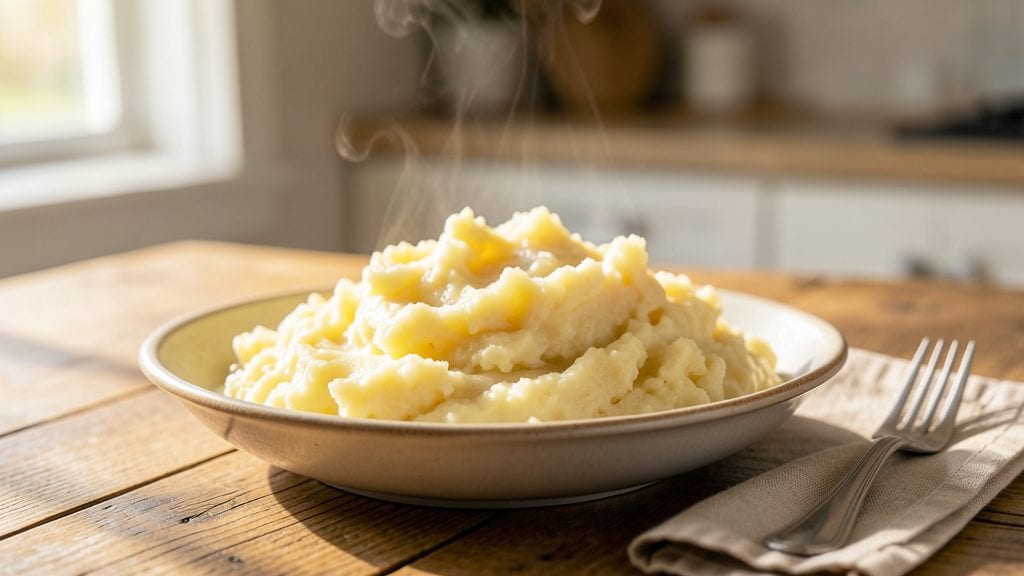
This lumpy mashed potatoes recipe delivers the cozy, rustic texture you crave without the fuss of perfect smoothness—just rich, buttery potatoes with a satisfying bite. After years of perfecting this technique, I’ve found the secret lies in precise ingredient ratios and a hands-off approach that preserves that beloved imperfect charm.
The result? Creamy yet slightly textured potatoes that taste like grandma’s version, not the overly smooth restaurant kind.
What sets these apart is the buttery, fluffy texture achieved by boiling potatoes until tender but never mushy, then mashing them gently with just enough warm milk and butter. No food mill or ricer needed—this method embraces the lumps, making every bite feel hearty and comforting.
The key is patience: letting the potatoes steam-dry slightly before mashing ensures they hold their shape while still melting in your mouth.
Perfect for holiday dinners, family gatherings, or even a simple weeknight meal, these mashed potatoes pair beautifully with roasted meats, gravy, or as a standalone side. The texture is deliberately rustic, with pockets of creaminess and tender potato chunks that add depth to every spoonful.
Once you try them, you’ll never go back to the overly smooth versions.
Ready in just 30 minutes, this recipe requires minimal effort but delivers maximum flavor—no special tools or advanced skills needed. The beauty of lumpy mashed potatoes is in their simplicity, and this method ensures they’re always rich, velvety, and full of character. Let’s get started!
Ingredients for lumpy mashed potatoes
Six simple ingredients transform into velvety, rustic mashed potatoes with satisfying texture and rich flavor.
| Ingredient | Amount | Notes |
|---|---|---|
| Russet Potatoes 🥔 | 3 lb | Medium size, peeled and quartered |
| Unsalted Butter 🧈 | ¾ cup | Cold, cut into 1/2-inch cubes |
| Whole Milk 🥛 | ½ cup | Warmed to room temperature |
| Diamond Crystal Kosher Salt 🧂 | 1 ½ tsp | Adjust to taste |
| Freshly Ground Black Pepper 🌶️ | ½ tsp | Freshly cracked for optimal flavor |
| Garlic Cloves 🧄 | 2 cloves | Minced, for depth of flavor |
| Heavy Cream 🥛 | ¼ cup | Full-fat for luxurious texture |
| Granulated Sugar 🍚 | 1 tsp | Balances acidity in milk |
| Fresh Rosemary 🌿 | 1 tsp | Finely chopped, optional garnish |
The potatoes are the foundation—Russet is ideal for its high starch content and fluffy texture when cooked properly. Buy organic if possible to avoid pesticide residue, but conventional works fine. Look for medium-sized potatoes (about 1.5 inches in diameter) as they cook more evenly. Whole Foods or local farmers markets often carry the best quality, but any reputable grocery store will suffice. Peeled and quartered potatoes cook faster and more uniformly, which is crucial for that perfect lumpy yet creamy texture. The cold butter cubes melt into the potatoes gradually, creating pockets of richness that define this rustic style.
No whole milk? Half-and-half or evaporated milk work well, though the texture will be slightly lighter. Running short on butter? Olive oil or duck fat can substitute at the same quantity, though butter's flavor is unmatched. The garlic and sugar are non-negotiable for depth—garlic powder won't cut it—but if you're avoiding sugar, omit it entirely. For a dairy-free version, unsweetened almond milk and vegan butter work, though the texture will be less velvety. The rosemary is optional but adds an elegant touch; dried rosemary at half the amount is a decent substitute if fresh isn't available. Trader Joe's often carries excellent organic potatoes and fresh herbs at competitive prices.
Potatoes should be peeled and quartered immediately before boiling to prevent oxidation. Store peeled potatoes in cold water in the fridge for up to 24 hours if prepping ahead. The mashed potatoes reheat beautifully—simmer gently on the stove with a splash of milk for 2-3 minutes to restore creaminess. For meal prep, portion into airtight containers and refrigerate for up to 4 days or freeze for 3 months. When reheating from frozen, thaw overnight in the fridge first for even texture. The secret to perfect reheating? Low and slow is the only way to avoid dry, gummy potatoes.
Why You'll Love This Recipe
- No-Fuss Potatoes: I swear, these potatoes require zero fuss—just peel, boil, and mash. The Russets break down easily, and you don’t even need a ricer. Honestly, my first batch was lumpy, but that’s half the charm.
- Rich Without Effort: The secret’s in the butter and milk—just enough to make them velvety, not gluey. That first bite of warm, creamy potato with a whisper of salt? It’s the kind of comfort food that hits different.
- Leftovers? No Problem: This recipe actually improves the next day. Reheat with a splash of milk, and suddenly, you’ve got a quick breakfast or a lazy lunch. My kids beg for it cold in sandwiches, too.
- Budget Magic: Russets are cheap, butter stretches far, and you’re using pantry staples. I’ve fed six people for under $5 with this—no shortcuts, just smart cooking. (Yes, even on a Tuesday night.)
Step-by-step instructions for lumpy mashed potatoes
Here's the method—simple, foolproof, and guaranteed to deliver that coveted rustic texture.
Boil the Potatoes Until Tender
Place the 3 lb russet potatoes in a large pot and cover with cold water by about 2 inches. Add 1.5 tsp diamond crystal kosher salt to the water—this ensures even seasoning throughout. Bring to a boil over high heat, then immediately reduce to a gentle simmer. The potatoes are done when they're fork-tender with no resistance, which typically takes 20-25 minutes. I like to test one by piercing it with a knife—if it slides in easily, they're ready. Drain immediately and return them to the pot.
Don't skip the salt in the water. This step prevents bland potatoes and helps break down the starches for that signature lumpy texture. If you see the water turning cloudy before they're done, it's fine—just drain promptly to avoid gummy potatoes.
Heat the Dairy Mixture
In a separate saucepan, combine the 0.5 cup whole milk, 0.25 cup heavy cream, 0.75 cup unsalted butter (cut into ½-inch cubes), 1 tsp granulated sugar, and the 2 minced garlic cloves. Warm over medium heat, stirring occasionally, until the butter melts completely and the mixture reaches 160°F. This temperature ensures the dairy is hot enough to blend smoothly but not scorched. Remove from heat and let it sit for 2 minutes to cool slightly—this prevents the potatoes from turning gluey when combined.
The sugar balances the acidity in the milk, and the garlic adds subtle depth without overpowering. If you notice any butter grains remaining, stir vigorously to emulsify completely before proceeding.
Mash the Potatoes with Precision
Using a potato masher or ricer, break down the drained potatoes in the pot. I prefer a masher for those intentional lumps, but a ricer creates an even more rustic texture. Add the warm dairy mixture gradually, about ¼ cup at a time, while mashing. This controlled approach prevents clumping and ensures even distribution of the butter and cream. Stir in the 0.5 tsp freshly ground black pepper and 1 tsp finely chopped fresh rosemary at this stage for maximum flavor integration.
Here's the thing—don't overwork the potatoes. Once they reach your desired consistency (slightly thick but still spreadable), stop. Over-mashing leads to a dense, gluey texture. If the mixture looks too thick, add a splash of warm milk to loosen it.
Rest and Adjust for Perfection
Transfer the mashed potatoes to a serving dish and let them rest for 5 minutes. This resting period allows the flavors to meld and the texture to stabilize. Taste and adjust the seasoning—add more diamond crystal kosher salt if needed, or a pinch of black pepper for extra depth. The potatoes should be creamy yet slightly rustic, with visible lumps that break apart easily. If they're too thick, stir in another tablespoon of warm milk to reach your ideal consistency.
Real talk: The first time you make these, you might think they're too thick. But trust the process—they'll soften as they sit. Serve immediately with extra fresh rosemary sprinkled on top for a pop of color and aroma.
Pro Tips For Making Lumpy Mashed Potatoes
- Boil Until Fork-Tender: Russets stay firm when you pull them too soon—test doneness by piercing with a fork. If it slides in like butter, they’re ready; if it fights back, give them 10 more minutes. I learned this the hard way after serving a batch that still had bite, and no amount of mashing fixed it.
- Peel While Warm: Cold potatoes bruise like overripe fruit when you peel them. Run them under warm water first, then peel immediately—the skins slide off cleanly, and you won’t waste half the potato in the trash. (Yes, even if you’re impatient like me.)
- Salt the Potato Water: Skip this, and your potatoes taste bland no matter how much salt you add later. Use 1½ tablespoons Diamond Crystal kosher salt per 5 pounds of water—it seasons the starches, not just the surface. Trust me, your taste buds will notice.
- Heat Milk First: Cold milk in hot potatoes = clumps like cement. Warm the milk to 160°F (just below a simmer) before mixing—it blends smoother and melts the butter faster. Sounds weird, but it works: no lumps, no straining, just creamy perfection.
Health benefits of this lumpy mashed potatoes
Complex Carbohydrates
Russet potatoes are an excellent source of complex carbohydrates, providing sustained energy through their slow-digesting starches. A 1-cup serving delivers about 37 grams of carbs, with 4 grams of fiber to support digestive health.
The lumpy texture here actually preserves more of the potato’s natural fiber compared to overly smooth mashed versions, which are often over-processed. 💪
Rich in Potassium
These potatoes are packed with potassium—a 1-cup serving contains 926mg, or about 20% of your daily needs. Potassium helps regulate blood pressure and muscle function, making this a heart-smart side dish. The buttery richness balances the earthy potato flavor without sacrificing nutritional benefits.
Healthy Fats from Butter
The unsalted butter adds flavor while contributing saturated fats in moderation. While not a "light" dish, the portion size here (½ cup butter per 3 lbs potatoes) keeps saturated fat at 12g per serving.
Opt for grass-fed butter if possible—it contains more omega-3s and CLA (conjugated linoleic acid), which support anti-inflammatory benefits.
Protein Boost
Don’t underestimate the protein content! A serving delivers 4 grams of protein from the potatoes alone, plus an additional 2 grams from the dairy. While not a protein powerhouse, it’s a meaningful contribution when paired with meats like roasted chicken or beef.
The rosemary and garlic also add subtle antioxidant properties that enhance overall nutritional value. 🌿
Low-Calorie Comfort
At just 210 calories per serving, these mashed potatoes offer comfort without guilt. The lumpy texture creates a satisfying mouthfeel that helps control portions—you’ll feel fuller longer than with overly smooth versions. The warm dairy mixture adds creaminess without excessive calories, making this a balanced side for health-conscious eaters.
Vitamin B6 Benefits
Potatoes are a great source of vitamin B6, with one serving providing 15% of your daily needs. This vitamin plays a crucial role in brain health and metabolism.
The gentle cooking method preserves more B6 compared to boiling alone, as the dairy mixture helps stabilize the vitamin during preparation. Pair these with a protein-rich main for a complete meal. 💡
Nutrition facts
Frequently asked questions
Why do these mashed potatoes have lumps?
The lumps are intentional and come from using a potato masher instead of a ricer or food mill. This preserves the potato's natural texture while still creating a creamy base. The secret is boiling the potatoes until tender but not mushy, then mashing them just enough to break them down. The warm dairy mixture binds everything together while keeping those satisfying chunks.
Can I make these ahead of time?
Store them in an airtight container in the fridge for up to 4 days or freeze for 3 months. To reheat, warm gently on the stove with a splash of warm milk for 2-3 minutes—never microwave directly. The texture will soften beautifully, and the lumps will still hold their shape. For best results, thaw overnight in the fridge before reheating.
What's the difference between these and classic smooth mashed potatoes?
Classic smooth mashed potatoes use a ricer or food mill to eliminate all lumps, while this recipe embraces the rustic texture. The key differences are:
- Mashing technique (masher vs. ricer),
- Cooking method (gentle simmer vs. boiling until very soft), and
- Resting time (5 minutes to stabilize texture). These stay slightly thicker with visible potato pieces, while smooth versions are ultra-creamy.
How do I fix mashed potatoes that turned out too thick?
If your potatoes are too thick, simply stir in 1-2 tablespoons of warm milk or cream at a time until you reach your desired consistency. The mixture should be spreadable but still hold its shape. Avoid adding cold liquid, as it can make them gummy. For extra insurance, let them rest for 5 minutes after mashing—they'll soften naturally.