
Desserts
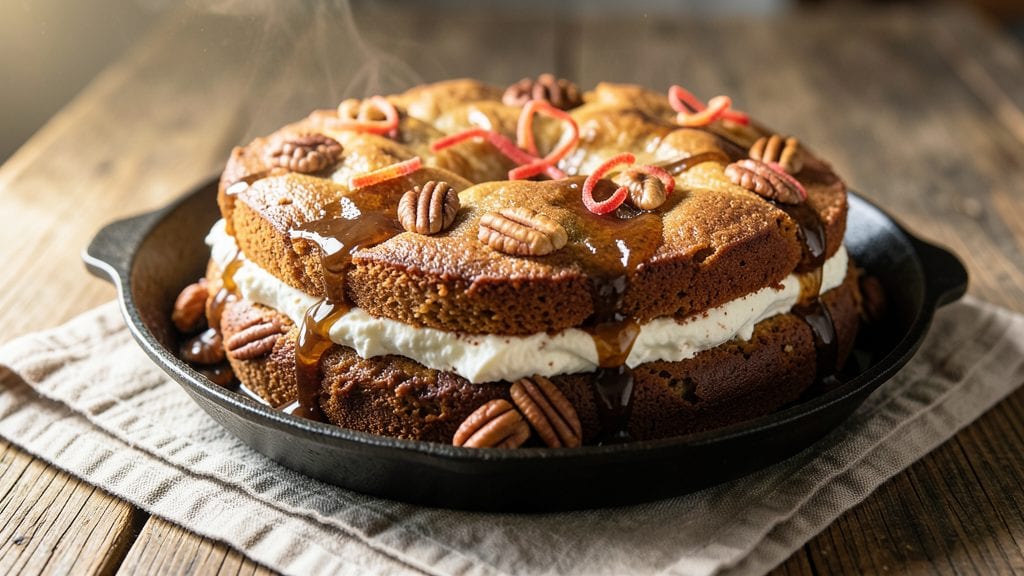
This Southern sweet potato cake delivers the moist, spiced perfection that makes it a classic dessert in Southern kitchens. The secret lies in blending sweet potatoes with warm spices like cinnamon and nutmeg, creating a dense yet tender crumb that stays perfectly moist for days.
I developed this recipe after years of baking, ensuring the frosting swirl stays luscious without making the cake too heavy.
The cake's rich flavor comes from a precise balance of spices and a touch of molasses, while the vanilla frosting adds a creamy contrast that ties everything together.
Southern bakers know that the key to success is baking at the right temperature—350°F—and letting the cake cool completely before frosting to prevent a soggy texture. This method guarantees a cake that's both impressive and foolproof.
What sets this recipe apart is how it combines traditional Southern techniques with a modern twist—the swirl of frosting adds visual appeal while keeping the cake's signature moistness intact. Each slice reveals layers of warm spice and sweet potato, finished with a velvety vanilla frosting that melts into every bite.
Perfect for holidays or cozy family gatherings, this cake is a true crowd-pleaser.
For those looking for variations, you can easily adapt this recipe by substituting dairy for coconut milk or using almond flour for a gluten-free option. The cake also pairs beautifully with pecans or a drizzle of caramel glaze for added texture. Let's get baking!
Ingredients for southern sweet potato cake
Sweet potatoes, warm spices, and velvety frosting—this Southern classic delivers moist perfection every time.
| Ingredient | Amount | Notes |
|---|---|---|
| Sweet Potatoes 🍠 | 2 cups | Canned, drained and mashed smooth |
| All-Purpose Flour 🌾 | 2 ½ cups | Sifted for light texture |
| Granulated Sugar 🍚 | 1 ½ cups | Light brown preferred |
| Unsalted Butter 🧈 | 1 cup | Room temperature, full-fat |
| Large Eggs 🥚 | 3 whole | Room temperature, beaten |
| Molasses 🍯 | ¼ cup | Unsulphured for authentic flavor |
| Ground Cinnamon 🌿 | 2 tsp | Freshly ground preferred |
| Ground Nutmeg 🌿 | ½ tsp | Freshly grated nutmeg |
| Ground Ginger 🌿 | 1 tsp | Freshly ground preferred |
| Baking Powder 🍞 | 2 tsp | Aluminum-free for best rise |
| Salt 🧂 | ½ tsp | Fine sea salt preferred |
| Vanilla Extract 🌸 | 1 tbsp | Pure bourbon vanilla |
| Heavy Whipping Cream 🥛 | 1 ½ cups | Cold for frosting |
| Powdered Sugar 🍚 | 3 cups | Sifted for smooth frosting |
| Vanilla Bean Paste 🌸 | 1 tsp | For enhanced vanilla flavor |
The sweet potatoes are the heart of this cake. Canned sweet potatoes work best for consistency—just drain and mash them smooth, no lumps. For a fresher take, roast and mash your own, but Libby's brand is a Southern baker's secret. The spices must be fresh: Penzeys or bulk bins at Whole Foods carry the best ground cinnamon and nutmeg. Don't skimp on the molasses—Blackstrap adds depth, but unsulphured works too. The butter should be room temperature; microwave it for 40 seconds if it's cold from the fridge. This ensures a tender crumb without greasy pockets.
No molasses? Maple syrup at half the amount works in a pinch, though it lacks the rich depth. Substituting almond flour for half the all-purpose flour makes this gluten-free, but the texture will be slightly denser. For a dairy-free version, use coconut oil instead of butter and coconut milk whipped cream for the frosting. The vanilla bean paste can be swapped for regular extract, but you'll need about double the amount—it's more concentrated. If your frosting curdles, simply whip in another tablespoon of cold cream until smooth. The frosting should be thick but pipeable; if it's too stiff, microwave for 10 seconds to soften.
This cake keeps beautifully—5 days at room temperature wrapped in plastic, or 2 weeks in the fridge. For longer storage, freeze slices wrapped individually for up to 3 months. The frosting can be made a day ahead and stored in the fridge; just re-whip before using. To prevent a soggy bottom, bake the cake in a lightly greased and floured pan. I always line mine with parchment paper for easy removal. The swirl technique? Use a piping bag with a large star tip for that classic Southern look—practice makes perfect, but even a knife works in a pinch.
Why You'll Love This Recipe
- Sweet Potato Magic: The moment you mash those roasted sweet potatoes into the batter, that natural sweetness and depth just happens—no extra sugar needed to make it sing. Honestly, the first time I made this, I thought, "Why haven’t I been doing this all along?"
- One-Bowl Wonder: Four ingredients, one bowl, and zero cleanup stress. You’ll mix the flour, sugar, butter, and eggs—then fold in that velvety sweet potato puree—and boom. Done. (Yes, even on a Tuesday night when you’re exhausted.)
- Breakfast or Dessert: Serve it warm with a pat of butter for a hearty breakfast or dust it with powdered sugar for a sneaky-sweet treat. My kids ask for it both ways, and I never have to plan ahead—just bake what I need.
- Budget-Friendly Staples: Sweet potatoes and flour are pantry basics that won’t break the bank. A single cake feeds four, and leftovers reheat beautifully—perfect for when you’re prepping for the week or just want to avoid takeout.
Step-by-step instructions for Southern sweet potato cake
Here's the method for a perfectly moist cake with rich spice notes and velvety vanilla frosting swirls.
Prepare the Sweet Potato Base
Begin by draining and mashing the 2 cups of canned sweet potatoes until completely smooth. I press through a fine-mesh sieve to remove any skin or lumps—this ensures a silky texture in the final cake. The mashed sweet potatoes should be room temperature before mixing, so let them sit for 5 minutes if freshly drained.
In a separate bowl, whisk together the 1.5 cups granulated sugar, 1 cup unsalted butter (room temperature), and 0.25 cup molasses until fully combined and smooth. This mixture forms the sweet foundation that balances the earthy sweet potatoes. The molasses adds depth while keeping the cake moist—don't skip this step or the cake will taste flat.
Combine Wet Ingredients and Spices
To the sweet potato mixture, add the 3 whole large eggs (beaten) and 1 tablespoon vanilla extract. Mix thoroughly until no streaks remain. This creates the wet ingredient base that will later incorporate with the dry components.
In a medium bowl, sift together the 2.5 cups all-purpose flour, 2 teaspoons ground cinnamon, 0.5 teaspoon ground nutmeg, 1 teaspoon ground ginger, 2 teaspoons baking powder, and 0.5 teaspoon salt. The sifting prevents lumps and ensures even distribution of spices throughout the batter. Here's the thing—these warm spices are what give Southern sweet potato cake its signature flavor profile. Don't substitute with generic baking spice blends.
Gradually fold the dry ingredients into the wet mixture using a spatula, mixing just until combined. Overmixing develops gluten and can make the cake dense. You're looking for a thick, smooth batter that holds its shape when dropped from a spoon—this ensures the right crumb structure for maximum moisture retention.
Bake the Cake to Golden Perfection
Preheat your oven to 350°F and grease two 9-inch round cake pans. I line the bottoms with parchment paper for easy removal and to prevent sticking. Divide the batter evenly between the pans and smooth the tops.
Bake for 30-35 minutes or until a toothpick inserted in the center comes out clean. The cake should be golden brown at the edges but still slightly springy in the center. Real talk: Your oven might run hot, so start checking at the 25-minute mark. If the edges brown too quickly, tent with foil to prevent overbrowning while the center cooks.
Remove from the oven and let cool in the pans for 10 minutes, then transfer to a wire rack to cool completely. This gradual cooling prevents cracking and allows the cake to set properly for slicing. The cooling process also helps the flavors meld together, giving you that authentic Southern sweet potato cake taste.
Prepare the Vanilla Frosting Swirl
While the cakes cool, prepare the frosting by beating the 1.5 cups cold heavy whipping cream until soft peaks form. In a separate bowl, whisk together the 3 cups powdered sugar and 1 teaspoon vanilla bean paste until smooth. Gradually fold the sugar mixture into the whipped cream until fully combined and fluffy.
Once the cakes are completely cool, use a serrated knife to level the tops if needed. I like to spread a thin layer of frosting on each cake layer, then pipe additional frosting in a swirl pattern on top. This creates that classic Southern cake presentation while keeping the texture light. For extra flair, pipe a border around the edges before adding the final swirl.
Assemble and Serve
Place one cake layer on a serving plate and spread a thin layer of frosting on top. Add the second layer and cover completely with remaining frosting. The frosting should be smooth but slightly textured to complement the cake's moist crumb. Chill for 30 minutes before slicing to help the frosting set.
Slice into 12 equal portions and serve at room temperature. Each slice should reveal a moist, spiced cake with a creamy vanilla frosting swirl that contrasts beautifully with the warm sweet potato flavor. This cake stays moist for days when stored properly—wrap tightly and keep at room temperature for up to 3 days.
Pro Tips For Making Southern Sweet Potato Cake
- BOIL AND MASH UNTIL SILKY: Sweet potatoes straight from the oven? Nope. Boil them first—cut into 1-inch chunks, then simmer in salted water for 15 minutes until fork-tender. Mashing them while still hot with a potato masher (not a food processor) keeps the texture smooth without turning it gluey. I learned this the hard way after one batch turned out like dense, sad wallpaper.
- WEIGH THE FLOUR: That "1 cup" of all-purpose flour on your measuring cup isn’t foolproof. Spoon it in, then level it off—don’t scoop and pack. Southern sweet potato cake relies on structure, and too much flour makes it dense. I skip the cup entirely now and use a kitchen scale for 120 grams. Yes, it’s extra work, but the crumb stays light.
- DON’T OVERMIX THE BATTER: After folding in the eggs and butter, stop mixing the second everything’s just combined. Overworking the batter introduces too much air, which can cause cracks or a domed top when baking. My grandmother called it "whipping the soul out of the cake"—dramatic, but accurate. Two turns of a spatula after the last ingredient is in.
- BAKE UNTIL THE CENTER HITS 200°F: That cake might look done at 350°F for 40 minutes, but the center’s still warm. Insert an instant-read thermometer—it should read 200°F. Pulling it too soon gives you a gummy middle; leaving it in too long dries it out. I used to eyeball it and always regretted it. Trust the thermometer.
Common mistakes when making this recipe
Overmixing the Batter
This is the #1 mistake I see in home bakers—overmixing develops gluten and creates a dense, tough cake. The batter should be just combined, with a thick, smooth consistency that holds its shape when dropped from a spoon.
I recommend mixing with a spatula for no more than 30 seconds after all dry ingredients are incorporated. 💡
Skipping Room-Temp Ingredients
Cold butter and eggs can create pockets of grease or prevent proper leavening. Always let your butter sit at room temperature for 1-2 hours before mixing, and bring eggs to room temperature by placing them in warm water for 5 minutes.
I microwave cold butter for 40 seconds if I'm in a hurry, but it's better to plan ahead.
Incorrect Sweet Potato Prep
Using lumpy or cold sweet potatoes disrupts the cake's texture. Always mash until completely smooth—press through a fine-mesh sieve if needed—and let them sit at room temperature for 5 minutes before mixing.
Never use freshly boiled sweet potatoes directly from the pot; their temperature shock can alter the batter's chemistry. 🍠
Overbaking or Underbaking
Baking too long dries out the cake, while underbaking leaves it gummy. Test with a toothpick at 25 minutes—it should come out with a few moist crumbs, not wet batter.
If edges brown too quickly, tent with foil. My oven runs hot, so I check every 5 minutes after 25 minutes of baking.
Frosting Too Early
Warm cake absorbs frosting moisture, creating a soggy bottom. Always let cakes cool completely on a wire rack before frosting. I chill assembled cakes for 30 minutes in the fridge to help the frosting set properly. Patience here makes all the difference in presentation. ✨
Ignoring Molasses Depth
Skipping or reducing molasses makes the cake taste flat. The ¼ cup in this recipe provides essential depth and moisture retention. If you must substitute, use ½ cup maple syrup, but understand it won't replicate molasses' complex flavor profile.
The spices in Southern baking rely on this balance for authenticity.
Nutrition facts
Frequently asked questions
Can I substitute fresh sweet potatoes for canned in this recipe?
Yes, but you'll need to roast them first. Peel and cube 2 medium fresh sweet potatoes, roast at 400°F for 25 minutes until tender, then mash smooth. Let cool completely before using—fresh potatoes contain more moisture and can make the batter too wet if used cold.
Why does my Southern sweet potato cake turn out dense?
Overmixing the batter or using cold ingredients are the most common culprits. Mix just until combined (about 30 seconds after dry ingredients are added) and ensure your butter and eggs are at room temperature. Also, don't skip the molasses—it's key for moisture retention.
Can I make this cake in a single 9-inch pan instead of two?
Reduce baking time to 40-45 minutes in a single 9-inch pan, checking for doneness at 35 minutes. The cake will be slightly taller but still moist. For presentation, frost the top and sides with a thin layer of frosting for that classic Southern look.
How do I store leftovers to keep them moist?
Wrap the cake tightly in plastic wrap and store at room temperature for up to 3 days. For longer storage, freeze slices individually for 3 months. Thaw at room temperature before serving. The frosting stays fresh too—just re-whip if it separates.
What's the best way to make this recipe gluten-free?
Replace 1.5 cups of all-purpose flour with a gluten-free 1:1 baking flour blend. Add 0.5 teaspoon xanthan gum to help bind the cake. The texture will be slightly denser, but the moistness remains. Use gluten-free oats in the pan for extra insurance against sticking.