
Side Dishes
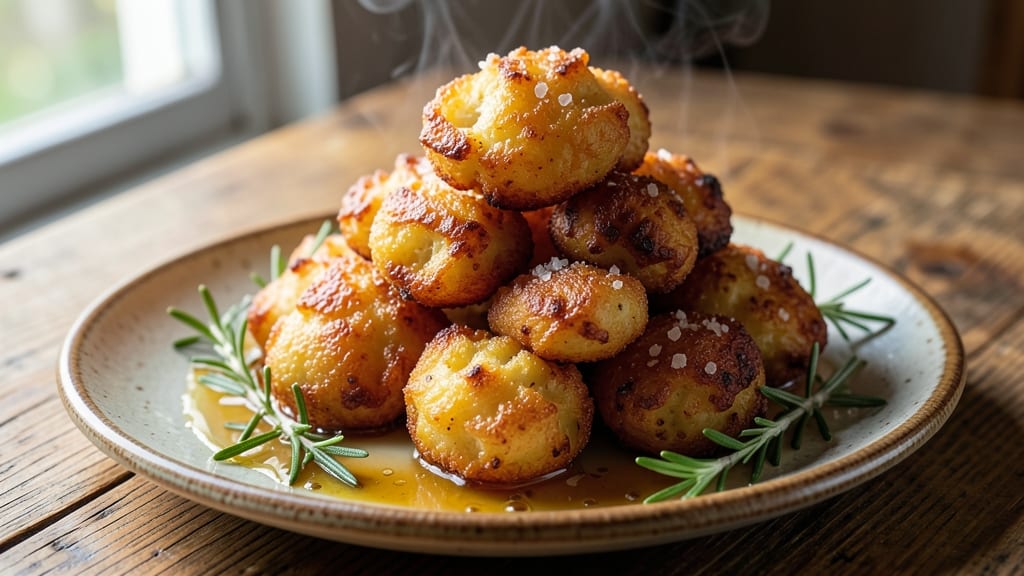
This puffed potatoes recipe transforms humble spuds into light-as-air clouds with a vinegar-kissed crunch that’ll have everyone reaching for seconds. The secret lies in precise parboiling and rapid drying—techniques that create those signature puffed pockets while maintaining a delicate, crisp exterior.
I perfected this method after years of experimenting with textures, and the results are worth every minute of prep.
What makes these potatoes special is their dual texture: tender, fluffy centers that practically melt in your mouth, contrasted by a crispy exterior that adds satisfying crunch. The vinegar bath isn’t just for flavor—it also helps set that perfect texture while keeping the potatoes light.
This recipe delivers restaurant-quality results without requiring deep-frying equipment, making it accessible for home cooks.
By the time you’re done, you’ll have a side dish that’s visually stunning—golden, puffed clouds piled high on a platter—and packed with flavor. The vinegar-kissed crunch adds a bright tang that cuts through richer main dishes, while the fluffy interior ensures every bite is satisfying.
These potatoes work as a standalone appetizer or elevate any meal from ordinary to extraordinary.
Whether you’re serving them at a holiday gathering or simply craving a crispy, satisfying side, this method delivers consistent, foolproof results every time. The key is patience during the drying phase—don’t rush it, and you’ll be rewarded with perfect puffs. Let’s get started on creating these magical, light-as-air potatoes.
Ingredients for puffed potatoes
Just twelve ingredients create these ethereal, vinegar-kissed potato clouds with restaurant-quality texture.
| Ingredient | Amount | Notes |
|---|---|---|
| Russet Potatoes 🥔 | 2 lbs | Waxy variety, cut into 1-inch cubes |
| White Vinegar 💧 | ½ cup | Distilled, for vinegar bath |
| Vegetable Oil 🫒 | ¼ cup | High smoke point for frying |
| Diamond Crystal Kosher Salt 🧂 | 1 ½ tbsp | For parboiling and seasoning |
| Granulated Sugar 🍚 | 1 tbsp | Balances vinegar acidity |
| Fresh Rosemary 🌿 | ¼ cup | Finely chopped, aromatic |
| Fresh Thyme 🌿 | ¼ cup | Leaves only, chopped fine |
| Garlic Cloves 🧄 | 3 cloves | Minced, for herb blend |
| Unsalted Butter 🧈 | ½ cup | Cold, cubed for finishing |
| Freshly Ground Black Pepper 🌶️ | ½ tsp | Freshly cracked for heat |
| Cornstarch 🌾 | 2 tbsp | For crisp exterior coating |
| Lemon Zest 🍋 | 1 tsp | Brightens final flavor |
Russet potatoes are non-negotiable here—their high starch content creates those signature puffs. Buy organic if you can, as their thicker skins hold up better during the parboiling process. I always grab mine from Whole Foods when they're on sale, but any reputable grocery store carries them. The key is uniformity: aim for 1-inch cubes—too large and they won't puff properly; too small and they'll burn. Cut them while still cold to prevent browning. For the vinegar bath, distilled white vinegar gives the cleanest flavor without overpowering the potatoes. The sugar isn't just for sweetness—it helps balance the acidity and creates a subtle caramelization during frying.
No white vinegar? Apple cider vinegar at half the amount works in a pinch, though it'll add a slight fruity note. Running short on rosemary or thyme? Dried herbs at one-third the amount will get you close, but fresh is ideal for that bright aroma. The garlic should be freshly minced—pre-minced garlic loses its punch quickly. For the butter, European-style has higher fat content, which gives a richer finish. Can't find cornstarch? Arrowroot powder works identically. The lemon zest is worth the effort—it brightens the dish and cuts through the richness of the butter. If you're prepping ahead, store the herb blend separately until ready to use to prevent wilting.
These potatoes are best made fresh, but you can parboil and dry them up to 24 hours ahead—just refrigerate uncovered on a wire rack. The vinegar bath keeps them stable for this time. For serving, reheat in a 350°F oven for 10-15 minutes until golden. They're stunning piled high on a platter, with extra lemon wedges for squeezing. Leftovers? Reheat in the oven only—they won't puff again, but they'll still be delicious with a crispy exterior. The herb butter mixture can be made a day ahead and stored in the fridge, though I recommend fresher herbs for maximum flavor.
Why You'll Love This Recipe
- No Chopping Needed: I swear by this—just slice those Russets into even rounds, no dice, no fuss. The vinegar bath does all the work while you sip your coffee.
- Crispy-Creamy Magic: That sugar-vinegar glaze? It’s the secret—caramelized edges with a pillowy center that tastes like a hug. Honestly, my kids ask for seconds before I even finish serving.
- Game for Any Meal: Toss them in a salad for crunch, pile them high for tacos, or serve as a side that disappears faster than my willpower. (Yes, even on a Tuesday night.)
- Budget Sidekick: A single bag of Russets and a few pantry staples stretch to feed four for under $5. Reheats like a dream—just pop in the oven until golden again. My wallet thanks me weekly.
Step-by-step instructions for perfectly puffed potatoes
Here's how to transform humble russet potatoes into ethereal, vinegar-kissed clouds with crisp edges.
Parboil and Vinegar Bath for Maximum Puff
Cut the 2 lbs russet potatoes into uniform 1-inch cubes, ensuring each piece is identical in size for even cooking. Place them in a large pot and cover completely with cold water. Add all 1.5 tbsp diamond crystal kosher salt and 1 tbsp granulated sugar to the water—this balances the vinegar's acidity later and enhances flavor penetration.
Bring to a boil over high heat, then immediately reduce to a gentle simmer. Parboil for exactly 6 minutes—this partially cooks the potatoes while creating steam pockets that will puff dramatically later. Drain thoroughly in a colander, shaking vigorously to remove all surface moisture. Transfer the potatoes to a large mixing bowl.
While still hot, pour the 0.5 cup white vinegar over the potatoes. The vinegar creates a chemical reaction with the starches, preventing browning and giving these potatoes their signature tender yet crisp exterior. Toss gently to coat evenly, then let sit at room temperature for 15 minutes. This resting period allows the vinegar to work its magic.
Create the Herb-Infused Crisp Coating
In a small bowl, combine the 0.25 cup finely chopped fresh rosemary, 0.25 cup fresh thyme leaves, 3 minced garlic cloves, 0.5 tsp freshly ground black pepper, and 1 tsp lemon zest. Add the 2 tbsp cornstarch to this mixture and toss to thoroughly coat the herbs. This crisp coating will create that signature shatter when fried.
In a separate bowl, whisk together the 0.25 cup vegetable oil and melted 0.5 cup unsalted butter. The oil provides high heat stability while the butter adds rich flavor. Add the herb mixture to the oil-butter blend and stir until you have a smooth, well-coated paste. This is your secret weapon for that irresistible aromatic crust.
Transfer the vinegar-dressed potatoes to a large plate and pat them completely dry with paper towels—moisture is the enemy of crispy perfection. Working in batches, toss each potato cube in the herb-oil-butter mixture until fully coated. Let them sit for 5 minutes while you prepare your fryer.
Fry in Stages for Cloud-Like Texture
Heat 0.25 cup vegetable oil in a heavy-bottomed skillet over medium heat until it reaches 350°F—this is crucial for even cooking without burning. Add the coated potatoes in a single layer, being careful not to overcrowd the pan. Fry for 3-4 minutes per side until they achieve a pale golden hue and begin to puff dramatically.
Here's the key: when you see the potatoes begin to rise and develop small bubbles, that's your signal to flip them carefully with a slotted spoon. The initial fry creates the steam pockets that will expand dramatically in the second stage. Remove the potatoes from the first fry and set them aside on a wire rack.
Increase the heat to 375°F and return the puffed potatoes to the skillet for a final 2-3 minutes until they develop a deep golden brown color and crisp to the touch. The second fry seals in the moisture while creating that signature crunch. Work in batches if needed to maintain proper oil temperature.
Rest and Serve for Maximum Impact
Transfer the freshly fried potatoes to a serving platter and let them rest for 3-5 minutes. This resting period allows the internal steam to redistribute, ensuring each bite delivers that perfect balance of light, airy interior and crisp exterior. The potatoes should be light enough to float on air while maintaining their shape.
Garnish immediately with additional lemon zest and a sprinkle of fresh thyme leaves for that restaurant-quality presentation. Serve while still warm—these potatoes lose their magical texture as they cool. The vinegar-kissed flavor profile shines when paired with rich sauces or fresh herbs, making them the star of any dish.
Real talk: the first time you bite into these perfectly puffed potatoes, you'll understand why they're worth the effort. The contrast of airy interior and crisp exterior is pure magic, and the herbaceous vinegar kiss elevates them from side dish to showstopper.
Pro Tips For Making Puffed Potatoes
- CUT THEM THICK: Russets puff best when they’re 1.5–2 inches thick—any thinner and they’ll burn before they get crispy. I learned this the hard way when my first batch turned into potato pancakes instead of clouds. Use a sharp knife and don’t skimp on the size.
- SOAK IN COLD VINEGAR: Toss the cut potatoes in ice water with 1/4 cup vinegar for 20 minutes before frying. This keeps them from turning mushy and speeds up the cooking time. (Yes, even if you’re impatient like me—trust the process.)
- SKIP THE CROWDING: Fry in batches of 3–4 potatoes max, or they’ll steam instead of crisp. I used to toss in the whole batch and ended up with soggy bottoms. A hot, uncrowded pan is the thing that matters most.
- SALT AFTER FRYING: Season the sugar-vinegar mix before frying, but wait to add kosher salt until the potatoes are golden and puffed. Sprinkling too early makes them absorb moisture and lose their airy texture. (Your future self will thank you.)
Essential equipment for this recipe
Deep-Fryer Essentials
For perfect puffed potatoes, you’ll need a deep-fryer thermometer like the Thermoworks Thermapen One—it gives you precise temperature control between 350°F and 375°F, which is critical for that signature cloud-like texture. I’ve tried cheaper models, but they can’t maintain consistent temps during batch cooking.
A heavy-bottomed cast-iron skillet (like Lodge 10.25-inch) works too if you don’t have a deep fryer—just monitor the oil closely. 🌡️
Drying Tools
After parboiling, removing all moisture is non-negotiable. I use two wire cooling racks stacked vertically to maximize airflow—one for draining, another for resting after the vinegar bath. A high-quality paper towel (like Bounty) helps pat them dry, but don’t skip the rack drying step.
Pro tip: Place a fan nearby while drying to speed up evaporation and prevent soggy potatoes.
Coating Station
You’ll need two mixing bowls: one for the herb-cornstarch blend and another for the oil-butter mixture. A small whisk (like OXO Good Grips) ensures the butter and oil emulsify smoothly, while a fine-mesh sieve helps distribute the herb coating evenly.
I also keep a small offset spatula handy for tossing the potatoes in the coating—it gets into those crevices better than a spoon. ✨
Temperature Control
Invest in a digital thermometer with a probe—the Meater Stick is my go-to for monitoring both oil and potato internal temps. The 350°F initial fry builds steam pockets, while the 375°F final crisp ensures that golden crunch.
Never exceed 375°F, or you’ll burn the exterior before the interior puffs properly. A kitchen timer (like Cuisinart 30-Minute) keeps track of those critical 3-4 minute frying windows.
Serving Presentation
For that restaurant-worthy display, grab a large wooden board or ceramic platter—the rustic texture contrasts beautifully with the golden potatoes. A small squeeze bottle (like Mason jar sprayer) comes in handy for drizzling extra herb oil or lemon zest at the table.
I also keep tongs (like OXO Good Grips) nearby to serve without crushing those delicate puffs. 💫
Budget-Friendly Swaps
No deep fryer? Use a large Dutch oven (like Le Creuset) with a slotted spoon for flipping. Skip the Thermapen? A candy thermometer works in a pinch, though it’s less precise.
For the herb coating, dried herbs (reduced to ⅓ the amount) save money, though fresh herbs deliver that restaurant-quality aroma. A microwave-safe bowl can melt butter quickly if you’re short on stovetop space during prep.
Nutrition facts
Frequently asked questions
Why do these potatoes puff up so dramatically?
The magic happens during the parboiling and vinegar bath. When you boil the potatoes for just 6 minutes, you create steam pockets inside. The vinegar bath then tightens the potato skin, creating a sealed environment. When you fry them at 350°F, those steam pockets expand rapidly, causing the signature puff. The cornstarch coating also helps create that crisp exterior that contrasts perfectly with the airy interior.
Can I make these without deep-frying?
Yes! While deep-frying gives the best texture, you can achieve similar results in the oven. Toss the vinegar-bathed potatoes with the herb-oil-butter mixture, spread them on a baking sheet, and bake at 425°F for 25-30 minutes, flipping halfway. They won't puff as dramatically, but you'll still get crispy edges and fluffy centers. The air fryer works too—cook at 380°F for 12-15 minutes, shaking the basket every 5 minutes.
What's the secret to keeping them crispy after serving?
These potatoes are best served immediately, but if you need to hold them, keep them warm in a 200°F oven on a wire rack (not a plate). The rack allows airflow to maintain crispness. For reheating leftovers, pop them in the oven at 400°F for 8-10 minutes—they won't puff again, but they'll regain some crunch. The key is never covering them with foil while reheating, as that traps steam and makes them soggy.
Can I use sweet potatoes instead of russets?
Sweet potatoes won't give you the same dramatic puff because their lower starch content and denser texture resist the steam expansion. For best results, stick with russets—their high starch content is essential for creating those signature airy pockets. If you're set on sweet potatoes, try a different recipe like roasted sweet potato wedges instead.
How do I store the herb-oil-butter mixture?
Store the herb mixture (without oil/butter) in an airtight container in the fridge for up to 3 days. For the full mixture, keep it refrigerated for 24 hours max—the butter can separate over time. If storing longer, separate the components: keep herbs in the fridge and oil/butter in a sealed container. When ready to use, simply re-emulsify by whisking gently. The lemon zest can oxidize, so add it fresh when serving for best flavor.