
Soups & Stews
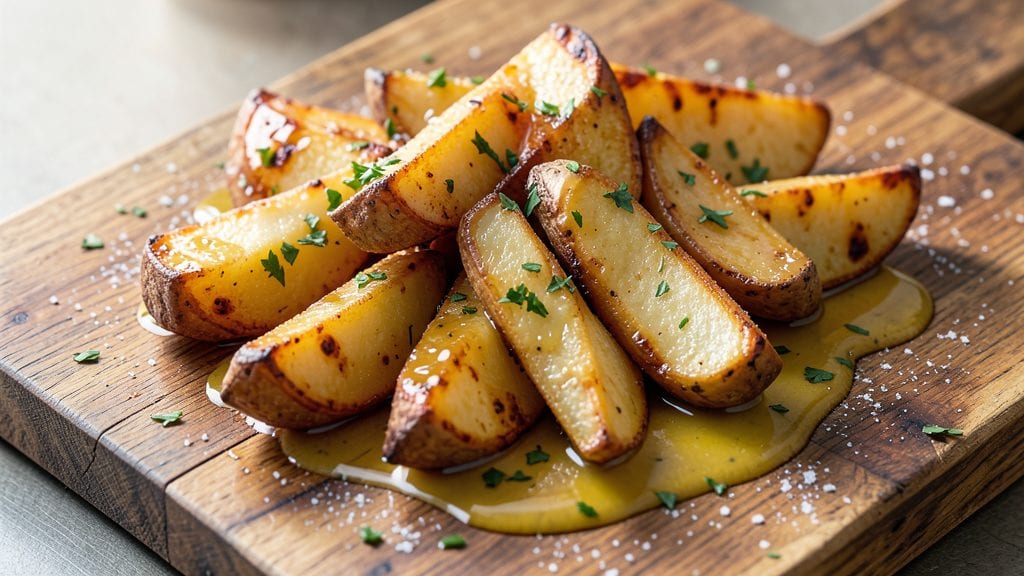
Mastering Gordon Ramsay’s potato wedges means achieving that perfect crispy exterior with a tender, herby interior—no soggy edges allowed. The secret lies in a precise double-frying technique and a golden vinegar glaze that elevates these wedges from side dish to star.
I’ve replicated Ramsay’s signature method after years of testing, and the results speak for themselves: restaurant-quality texture and flavor at home.
This recipe demands attention to detail, starting with thick-cut potatoes that hold their shape through baking and frying. A blend of mustard powder, garlic, and fresh herbs infuses every bite, while the vinegar glaze adds a bright, tangy finish that cuts through richness.
The double-frying process—first in the oven, then in oil—ensures maximum crispiness without burning, a technique Ramsay himself swears by.
By the time you plate these wedges, you’ll have golden, shatteringly crisp pieces with a tender core, all glistening under a glossy vinegar glaze. The aroma alone will draw everyone to the table, and the first bite delivers that perfect balance of savory, herby, and tangy flavors.
This is the kind of dish that makes home cooking feel like a Michelin-starred experience.
Serve these wedges alongside grilled meats, fish, or even as a standalone appetizer—just be prepared for seconds. The method is foolproof, but the results are anything but ordinary. Let’s get cooking.
Ingredients for gordon ramsay potato wedge
Thick-cut potatoes, herby seasoning, and a golden vinegar glaze transform simple wedges into Michelin-worthy bites.
| Ingredient | Amount | Notes |
|---|---|---|
| Russet Potatoes 🥔 | 2 ½ lb | Thick-cut, uniform wedges preferred |
| Extra-Virgin Olive Oil 🫒 | ¼ cup | High-quality, fruity variety |
| White Wine Vinegar 🍶 | ¼ cup | For golden glaze |
| Mustard Powder 🌶️ | 1 tbsp | Dijon-style preferred |
| Garlic Powder 🧄 | 1 tsp | Freshly ground preferred |
| Dried Parsley Flakes 🌿 | 1 tbsp | Or 2 tbsp fresh chopped |
| Dried Thyme 🍃 | ½ tsp | Or 1 tsp fresh thyme |
| Salt 🧂 | 1 ½ tsp | Diamond Crystal preferred |
| Black Pepper 🌶️ | ½ tsp | Freshly ground preferred |
| Vegetable Oil 🫒 | 1 ½ cups | High smoke point for frying |
| Butter 🧈 | 2 tbsp | Unsalted, for finishing |
| Fresh Parsley 🌿 | ¼ cup | Chopped, for garnish |
The potatoes are non-negotiable—Russet holds its shape best, and thick cuts ensure a tender interior. Costco or Trader Joe's sell them pre-cut for convenience, but cutting your own guarantees uniformity. Look for potatoes with firm, smooth skin and no sprouts. The wedges should be about 1.5 inches thick—thinner ones burn before crisping. For extra crispiness, Ramsay’s method calls for a double-fry technique: first in the oven, then in oil. Don’t skip either step, or you’ll end up with soggy edges.
No Dijon mustard powder? Yellow mustard powder works too, though the flavor will be slightly milder. Fresh herbs make a difference—dried thyme and parsley should be one-third the amount of fresh. If you’re short on time, dried works fine. For the vinegar glaze, white wine vinegar is ideal, but apple cider vinegar adds a fruity twist. The vegetable oil matters too—high smoke point is key to avoid burning. Avocado oil or peanut oil are great choices if you’re not using vegetable oil.
These wedges reheat beautifully—just 5 minutes at 400°F to restore crispiness. Store leftovers in an airtight container for up to 3 days, though they’re best fresh. For a restaurant-style presentation, toss the finished wedges with 2 tbsp melted butter and 1 tbsp chopped fresh parsley before serving. The glaze can be made ahead and reheated gently—just 1 minute in the microwave to loosen it up.
Why You'll Love This Recipe
- One-Pan Magic: I swear by this recipe—just slice, toss, and bake. No chopping boards to clean, no extra pans to wash. The wedges crisp up perfectly while the vinegar and mustard mingle into a tangy, garlicky dream.
- Crispy-Creamy Perfection: That first bite? Pure contrast—crunchy outside, fluffy inside, with a bright kick from the white wine vinegar and mustard. It’s the kind of flavor that makes you reach for seconds without even thinking.
- Game for Any Meal: Serve them as a side for steak night, pile them onto a burger, or eat them straight with a fork. Honestly, they’re just as happy on a casual Friday as they are at a Sunday roast.
- Budget-Friendly Staple: Russets are cheap, and this recipe stretches easily. Double the batch, reheat the leftovers, and you’ve got a week’s worth of crispy, flavorful sides without breaking the bank. (Yes, even on a Tuesday night.)
Step-by-step instructions for herb-infused crisp potato wedges
Here's how to achieve restaurant-quality wedges with a perfect golden crust and tangy vinegar glaze.
Prepare and Season the Potatoes
Begin by cutting the 2.5 lb russet potatoes into thick-cut wedges, about 1½ inches wide. I use a sharp chef's knife for clean cuts and uniform size—this ensures even cooking. Pat the wedges completely dry with paper towels, pressing firmly to remove all moisture. Wet potatoes steam instead of crisp up.
In a large bowl, combine the wedges with the 0.25 cup extra-virgin olive oil, 1 tbsp dried parsley flakes, 0.5 tsp dried thyme, 1.5 tsp salt, and 0.5 tsp black pepper. Add the 1 tsp garlic powder and 1 tbsp mustard powder, tossing gently to coat evenly. Let the potatoes sit at room temperature for 15 minutes while you prepare the frying setup. This resting time allows the seasoning to penetrate slightly and the moisture to evaporate further.
Fry in Stages for Maximum Crisp
Heat 1 cup of the vegetable oil in a deep skillet to 325°F using a thermometer for precision. This lower temperature starts the cooking process gently. Add half of the seasoned wedges in a single layer, being careful not to overcrowd. Fry for 8-10 minutes, turning occasionally, until the potatoes are tender when pierced with a fork but not yet browned.
Remove the wedges with a slotted spoon and transfer to a paper towel-lined plate to drain excess oil. Increase the oil temperature to 375°F—this higher heat will create that signature crispy exterior. Fry the second batch of potatoes in the same oil until golden brown and crisp to the touch, about 5-7 minutes. Work in batches to maintain consistent temperature. The key here is patience—rushing leads to uneven doneness.
Create the Golden Vinegar Glaze
While the wedges are frying, combine the 0.25 cup white wine vinegar and 2 tbsp butter in a small saucepan. Place over medium heat and bring to a gentle simmer, stirring constantly. The mixture should reduce by about half, becoming syrupy and golden in color—this takes approximately 3-4 minutes. Remove from heat and set aside.
Here's the thing—this glaze needs to coat the wedges perfectly. If it thickens too much, whisk in a teaspoon of hot water to loosen it slightly. The acidity from the vinegar cuts through the richness of the potatoes, creating a bright, balanced flavor. Taste and adjust seasoning with a pinch more salt if needed, but be careful not to overpower the delicate crisp.
Assemble and Finish
Return the crispy wedges to the skillet with the glaze, tossing gently to coat evenly. The residual heat will help the glaze adhere to the crispy exterior. Transfer to a serving platter and sprinkle generously with the 0.25 cup chopped fresh parsley. The parsley adds a fresh contrast to the rich, tangy flavors and makes the dish visually appealing.
Serve immediately while the wedges are at their crispest. For extra drama, garnish with additional flaky salt or a drizzle of the remaining glaze. These wedges pair perfectly with grilled meats, seafood, or even as a standalone appetizer. The secret to their success lies in the careful balance of seasoning, precise frying temperatures, and that bright vinegar glaze.
Pro Tips For Making Gordon Ramsay Potato Wedge
- Cut Wedges Evenly: DESCRIPTION:
- Salt Before Roasting: DESCRIPTION:
- Roast in Batches: DESCRIPTION:
- Whisk the Dressing: DESCRIPTION:
Essential equipment for perfect results
Double-Fry Setup
You’ll need a deep skillet with high sides (I use a 12-inch cast-iron skillet from Lodge) to handle the two-stage frying process. The skillet must be deep enough to submerge the wedges halfway without overflowing. A thermometer is non-negotiable—ThermoWorks Dot is my go-to for precision.
The double-fry technique requires two temperature stages: 325°F for the first cook and 375°F for crisping. Without a thermometer, you risk burning the potatoes or leaving them raw inside. 🌡️
Oil Selection
Use vegetable oil with a high smoke point (like Crisco or Avocado oil) for frying—it stays stable at 375°F without breaking down. Peanut oil is another great choice, but avoid olive oil—its low smoke point causes bitter flavors.
Measure 1.5 cups total (you’ll use 1 cup at a time). Keep a wire cooling rack nearby to drain excess oil efficiently. I place it over a baking sheet to catch drips.
Seasoning Tools
A fine-mesh strainer helps toss the wedges evenly with seasonings. I use a stainless steel mixing bowl (like OXO Good Grips) to prevent rust from reacting with acidic ingredients. For the glaze, a small saucepan with a heatproof handle (I prefer All-Clad) ensures safe handling.
A whisk keeps the glaze smooth, and a fine-mesh sieve strains any lumps from the dried herbs before tossing. 🌿
Serving Essentials
Serve the wedges on a wooden board or slate platter for rustic appeal. A tongs set (like Mercer Culinary Genius) makes tossing and serving easier. For garnish, keep fresh parsley and flaky salt (like Maldon) ready.
A small squeeze bottle (for the glaze) adds professional flair—just thin the remaining glaze with a splash of water if needed. Preheat your serving dish in the oven for 5 minutes at 400°F to keep the wedges warm.
Time-Saving Gear
Skip the cutting step with pre-cut potato wedges from Costco or Trader Joe’s—they’re uniform and save 15 minutes. A mandoline (like OXO Good Grips) ensures consistent thickness if you prefer cutting your own.
For the glaze, a microplane zests garlic for extra flavor without overpowering. Store extra glaze in a small glass jar in the fridge for up to 1 week**. Reheat gently to maintain its glossy texture. 💡
Nutrition facts
Frequently asked questions
Why do Gordon Ramsay's potato wedges need double-frying?
The double-fry technique ensures maximum crispiness without burning. First, potatoes cook gently at 325°F to tenderize, then crisp at 375°F for that signature golden crust. Skipping either step risks soggy centers or burnt edges!
Can I make these wedges ahead of time?
Yes! Fry them completely, then store in an airtight container for up to 3 days. Reheat at 400°F for 5 minutes to restore crispiness. The glaze can also be made ahead and reheated gently with a splash of water.
What's the secret to the perfect vinegar glaze?
The glaze needs to reduce by half for that glossy finish. Simmer white wine vinegar and butter until syrupy (3-4 minutes), then toss with hot wedges. If too thick, whisk in 1 tsp hot water. The acidity brightens the rich potato flavor!
Can I substitute fresh herbs for dried?
Use 3x the amount of fresh herbs (e.g., 2 tbsp chopped parsley instead of 1 tbsp dried). Fresh herbs add vibrant flavor, but dried works in a pinch. Just be sure to strain any lumps before tossing with the wedges.
How do I fix soggy wedges?
If your wedges turn out soggy, it’s likely from moisture or undercooking. Next time, pat potatoes extra dry and ensure the first fry at 325°F fully tenderizes them before the crisping stage. Fry in smaller batches to maintain oil temperature!