
Side Dishes
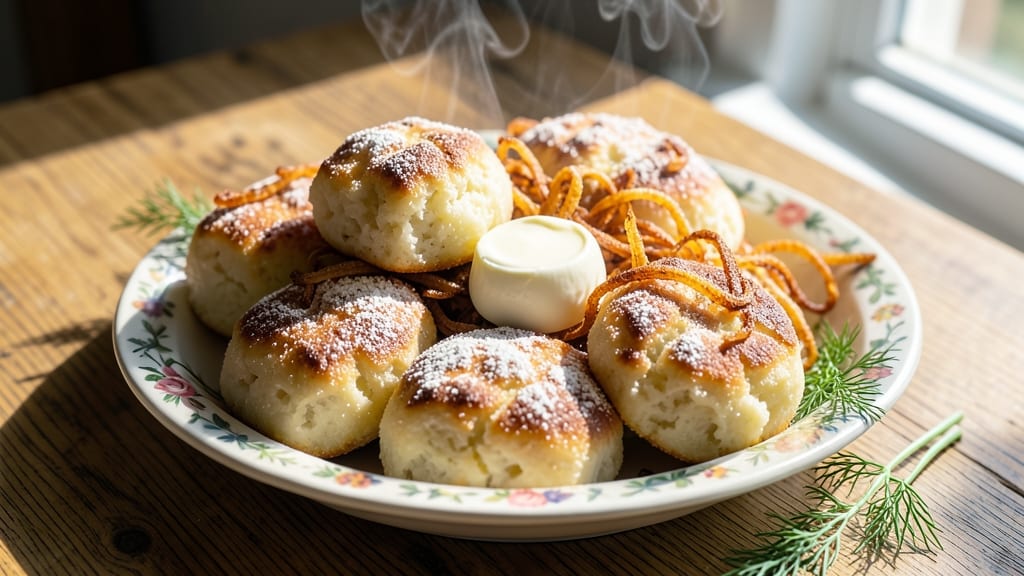
Polish potato dumplings bring comfort food to life with their pillowy texture and simple ingredients—no fancy techniques required. These classic kopytka or placki ziemniaczane transform humble potatoes into a dish that feels like a warm hug on any table.
The secret lies in the dough's lightness, achieved through precise mixing and gentle handling, ensuring they float like clouds rather than sink.
What makes this recipe truly special is its cultural authenticity and adaptability. Born from Polish tradition, these dumplings pair beautifully with fried onions, sauerkraut, or mushroom gravy, but they're also versatile enough for sweet variations like cinnamon-sugar toppings.
The process is straightforward: grate potatoes, mix with flour and eggs, shape carefully, and boil until they rise to the surface.
By the time you serve these golden, fluffy dumplings, you'll have a dish that's both nostalgic and impressive—perfect for family dinners or special occasions. The aroma alone will have everyone gathering around the table, eager for a taste of this Polish classic.
Let's get started on creating your own batch of these comforting clouds.
These dumplings are a blank canvas for tradition or creativity—whether you stick to the classic savory version or experiment with sweet twists. The key is patience in shaping and boiling, which guarantees that tender, melt-in-your-mouth texture we all love. Ready to master this timeless recipe?
Ingredients for potato dumplings polish
Simple ingredients transform into cloud-like Polish dumplings with just patience and love.
| Ingredient | Amount | Notes |
|---|---|---|
| Russet Potatoes 🥔 | 2 ½ lb | Cold, peeled, finely grated |
| All-Purpose Flour 🌾 | 1 ½ cups | Sifted for light texture |
| Large Eggs 🥚 | 2 whole | Room temperature preferred |
| Salt 🧂 | 1 ½ tsp | Diamond Crystal kosher preferred |
| Unsalted Butter 🧈 | ¼ cup | Cold, cubed for shaping |
| Onion Powder 🧅 | ½ tsp | For subtle depth |
| Black Pepper 🌶️ | ¼ tsp | Freshly ground preferred |
| Fresh Dill 🌿 | ¼ cup | Chopped, optional garnish |
| Water 💧 | 1 ½ cups | For boiling, room temp |
| Fried Onions 🧅 | ½ cup | Store-bought or homemade |
| Sour Cream 🥛 | ½ cup | Full-fat for richness |
| Mushroom Gravy 🍄 | 1 ½ cups | Classic pairing |
The potatoes are everything here. Russet potatoes are ideal—their dry, starchy flesh grates perfectly and holds up to boiling. Grab the pre-peeled bags from Trader Joe's for convenience, or peel and grate yourself for maximum freshness. Keep them cold until mixing to prevent browning. The flour matters too—King Arthur all-purpose or Gold Medal work best, but any sifted flour will do. Don't skip sifting; it keeps those dumplings light as air. For the butter, Land O'Lakes unsalted is my go-to—cold cubes melt just enough to bind without greasing your hands.
No fresh dill? Dried dill at half the amount works in a pinch, though it lacks that bright freshness. Short on time? Swap the fried onions for caramelized shallots—same sweet crunch, different flavor profile. The gravy can be store-bought (just heat it through), but homemade mushroom gravy elevates everything. For the eggs, room temperature is key—they'll mix more smoothly into the potato dough. If your dumplings feel too wet, add a splash more flour; too dry? A teaspoon of water or milk helps. The secret to perfect shaping? Keep your hands wet—it prevents sticking and makes rolling easier.
These dumplings reheat beautifully—just pop them in a 350°F oven for 10-15 minutes until golden. Store leftovers in the fridge for 3-4 days, covered with a damp towel to keep them soft. For longer storage, freeze shaped dumplings on a tray before transferring to a bag—they'll keep for up to 3 months. Pro tip: Double the batch and freeze half. They're perfect for lazy weeknights—just boil from frozen, adding 2-3 extra minutes. The aroma alone will have your whole house smelling like Polish grandma's kitchen.
Why You'll Love This Recipe
- No-Knead Magic: I swear by this—just mash the Russets, mix in flour and egg, and roll. No food processor, no fuss. My hands are always too busy for fancy gadgets, and this works every time.
- Butter-Kissed Crisp: That golden crust? Pure reward. The butter melts into the fluffy potato center, and the salt? It’s the kind of salty that makes you crave another bite before the first one’s even gone.
- Weeknight Crowd-Pleaser: Serve them with gravy for dinner, fry up extras for breakfast hash, or pack a few for lunch. My in-laws think they’re fancy; my kids just eat them straight from the pan.
- Pantry Staple Power: Five ingredients, all cheap and lasting. I’ve made these with potatoes that were about to sprout, and they still turned out rich. Leftovers? Freeze them—no one complains when they thaw.
Step-by-step instructions for Polish potato dumplings
Here's how to transform simple ingredients into pillowy, melt-in-your-mouth dumplings that'll impress everyone at your table.
Prepare the Potato Base
Start by grating the 2.5 lb russet potatoes using a box grater or food processor. I like to use the finest setting to get an even, smooth texture. Place the grated potatoes in a clean kitchen towel and squeeze out every last drop of liquid—this step is crucial for preventing gummy dumplings. The drier the potato mixture, the lighter your finished dumplings will be.
Transfer the squeezed potatoes to a large mixing bowl. Here's where the magic begins: add the 1.5 cups all-purpose flour, 1.5 tsp salt, 0.5 tsp onion powder, and 0.25 tsp black pepper. Mix everything together with your hands until you have a smooth, cohesive dough. The mixture should be soft but not sticky—if it feels too dry, add a splash of water (about 1 tablespoon at a time) until it comes together just right. This dough is the foundation of those signature fluffy dumplings.
Incorporate Eggs and Shape the Dumplings
In a separate bowl, lightly beat the 2 whole large eggs until just combined. Add them to the potato mixture along with the 0.25 cup unsalted butter (cold, cubed) and mix thoroughly. The butter should melt slightly from the warmth of your hands, creating a tender, moist texture. Fold in the 0.25 cup fresh dill at this stage—this is when the herbs will distribute evenly throughout the dough.
Now for the shaping. Divide the dough into 4 equal portions (about 1 cup each) and roll each portion into a log about 12 inches long. Here's the trick: use a sharp knife to slice each log into ½-inch thick rounds. I like to keep the slices close together on the cutting board so they don't dry out. You should end up with about 24 dumpling rounds—enough for a generous serving of 4. Don't worry if they're not perfect; these dumplings are forgiving.
Boil to Perfection
Bring a large pot of 1.5 cups water to a gentle boil over medium heat. The water should be hot but not rolling—you want a steady simmer that won't cause the dumplings to rise too quickly. Carefully add the dumpling rounds in a single layer, being careful not to overcrowd the pot. If needed, work in batches to avoid lowering the water temperature too much.
Let the dumplings cook undisturbed for 5-6 minutes. Here's what you're looking for: they should float to the surface and develop a delicate, translucent appearance around the edges. This is your signal that they're perfectly cooked through. Use a slotted spoon to transfer them to a paper towel-lined plate to drain briefly—this step prevents them from becoming soggy when you add the toppings.
Assemble and Serve
Return the pot of water to a simmer (you'll use it again). In a small bowl, mix together the 0.5 cup fried onions and 0.5 cup sour cream until well combined. This creamy topping is what makes these dumplings truly special—it adds a rich contrast to the light, fluffy texture.
To serve, spoon 1.5 cups mushroom gravy into each serving dish. Arrange 6 dumplings on top of the gravy, then drizzle with the fried onion and sour cream mixture. The gravy should be warm enough to gently melt the topping into a luscious sauce. Garnish with additional fresh dill if desired, and serve immediately while the dumplings are still warm and tender.
Pro Tips For Making Potato Dumplings Polish
- BOIL POTATOES UNTIL TENDER: Russets stay dense if you overcook them, but mushy potatoes ruin the dumpling texture. Test with a fork—it should slide in like butter, not fight you. Drain immediately and let them steam-dry for 2 minutes; cold potatoes make the dough sticky and hard to handle.
- USE COLD BUTTER FOR DOUGH: Cut that unsalted butter into cubes and chill it first—this prevents the dough from turning greasy. Work fast once mixed, but don’t rush rolling; cold butter gives flaky layers, and warm butter just makes sad, dense dumplings. (Yes, even if you’re impatient like me.)
- STEAM DON’T BOIL THE DUMPLINGS: Polish potato dumplings need gentle heat to cook through without falling apart. Start with a rolling boil, then lower to a simmer and cover tightly—like a sauna, not a pressure cooker. Poking holes in the lid releases steam and turns them gummy. (Your future self will thank you.)
- SALT THE WATER LIKE THE SEA: The dough needs salt, but the boiling water needs more—think 1.5 tablespoons per quart. Under-salted water makes the potatoes bland, and you can’t fix it later. Taste a raw potato after boiling; if it’s insipid, add another pinch of salt to the pot. (No, the recipe won’t say this.)
Common mistakes when making perfect results
Overmixing the Dough
When you mix the potato dough too vigorously, you risk developing a tough, dense texture instead of the signature fluffy clouds. Polish potato dumplings rely on a delicate balance of ingredients, and overworking the dough introduces too much gluten.
I recommend mixing just until the ingredients come together—about 30-45 seconds by hand. The dough should be soft and slightly crumbly, not smooth like pie dough. If it feels sticky, add just 1 tablespoon of flour at a time until it reaches the right consistency. 🌟
Skipping the Squeeze
One of the most common mistakes is not squeezing enough moisture from the grated potatoes. The liquid in raw potatoes can turn your dumplings into gummy, dense masses instead of light, airy clouds. Use a clean kitchen towel or cheesecloth to wring out every last drop before mixing.
I like to press the potatoes firmly between the towel for about 1-2 minutes to ensure maximum dryness. This step is non-negotiable for perfect texture.
Uneven Shaping
Inconsistent thickness in your dumpling rounds leads to uneven cooking—some pieces may be undercooked while others turn mushy. Aim for slices that are ½-inch thick throughout, using a sharp knife for clean cuts. I find it helpful to roll the dough logs into even cylinders first, then slice them uniformly.
Keep the rounds close together on the cutting board to prevent them from drying out while you shape the rest. Uneven pieces won't float properly during boiling, which is your cue for perfect doneness.
Boiling Too Vigorously
The water temperature plays a crucial role in how your dumplings cook. A rolling boil will cause them to rise too quickly and potentially burst or become dense. Instead, maintain a gentle simmer—you should see small bubbles breaking the surface but not a vigorous boil.
I like to start with medium heat and adjust to maintain this steady simmer. The dumplings should float to the surface in 5-6 minutes without any agitation. If they sink, they need more time—but never let them boil vigorously.
Overcrowding the Pot
Stuffing too many dumplings into the pot at once lowers the water temperature and causes uneven cooking. Work in batches if needed, keeping the water at a steady simmer between additions.
A good rule of thumb is to leave about 1 inch of space between each dumpling round when adding them to the pot. This ensures they cook evenly and develop that signature translucent edge. Overcrowding is the fastest way to turn your beautiful dumplings into a sad, soggy mess. ⚡
Not Resting After Boiling
Freshly boiled dumplings need a brief rest before serving to redistribute their juices and firm up slightly. Transfer them to a paper towel-lined plate and let them sit for 2-3 minutes before adding toppings.
This resting period prevents them from becoming mushy when the warm gravy or sour cream mixture is added. I also find that resting helps them hold their shape better when plating. Skipping this step often leads to dumplings that collapse under their toppings.
Nutrition facts
Frequently asked questions
Why do Polish potato dumplings need to float before they're done?
The floating signal means the dumplings are perfectly cooked through and have reached their ideal light, airy texture. When they float, the starches inside have fully gelatinized, creating that signature cloud-like consistency. This happens at about 5-6 minutes of gentle simmering—never let them boil vigorously or they'll turn dense.
Can I make these dumplings ahead of time?
Shape the dumplings and store them in an airtight container in the fridge for up to 2 days before boiling. For longer storage, freeze shaped dumplings on a tray before transferring to a bag—they'll keep for 3 months. Just add 2-3 extra minutes to boiling time if frozen. The texture stays perfect when reheated gently.
What's the secret to keeping them from falling apart?
Three things: 1) Don't overmix the dough (just 30-45 seconds by hand), 2) shape them uniformly (½-inch thick slices), and 3) let them rest 2-3 minutes after boiling before adding toppings. The resting time lets the starches set properly so they hold their shape under gravy or sour cream.
Are there sweet versions of these dumplings?
Yes! For sweet dumplings, replace the onion powder with 1 tsp cinnamon and ½ tsp nutmeg, then top with melted butter and cinnamon sugar instead of gravy. You can also add ½ cup grated apple or chopped raisins to the dough. These make a fantastic dessert with vanilla ice cream or whipped cream.
What if my dumplings turn out dense instead of fluffy?
This usually means either too much liquid in the potatoes (skip the squeezing step) or overmixing the dough (which develops gluten). For next time, squeeze the grated potatoes thoroughly and mix just until combined. Also ensure you're using a gentle simmer—not a rolling boil—when cooking. The water should be hot but calm, like a lazy river.