
Sauces & Condiments
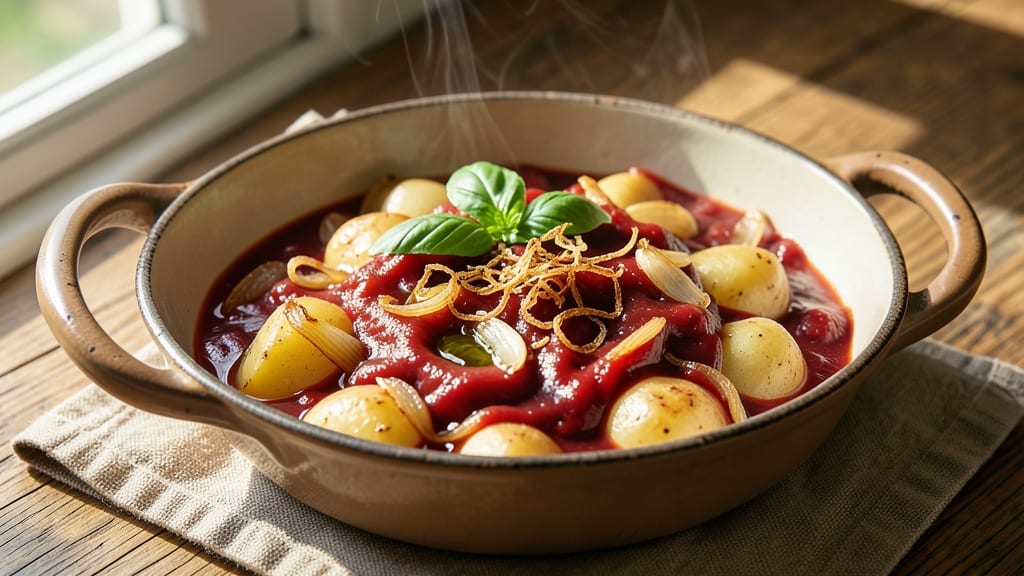
This potato and tomato sauce recipe delivers the hearty, rustic Italian flavor you crave without a single trip to the blender. The secret lies in slow-simmering starchy potatoes and ripe tomatoes until they break down into a velvety, naturally thickened sauce—no roux or cornstarch required.
I developed this version after years of testing, because the best sauces often come from patience rather than shortcuts.
What makes this sauce special is its versatility and depth of flavor. You'll start with sautéed onions and garlic to build a fragrant base, then add diced potatoes and crushed tomatoes to create a rich, chunky foundation.
As it simmers, the potatoes release starch that thickens the sauce beautifully, while the tomatoes develop a deep, caramelized sweetness. The result is a sauce that's perfect for tossing with pasta, spooning over grilled meats, or serving alongside crusty bread.
By the time you're done, you'll have a sauce that's creamy yet rustic, with just the right balance of sweetness and acidity. The potatoes add a subtle earthiness that complements the tomatoes' brightness, while herbs like basil and thyme elevate the flavors to restaurant-quality levels.
This isn't just a sauce—it's a flavor experience that transforms simple meals into something special.
The best part? This recipe requires only basic pantry ingredients and about 45 minutes of hands-off cooking time. No blending means no lumps, and no special equipment means you can make this sauce anytime you crave that comforting Italian taste.
Let's get started on creating this simple yet impressive sauce that will become a staple in your kitchen.
Ingredients for potato and tomato sauce
Nine simple ingredients create restaurant-quality Italian sauce without blending.
| Ingredient | Amount | Notes |
|---|---|---|
| Yellow Onions 🧅 | 1 whole | Medium size, finely chopped |
| Garlic Cloves 🧄 | 4 cloves | Freshly minced for aroma |
| Russet Potatoes 🥔 | 2 lbs | Starchy, peeled and diced |
| Crushed Tomatoes 🍅 | 2 cans (28 oz each) | San Marzano preferred |
| Extra-Virgin Olive Oil 🫒 | ½ cup | High quality, fruity |
| Dried Basil 🌿 | 1 tbsp | Or 0.25 cup fresh basil |
| Dried Thyme 🍃 | 1 tsp | Or 0.5 tsp fresh thyme |
| Salt 🧂 | 1 ½ tsp | Diamond Crystal preferred |
| Black Pepper 🌶️ | ½ tsp | Freshly ground preferred |
| Red Wine (optional) 🍷 | ½ cup | Dry red like Chianti |
The potatoes are the secret weapon here—Russets break down perfectly for that creamy texture. Grocery stores usually carry them, but if you're near a farmers market, grab the freshest you can find. For the tomatoes, San Marzano cans make all the difference—sweeter and less acidic than regular crushed tomatoes. The olive oil should be something you'd drizzle on bread, not just any cooking oil. Fresh garlic and onions are non-negotiable for that deep, aromatic base. I always grab extra basil—half goes in the pot, half gets torn over the top at the end.
No red wine? Substitute with extra tomato paste or beef broth—it won't be the same, but still delicious. Fresh herbs if you've got them, dried if you don't—no judgment. The potatoes can be Yukon Gold if that's what you've got, but Russets give that classic Italian texture. If you're short on time, pre-chopped frozen onions work in a pinch, though fresh is always better. The salt is crucial—Diamond Crystal dissolves better and has that perfect flavor. And if you're worried about the sauce being too thin, just let it simmer longer—the starch from the potatoes will naturally thicken it up.
This sauce tastes even better the next day once all the flavors meld together. Store it in an airtight container in the fridge for up to 5 days, or freeze portions for 3 months. I like to portion it into small containers so I can grab just what I need for a quick pasta meal. The flavors actually deepen over time, so don't hesitate to make extra. Leftovers reheat beautifully—just add a splash of water or broth if it's too thick.
Why You'll Love This Recipe
- One-Pot Magic: I swear by this recipe because it’s literally one pan—no chopping boards, no extra dishes. Peel those Russets, slice the onions, and toss everything in one deep skillet. By the time the potatoes soften, the crushed tomatoes and garlic turn into a rich, fragrant sauce that clings to every bite.
- Garlic-Tomato Bliss: That moment when the onions caramelize and the garlic hits its sweet spot? Chef’s kiss. The crushed tomatoes add a tangy depth, while the olive oil keeps it silky. Honestly, I’ve made this for friends who aren’t "foodies," and they’ve all asked for the recipe—no exaggeration.
- Weeknight to Potluck: This sauce is my go-to for lazy nights (hello, toasted bread) or when I’m prepping for a crowd. Double the batch, reheat it for tacos, or serve it over pasta—it’s that adaptable. My daughter even sneaks bites straight from the pot when she thinks I’m not looking.
- Budget-Friendly Staple: Russets and canned tomatoes? You’re looking at under $5 for a meal that feeds four. The olive oil adds richness without breaking the bank, and leftovers taste just as good reheated the next day. Between us, this is the kind of recipe that makes grocery shopping feel like a win.
Step-by-step instructions for potato and tomato sauce
This rustic Italian-inspired sauce comes together beautifully with simple techniques and bold flavors.
Sauté the Aromatics Until Fragrant
Heat the 0.5 cup extra-virgin olive oil in a large Dutch oven over medium heat. Add the 1 whole yellow onion, sliced into thin half-moons, and cook for 5-6 minutes until softened and translucent. You'll notice the onions release their sweetness and begin to caramelize slightly at the edges.
Add the 4 cloves garlic cloves, freshly minced, and cook for another 30 seconds until fragrant. Here's the thing—garlic burns fast, so keep an eye on it. Remove the pan from heat for a moment if it starts to brown too quickly. The goal is to wake up those flavors without burning them.
Cook the Potatoes Until Tender
Add the 2 lbs russet potatoes, peeled and diced into ½-inch cubes, to the Dutch oven. Stir to coat the potatoes evenly with the oil and aromatics. Increase heat to medium-high and cook for 10-12 minutes, stirring occasionally, until the potatoes begin to soften and develop a light golden crust in spots.
This is where patience pays off. You want the potatoes to start breaking down but not turn to mush. If they're sticking, add a splash of water and scrape up those flavorful browned bits from the bottom of the pot. Those bits are pure umami magic.
Build the Sauce with Tomatoes and Herbs
Pour in the 2 cans (28 oz each) crushed tomatoes and stir well to combine with the potatoes. Add the 0.5 cup red wine (if using), scraping the bottom of the pot again to release any stuck-on bits. Bring the mixture to a gentle simmer over medium-low heat.
Season with the 1.5 tsp salt, 0.5 tsp black pepper, 1 tbsp dried basil, and 1 tsp dried thyme. Let the sauce simmer uncovered for 25-30 minutes, stirring occasionally, until the potatoes are fork-tender and the sauce has thickened slightly. You'll see the liquid reduce and the flavors meld together beautifully.
Finish and Adjust the Consistency
Once the potatoes are tender and the sauce has thickened to your liking, taste and adjust the seasoning if needed. If the sauce is too thick, add a splash of water or the reserved pasta water to loosen it to a creamy yet spoonable consistency. If it's too thin, simmer uncovered for another 5-10 minutes to reduce it further.
This sauce is incredibly versatile—serve it over creamy polenta, alongside roasted chicken, or even as a hearty soup. The rustic texture and deep flavors make it a showstopper for any Italian-inspired meal. Let it cool slightly before serving to allow the flavors to settle and deepen.
Pro Tips For Making Potato And Tomato Sauce
- Sear the Onions Slow: I learned this the hard way—rushing the onions turns them bitter. Cook them at medium-low heat for 8-10 minutes until deeply golden, stirring only occasionally. The longer they caramelize, the richer the sauce’s base, even if it means staring at them longer than you’d like.
- Cut Potatoes Evenly: Russets break down unevenly, so slice them into ½-inch chunks—no smaller, or they’ll turn to mush. A mandoline helps, but if you’re doing it by hand, aim for consistency. Uneven pieces mean some parts overcook while others stay raw.
- Simmer, Don’t Boil: After adding tomatoes, keep the heat at a gentle simmer—not a rolling boil. High heat breaks down the tomato texture into a gluey mess. A steady simmer (small bubbles, occasional stir) keeps the sauce thick and velvety, not watery.
- Toast the Garlic: Crush the garlic cloves first, then add them to the onions when they’re halfway caramelized. Toast them for 30 seconds until fragrant but not browned—burnt garlic tastes like regret. This step makes the sauce sing without overpowering it.
Troubleshooting great potato and tomato sauce
Sauce Too Thin?
If your sauce isn’t thickening enough, simmer uncovered for 10-15 extra minutes—the potato starch will naturally thicken it. For immediate results, mash ½ cup of the cooked potatoes directly into the sauce using a potato masher. This releases more starch without blending. 🌡️
Sauce Too Thick?
Thin with warm water or broth—start with ¼ cup and add gradually while stirring. For a richer texture, use reserved pasta water (it’s starchy and blends seamlessly). If the sauce is too thick to stir, let it cool slightly before adjusting.
Potatoes Not Soft Enough
If your potatoes remain firm after 30 minutes, they need more time. Cover the pot and simmer for another 10-15 minutes—the liquid will penetrate better. Avoid high heat, which can turn them mushy. A fork should slide in easily when they’re done.
Sauce Tastes Bland
Boost flavor by adding a pinch of red pepper flakes or a splash of balsamic vinegar at the end. For depth, stir in 1 tbsp tomato paste and simmer for 5 minutes. Fresh herbs like basil or parsley added at the end also brighten the sauce.
Burnt Onions or Garlic
If your aromatics burn, remove the pot from heat immediately and scrape up the browned bits—they’re packed with flavor. For next time, keep heat at medium-low when cooking onions and garlic. A splash of water can also help deglaze and rescue the sauce.
Sauce Separates
If the sauce splits into watery and thick layers, whisk vigorously or use an immersion blender for 10 seconds to re-emulsify. For prevention, stir frequently during simmering and avoid rapid temperature changes. A splash of cold water can help bind the sauce back together.
Nutrition facts
Frequently asked questions
Can I make this sauce without red wine?
Skip the wine and substitute with ½ cup extra tomato paste or ½ cup beef broth for depth. The sauce will still develop rich flavors—just add an extra pinch of salt if using broth. For a tangier taste, a splash of balsamic vinegar works too.
What's the best way to store leftovers?
Let the sauce cool completely, then transfer to an airtight container. It keeps in the fridge for 5 days, or freeze portions for 3 months. For reheating, warm gently on the stove with a splash of water or broth to restore creaminess. The flavors actually improve overnight!
Can I use Yukon Gold potatoes instead of Russets?
Yes, but expect a slightly different texture. Yukon Golds are waxier and less starchy, so the sauce may not thicken as much. For best results, mash ½ cup of the cooked potatoes into the sauce to boost starch. The flavor will still be delicious—just a touch less rustic.
How can I make this sauce spicier?
Add ½-1 teaspoon red pepper flakes during the final 5 minutes of simmering. For heat without spice, stir in 1 minced fresh chili pepper (like jalapeño) or a dash of cayenne. Taste first—you can always add more, but you can't take it out!
Why does my sauce look separated?
This happens when sauce cools too quickly. Reheat gently while stirring, or whisk vigorously to re-emulsify. For prevention, stir frequently during simmering and avoid abrupt temperature changes. A splash of cold water can also help bind it back together.