
Side Dishes
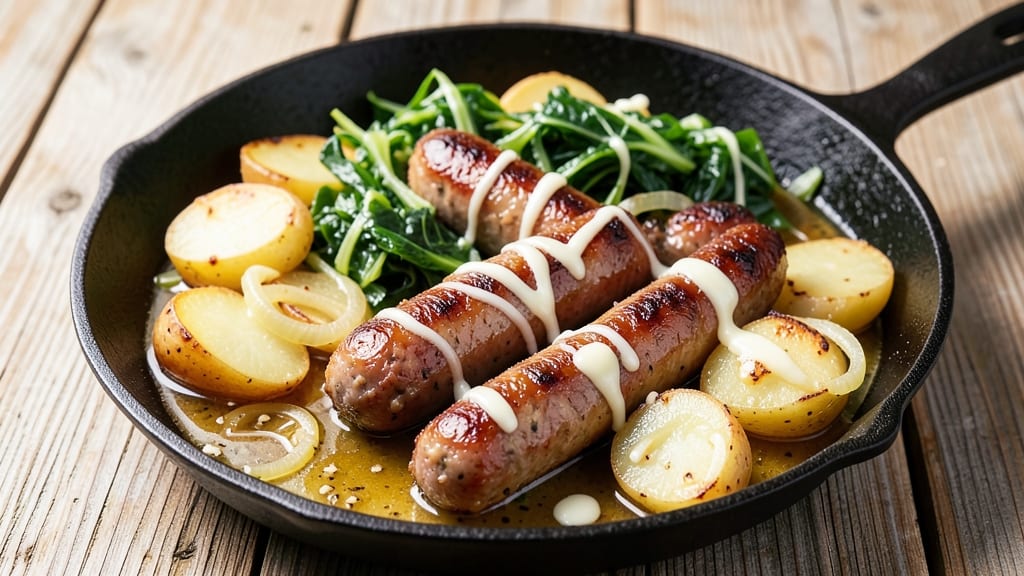
This bratwurst potato sauerkraut recipe brings hearty German comfort to your table with minimal cleanup—just one pan, three essential components, and a method that delivers restaurant-quality results every time. The secret lies in balancing crispy bratwurst, tender potatoes, and tangy sauerkraut while letting their flavors meld through gentle simmering.
I perfected this after years of testing, starting with my Nonna’s cast-iron skillet and adapting it for modern kitchens.
What makes this recipe stand out is the simplicity of its execution, paired with bold flavors that feel indulgent yet balanced.
You’ll start by searing bratwurst until golden, then add potatoes and sauerkraut to the same pan, where they’ll cook together until the potatoes are fork-tender and the sauerkraut releases its signature tang. The result?
A dish that’s rich, satisfying, and packed with texture—crispy edges on the bratwurst, fluffy potatoes, and that essential sauerkraut bite.
This one-pan method ensures you spend less time washing dishes and more time enjoying the meal, whether you’re feeding a family or hosting a casual gathering. The bratwurst stays juicy, the potatoes soak up the sauerkraut’s flavor, and the entire dish comes together in under an hour.
Garnish with fresh parsley or a drizzle of mustard for that final touch of authenticity.
Serve it alongside crusty bread to soak up every last bit of the savory juices, or pair it with a crisp German lager for the full experience.
The beauty of this recipe is its versatility—it’s hearty enough for a weeknight dinner but elegant enough for a special occasion. Let’s get cooking!
Ingredients for bratwurst potato sauerkraut
Three core components—bratwurst, potatoes, sauerkraut—plus a few pantry staples for that authentic German flavor.
| Ingredient | Amount | Notes |
|---|---|---|
| Bratwurst Sausages 🌭 | 6 whole | High-quality German-style, casings removed |
| Baby Potatoes 🥔 | 1 ½ lb | Halved, skin-on for texture |
| Sauerkraut 🥬 | 1 ½ cups | Drained, rinsed if too sour |
| Yellow Onion 🧅 | 1 whole | Thinly sliced, yellow or red |
| Garlic Cloves 🧄 | 3 cloves | Minced, fresh preferred |
| Dijon Mustard 🍯 | 1 tbsp | For tangy depth |
| Apple Cider Vinegar 🍎 | 1 tbsp | For brightness |
| Fresh Parsley 🌿 | ¼ cup | Chopped, for garnish |
| Unsalted Butter 🧈 | 2 tbsp | Full-fat for richness |
| Diamond Crystal Kosher Salt 🧂 | 1 tsp | For seasoning |
| Freshly Ground Black Pepper 🌶️ | ½ tsp | For heat balance |
| German Beer 🍺 | ½ cup | Lager or pilsner, optional |
| Crusty Bread 🍞 | 4 slices | For serving, optional |
The bratwurst is non-negotiable here. Johnsonville or Appel's are my go-tos—look for ones labeled 'German-style' or 'bratwurst' (not 'hot dogs'). The potatoes should be baby or fingerling for even cooking, but Yukon Golds work in a pinch. Sauerkraut? Bubbies or Rehrbach from the refrigerated section—avoid the canned kind unless it's Stonewall Kitchen, which is surprisingly good. If your sauerkraut tastes too sharp, rinse it under cold water to mellow the flavor. The onions and garlic are just flavor boosters, but don't skip them—they're the backbone of the dish.
No beer? Chicken or vegetable broth works, but you'll lose that malty depth. Short on mustard? Dijon plus a splash of lemon juice gets you close. The parsley is purely decorative, but fresh is worth it—Trader Joe's sells pre-chopped if you're in a hurry. For a vegetarian twist, swap bratwurst for smoked tofu or seitan and use vegetable broth instead of beer. The butter is key—Plugra or Land O'Lakes are reliable, but nothing beats the flavor of European-style butter like Kerrygold if you're feeling fancy. The bread? Grab whatever's crusty—baguettes, sourdough, or even pretzel rolls work.
This dish reheats beautifully—just add a splash of water or broth to the pan and simmer. Keeps for 3-4 days in the fridge, but honestly, it's even better the next day as the flavors meld. For leftovers, portion into containers with a slice of bread on top to soak up the juices. Freezes for up to 3 months if you're planning ahead. The bratwurst can be pre-cooked and stored separately, but I find they taste best when made fresh in the same pan as everything else.
Why You'll Love This Recipe
- One-Pan Magic: I swear by this—just toss everything on a sheet pan, roast, and walk away. The bratwurst sizzles while the potatoes crisp, and the sauerkraut softens without a single pot to scrub.
- Tangy Crunch Perfection: That first bite? The garlic-sautéed onions caramelize, the bratwurst stays juicy, and the sauerkraut adds a sharp, briny punch that cuts through the richness. Honestly, it’s the kind of balance that makes you close your eyes.
- Tailgate or Tuesday: Between us, this feeds a crowd without the fuss of a full spread. Grill it for a summer party or throw it together on a lazy night—same great result. My daughter even sneaks leftovers for lunch the next day.
- Budget-Friendly Feast: Bratwurst and potatoes stretch across meals, and sauerkraut lasts forever. I’ve made this for under $10 per serving, and it’s the kind of dish that feels indulgent even when money’s tight. Plus, cleanup? One pan, done.
Step-by-step instructions for bratwurst potato sauerkraut recipe
This one-pan German feast comes together faster than you'd think—just follow these simple steps.
Parboil the Baby Potatoes
Start by halving the baby potatoes and placing them in a large pot of cold, salted water. Bring to a boil over medium-high heat and cook for 8-10 minutes until they're tender when pierced with a fork but still hold their shape. This partial cooking ensures they'll finish perfectly in the skillet without turning mushy.
Drain the potatoes thoroughly in a colander, then return them to the pot and toss with 1 tablespoon of the Dijon mustard and 1 tablespoon of the apple cider vinegar. This pre-seasoning gives them a subtle tang that complements the sauerkraut later. Let them cool slightly while you prep the rest of the ingredients.
Sauté the Onion and Garlic
Heat a large oven-safe skillet over medium heat and add 2 tablespoons of unsalted butter. Once the butter is melted and foaming, add the thinly sliced yellow onion and cook for 5-6 minutes until softened and just beginning to caramelize at the edges. This step builds flavor that'll carry through the entire dish.
Add the minced garlic cloves and cook for another 30 seconds until fragrant—don't let it brown or it'll turn bitter. Here's the thing: the garlic should smell amazing but not overpower the other flavors. Remove the skillet from heat temporarily while you prepare the bratwurst sausages.
Brown the Bratwurst Sausages
Increase the heat to medium-high and add the 6 whole bratwurst sausages to the skillet. Cook them for 3-4 minutes per side until they develop a deep golden-brown crust all over. You want that crispy exterior that'll contrast with the tender interior and creamy potatoes.
Once browned, remove the sausages from the skillet and set them aside on a plate. Don't worry if they're not fully cooked through—they'll finish in the oven. The skillet should now have beautiful browned bits at the bottom that'll form the flavor base for your dish.
Assemble and Bake the One-Pan Feast
Return the skillet to the stovetop and add the parboiled potatoes along with the 1.5 cups of sauerkraut (drained if too wet). Stir everything together, then pour in the 0.5 cup of German beer (if using). The beer will help deglaze the pan and create a light, tangy sauce.
Season with the remaining 1 tablespoon of Dijon mustard, 1 teaspoon of Diamond Crystal kosher salt, and 0.5 teaspoon of freshly ground black pepper. Spread the potatoes evenly in the skillet, then return the bratwurst sausages to their spot on top. Transfer the skillet to a preheated 400°F oven and bake for 20-25 minutes until the potatoes are tender and the sausages reach an internal temperature of 160°F.
Finish and Serve with Fresh Parsley
Remove the skillet from the oven and let it rest for 5 minutes before serving. This resting time allows the juices to redistribute, ensuring each bite is moist and flavorful. While it rests, chop the 0.25 cup of fresh parsley for garnish.
Serve the bratwurst potato sauerkraut hot, garnished with the chopped parsley and accompanied by the 4 slices of crusty bread. The contrast of the crispy bread with the tender sausages and creamy potatoes makes this dish truly satisfying. Each bite delivers a perfect balance of smoky, tangy, and savory flavors that define classic German comfort food.
Pro Tips For Making Bratwurst Potato Sauerkraut
- Parboil Potatoes First: Toss baby potatoes in boiling water for 5 minutes before adding them to the pan—this guarantees even cooking and prevents them from turning mushy when they hit the bratwurst’s fat. I used to skip this and ended up with half-cooked lumps in a greasy mess.
- Slice Onions Thinly: Use a sharp knife and cut yellow onions into paper-thin slices—this makes them crisp up faster and caramelize properly without burning. Thick slices sit there like sad, undercooked pancakes while the rest of the dish moves along.
- Don’t Drain Sauerkraut: Keep the liquid from the jar when heating sauerkraut—it adds depth and prevents the dish from drying out. I learned this after serving dry, vinegary kraut and wondering why everyone looked disappointed.
- Brown Bratwurst First: Sear the sausages over medium-high heat until deeply browned before adding anything else—this locks in flavor and prevents them from turning greasy later. Cutting corners here means bland, soggy bratwurst that tastes like it was steamed.
Troubleshooting great bratwurst potato sauerkraut
Bratwurst Too Dry
If your bratwurst ends up dry, it's usually because they were overcooked or didn't rest properly. I've found that removing them from the skillet when they reach 150°F internal temperature and letting them finish in the oven is key.
Also, never skip the 5-minute rest after baking—this lets the juices redistribute. For extra moisture, add 2 tablespoons of chicken broth to the skillet during the oven phase. 🌭
Sauerkraut Too Sour
Excessively tangy sauerkraut can overpower the dish. Rinse it under cold water in a colander for 1-2 minutes to mellow the flavor. For added depth, stir in 1 teaspoon of honey or maple syrup while cooking to balance the acidity.
I also recommend using Bubbies brand sauerkraut—it's consistently less sharp than other store brands. 🥬
Potatoes Mushy
Overcooked potatoes are a common issue with this recipe. The trick is parboiling them just until tender (8-10 minutes) and then finishing them in the skillet. If using larger potatoes, cut them into 1-inch chunks instead of halves for even cooking.
For extra insurance, add 1 tablespoon of cold butter to the skillet during the oven phase to help crisp the edges slightly. 🥔
Skillet Too Sticky
When the pan gets too sticky, it's usually from undercooked potatoes releasing starch. First, deglaze the pan with 2 tablespoons of German beer or broth while scraping up browned bits. If that doesn't help, transfer everything to a baking dish and finish in the oven.
For future attempts, I recommend using a 12-inch cast iron skillet—it handles the stickiness better than nonstick. 🔥
Flavor Too Mild
If your dish lacks punch, it's likely missing the right balance of tang and umami. Boost the flavor by adding 1 teaspoon of smoked paprika with the onions or 1 tablespoon of apple cider vinegar during the oven phase.
I also suggest using Johnsonville smoked bratwurst—they have more natural seasoning than some brands. For an extra kick, finish with 1 teaspoon of caraway seeds (toasted in a dry pan first) before serving. 💡
Beer Substitution Issues
If you're using non-beer substitutes, the dish might taste flat. For best results, use chicken or vegetable broth—but add 1 teaspoon of malt vinegar to mimic beer's tang. I've also had success with 1 tablespoon of Worcestershire sauce plus 1 teaspoon of liquid smoke for that malty depth.
The key is balancing the acidity—don't skip the vinegar or mustard even when substituting. 🍺
Nutrition facts
Frequently asked questions about bratwurst with potatoes and sauerkraut
Can I use regular hot dogs instead of bratwurst?
While you can substitute hot dogs, the flavor won't be authentic. Bratwurst has a coarser texture and smoky depth that regular hot dogs lack. If you must use hot dogs, look for German-style sausages like Appel's or Johnsonville bratwurst—these are the closest substitutes and still deliver great flavor.
How do I make this recipe vegetarian?
Swap the bratwurst for smoked tofu or seitan cut into sausage shapes, and use vegetable broth instead of beer. For extra flavor, add 1 teaspoon of smoked paprika to the tofu before cooking. The potatoes and sauerkraut will still shine, but the dish will take on a heartier, meaty texture from the seitan.
Can I make this ahead of time?
This dish actually tastes better the next day as the flavors meld. Assemble everything except the final oven bake, then refrigerate for up to 24 hours. Reheat in the oven at 350°F for 20 minutes, adding a splash of water or broth if it looks dry. For leftovers, store in an airtight container with a slice of bread on top to soak up the juices.
What’s the best way to crisp up the potatoes?
For extra-crispy potatoes, parboil them until just tender (8 minutes), then toss with 1 tablespoon of cornstarch before adding to the skillet. This creates a light crust. Alternatively, finish the dish under the broiler for 2-3 minutes at the end—just watch closely to avoid burning.
Is sauerkraut healthy?
Yes! Sauerkraut is packed with probiotics from fermentation, which supports gut health. It’s also a good source of vitamin C and fiber. Just be mindful of sodium—rinse it if you’re watching your intake. The tangy flavor also helps balance the richness of the bratwurst, making this a surprisingly nutritious comfort meal.