
Side Dishes
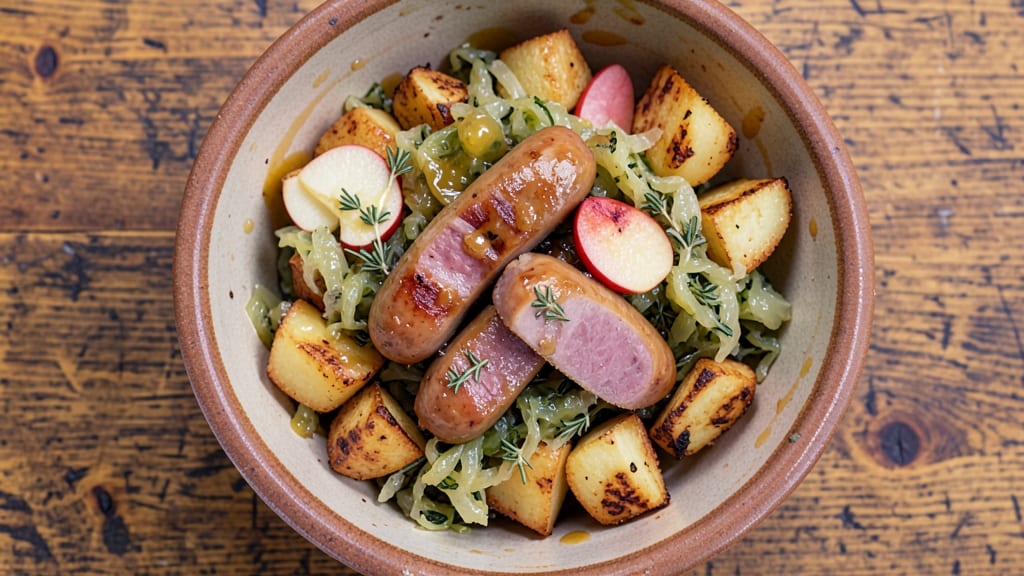
This German sausage, sauerkraut, and potatoes recipe delivers the ultimate comfort food experience—rich, savory, and perfectly balanced in one hearty pan. The secret lies in caramelizing onions for the sauerkraut while letting the sausages develop a crispy, golden crust, all while potatoes simmer into tender perfection.
I've perfected this dish over years of weekend family gatherings, where it never fails to disappear from the table.
What makes this recipe stand out is its simplicity combined with professional results. You'll start by searing bratwurst or kielbasa until deeply browned, then build layers of flavor by sautéing onions and apples in the same pan before adding tangy sauerkraut.
Meanwhile, potatoes boil until fork-tender, ready to soak up all the savory juices. The entire meal comes together in under an hour with minimal cleanup.
By the time you serve this dish, you'll have a plate that looks and tastes like it came from a Bavarian beer hall—crispy sausages, caramelized sauerkraut with sweet-tangy depth, and buttery potatoes that melt in your mouth.
The aroma alone will have everyone gathering at the table, and the first bite delivers that perfect balance of smoky, tangy, and comforting flavors. This is the kind of meal that makes ordinary weeknights feel special.
Serve with a dollop of mustard on the sausages and crusty rye bread to soak up every last bit of sauce. The leftovers reheat beautifully, making this an ideal recipe for meal prep or feeding a crowd.
Let's get cooking—this German feast is about to become your new favorite dinner staple.
Ingredients for german sausage sauerkraut potato
Fourteen ingredients, one pan, Bavarian flavors you'll crave again and again.
| Ingredient | Amount | Notes |
|---|---|---|
| German Bratwurst Sausages 🌭 | 1 ½ lb | Fresh, not pre-cooked |
| Yellow Onions 🧅 | 2 large | Thinly sliced for caramelizing |
| Honeycrisp Apples 🍎 | 2 medium | Peeled and sliced into wedges |
| Sauerkraut 🥬 | 1 lb | Drained, rinsed if too sour |
| Russet Potatoes 🥔 | 2 lb | Cut into 2-inch chunks |
| Unsalted Butter 🧈 | 4 tbsp | Full-fat for richness |
| Yellow Mustard 🍯 | 2 tbsp | For serving sausages |
| Fresh Thyme 🌿 | 2 sprigs | Or 1 tsp dried thyme |
| Bay Leaves 🌿 | 2 whole | For potato flavor |
| Salt 🧂 | 1 ½ tsp | Kosher or sea salt |
| Black Pepper 🌶️ | 1 tsp | Freshly ground preferred |
| Apple Cider Vinegar 🍎 | 1 tbsp | For sauerkraut brightness |
| Dark Beer 🍺 | ½ cup | Optional, for deglazing |
| Crusty Rye Bread 🍞 | 1 loaf | For serving |
The sausages are the star—bratwurst or kielbasa both work, but avoid pre-cooked links. Local butchers often have the best selection, or grab the Johnsonville brand at any grocery store. For the onions, yellows caramelize best—skip red or white. Apples add sweetness that balances the tangy sauerkraut, and Honeycrisp stays firm when cooked. The sauerkraut? Look for the kind without added vinegar—it's milder and lets the natural flavors shine. I always buy mine from the German deli section at Whole Foods if I'm feeling fancy, but the regular canned stuff works perfectly fine.
No bratwurst? Italian sausage or even smoked sausages will work in a pinch, though the flavor won't be quite the same. Short on apples? Pear slices add a nice contrast. The dark beer is optional but adds depth—any stout or porter will do. Fresh thyme is ideal, but dried works at one-third the amount. For the potatoes, if you can't find russets, Yukon Golds will work too. The key is cutting them evenly so they cook at the same rate. And if you're feeling adventurous, add a splash of apple juice to the sauerkraut for extra sweetness.
This dish reheats beautifully—honestly tastes better the next day once everything melds together. Keeps in the fridge for 4-5 days and freezes for 3 months. I always make a double batch because it disappears so fast. For serving, warm the rye bread in the oven for 5 minutes—it soaks up all the juices perfectly. Leftovers make great lunches too, just reheat with a splash of water to keep things moist.
Why You'll Love This Recipe
- One-Pan Magic: I swear by this trick—just toss everything on a sheet pan, roast, and walk away. The brats sizzle while the potatoes crisp, and the sauerkraut softens into that perfect tangy blanket. No pots, no mess, no stress. (Yes, even on a Tuesday night.)
- Sweet-Savory Balance: That crisp Honeycrisp apple with the smoky bratwurst? It’s the kind of combo that makes you pause mid-bite. The onions caramelize into golden pools, and the sauerkraut’s sharp bite cuts through the richness—like a flavor hug you didn’t know you needed.
- Leftovers for Days: Between us, this dish begs for seconds, which means you’ll have meals ready for the next two lunches. Reheat the potatoes and brats in a skillet with a splash of broth, and the sauerkraut? Just warm it up—it tastes better the second time around.
- Budget Crowd-Pleaser: You’re feeding a family for under $15, and everyone’s happy. The potatoes stretch the meal, the brats are affordable, and the apples add a touch of luxury without breaking the bank. Honestly, it’s the kind of dish that makes you feel like you’re cooking fancy, even when you’re not.
Step-by-step instructions for German sausage, sauerkraut, and potatoes
Here's how to create a comforting, all-in-one German feast that brings homey flavors together perfectly.
Prep the Potatoes and Sausages
Start by cutting the 2 lb russet potatoes into 2-inch chunks—this size ensures they cook evenly without turning to mush. Toss the potato chunks in a large bowl with 1 tbsp unsalted butter, 1 tsp salt, 1 tsp black pepper, 2 sprigs fresh thyme, and 2 whole bay leaves. Give it a good toss so every piece gets coated with the butter and seasonings.
Meanwhile, take the 1.5 lb german bratwurst sausages out of the fridge and let them sit at room temperature for 10 minutes. This helps them cook more evenly. While they warm up, thinly slice 2 large yellow onions for caramelizing later, and peel and slice 2 medium honeycrisp apples into wedges. Keep these separate for now—they'll join the party at different times.
Caramelize the Onions and Cook the Potatoes
Heat a large Dutch oven or deep oven-safe skillet over medium heat and add the sliced yellow onions. Cook them for 10-12 minutes, stirring occasionally, until they turn a beautiful golden brown and become soft. This caramelization adds deep sweetness to the dish—don't rush this step, or you'll miss out on that rich flavor.
Once the onions are caramelized, push them to one side of the pan and add the buttered potatoes. Increase the heat to medium-high and cook for 5-7 minutes, stirring occasionally, until the potatoes start to brown slightly in spots. This creates a nice crust on the potatoes while keeping them tender inside. If the potatoes aren't browned enough after this time, just keep them on the stovetop for a few more minutes—they'll finish cooking in the oven.
Add Sausages and Sauerkraut
Add the german bratwurst sausages to the Dutch oven, arranging them on top of the potatoes. Cook for 3-4 minutes per side until they're browned all over. This quick sear gives them a crispy exterior while keeping the inside juicy. Once browned, remove the sausages and set them aside on a plate.
In the same pot, add the 1 lb sauerkraut (drained if too watery) and the sliced honeycrisp apples. Stir everything together, then pour in the 0.5 cup dark beer and 1 tbsp apple cider vinegar. Bring to a gentle simmer, cover, and let it cook for 5 minutes to let the flavors meld. The beer adds a nice depth, while the vinegar brightens up the sauerkraut. If you don't have beer, you can substitute with an extra splash of apple juice or water.
Combine and Bake to Perfection
Return the sausages to the Dutch oven, nestling them back into the potatoes and sauerkraut mixture. Cover the pot and transfer it to a preheated 375°F oven. Bake for 30-35 minutes, or until the potatoes are tender when pierced with a fork and the sausages reach an internal temperature of 160°F. The potatoes should be golden and crispy on the outside, with fluffy insides.
If the top starts to brown too quickly, tent it loosely with aluminum foil. The goal is to keep everything moist and flavorful while letting the potatoes develop that perfect crust. The sausages should be fully cooked and juicy, with the sauerkraut softened but still holding its texture.
Serve with Mustard and Crusty Bread
Once everything is cooked, give the dish a final stir to combine all the flavors. Let it rest for 5 minutes before serving—this helps the juices redistribute, making every bite even more delicious. Serve the sausages, potatoes, and sauerkraut directly from the Dutch oven, and set out the 2 tbsp yellow mustard on the side for dipping or spreading on the 1 loaf crusty rye bread. The bread is perfect for soaking up any extra sauerkraut or juices.
This hearty dish is all about balance—crispy sausages, tender potatoes, tangy sauerkraut, and sweet caramelized onions. Each bite delivers a little bit of everything, making it the ultimate comfort food. Serve with a cold dark beer or a crisp white wine to complement the flavors even more. Enjoy your German feast!
Pro Tips For Making German Sausage Sauerkraut Potato
- Sear the Sausages First: Hit the bratwurst with high heat until deeply browned—no peeking or poking—before adding anything else. I used to skip this, and the flavor was always flat; those caramelized crusts hold the whole dish together.
- Dice Apples Thinly: Cut the Honeycrisp apples into 1/4-inch slices, then chop into small cubes so they soften evenly with the potatoes. Thick chunks stay crunchy and weirdly out of place in this hearty mix.
- Drain and Rinse Kraut: Dump the sauerkraut into a colander and rinse under cold water to cut the acidity—just enough to mellow it out without losing texture. Skipping this leaves your dish tasting like a pickle attack.
- Boil Potatoes Separately: Parboil the Russets for 8-10 minutes until fork-tender, then drain and toss with butter and salt before adding to the pan. This guarantees they stay creamy instead of turning to mush in the sausage grease.
Dietary considerations for this dish
Gluten-Free Adaptations
This classic German dish can easily be made gluten-free by swapping a few key ingredients. Use gluten-free bratwurst like Applegate or Field Turf brands, which are widely available in grocery stores. For the sauerkraut, ensure it's labeled gluten-free—most traditional sauerkraut is naturally gluten-free, but some brands add wheat-based thickeners. 🌾
When caramelizing onions, use gluten-free butter or olive oil instead of regular butter if concerned about cross-contamination. For the crusty rye bread, opt for a gluten-free rye bread alternative like Canyon Bakehouse or Schär brands. These substitutions keep the dish hearty and delicious without compromising texture or flavor.
Low-Carb Options
For a lower-carb version, replace the potatoes with cauliflower mash or rutabaga chunks. I steam 2 cups cauliflower florets until tender, then blend with 2 tbsp butter, ¼ cup cream cheese, and a pinch of salt for a creamy, low-carb alternative.
The cauliflower absorbs the sauerkraut flavors beautifully while keeping the dish light. 🥬
Another great low-carb swap is mashed turnips, which have a slightly sweet, earthy flavor that pairs well with the sausages. Cook 2 cups turnip chunks until tender, then mash with butter and a splash of apple cider vinegar to mimic the tangy element of the original dish.
Dairy-Free Adjustments
To make this dish dairy-free, skip the butter on the potatoes and use olive oil or vegetable oil instead. For the cauliflower mash, replace butter with dairy-free cream cheese like Kite Hill or Miyoko's. The flavor remains rich and satisfying without any dairy. 🥛
If you're avoiding dairy entirely, you can also use coconut oil for cooking the potatoes and onions. It adds a subtle sweetness that complements the caramelized onions and tangy sauerkraut. Just be sure to use unsweetened coconut oil to avoid altering the dish's flavor profile.
Vegetarian Substitutes
For a vegetarian version, replace the sausages with plant-based bratwurst like Beyond Meat or Impossible sausages, which mimic the texture and flavor of traditional bratwurst. These brands also hold up well during baking, ensuring a satisfying bite. 🌱
Another option is to use portobello mushrooms or hearty lentils as a protein base. Sauté sliced portobellos with a pinch of smoked paprika to mimic the smoky flavor of sausages, or cook 1 cup brown lentils with caramelized onions and apples for a hearty, protein-rich alternative.
Allergen-Friendly Tips
If you or someone at your table has a mustard allergy, simply skip the mustard on the side or offer an alternative like horseradish cream or apple butter. For those avoiding apples, use pear slices in the sauerkraut mixture—they add sweetness without the same allergenic concerns.
Always double-check ingredient labels, especially for sauerkraut and sausages, which may contain hidden allergens. 🚫
For a nut-free kitchen, avoid any garnishes like chopped nuts or nut-based sauces. Stick to simple, fresh herbs like parsley or chives for a bright, allergen-friendly finish. The beauty of this dish is its simplicity, so you can easily adapt it to fit most dietary needs without sacrificing flavor.
Nutrition facts
Frequently asked questions
Can I use pre-cooked sausages in this recipe?
Fresh sausages like bratwurst or kielbasa work best for that authentic German flavor and texture. Pre-cooked sausages won't get the same crispy exterior when pan-seared, and they may release less flavor into the dish. If you must use pre-cooked, skip the initial browning step and add them directly to the Dutch oven during baking.
How do I know when the sauerkraut is done?
The sauerkraut should be tender but still hold its shape—no mushy texture. After adding it to the Dutch oven with apples and beer, simmer for 5-7 minutes uncovered. It's ready when the liquid reduces slightly and the kraut softens. The apples should also be just tender, not falling apart.
What if my sauerkraut is too sour?
Rinse it under cold water to remove excess acid, then drain well. For extra sweetness, add 1 tbsp honey or maple syrup when combining with apples. The caramelized onions will also balance the tang. If it's still too sharp, a splash of apple juice (instead of vinegar) helps mellow the flavor.
Can I make this dish ahead of time?
This dish actually tastes better the next day as flavors meld. Assemble everything except the final baking step, cover, and refrigerate overnight. Reheat in the oven at 350°F for 20-25 minutes, covered with foil, until warmed through. The potatoes may need a splash of water to prevent drying out.
What's the best way to reheat leftovers?
For best results, reheat in the oven rather than the microwave. Cover with foil and bake at 350°F for 15-20 minutes until everything is piping hot. If using the stovetop, add 2 tbsp water or beer to the pan to prevent drying. The sausages will stay juicy, and the sauerkraut will retain its texture.