
Side Dishes
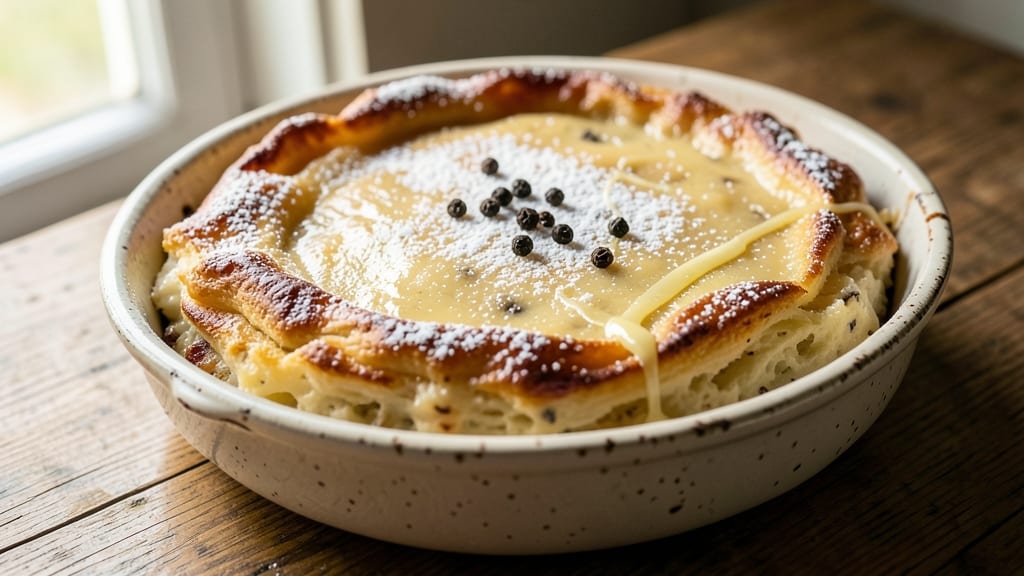
This old-fashioned potato pudding recipe delivers the comforting nostalgia of a creamy vanilla custard topped with a spiced, caramelized crust—exactly the kind of dessert that turns ordinary dinners into special occasions.
The secret lies in perfectly boiled potatoes and a custard base that transforms into a velvety texture when baked, while the crust adds a satisfying crunch that contrasts beautifully with the soft filling.
What makes this recipe truly special is its simplicity—just a handful of ingredients come together to create a dish that feels indulgent yet homestyle. The potatoes provide natural creaminess without dairy, while warm spices like cinnamon and nutmeg infuse the custard with cozy depth.
Baking at the right temperature ensures a smooth, jiggly center with a golden, crackly top that’s impossible to resist.
By the time it emerges from the oven, you’ll have a dessert that’s rich, velvety, and perfectly balanced—creamy enough to satisfy a sweet tooth but with enough texture to feel substantial.
The aroma alone will have everyone gathering around the table, and the first bite delivers that nostalgic comfort of childhood desserts, now elevated with professional precision.
Serve it warm with whipped cream or a drizzle of caramel for extra indulgence, or enjoy it as-is for a dessert that’s equal parts comforting and impressive. This is the kind of recipe that becomes a family tradition—let’s get started on making yours.
Ingredients for old fashioned potato pudding
Six simple ingredients create this nostalgic dessert with velvety texture and golden crust.
| Ingredient | Amount | Notes |
|---|---|---|
| Russet Potatoes 🥔 | 2 ½ lb | Peeled, boiled until tender |
| Granulated Sugar 🍚 | 1 ½ cups | White or light brown preferred |
| Unsalted Butter 🧈 | ¾ cup | Cold, cubed for crust |
| All-Purpose Flour 🌾 | ½ cup | For spiced crust mixture |
| Large Eggs 🥚 | 4 whole | Room temperature for custard |
| Milk 🥛 | 2 cups | Whole milk for creaminess |
| Vanilla Extract 🌸 | 2 tsp | Pure, high-quality extract |
| Ground Cinnamon 🍃 | 2 tsp | Freshly ground preferred |
| Ground Nutmeg 🌿 | ½ tsp | Freshly grated nutmeg |
| Salt 🧂 | ½ tsp | Fine sea salt preferred |
| Heavy Cream 🥛 | ½ cup | For custard richness |
| Cornstarch 🌾 | 2 tbsp | For thickening custard |
The potatoes are the foundation—Russet potatoes work best because they're starchy and hold their shape when boiled. Organic potatoes from a local market or grocery store like Whole Foods tend to have better flavor, but any russet will do. Boil them whole with skin on first to preserve texture, then peel and mash them thoroughly—no lumps in the custard. For the crust, cold butter is crucial; it creates flaky layers when baked. If you're short on time, Trader Joe's sells pre-cubed butter that works perfectly. The spices should be freshly ground—Penzeys or bulk bins at natural food stores are great sources for quality ground cinnamon and nutmeg.
No vanilla extract? Seeds from a vanilla bean steeped in warm milk work beautifully, though they require a bit more effort. Short on heavy cream? Half-and-half or whole milk will still give you a creamy pudding, though the texture will be slightly lighter. For the crust, almond flour or oats can replace all-purpose flour if you're avoiding gluten, though the texture will differ slightly. The cornstarch is non-negotiable—it's what gives the pudding that signature velvety texture. If you don't have it, arrowroot powder works in a pinch. And if you're feeling adventurous, a pinch of cardamom can add a unique depth to the spice blend.
This pudding reheats beautifully—just warm it in the oven at 325°F for 15 minutes until the center is just set. It keeps well in the fridge for 4-5 days, though I recommend making it fresh for the best texture. For make-ahead convenience, prepare the custard mixture and crust separately, then assemble just before baking. The crust can be made up to 2 days ahead and stored in the fridge. When serving, a dusting of powdered sugar or a drizzle of caramel elevates it to restaurant-quality. Portion into individual ramekins for elegant serving.
Why You'll Love This Recipe
- Pantry Staples Only: I swear by this recipe because it uses what I already have. No specialty ingredients—just potatoes, sugar, butter, flour, and eggs. Honestly, if my pantry has those, I can make this happen without a second thought.
- Velvet Texture Magic: That creamy, almost custard-like consistency? It’s the eggs and butter working their magic. The sugar caramelizes just enough to give it a subtle sweetness, but the flour keeps it rich without being heavy. (Yes, even on a Tuesday night.)
- Leftovers That Beg for More: This pudding actually tastes better the next day—if you can resist eating it all in one sitting. I’ve reheated portions in the microwave for breakfast or packed it for lunch, and no one ever complains. It’s my secret weapon for lazy mornings.
- Dessert or Side?: Serve it warm with a drizzle of honey for a cozy treat, or let it cool and slice it like a pie for a crowd. Between us, my kids ask for it at Thanksgiving and Christmas—it’s that versatile. And the best part? It’s cheaper than buying a pie.
Step-by-step instructions for old fashioned potato pudding
This method delivers a perfectly balanced pudding with a golden crust and silky custard every time.
Prepare the Potato Base
Peel the 2.5 lb russet potatoes and cut them into even 1-inch chunks. Place them in a large pot and cover with cold water by about 2 inches. Add 1 teaspoon of salt to the water to enhance flavor during cooking. Bring to a boil over high heat, then reduce to a gentle simmer for 15-20 minutes until the potatoes are fork-tender.
Drain the potatoes thoroughly in a colander, then return them to the pot. Using a potato masher or ricer, mash them until completely smooth with no lumps remaining. This texture is crucial for the pudding's velvety consistency. Let the mashed potatoes cool slightly to room temperature before proceeding.
Make the Spiced Crust Mixture
In a medium bowl, combine the 0.75 cup cold unsalted butter (cubed) with the 0.5 cup all-purpose flour, 2 teaspoons ground cinnamon, 0.5 teaspoon ground nutmeg, and 0.5 teaspoon salt. Using a pastry cutter or your fingers, work the mixture until it resembles coarse crumbs with pea-sized butter pieces throughout.
This crust mixture should be firm but crumbly - not pasty. If it appears too dry, add just 1 teaspoon of ice water to help it bind. The butter should remain cold to create a crisp, flavorful crust when baked. Set this mixture aside while you prepare the custard filling.
Create the Custard Filling
In a large mixing bowl, whisk together the 4 whole large eggs, 1.5 cups granulated sugar, 2 teaspoons vanilla extract, and 2 tablespoons cornstarch until completely smooth. In a separate bowl, warm the 2 cups milk and 0.5 cup heavy cream together until just steaming (about 110°F). Slowly pour the warm milk mixture into the egg mixture while whisking constantly to prevent curdling.
Return the combined mixture to the pot with the mashed potatoes. Stir vigorously until the potatoes are fully incorporated and the mixture is smooth. The custard should be thick but pourable. Taste and adjust sweetness if needed - the sugar content should be balanced with the natural sweetness of the potatoes.
Assemble and Bake
Preheat your oven to 350°F. Generously grease a 9x13-inch baking dish. Spread half of the crust mixture evenly over the bottom of the dish, pressing lightly with your fingers. Pour the custard mixture over the crust, then sprinkle the remaining crust mixture evenly on top. Press down gently with the back of a spoon to create an even, textured surface.
Bake for 50-55 minutes until the top is golden brown and the center is just set (when gently shaken, it should jiggle slightly but not be liquid). The pudding is done when it reaches an internal temperature of 170°F at the center. Remove from the oven and let cool for 10 minutes before serving.
Pro Tips For Making Old Fashioned Potato Pudding
- BOIL POTATOES UNTIL TENDER: Russets should fall apart like overcooked mashed potatoes—no resistance when pierced with a fork. I learned this the hard way: undercooked chunks make the pudding grainy, no matter how much you beat it later. Skip the "al dente" rule here; mushy is the goal.
- SIFT THE FLOUR FIRST: Measure flour into the bowl before cracking eggs—this prevents lumps that turn the pudding gummy. I used to dump flour in after mixing, and the texture always suffered. A quick sift also aerates the batter, giving that classic lightness.
- BAKE IN A WATER BATH: Place the pudding dish in a roasting pan with 1 inch of hot water—this keeps the center moist and prevents cracking. I’ve tried baking it dry, and the top always dried out before the middle set. Yes, it’s an extra step, but it’s the thing that matters most for that creamy, jiggly finish.
- WHISK EGGS AND SUGAR HOT: Heat the egg-sugar mixture over a double boiler until it’s 160°F—just before it tempers. I was skeptical until I tried it: this dissolves the sugar completely and makes the pudding silky instead of grainy. Skip the stovetop shortcut; the microwave won’t cut it here.
Serving suggestions for this dish
Classic Whipped Cream
Nothing elevates this dessert like a cloud of homemade whipped cream—light, sweet, and airy. I use 1 cup heavy whipping cream chilled in the fridge for at least 2 hours, then whip it with 2 tablespoons powdered sugar and 1 teaspoon vanilla extract until stiff peaks form.
The contrast between the warm pudding and cool cream is pure magic. For extra flair, dust with ½ teaspoon cinnamon before serving. 🥛
Caramel Drizzle
A rich homemade caramel sauce takes this pudding to the next level. Simmer 1 cup granulated sugar with ¼ cup water until amber-colored, then whisk in ½ cup heavy cream until smooth.
Let cool slightly before drizzling over individual servings. For a quicker option, use store-bought caramel sauce like Trader Joe’s or Smucker’s, but homemade tastes infinitely better. 🍯
Warm Maple Syrup
For a rustic touch, warm ¼ cup pure maple syrup (like Grade A Vermont maple) in a small saucepan until just pourable. Drizzle generously over slices of pudding—its earthy sweetness complements the vanilla and spices beautifully.
I like to heat it with a splash of heavy cream for extra richness. Perfect for autumn gatherings! 🍁
Spiced Rum Sauce
Infuse ½ cup heavy cream with 1 tablespoon dark rum (like Kahlúa or Captain Morgan) and ½ teaspoon cinnamon by simmering gently for 3 minutes.
Strain and drizzle over servings for a boozy, aromatic finish. This works especially well with warm pudding—the alcohol cooks off slightly, leaving behind warm spices. 🍹
Toasted Nuts
For texture lovers, toast ½ cup pecans or walnuts in a dry skillet over medium heat for 3-4 minutes until fragrant. Chop coarsely and sprinkle over the top before serving.
The nuts add a satisfying crunch that balances the creamy pudding. I also like to mix in 1 teaspoon brown sugar while toasting for extra caramelization. 🌰
Fruit Compote
A berry compote made from 1 cup mixed berries (fresh or frozen), 1 tablespoon sugar, and 1 teaspoon lemon juice simmered for 8-10 minutes adds vibrant color and tartness.
Serve alongside or spooned over the pudding. For a winter twist, try applesauce spiced with cinnamon—it pairs beautifully with the warm spices in the crust. 🍓
Nutrition facts
Frequently asked questions
Why does my potato pudding turn out too dense?
Overmixing the custard or underbaking are the most common culprits. Make sure to whisk the eggs and milk mixture just until combined, then stir in the potatoes gently. Bake until the center reaches 170°F—underbaking leaves it gummy, while overbaking makes it dry. Also, ensure your potatoes are fully mashed with no lumps.
Can I make this pudding in individual ramekins?
Use 6-ounce ramekins and reduce the baking time to 30-35 minutes at 350°F. The smaller size ensures even cooking and a perfect golden crust. For extra elegance, top each serving with a dollop of whipped cream or caramel sauce after baking.
What’s the best way to reheat leftover potato pudding?
Warm it in the oven at 325°F for 15-20 minutes until the center is just set. Avoid microwaving—it can make the texture rubbery. For a quick fix, place slices on a baking sheet and broil for 2-3 minutes to crisp the top. Reheating preserves that classic creamy texture.
Can I use sweet potatoes instead of russets?
Sweet potatoes will change the flavor and texture significantly. They’re naturally sweeter and more moist, which can make the pudding overly dense. If you’re set on using them, reduce the sugar by ½ cup and add 1 teaspoon cinnamon to balance the sweetness. However, russets are ideal for their neutral taste and starchy consistency.
How do I prevent the crust from burning before the pudding is set?
Cover the baking dish loosely with aluminum foil for the first 30 minutes of baking, then remove it to let the top brown. Alternatively, bake at 325°F for the first 20 minutes, then increase to 350°F. The key is patience—let the pudding set gradually for that perfect jiggly center.