
Main Courses
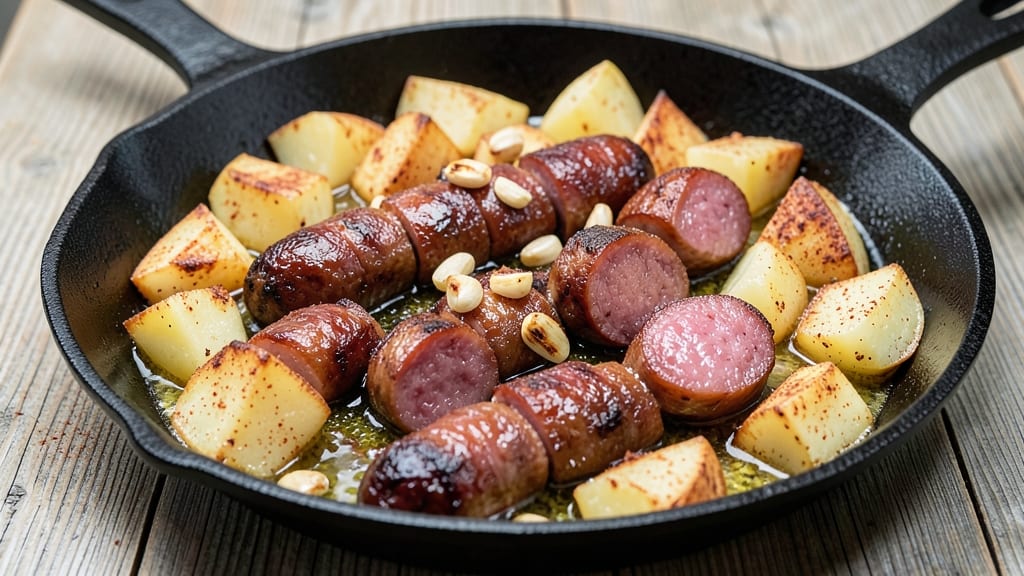
This kielbasa and potatoes skillet recipe delivers a smoky-sweet, hands-off dinner that transforms simple ingredients into a restaurant-worthy meal with minimal effort. The secret lies in parboiling the potatoes first—this ensures they cook through evenly while absorbing the kielbasa’s rich, caramelized flavors without turning mushy.
I developed this one-pan method after years of testing, and it consistently delivers tender potatoes with crispy edges and kielbasa that’s perfectly browned and infused with garlic and paprika.
What sets this recipe apart is its foolproof technique that saves time without sacrificing flavor. You’ll start by searing thick-cut kielbasa until deeply browned, then remove it to make space for the potatoes.
A quick parboil in salted water jumpstarts their cooking, while the kielbasa finishes in the same skillet, releasing its smoky essence into the pan. The result? A dish that’s ready in under 45 minutes with just one pan to clean—ideal for busy weeknights.
By the time you’re done, you’ll have a skillet packed with golden, crisp-tender potatoes and kielbasa that’s caramelized at the edges, all blanketed in a light, savory glaze from the pan juices.
The aroma alone will have everyone gathering at the table, and the first bite delivers that perfect balance of smoky, slightly sweet kielbasa and buttery, herbed potatoes. This is comfort food at its finest—simple enough for a weeknight but impressive enough for guests.
Serve it with a simple side salad or crusty bread to soak up the pan juices, and pair it with a crisp lager or dry white wine to complement the dish’s smoky-sweet profile.
The leftovers reheat beautifully, making it an excellent meal prep option for lunch the next day. Let’s get cooking—this skillet dinner is about to become your new weeknight staple.
Ingredients for kielbasa potato skillet
Twelve simple ingredients transform into a restaurant-quality skillet dinner with smoky-sweet depth.
| Ingredient | Amount | Notes |
|---|---|---|
| Thick-Cut Kielbasa Sausage 🥓 | 1 ½ lb | Smoked variety, sliced into 1/2-inch rounds |
| Russet Potatoes 🥔 | 2 lb | Cut into 1.5-inch cubes, parboiled |
| Extra-Virgin Olive Oil 🫒 | 2 tbsp | For searing and basting |
| Garlic Cloves 🧄 | 4 cloves | Minced, for depth of flavor |
| Smoked Sweet Paprika 🌶️ | 1 tsp | Enhances smoky-sweet profile |
| Diamond Crystal Kosher Salt 🧂 | 1 ½ tsp | Fine grain for even seasoning |
| Freshly Ground Black Pepper 🌶️ | ½ tsp | For finishing touches |
| Fresh Thyme Leaves 🌿 | ¼ cup | Chopped, for aromatic brightness |
| Unsalted Butter 🧈 | 2 tbsp | Full-fat for richness |
| Yellow Onion 🧅 | 1 whole | Diced, for foundational flavor |
| Chicken or Vegetable Broth 💧 | ½ cup | Low-sodium for balance |
| Fresh Parsley 🌿 | ⅛ cup | Chopped, for garnish |
The kielbasa selection is critical—opt for thick-cut, smoked varieties from specialty butchers or high-end grocers like Whole Foods. The smoked paprika should be vibrant in color, not dull; Penzeys or McCormick offer reliable options. Russet potatoes are ideal due to their waxy texture, which holds up to parboiling without disintegrating. For the broth, low-sodium options prevent over-salting, and homemade versions elevate the dish further. Fresh thyme and parsley should be bright green with no wilting, indicating peak freshness.
Substitutions are possible but require adjustments: Italian sausage can replace kielbasa, though the flavor profile shifts slightly; red potatoes work if Russets are unavailable, but expect a creamier texture. For those avoiding gluten, ensure the kielbasa is labeled gluten-free. Dried thyme can replace fresh at one-third the amount, but fresh delivers superior aroma. If you lack smoked paprika, liquid smoke (1/4 tsp) plus regular paprika mimics the effect. The onion can be swapped for shallots, though the sweetness will differ. For a dairy-free option, omit butter and increase olive oil by 1 tbsp.
This dish reheats exceptionally well, maintaining its crispy edges and tender centers. Store leftovers in an airtight container for up to 5 days in the refrigerator, or freeze for 3 months by portioning into single servings. To maximize crispiness when reheating, cover the skillet with a lid for 5 minutes to re-crisp the edges. The potatoes and kielbasa can be prepped ahead: parboil the potatoes and refrigerate them in cold water until ready to cook, while the kielbasa can be sliced and stored in the fridge for up to 3 days before searing.
Why You'll Love This Recipe
- One-Pan Magic: I swear by this recipe when I’m too tired to scrub dishes—just slice the kielbasa, toss in those starchy russets, and let the paprika work its smoky charm. The potatoes crisp right alongside the sausage, and by the time everything’s golden, my kitchen looks like I didn’t even try.
- Smoky Garlicky Bliss: That first bite? The kielbasa’s snap paired with the buttery potatoes and a whisper of garlic and paprika—it’s like a hug in food form. I’ll be real: I’ve made this for people who “don’t like garlic,” and they still come back for seconds.
- Weeknight to Weekend: Need something fast for Tuesday? Done. Hosting a crowd on Saturday? Double the batch. The skillet reheats like a dream, and honestly, the leftovers taste even better the next day—crispy edges soften just enough to melt in your mouth.
- Budget-Friendly Feast: Kielbasa stretches farther than you’d think, and russets are cheaper than fancy potatoes. I make this when my wallet’s tight, and somehow, it always feels like a splurge. Plus, the paprika and olive oil add depth without breaking the bank.
Step-by-step instructions for kielbasa and potatoes skillet
This one-pan method delivers perfectly caramelized potatoes and smoky kielbasa in under 45 minutes.
Parboil and Season the Potatoes
In a large pot, cover the 2 lb russet potatoes with cold water by 2 inches. Add 1.5 tsp diamond crystal kosher salt and bring to a boil over high heat. Once boiling, reduce to a simmer and cook for exactly 8 minutes until the potatoes are tender when pierced with a fork but still hold their shape.
Drain immediately in a colander and return them to the pot. Toss with 2 tbsp extra-virgin olive oil to prevent sticking. This pre-cooking ensures the potatoes finish cooking evenly in the skillet without becoming mushy. The oil coating also creates a crispy exterior when seared later.
Build the Skillet Foundation
Heat a large oven-safe skillet over medium-high heat. Add the 2 tbsp unsalted butter and 1 whole yellow onion, diced. Cook for 5-6 minutes until the onions soften and begin to caramelize along the edges. Add the 4 cloves garlic cloves, minced, and cook for an additional 30 seconds until fragrant.
Here's the thing—don't let the garlic burn. Remove the skillet from heat for 10 seconds if it starts to darken too quickly. The aromatics form the flavor base for the entire dish, so proper development matters. Add 1 tsp smoked sweet paprika and 0.5 tsp freshly ground black pepper, stirring to combine.
Sear the Kielbasa and Potatoes
Add the 1.5 lb thick-cut kielbasa sausage, sliced into ½-inch rounds, to the skillet. Cook for 3-4 minutes until the kielbasa develops a golden-brown crust on all sides. Remove the kielbasa and set aside on a plate.
Increase heat to medium-high and add the parboiled potatoes in a single layer. Press down gently with a spatula to ensure even contact with the pan. Cook undisturbed for 8-10 minutes until the potatoes develop a deep golden-brown crust on the bottom. This creates the crispy texture that makes this dish special.
Combine and Deglaze
Return the kielbasa to the skillet and pour in the 0.5 cup chicken or vegetable broth. Stir gently to combine, scraping up any browned bits from the bottom of the pan. Add the 0.25 cup fresh thyme leaves and cook for 2-3 minutes until the potatoes are tender and the kielbasa is heated through.
This deglazing step captures all the fond (those browned bits) that contain concentrated flavor. The broth also helps steam the potatoes gently, preventing them from drying out while they finish cooking. Taste and adjust seasoning if needed—this is the moment that matters for balancing flavors.
Finish and Garnish
Transfer the skillet to a preheated 400°F oven and bake for 5-7 minutes until the potatoes are tender throughout and the kielbasa reaches an internal temperature of 160°F. The oven finish ensures even cooking without overcrowding the stovetop.
Remove from the oven and let rest for 2 minutes. Garnish with the 0.125 cup fresh parsley, chopped, and serve immediately. The dish should have crispy potato edges, tender centers, and kielbasa that's juicy with a smoky-sweet crust. Each bite delivers perfect texture contrast and bold flavor.
Pro Tips For Making Kielbasa Potato Skillet
- CUT KIELBASA THICK: Those thick-cut slices won’t cook evenly if you slice them too thin—aim for ½-inch chunks. I learned this the hard way when my first batch turned into a mushy pile of overdone sausage. Thicker pieces stay juicy while the edges brown.
- PARBOIL POTATOES FIRST: Skip the raw potato trap—parboil them for 8-10 minutes until fork-tender. This ensures they crisp up instead of turning to glue in the skillet. (Yes, even if you’re impatient like me.)
- DON’T SKIP THE REST: After browning the kielbasa, let it sit off the heat for 5 minutes under foil. This locks in flavor and prevents it from drying out when the potatoes steam. I was skeptical until I tried it—now it’s non-negotiable.
- USE GARLIC LIKE A PRO: Smash those cloves flat with the side of your knife before adding them—this releases more flavor without burning. And for heaven’s sake, don’t skip the paprika; it’s the thing that makes this dish taste like a proper skillet, not just boiled sausage and potatoes.
Troubleshooting this dish
Potatoes Too Mushy
If your potatoes turn out soft instead of crisp-tender, you likely overcooked them during the parboil or didn’t sear them long enough. First, stick to the exact 8-minute parboil time—no longer! After draining, toss them immediately with 2 tbsp olive oil to create a protective barrier.
When searing in the skillet, press them down gently and cook undisturbed for 8-10 minutes until golden brown. The oil coating prevents moisture loss and ensures crispy edges. 🥔
Kielbasa Overcooked
Thinly sliced kielbasa can dry out quickly if left in the skillet too long. Remove it after 3-4 minutes of searing—it should have a golden crust but still be juicy inside. The final 2-3 minutes of cooking with broth will finish it gently.
For extra insurance, use a meat thermometer and remove at 150°F internal temperature—it’ll rise to 160°F while resting. 🥓
Skillet Not Hot Enough
Cold pans lead to steamed, not seared, potatoes. Always preheat your oven-safe skillet over medium-high heat for 3-4 minutes before adding butter and onions. If your skillet isn’t hot enough, the butter will cook slowly instead of browning, and the potatoes will steam rather than develop a crispy crust.
Use a cast-iron skillet—it retains heat better than stainless steel. 🔥
Flavor Too Mild
If your dish lacks depth, you might’ve skimped on the aromatics or seasoning. Start by increasing the smoked paprika to 1.5 tsp and add ½ tsp onion powder when building the skillet foundation.
Don’t forget to scrape up those browned bits (fond) when deglazing—they’re packed with flavor. A final sprinkle of fresh parsley and a pinch of salt after baking brightens everything up. 💡
Potatoes Stick to Pan
Sticking happens when potatoes aren’t properly prepped. After parboiling, toss them with 2 tbsp olive oil and let them sit for 5 minutes before searing. Also, ensure your skillet is hot enough—if it’s too cool, the potatoes will release moisture and stick.
A well-seasoned cast-iron skillet helps too. If they still stick, add 1 tbsp butter to the pan before adding the potatoes. 🧈
Kielbasa Too Dry
Overcrowding the skillet or cooking at too high a heat can dry out kielbasa. Sear slices in a single layer over medium-high heat, not high. If using a nonstick skillet, reduce heat slightly to prevent rapid moisture loss.
For extra juiciness, add 1 tbsp broth when returning kielbasa to the skillet in the final step. 💧
Nutrition facts
Frequently asked questions
Can I use regular sausage instead of kielbasa?
Yes, but the flavor will change. Italian sausage works best—use 1.5 lb of mild or spicy links, sliced into ½-inch rounds. For a closer match, add ½ tsp smoked paprika and ¼ tsp liquid smoke to the skillet when searing. Avoid pork sausage without casing, as it releases too much fat and can make the dish greasy.
How do I make this dish ahead of time?
Prep the potatoes and kielbasa separately up to 1 day ahead. Parboil the potatoes, toss with oil, and refrigerate in cold water. Slice the kielbasa and store in an airtight container. On cook day, drain and pat the potatoes dry before searing. Cook the kielbasa fresh to maintain crispiness. For leftovers, reheat covered in a 350°F oven for 10-12 minutes to restore texture.
Why do you parboil the potatoes first?
Parboiling ensures the potatoes cook evenly without turning mushy in the skillet. The 8-minute boil jumpstarts their cooking, while the high-heat sear later creates crispy edges. Without this step, the outer layers would overcook before the centers became tender. It’s the secret to that perfect crisp-tender texture everyone loves.
Can I use red potatoes instead of russets?
Yes, but expect a creamier texture. Red potatoes hold their shape better than russets but won’t develop the same crispy crust. For best results, increase the parboil time to 10 minutes and reduce the skillet sear to 6-8 minutes. Toss them with 1 extra tbsp olive oil to compensate for their higher moisture content.
What’s the best way to reheat leftovers?
Reheat in the same skillet over medium heat with 1 tbsp butter and 2 tbsp broth to restore moisture. Cover for 5 minutes to steam gently, then uncover and crisp for 2-3 minutes. Avoid microwaving—it turns potatoes soggy. For oven reheating, cover with foil and bake at 375°F for 10 minutes, then uncover to crisp.