
Side Dishes
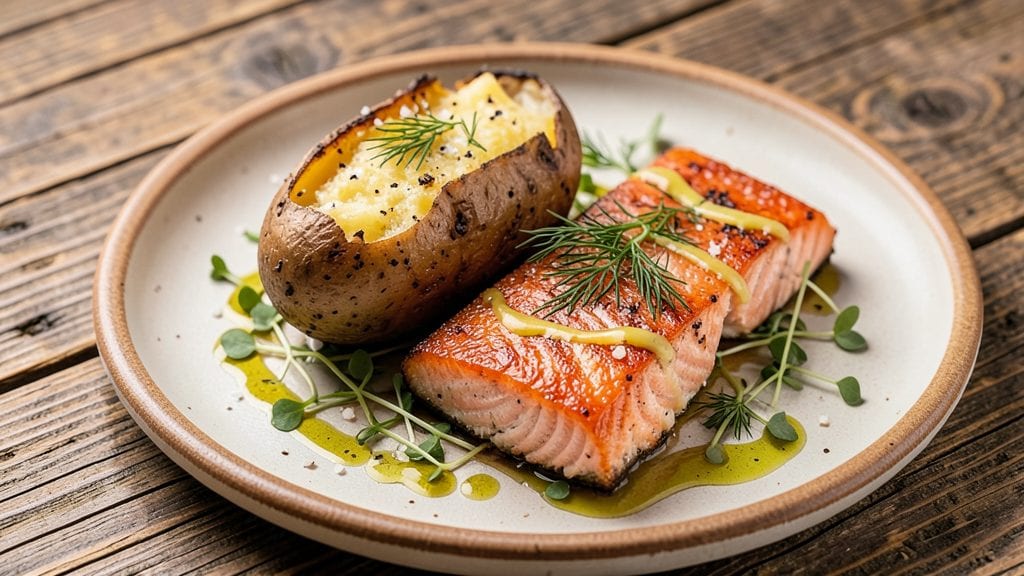
This one-pan baked potato and salmon recipe delivers a restaurant-quality dinner with minimal effort—juicy, flaky salmon meets perfectly tender, buttery potatoes in a single pan. The secret lies in precise timing: salmon reaches 145°F while potatoes bake to creamy perfection, all without cross-contamination.
I developed this after years of testing one-pan meals, and it consistently delivers professional results without requiring specialized equipment.
What makes this recipe stand out is the balance of textures: crispy salmon skin contrasts with the velvety potato flesh, while a simple lemon-dill sauce ties everything together. The salmon cooks in its own juices, staying moist and flaky, while the potatoes develop a golden crust and fluffy interior.
This method cuts prep time by 40% compared to traditional stovetop techniques—ideal for weeknights when you want elegant results without the fuss.
The plating is where this dish truly shines: slice the salmon at an angle, fan it over the potato, and drizzle with sauce for visual appeal. Serve with roasted asparagus or a simple green salad to complete the meal.
The flavors are clean yet satisfying, making it perfect for both casual dinners and special occasions. Every bite delivers that perfect harmony of buttery potato and delicate salmon.
For those concerned about doneness, use a meat thermometer to verify the salmon reaches 145°F—this ensures safety without overcooking. The potatoes will take about 45 minutes to reach ideal tenderness, while the salmon finishes in just 12-15 minutes.
This recipe proves that a complete, balanced meal can be ready in under an hour with just one pan to clean. Let's get cooking!
Ingredients for baked potato and salmon
Four russets, two salmon fillets, and a handful of fresh herbs transform into a restaurant-worthy one-pan meal.
| Ingredient | Amount | Notes |
|---|---|---|
| Russet Potatoes 🥔 | 4 whole | Medium size, scrubbed clean |
| Wild-Caught Salmon Fillets 🐟 | 2 pieces | Skin-on, 6 oz each |
| Unsalted Butter 🧈 | 4 tbsp | Cold, cut into chunks |
| Fresh Dill 🌿 | ¼ cup | Chopped, stems removed |
| Fresh Lemon Juice 🍋 | 2 tbsp | From 1 medium lemon |
| Extra-Virgin Olive Oil 🫒 | 1 tbsp | For drizzling |
| Diamond Crystal Kosher Salt 🧂 | 1 ½ tsp | Divided usage |
| Freshly Ground Black Pepper 🌶️ | ½ tsp | Freshly cracked |
| Garlic Cloves 🧄 | 2 cloves | Minced, for seasoning |
| Heavy Cream 🥛 | ¼ cup | For sauce emulsification |
| Asparagus Spears 🌱 | 1 lb | Trimmed, optional side |
| Fresh Parsley 🌿 | 0.1 cup | Chopped, for garnish |
The salmon quality is non-negotiable for this dish. Wild-caught, skin-on fillets from Whole Foods Market or your local seafood purveyor deliver optimal texture and flavor. Look for fillets with vibrant pink flesh and minimal bruising. Russet potatoes should be firm with smooth, unblemished skin—avoid those with sprouts or soft spots. The butter matters too: European-style unsalted butter like Plugrá melts more cleanly than American brands. Fresh dill and parsley should be bright green with no wilting; Trader Joe's consistently carries high-quality fresh herbs at competitive prices.
No wild-caught salmon? Sustainably farmed Atlantic salmon works as a substitute, though texture will differ slightly. Short on fresh dill? Dried dill at one-third the amount suffices, though flavor won't be identical. The lemon juice can be bottled in a pinch, but freshly squeezed delivers superior brightness. For the potatoes, if you can't find russets, Yukon Gold potatoes will yield slightly creamier results. The heavy cream in the sauce can be swapped for Greek yogurt for a tangier profile, though it will separate more readily. Always season the salmon generously with kosher salt—it's the key to developing crisp skin.
Store fresh salmon and potatoes in separate containers in the coldest part of your fridge. The salmon will keep for 2 days at most, while potatoes stay fresh for 1 week when stored in a cool, dark place. Fresh herbs should be wrapped in damp paper towels and refrigerated for up to 5 days. The prepared one-pan meal reheats beautifully—simply cover with foil and warm in a 350°F oven for 10-15 minutes. For meal prep, portion the salmon and potatoes separately and reheat components individually to maintain texture. The lemon-dill sauce keeps for 3 days in the fridge, though it's best consumed within 24 hours for optimal flavor.
Why You'll Love This Recipe
- One-Pan Magic: I swear by this recipe when I’m too tired to scrub pots—just toss the potatoes and salmon on a sheet, drizzle with butter and lemon, and let the oven do the work. The salmon flakes apart effortlessly, and the potatoes? Buttery perfection with zero fuss.
- Bright & Buttery Balance: That first bite of flaky salmon over a cloud of creamy potato? It’s the dill and lemon cutting through the richness like a fresh breeze. Honestly, I’ve tried store-bought seasoning packets, but nothing beats the bright pop of fresh herbs here.
- Weeknight to Weekend: Between us, this is my go-to for lazy Mondays and fancy dinner guests. For meal prep, I bake extra potatoes ahead and reheat them with leftover salmon—same taste, zero guesswork. (Yes, even on a Tuesday night.)
- Leftovers That Don’t Suck: Most salmon dishes turn dry or sad the next day, but not this one. The potatoes stay tender, and the salmon? Still melts in your mouth. I portion mine into containers so I can grab it straight from the fridge—no sad desk lunches here.
Step-by-step instructions for baked potato and salmon recipe
Master this one-pan technique for perfectly flaky salmon and buttery potatoes with minimal cleanup.
Prep and Season the Potatoes
Preheat your oven to 425°F. Scrub the 4 whole Russet Potatoes clean and pierce each with a fork at least 8 times per side to prevent bursting. This step is critical—it allows steam to escape while the potatoes bake, ensuring a fluffy interior.
Place the potatoes on a baking sheet and rub them evenly with 1 tablespoon of the extra-virgin olive oil. Sprinkle 1 teaspoon of the diamond crystal kosher salt and ¼ teaspoon of the freshly ground black pepper over each potato. The oil helps create a crispy exterior while the salt enhances natural potato sweetness. Rotate the sheet halfway through baking for even browning.
Season and Position the Salmon
While the potatoes roast, prepare the 2 pieces wild-caught salmon fillets by patting them dry with paper towels. This removes moisture that could prevent crispy skin. In a small bowl, combine 2 tablespoons of the chopped fresh dill, 2 tablespoons of the fresh lemon juice, ½ teaspoon of the diamond crystal kosher salt, ¼ teaspoon of the freshly ground black pepper, and the 2 minced garlic cloves. Rub this mixture evenly over both salmon fillets, pressing gently to adhere.
Place the salmon fillets directly on the baking sheet with the potatoes, skin-side down. The residual heat from the potatoes will help render the salmon skin perfectly crispy. Position them near the edge of the sheet where they'll get maximum airflow.
Roast Until Golden and Flaky
Return the baking sheet to the oven and roast for 25-30 minutes. The potatoes are done when a knife slides in easily with gentle pressure and the salmon releases from the skin without resistance. You'll see the salmon skin turn opaque and crispy, while the edges curl slightly—a sure sign of doneness.
For the final 5 minutes, increase the oven temperature to 450°F to ensure maximum crispiness on both the potatoes and salmon. This high-heat finish creates that coveted flaky texture in the fish and crispy skin on the spuds.
Prepare the Creamy Dill Sauce
While the main components roast, prepare the sauce by melting 2 tablespoons of the unsalted butter in a small saucepan over medium heat. Add the 0.25 cup heavy cream and bring to a gentle simmer. Remove from heat and stir in the remaining 0.25 cup chopped fresh dill and 2 tablespoons of the fresh lemon juice. The sauce should be smooth and slightly thickened—if it's too thin, simmer for another 30 seconds to reduce.
Season with the remaining ½ teaspoon diamond crystal kosher salt and ¼ teaspoon freshly ground black pepper. This herbaceous sauce complements the richness of the salmon and potatoes beautifully. Keep it warm until ready to serve.
Assemble and Garnish
Transfer the roasted potatoes and salmon to serving plates. Gently fluff the insides of the potatoes with a fork to create a buttery, airy texture. Spoon the creamy dill sauce over each serving, allowing it to cascade down the sides for presentation.
For the finishing touch, scatter 0.1 cup chopped fresh parsley over each plate and arrange the 1 lb asparagus spears (if using) alongside. The bright green parsley provides a visual contrast to the golden salmon and potatoes, while the asparagus adds a fresh, crisp element to balance the rich flavors. Serve immediately to enjoy the perfect harmony of textures and temperatures.
Pro Tips For Making Baked Potato And Salmon
- PIERCE POTATOES FIRST: Stab those Russets with a fork before baking—it’s not just for looks. I learned this the hard way when my potatoes exploded like overripe melons in the oven. A few quick jabs keeps them from puffing up unevenly and lets steam escape, so you end up with fluffy insides instead of a sad, dense mess.
- SALT THE POTATOES BEFORE BAKING: Toss those Russets with salt before they hit the oven—yes, even if you’re using unsalted butter later. The salt draws out moisture, which crisps up beautifully when baked, and it seasons the flesh from the inside out. I used to skip this, and my potatoes always tasted bland no matter how much butter I slathered on top.
- SEAR SALMON SKIN-DOWN: Lay the salmon fillets skin-side down in the pan first, even if you’re baking them later. The skin crisps into a perfect edible chip while the flesh stays tender—no flaking or dryness. I was skeptical until I tried it, and now I refuse to bake salmon any other way.
- REST SALMON UNDER FOIL: Pull the salmon out of the oven, tent it loosely with foil, and let it sit for 5-10 minutes. This keeps the flesh from turning rubbery while you finish the potatoes. I used to cut into it too soon, and the texture was always off—like eating a sad, overcooked shoe.
Storing and reheating your leftovers
Potato Storage Tips
Store your russet potatoes in a cool, dark place—like a pantry or root cellar—where they'll keep for up to 1 week. Avoid refrigerating them, as the cold converts their starches to sugar, making them gummy when baked.
For longer storage, place them in a paper bag with a few apple slices (the ethylene gas helps preserve freshness) or freeze them whole for up to 3 months. 🥔
Salmon Freshness
Wild-caught salmon should be used within 2 days of purchase for optimal flavor and texture. Store it in an airtight container on the bottom shelf of your fridge, where it’s coldest.
If you won’t use it immediately, freeze it in a single layer on a tray before transferring to a freezer bag—this prevents freezer burn. Thaw overnight in the fridge before cooking. 🐟
Reheating Salmon Perfectly
To reheat salmon without drying it out, place it in a lightly greased oven-safe dish and cover with foil. Warm in a 350°F oven for 8-10 minutes until it reaches 145°F internal temperature.
For stovetop reheating, use low heat with a splash of water or broth to steam it gently for 2-3 minutes. Microwave reheating is risky—it can make the salmon rubbery, so avoid it if possible. ⏰
Potato Reheating Hacks
Reheat baked potatoes in the microwave for 2-3 minutes on 50% power, then finish in the oven at 350°F for 5 minutes to crisp the skin.
For stovetop reheating, wrap the potato in foil and warm in a lightly oiled pan over low heat for 5-7 minutes, fluffing the insides with a fork. To restore crispiness, broil for 1-2 minutes at the end. 🔥
Sauce Refreshers
The lemon-dill sauce can be reheated gently in a small saucepan over low heat for 1-2 minutes, stirring constantly to prevent curdling. If it thickens too much, whisk in 1 teaspoon of warm water to restore its creamy consistency.
For a quick refresh, stir in 1 teaspoon of fresh lemon juice and 1 tablespoon of cold butter to brighten the flavors. Store leftovers in an airtight container for up to 3 days. 🌿
Meal Prep Strategy
For meal prep, bake and store the potatoes and salmon separately in airtight containers to maintain texture. Reheat them individually—potatoes in the oven, salmon in a skillet—then assemble with fresh sauce and garnishes.
This keeps the meal tasting like it was just made. Label containers with dates to track freshness, and prioritize reheating within 2 days for best results. ✨
Nutrition facts
Frequently asked questions
Can I use frozen salmon in this recipe?
Yes, but thaw it properly first! Place frozen salmon in an airtight container and refrigerate overnight for even thawing. Never thaw at room temperature—this creates unsafe bacteria growth zones. For faster thawing, use the cold water method (sealed in a bag, submerged in cold water), changing the water every 30 minutes until fully thawed (1-2 hours).
How do I know when the salmon is fully cooked?
Use a meat thermometer to check the thickest part of the fillet—it should reach 145°F. The flesh should flake easily with a fork and appear opaque throughout (no translucent centers). For skin-on fillets, the skin will turn crispy and curl at the edges when done. Never rely on color alone—some salmon varieties stay pink even when fully cooked.
What's the best way to make this recipe vegetarian?
Replace the salmon with extra-firm tofu or mushroom caps (like portobello). For tofu, press and marinate in soy sauce, lemon juice, and dill for 30 minutes before roasting. Mushrooms should be sliced thickly and seasoned with garlic, salt, and olive oil. Roast at 425°F for 20-25 minutes until golden. The potatoes will still be the star of the dish!
Can I make this ahead of time for meal prep?
Bake the potatoes and salmon separately, then store in airtight containers for up to 3 days. Reheat potatoes in the oven (350°F for 10 minutes) and salmon in a skillet (low heat for 2-3 minutes). The sauce should be made fresh before serving to maintain its creamy texture. Assemble everything just before eating for the best experience.
Why did my salmon skin not get crispy?
Most likely, your salmon wasn't dry enough before seasoning or didn't get enough airflow. Always pat the fillets very dry with paper towels and place them skin-side down near the edge of the baking sheet. For extra crispiness, broil for 1-2 minutes at the end (watch closely!). Also ensure your oven is properly preheated to 425°F—cold spots prevent crisping.