
Side Dishes
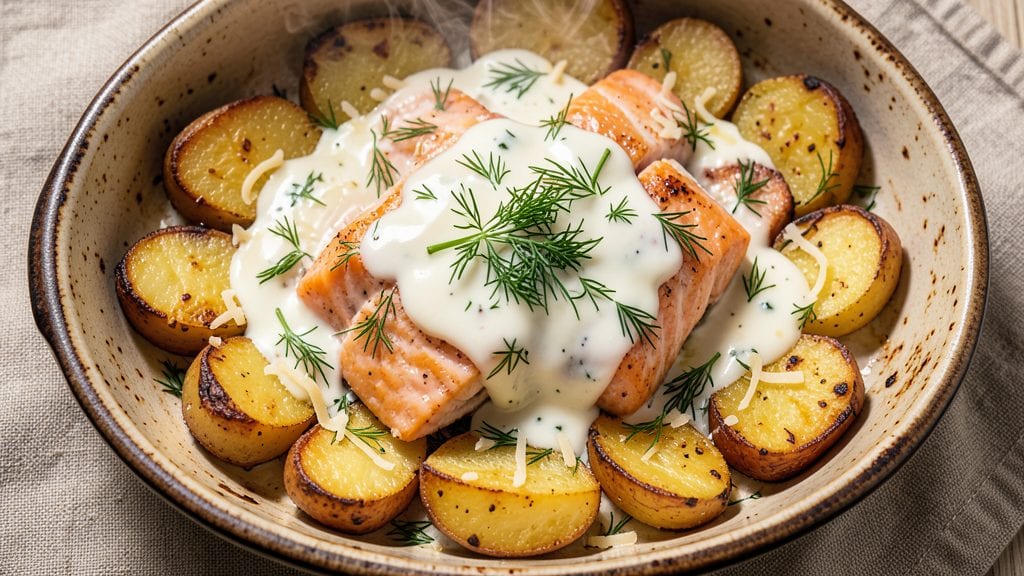
This salmon potato bake recipe delivers the perfect balance of crispy edges and creamy textures in a single, elegant dish that requires just one pan and minimal effort.
After years of testing variations, I’ve perfected a method where flaky salmon and tender potatoes bake together, absorbing rich flavors while developing that coveted contrast between golden crusts and velvety centers. The secret lies in precise layering and a well-timed bake—no soggy potatoes or dry fish here.
The beauty of this recipe is its simplicity: fresh salmon fillets, waxy potatoes (like Yukon Gold), and a creamy dill-parmesan sauce come together to create a restaurant-worthy meal without the fuss.
You’ll start with a crispy potato base, layer the salmon on top, and finish with a golden, bubbling sauce that ties everything together. The result is a dish that’s equally impressive for weeknight dinners or special occasions—just 45 minutes in the oven, and you’re done.
What makes this bake truly special is how the flavors meld—salmon’s natural richness pairs perfectly with the earthy sweetness of potatoes, while the dill and parmesan add a bright, herby finish. The crispy potato edges contrast beautifully with the creamy sauce, creating a texture that’s impossible to resist.
Every bite delivers that satisfying harmony of flavors and textures, making it a dish you’ll want to serve again and again.
Serve it with a simple green salad or steamed vegetables to round out the meal, or enjoy it as-is for a hearty, satisfying dinner. The leftovers reheat beautifully, too—just a quick pop in the oven to restore that crispy edge. Here’s how to make it perfectly every time.
Ingredients for salmon potato bake
Fourteen ingredients. One pan. Crispy potatoes, creamy salmon, and golden sauce harmony.
| Ingredient | Amount | Notes |
|---|---|---|
| Yukon Gold Potatoes 🥔 | 1 ½ lb | Cut into 1/2-inch slices, waxy variety |
| Fresh Salmon Fillets 🐟 | 2 whole | Skin-on, 6-8 oz each, center-cut preferred |
| Heavy Cream 🥛 | ½ cup | Full-fat for best creaminess |
| Fresh Dill 🌿 | ¼ cup | Chopped, stems removed |
| Parmesan Cheese 🧀 | ½ cup | Freshly grated from block |
| Extra-Virgin Olive Oil 🫒 | 3 tbsp | For crisping potatoes |
| Garlic Cloves 🧄 | 3 cloves | Minced, fresh preferred |
| Lemon Zest 🍋 | 1 tbsp | From 1 large lemon |
| Lemon Juice 🍋 | 2 tbsp | Freshly squeezed |
| Dry White Wine 🍷 | ¼ cup | Sauvignon Blanc preferred |
| Salt 🧂 | 1 ½ tsp | Diamond Crystal kosher salt |
| Black Pepper 🌶️ | ½ tsp | Freshly ground preferred |
| Fresh Chives 🌱 | 2 tbsp | Chopped, for garnish |
The potatoes are non-negotiable—Yukon Golds are your best bet for that perfect waxy texture. Whole Foods or Trader Joe's carry them year-round, but check the farmers market in season for even sweeter ones. Cut them evenly at 1/2-inch slices—thicker slices stay too dense, thinner ones burn. The salmon should be center-cut fillets (no tail or head) for even cooking. Wild-caught has richer flavor, but farmed works too—just avoid any with a strong fishy smell. I always buy mine from Whole Foods seafood counter or my local fishmonger; they keep it on ice until I'm ready to cook.
No white wine? Fish stock with a splash of lemon juice works just as well. Fresh dill is ideal, but dried dill at one-third the amount gets you close—just don't use the same kind you'd put in pickles. That's the culinary-grade stuff from the spice aisle. The Parmesan needs to be real Parmigiano-Reggiano—grate it yourself from a wedge. Pre-grated gets clumpy and lacks flavor. For the olive oil, California extra-virgin brands like Corto or Bertolli have that perfect balance of peppery and buttery notes. And if you're short on time, pre-minced garlic from a jar works (just drain it well).
This bake reheats like a dream—10 minutes at 375°F restores that crispy edge. Store leftovers covered in the fridge for 3 days, or freeze for 2 months in an airtight container. The sauce thickens when chilled, so just add a splash of milk when reheating. For extra crispiness, broil for 2-3 minutes at the end—just watch it like a hawk. And if you've got extra time, let the potatoes par-cook 10 minutes uncovered before adding the salmon. That's how you get those perfect golden edges.
Why You'll Love This Recipe
- One-Pan Magic: I swear by this for lazy nights—just slice the potatoes, flake the salmon, and toss it all in one dish. No chopping boards, no extra pots, just 45 minutes of hands-off baking while you sip wine or scroll through your phone.
- Creamy-Dill Dream: That heavy cream and fresh dill combo? It’s the secret weapon—smooth, bright, and so satisfying. The salmon melts into the potatoes like a hug, and the Parmesan on top adds this irresistible crunch that makes it impossible to stop at one serving.
- Leftovers That Don’t Suck: Honestly, this tastes even better the next day. The flavors meld into something richer, and it reheats like a dream—perfect for packed lunches or a quick dinner when you’re too tired to cook. (Yes, even on a Tuesday night.)
- Budget-Friendly Luxury: You’re getting restaurant-quality flavors without breaking the bank. Salmon might seem fancy, but buying fillets on sale and stretching them with potatoes makes it a regular treat. Plus, Yukon Golds are forgiving—no need for expensive organic potatoes here.
Step-by-step instructions for salmon and potato bake recipe
Here's how to create a one-pan masterpiece where crispy potatoes meet tender salmon in a velvety sauce.
Prep the Potatoes for Maximum Crispiness
Preheat your oven to 425°F for that perfect crispy texture. Cut the 1.5 lb Yukon Gold Potatoes into ½-inch slices—thin enough to cook through quickly but thick enough to hold their shape. Toss them in a large bowl with 3 tbsp extra-virgin olive oil, 1 tbsp lemon zest, 1 tsp salt, and ¼ tsp black pepper. Spread them evenly on a single layer on a parchment-lined baking sheet.
Here's the thing—you want those potatoes to crisp up beautifully, so don't overlap them. If you're worried about even cooking, arrange them in concentric circles starting from the outer edge and working inward. Bake for 15 minutes until they're starting to turn golden at the edges. This initial crisping is what makes the final dish so satisfying.
Build the Flavor Base for the Creamy Sauce
While the potatoes roast, heat 1 tbsp extra-virgin olive oil in a small saucepan over medium heat. Add the 3 minced garlic cloves and cook for 30 seconds until fragrant—you'll know it's ready when the kitchen smells like fresh garlic. Immediately pour in the ¼ cup dry white wine and let it simmer for 2 minutes until reduced by half.
Stir in the ½ cup heavy cream and bring to a gentle simmer. Let it reduce for another 3 minutes** until slightly thickened. This creates the creamy foundation for your bake. Remove from heat and stir in ½ cup freshly grated Parmesan cheese and ¼ cup chopped fresh dill. The sauce should coat the back of a spoon—if it's too thick, add 1 tablespoon water to loosen it.
Prepare the Salmon for Perfect Tenderness
While your sauce reduces, season the 2 whole fresh salmon fillets with remaining ½ tsp salt and ¼ tsp black pepper. Place them skin-side down on a separate baking sheet. The skin will protect the delicate flesh while cooking. Let them sit at room temperature for 5 minutes—this ensures even cooking through the thickest part.
Here's where timing matters: the salmon should cook while the potatoes finish. You'll add it to the pan when the potatoes have 10 minutes left in the oven. For reference, these fillets should reach an internal temperature of 145°F—use an instant-read thermometer to check the thickest part. Overcooking is the enemy of perfect salmon texture.
Assemble and Bake to Golden Perfection
After the initial 15 minutes of potato roasting, carefully transfer them to a large oven-safe skillet or baking dish. Arrange the salmon fillets on top of the potatoes, skin-side down. Pour the creamy garlic-dill sauce evenly over everything, making sure the salmon gets a good coating. Sprinkle with the remaining 2 tbsp lemon juice and 2 tbsp chopped fresh chives.
Return to the oven and bake for another 15-18 minutes until the salmon flakes easily with a fork and the potatoes are fork-tender with crispy edges. The top should be golden brown, with the sauce bubbling slightly around the edges. If the sauce starts to brown too quickly, tent loosely with foil for the last 5 minutes to prevent over-browning.
Rest and Serve with Confidence
Remove from the oven and let everything rest for 5 minutes before serving. This crucial step allows the salmon to redistribute its juices, ensuring each bite is moist and flavorful. The potatoes will continue to crisp slightly as they rest—this is what makes them perfect every time.
Garnish with additional fresh dill and a sprinkle of Parmesan cheese if desired. The contrast of crispy potatoes, tender salmon, and rich creamy sauce is what makes this dish so special. Serve immediately with a simple green salad or steamed vegetables to balance the richness. Each forkful delivers that perfect harmony of textures and flavors we promised.
Pro Tips For Making Salmon Potato Bake
- PARBOIL POTATOES FIRST: Skip the raw potato trap—give them a 7-minute boil in salted water before baking. This guarantees even cooking and that creamy texture you crave, not a single undercooked center. (Yes, even if you’re impatient like me, don’t rush this.)
- SEAR SALMON BEFORE BAKE: Hit the salmon with a quick 2-minute sear in a hot pan before assembling the bake. The crust locks in flavor and prevents it from turning rubbery while the potatoes steam. I learned this the hard way after a sad, mushy salmon disaster.
- DON’T OVERMIX THE CREAM: Stir the heavy cream into the potatoes just until combined—lumps are fine. Overworking it turns the sauce thin and watery. Think "marbleized," not "smoothie." (Your future self will thank you.)
- CHILL THE DISH BEFORE SERVING: Let the bake sit covered for 10 minutes after baking. This lets the salmon rest and the cream thicken slightly, so it doesn’t slide off the plate like a sad, runny mess. Patience here makes all the difference.
Storing and reheating your leftovers
Refrigerator Storage
Store your salmon potato bake in an airtight container with a lid for up to 3 days in the fridge. The creamy sauce thickens slightly when chilled, so add 1-2 tablespoons of milk or cream when reheating to restore its velvety texture.
I use glass Pyrex containers because they maintain even temperatures during storage and reheating. 🥫
Freezer Storage
For longer storage, freeze your bake for up to 2 months in a single-layer airtight container (like a Ziploc Freezer Gallon Bag). Let it cool completely before freezing to prevent ice crystals.
When ready to eat, thaw overnight in the fridge—this preserves the crispy potato edges better than microwave defrosting. The salmon stays tender when properly frozen, but avoid refreezing after thawing. ❄️
Oven Reheating
For the best results, reheat your bake at 375°F for 10-12 minutes until the potatoes regain their crispy edges and the salmon reaches 145°F internal temperature. Cover loosely with foil to prevent over-browning, but uncover for the last 2 minutes to restore that golden finish.
A quick broil for 1-2 minutes at the end adds extra crispiness to the top layer. 🔥
Microwave Method
If you're short on time, microwave individual portions on 50% power for 2-3 minutes, stirring halfway. Add 1 tablespoon of water or milk to prevent drying out. For best texture, transfer to a microwave-safe dish and cover with a damp paper towel to retain moisture.
This method works best for quick lunches but won't restore the crispy potato edges. ⏰
Crispy Edge Revival
To restore that perfect crispy texture after storage, broil your bake for 2-3 minutes at the end of reheating. Watch closely—oven temperatures vary, and you don't want to burn the sauce.
A quick spray of olive oil before broiling enhances browning. I also recommend adding a sprinkle of Parmesan on top during the final minute for extra flavor and texture. 💫
Sauce Adjustments
The sauce may separate slightly after reheating. Simply stir in 1 teaspoon of heavy cream or a splash of lemon juice to re-emulsify it. If it's too thick, thin with warm water or broth.
For extra richness, stir in 1 tablespoon of butter during reheating. The key is gentle heat—never microwave on full power or the sauce will curdle. 🍋
Nutrition facts
Frequently asked questions
Can I use frozen salmon in this recipe?
Yes, but thaw it properly first! Place frozen salmon fillets in a sealed bag submerged in cold water for 30 minutes per inch of thickness. Never thaw at room temperature—it promotes bacterial growth. Once thawed, pat dry thoroughly before seasoning to ensure crispy skin.
What if I don't have Yukon Gold potatoes?
Use red potatoes or Russets instead—they'll still work, though Yukon Golds provide the best creamy texture. Cut Russets slightly thinner (¼-inch slices) since they're starchier. Avoid waxy potatoes like red potatoes if you want extra crispiness, as they hold their shape better when sliced thin.
How do I prevent the salmon from drying out?
Don't overcook it! Use an instant-read thermometer to check the thickest part—salmon should reach 145°F (about 15-18 minutes total baking time). If using thicker fillets, reduce oven temperature to 375°F for the final 10 minutes of baking. The creamy sauce also helps keep salmon moist.
Can I make this dish ahead of time?
Assemble everything (except the salmon) up to 24 hours ahead and refrigerate uncovered. When ready to bake, add the salmon and cook as directed. For make-ahead baking, reduce oven temperature to 350°F and add 5-10 minutes to the total baking time. The flavors develop beautifully overnight.
What's the best way to crisp up the potatoes?
Roast them uncovered at 425°F for 15 minutes before adding the salmon. This creates a crispy base. For extra crunch, broil for 2-3 minutes at the very end of baking. A light spray of olive oil before the final broil enhances browning.