
Side Dishes
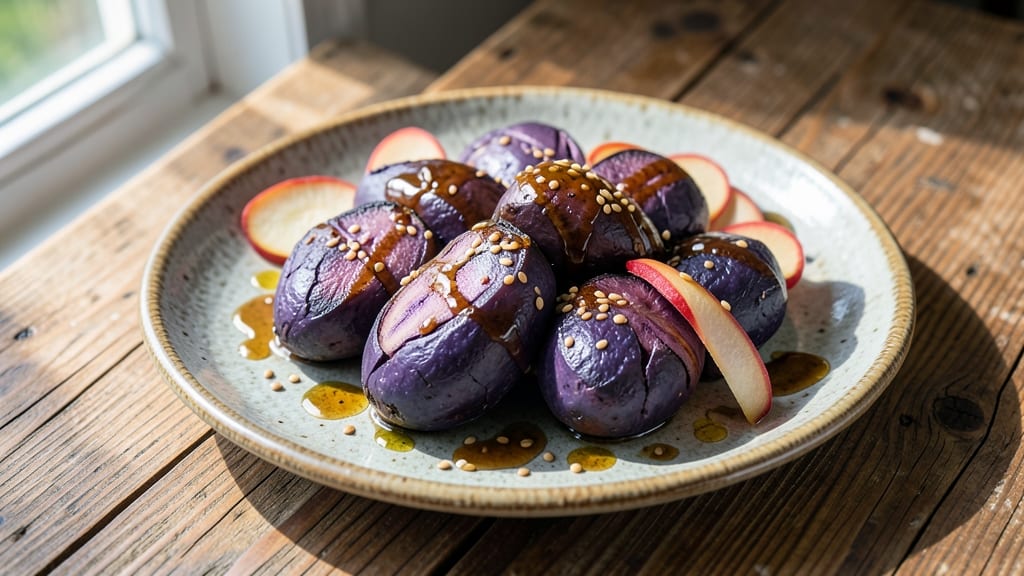
Japanese purple potatoes bring a vibrant purple hue and earthy sweetness to any meal, making them a standout in Japanese cuisine. These potatoes retain their striking color even after cooking, adding visual appeal alongside their naturally nutty flavor profile.
I've perfected a simple roasting method that enhances their natural sweetness while keeping the texture tender and slightly crispy on the edges.
The beauty of these potatoes lies in their versatility—they can be roasted, boiled, or even mashed, but roasting at high heat brings out their caramelized sweetness best. This recipe delivers restaurant-quality results with minimal effort, using just a few simple ingredients and 30 minutes of active time.
The vibrant purple color remains intact, making them perfect for both traditional and modern dishes.
By the end, you'll have tender, caramelized potatoes with a rich purple color that looks as impressive as it tastes. Their natural sweetness pairs beautifully with savory Japanese flavors, making them ideal for complementing grilled meats, fish, or even as a standalone side dish.
The best part? These potatoes are packed with antioxidants and nutrients, adding a healthy twist to your meal.
Serve them alongside miso-glazed salmon, teriyaki chicken, or even as a vibrant addition to a Japanese-inspired grain bowl. This recipe is designed to be foolproof, ensuring you achieve perfect results every time. Let's get started on creating this visually stunning and delicious side dish!
Ingredients for japanese purple potato
Japanese purple potatoes meet Japanese flavors in this vibrant, foolproof side dish.
| Ingredient | Amount | Notes |
|---|---|---|
| Japanese Purple Potatoes 🥔 | 2 ½ lb | Waxy variety, unpeeled for color retention |
| Extra-Virgin Olive Oil 🫒 | 0.3 cup | High-quality, fruity variety |
| Sesame Oil 🌿 | 1 tbsp | For aromatic depth |
| Soy Sauce 🧂 | 2 tbsp | Low-sodium preferred |
| Honey 🍯 | 1 tbsp | Raw, unprocessed for purity |
| Fresh Ginger 🌿 | 1 tbsp | Finely grated, zest included |
| Garlic Cloves 🧄 | 3 cloves | Minced, aromatic |
| Salt 🧂 | 1 tsp | Diamond Crystal kosher |
| Black Pepper 🌶️ | ½ tsp | Freshly ground |
| Toasted Sesame Seeds 🥜 | 2 tbsp | For garnish and crunch |
| Fresh Green Onions 🥬 | ¼ cup | Chopped, for garnish |
The star here is Japanese purple potatoes—look for waxy varieties at specialty markets or Asian grocery stores like H Mart or 99 Ranch. They should be firm to the touch with a deep purple skin. Don't peel them before roasting; that's how you keep that stunning color! The extra-virgin olive oil should be fruity, not bitter—California Olive Ranch is my go-to for reliable quality. Sesame oil adds that signature aroma, but don't skip it—it's what ties everything together.
No sesame oil? Toasted sesame paste works in a pinch, though it's thicker. Want to cut back on sodium? Use coconut aminos instead of soy sauce—it's got a similar depth but less salt. Ginger is non-negotiable for this flavor profile, but if you're short on time, 1 tsp ground ginger at half the amount gets you close. The honey should be raw and unprocessed—local honey from farmers markets adds a subtle floral note that pairs beautifully. For the garlic, roasted garlic adds a different dimension if you want to experiment.
These potatoes keep beautifully for 3-4 days in an airtight container in the fridge, but honestly, they're best eaten within 2 days for peak texture. The sesame seeds and green onions should be stored separately until garnishing—toast the seeds in a dry pan for 30 seconds right before using to bring out their nuttiness. Reheat gently in the oven at 350°F for 10 minutes to restore that perfect crispness. They also freeze amazingly well—just thaw overnight in the fridge and reheat from frozen.
Why You'll Love This Recipe
- Five-Ingredient Magic: I swear by this recipe—just potatoes, oil, soy, sesame, and honey. That’s it. No chopping, no peeling fuss, and no last-minute grocery runs. Honestly, I’ve made it with whatever potatoes I had in the drawer, but those deep purple ones? They turn into little edible jewels.
- Umami Honey Crunch: The sesame oil hits first—nutty, toasty, like a warm hug. Then the soy sauce kicks in with that salty depth, and the honey? It caramelizes just enough to make every bite taste like a tiny, crispy reward. Between us, I’ve caught myself eating them straight from the pan.
- Lunchbox Hero: Cold or warm, these potatoes hold up like champs. Toss them in a bento box with rice and edamame for a lunch that feels fancy but costs next to nothing. My kid brings them to school and comes home raving—no sad desk lunches here.
- Leftovers Lie: I make a big batch on Sundays, and they’re still begging for seconds by Wednesday. The flavors only get better as they sit, and they reheat in seconds. Not the prettiest, but the taste makes up for it—plus, it’s my secret weapon for lazy nights.
Step-by-step instructions for Japanese purple potatoes
Here's how to transform these stunning potatoes into a showstopping side dish bursting with umami and color.
Prep and Parboil the Potatoes
Start by thoroughly scrubbing the 2.5 lb Japanese Purple Potatoes under cold water to remove any dirt. Cut them into 1-inch chunks—the waxy texture holds up beautifully when roasted. Place the chunks in a medium pot and cover with cold water by about 1 inch. Add 1 tsp Salt and bring to a boil over high heat. Once boiling, immediately reduce to a gentle simmer for 5 minutes.
This quick parboil ensures the potatoes cook evenly and develop a tender interior while maintaining their vibrant purple hue. Drain immediately in a colander and rinse with cold water to stop the cooking process. Here's the thing—don't skip this step. Parboiling prevents the potatoes from turning mushy during roasting and helps them absorb flavors more effectively.
Create the Flavorful Oil Mixture
In a small bowl, whisk together 0.3 cup Extra-Virgin Olive Oil, 1 tbsp Sesame Oil, 2 tbsp Soy Sauce, 1 tbsp Honey, 1 tbsp Fresh Ginger, 3 cloves Garlic Cloves (minced), 0.5 tsp Black Pepper, and 1 tsp Salt. The combination of sweet honey and savory soy sauce creates a perfect balance that complements the earthy potatoes. Let this mixture sit for 5 minutes to allow the aromatics to meld together.
This is where the magic happens. The sesame oil adds depth while the honey caramelizes slightly during roasting, creating a beautiful glaze. I always use freshly grated ginger and minced garlic—pre-minced garlic lacks the same aromatic punch. Taste the mixture now; it should be tangy, slightly sweet, and packed with umami. If you want more depth, add an extra pinch of salt.
Toss and Roast to Perfection
In a large bowl, combine the drained potato chunks with the oil mixture, tossing gently but thoroughly until every piece is evenly coated. Transfer the potatoes to a rimmed baking sheet lined with parchment paper, spreading them in a single layer. Roast in a 400°F oven for 25 minutes, stirring once halfway through the cooking time.
You'll know they're ready when the edges are deep golden brown and the potatoes feel tender when pierced with a fork. The vibrant purple color should remain intact, though it may darken slightly at the edges—a sign of perfect caramelization. Real talk: don't overcrowd the pan. If you do, the potatoes will steam instead of roast, resulting in a soggy texture. If your pan is too small, work in batches.
Finish with Crunch and Garnish
Remove the potatoes from the oven and immediately sprinkle with 2 tbsp Toasted Sesame Seeds and 0.25 cup Fresh Green Onions (chopped). Toss gently to distribute the seeds and onions evenly. Let them sit for 2 minutes to allow the sesame seeds to crisp slightly from the residual heat.
This final step adds texture contrast and visual appeal. The toasted sesame seeds provide a satisfying crunch that balances the tender potatoes, while the green onions add a fresh, bright finish. Serve immediately while the potatoes are still warm—this dish doesn't wait. The combination of sweet, savory, and umami flavors makes these potatoes an unforgettable side dish that steals the show alongside any main course.
Pro Tips For Making Japanese Purple Potato
- Slice Thinly, Evenly: Japanese purple potatoes hold moisture like no other, so if you’re roasting or pan-searing, cut them into ¼-inch slices—no thicker, or they’ll turn gummy. Use a mandoline if you’re impatient like me, but if you’re doing it by hand, keep your knife sharp and steady. Uneven slices = uneven cooking, and that’s a waste of those gorgeous purple layers.
- Toast Sesame Oil First: That sesame oil isn’t just for drizzling—heat it in the pan for 10 seconds before adding anything else. It’ll perfume the whole dish with nutty depth, but skip this and you’re just using it as a flavorless binder. (Yes, even if you’re in a hurry—just don’t walk away.)
- Balance Sweet and Salty: Soy sauce and honey are a match made in heaven, but too much honey makes this dish cloying, and too little soy flattens the flavor. Start with 1 tablespoon soy to ½ tablespoon honey per potato, then adjust—taste as you go. (I learned this after making a batch that tasted like a dessert, not a savory side.)
- Don’t Overcrowd the Pan: If you’re pan-frying, work in batches—two slices max per side, or they’ll steam instead of crisp. I used to toss everything in at once, and the result was sad, limp potatoes. Crowding kills texture, and these potatoes deserve to be golden and crisp. (Your future self will notice.)
Regional styles of this recipe
Kyoto-Inspired Roasted
In Kyoto, these potatoes are often roasted with yuzu kosho—a citrusy chili paste—for a bright, slightly spicy kick. Replace the soy sauce with 1 tbsp yuzu kosho and 1 tsp mirin in the oil mixture.
The acidity from the yuzu enhances the potato's natural sweetness while adding a signature Japanese tang. Serve with grilled mackerel or miso-glazed tofu for an authentic Kyoto-inspired meal. 🌸
Okinawa Sweet Glaze
Okinawan cuisine loves caramelized flavors, so try brushing the potatoes with a mix of 2 tbsp honey and 1 tbsp awamori (Okinawan liquor) after roasting. The awamori adds a subtle warmth that pairs perfectly with the potatoes' earthiness.
Garnish with toasted black sesame seeds instead of white for a deeper, nuttier flavor. This version is especially popular as a side for Okinawan soba noodles.
Hokkaido Butter Finish
For a richer, creamier take, finish the roasted potatoes with 1 tbsp Hokkaido butter (Japanese premium butter) and a pinch of flaky sea salt. The butter's high fat content creates a luxurious mouthfeel, while the sea salt cuts through the sweetness.
This style is perfect for pairing with Hokkaido beef or uni (sea urchin)—a luxurious touch that feels like a Michelin-starred side dish. 🥛
Tokyo Street Food Twist
Transform these potatoes into a Tokyo-style street food snack by tossing them with a spicy mayo (mix 2 tbsp mayo with 1 tsp sriracha and ½ tsp grated daikon) after roasting.
Add crushed ramen seasoning for umami depth. Serve in a paper cone or as a topping for gyudon (beef bowl) for an onigiri-like texture that's addictive and portable.
Hiroshima Okonomiyaki Fusion
In Hiroshima, these potatoes can be incorporated into okonomiyaki—Japan's savory pancake. Layer the roasted potatoes with shredded cabbage, okonomiyaki sauce, and bonito flakes, then cook until crispy.
Top with aonori (seaweed flakes) and katsuobushi (bonito shavings) for that iconic Hiroshima street food experience. The potatoes add a vibrant contrast to the savory layers. 🍳
Nutrition facts
Frequently asked questions
Why do Japanese purple potatoes keep their color when cooked?
These potatoes contain anthocyanins, the same antioxidants that give blueberries their color. Unlike regular potatoes, their skin and flesh stay vibrant through cooking because these pigments are heat-stable. The parboiling step in this recipe actually helps preserve the color while tenderizing the interior.
Can I substitute regular potatoes for Japanese purple potatoes?
You can try, but the results won't be the same. Regular potatoes will lose their color when cooked and have a different texture. For best results, use red or purple sweet potatoes as a closer substitute—they retain some color and sweetness, though not as vibrant. The flavor profile will also be milder compared to the earthy sweetness of Japanese purple potatoes.
How do I prevent the potatoes from turning mushy during roasting?
Never skip the parboiling step—it's crucial for even cooking. Also, make sure to:
- Cut them into even 1-inch chunks
- Pat them very dry after parboiling
- Spread them in a single layer on the baking sheet
- Roast at 400°F (not higher) to avoid burning the edges before the centers cook The high heat caramelizes the edges while keeping the inside tender.
What's the best way to store leftover roasted purple potatoes?
Store them in an airtight container in the fridge for up to 4 days. To reheat, spread them on a baking sheet and warm at 350°F for 10 minutes—this restores their crisp edges. For longer storage, freeze them for up to 3 months. Thaw overnight in the fridge before reheating. The color may darken slightly when reheated, but the flavor stays delicious.
Are these potatoes gluten-free?
Yes, this recipe is naturally gluten-free as written. Just confirm your soy sauce is gluten-free (look for tamari) and check sesame seed packaging for cross-contamination warnings. The potatoes themselves are completely gluten-free, making this a safe side for celiac diets or gluten sensitivities.