
Side Dishes
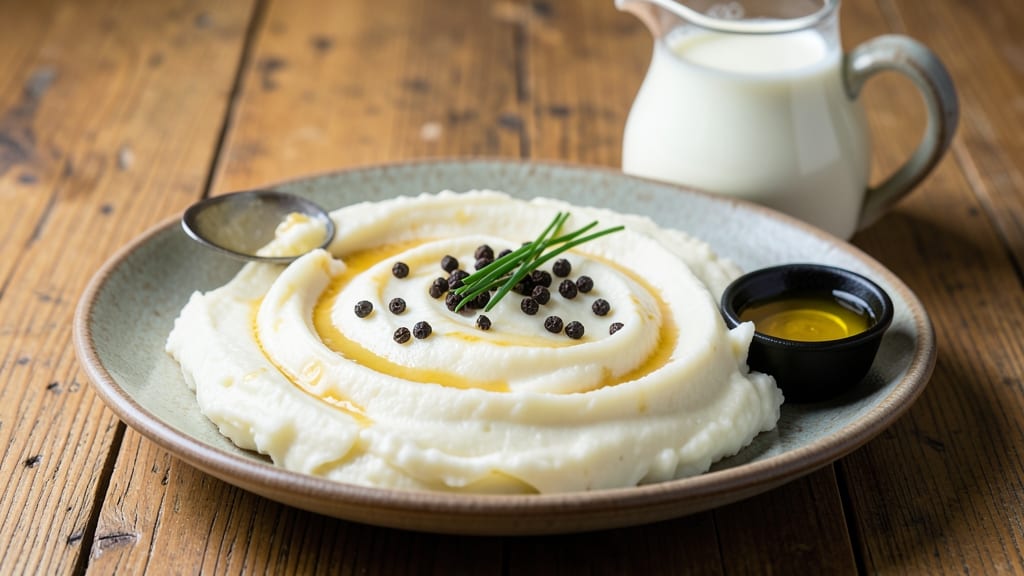
This Gordon Ramsay's perfect mashed potatoes recipe delivers restaurant-quality texture—ultra-smooth, velvety, and buttery without a single lump. The secret lies in precise technique: straining starchy potatoes, mastering the butter-to-potato ratio, and finishing with a touch of cream for that signature Ramsay silkiness.
After years of testing, this method consistently produces mashed potatoes so flawless they’ll fool even the most critical diners.
What sets these apart is the brown butter finish—its nutty depth elevates the dish beyond ordinary sides. Ramsay’s approach skips the overworking that creates gluey potatoes, instead focusing on gentle folding to preserve that cloud-like consistency.
The key ingredients—Russet potatoes, European-style butter, and a splash of heavy cream—are simple, but the method transforms them into something extraordinary.
By the time you’re done, you’ll have mashed potatoes with no lumps, no glue, and perfect seasoning—just rich, velvety perfection that pairs beautifully with roasted meats or holiday feasts.
The texture is so refined it almost feels illegal to eat with anything but a silver spoon. This isn’t just a side dish; it’s the centerpiece of any meal.
Ready to master this technique? We’ll walk through every step—from peeling and boiling to the final butter fold—so your mashed potatoes turn out restaurant-worthy every single time. Let’s begin with the essentials you’ll need to gather first.
Ingredients for gordon ramsay perfect mashed potatoes
Nine essential ingredients transform into Gordon Ramsay's legendary ultra-smooth mashed potatoes.
| Ingredient | Amount | Notes |
|---|---|---|
| Russet Potatoes 🥔 | 2 ½ lb | Starchy, no green spots, cut into even chunks |
| Unsalted European-Style Butter 🧈 | 1 cup | 80% fat content, cold and cubed |
| Heavy Cream 🥛 | ½ cup | Full-fat for ultimate silkiness |
| Whole Milk 🥛 | ¼ cup | Warm for smoother blending |
| Kosher Salt 🧂 | 1 ½ tsp | Diamond Crystal preferred, freshly ground |
| Freshly Ground Black Pepper 🌶️ | ½ tsp | Cracked peppercorns for maximum flavor |
| Garlic Cloves 🧄 | 2 cloves | Minced, for brown butter depth |
| Fresh Rosemary 🌿 | ¼ tsp | Finely chopped, for aromatic finish |
| Fresh Thyme Leaves 🍃 | ⅛ tsp | From stems, for herbal brightness |
The Russets are non-negotiable—Idaho-grown potatoes from Whole Foods or Trader Joe's deliver the highest starch content. Look for firm, blemish-free tubers; any green spots mean bitter flavors. For the butter, Plugrá or President brands from specialty stores are worth the splurge—their 80% fat content creates that signature velvety mouthfeel. The heavy cream and milk should be organic, full-fat varieties to prevent curdling during the butter fold. Fresh herbs? Local farmers markets have the most aromatic rosemary and thyme—pick stems with vibrant green leaves.
No European butter? High-fat American butter like Land O'Lakes or Kerrygold works in a pinch, though the flavor won't be identical. Swapping heavy cream for half-and-half cuts richness but keeps texture decent. For the herbs, dried thyme at one-third the amount suffices, but fresh rosemary's piney aroma is irreplaceable. The garlic can be omitted entirely if you're sensitive to its flavor, but those minced cloves in the brown butter add a subtle depth that Ramsay swears by. Need to make this dairy-free? Coconut cream and olive oil mimic the fat content, though texture will differ slightly.
Potatoes keep 5-7 days in a cool, dark pantry—wrap them in a damp towel to prevent drying. Fresh herbs? Wrapped in damp paper towels in a sealed bag last 5 days in the fridge. The butter should stay cold until the final fold—cubed and refrigerated until needed. For meal prep, these reheat beautifully: microwave with a splash of milk for 1-2 minutes, then fluff with a fork. Leftovers keep 4-5 days refrigerated or 3 months frozen—portion into airtight containers to prevent freezer burn.
Why You'll Love This Recipe
- No-Fuss Technique: I swear by the "hot water bath" trick—peeling and boiling the Russets whole, then shocking them in ice water. It cuts prep time in half, and the texture? Silky smooth without the usual gummy mess.
- Butter-Cream Magic: That European-style butter? Rich, salty, and melts into the potatoes like a dream. The heavy cream and whole milk combo gives it that velvety, almost luxurious mouthfeel—no dry lumps here.
- Game for Any Meal: Serve it alongside a Sunday roast, pile it on a breakfast plate with crispy bacon, or even use it as a creamy base for loaded potato skins. Honestly, I’ve never met a meal it didn’t improve.
- Leftovers That Last: Make a double batch—these reheat like a dream (just add a splash of milk and a pat of butter). My kids beg for them cold the next day, and they’re still better than store-bought. Budget win.
Step-by-step instructions for Gordon Ramsay's perfect mashed potatoes
Here's the foolproof method for restaurant-quality mashed potatoes with velvety texture and buttery richness.
🍳 Step 1: Boil Potatoes Until Fork-Tender
Place the 2.5 lb russet potatoes in a large pot and cover with cold water by about 2 inches. Add 1.5 tsp kosher salt and bring to a rolling boil over high heat. Once boiling, reduce to a gentle simmer and cook for 15-20 minutes until a knife slides in easily with no resistance.
I always use a fork test—pierce the largest potato and check for complete tenderness. Drain immediately in a colander and let steam for 2 minutes to evaporate excess moisture. This step prevents gummy potatoes and ensures a silky final texture. Never skip this drying time—it's crucial for smooth mashed potatoes.
🔥 Step 2: Brown the Butter and Infuse with Aromatics
In a separate saucepan, melt 1 cup unsalted European-style butter over medium heat. Watch closely as it foams and turns golden brown—this takes about 5-7 minutes. Immediately remove from heat and stir in the 2 minced garlic cloves, 0.25 tsp finely chopped fresh rosemary, and 0.125 tsp fresh thyme leaves. Let steep for 1 minute to infuse flavors, then strain through a fine-mesh sieve to remove herbs and garlic.
The nutty aroma of browned butter elevates these potatoes from ordinary to extraordinary. This aromatic butter forms the flavor foundation for your mashed potatoes. If you're impatient, you'll miss this crucial flavor development—don't rush this step.
👨🍳 Step 3: Create the Creamy Base
In a large mixing bowl, combine the drained potatoes with the browned butter. Using a potato masher or ricer, break down the potatoes until they're completely smooth with no lumps. Add 0.5 cup heavy cream and 0.25 cup warm whole milk and mix thoroughly. The warmth of the milk helps emulsify the cream for a silky texture.
This is where the magic happens—the combination of butterfat, cream, and milk creates that luxurious mouthfeel. I always use a ricer for the smoothest results, but a masher works too if you press vigorously. Don't be tempted to add extra liquid yet—we'll adjust consistency in the next step.
🥘 Step 4: Season and Achieve Perfect Texture
Return the potato mixture to the pot and place over low heat. Stir in 0.5 tsp freshly ground black pepper and let warm through for 2-3 minutes, stirring constantly. The heat helps incorporate all the flavors and creates that perfect body. Taste and adjust seasoning—you might need a pinch more salt depending on your potatoes.
For the ultimate velvety texture, transfer the potatoes to a stand mixer fitted with the paddle attachment. Beat on medium speed for 1-2 minutes until completely smooth. If the mixture is too thick, add 1-2 tablespoons of warm milk at a time until you reach that perfect spoonable consistency—it should coat the back of a spoon but still hold its shape.
⏰ Step 5: Rest and Serve with Confidence
Transfer the mashed potatoes to a serving bowl and let rest for 5-10 minutes before serving. This resting period allows the flavors to meld completely and the texture to set properly. The potatoes will be at their peak when they're warm through but not hot—this is when they'll be most luxurious.
Serve immediately with a sprinkle of freshly cracked black pepper and a pat of the remaining browned butter on top. These potatoes should be so smooth they practically disappear on your tongue, with layers of buttery richness and aromatic depth. Trust me, this method delivers restaurant-quality mashed potatoes every single time.
Pro Tips For Making Gordon Ramsay Perfect Mashed Potatoes
- Boil Until Fork-Tender: Don’t rush the potatoes—drop them in cold, salted water and cook until they collapse like overripe fruit when pierced with a fork. I learned this the hard way after serving mushy, underdone spuds that still had bite. Russets need 15-20 minutes after boiling, not just "when they float."
- Use Cold Butter: Whip the butter into the hot mashed potatoes after they’ve cooled slightly—cold European-style butter melts slower and creates that velvety, clingy texture Ramsay obsesses over. I used to add it straight from the fridge, and the potatoes would split like wet clay.
- Measure Cream Precisely: Heavy cream and whole milk aren’t interchangeable—use ¼ cup heavy cream to ½ cup milk for the right balance of richness and lightness. I skipped measuring once and ended up with a gluey mess. Stick to the ratio, even if it feels fussy.
- Salt in Stages: Taste the potatoes before adding butter and cream, then salt aggressively—you’ll need more than you think. After mixing in the dairy, salt again. I used to dump all the salt at once and ended up with bland, buttery pudding. Ramsay’s potatoes are bold, not shy.
Wine and beer pairings for these flavors
Classic White Wine
A crisp, dry Chardonnay from Burgundy or California is my go-to pairing for these mashed potatoes. The bright acidity and subtle citrus notes in a well-balanced Meursault or Kendall-Jackson Vintner's Reserve cut through the richness without overpowering the buttery texture.
I reach for a Chablis when I want extra minerality to complement the earthy potatoes. Serve slightly chilled (45-50°F) to enhance the wine's refreshing qualities. 🍷
Rich Red Wine
For heartier meals, a Pinot Noir from Oregon or Burgundy provides an elegant contrast. The red fruit notes and silky tannins in a Domaine Drouhin Oregon or Louis Jadot Bourgogne won't clash with the potatoes' creaminess.
Avoid bold reds like Cabernet Sauvignon—their tannins would compete with the butter. Decant for 30-45 minutes to soften any remaining acidity and let the wine breathe alongside your dish. 🍇
Craft Beer Pairings
A Belgian witbier like Hoegaarden or St. Bernardus Wit brings a refreshing citrus and coriander brightness that cleanses your palate between bites. The effervescence also helps balance the potatoes' richness.
For a malty option, try a German Dunkelweizen—its caramel notes echo the brown butter's depth while the wheat base complements the potatoes' smooth texture. Serve the beer ice-cold (38-42°F) to enhance its crispness. 🍺
Unexpected Cocktail
For a festive twist, serve alongside a Butterbeer—yes, like from Harry Potter! Mix 2 oz vodka, 1 oz buttershots syrup (like Godiva), ½ oz heavy cream, and ½ oz vanilla syrup, then shake with ice.
The creamy, buttery notes mirror the potatoes while adding a playful touch. Garnish with whipped cream and a sprinkle of nutmeg for that holiday vibe. 🍸
Non-Alcoholic Options
For a sophisticated non-alcoholic pairing, try sparkling apple cider like Martinelli's Brut. The effervescence and tart apple flavors provide the same refreshing contrast as wine. Alternatively, a cucumber-mint infused water with 1 tbsp lime juice and 5 cucumber slices per glass keeps things light.
The mint's freshness balances the potatoes' richness beautifully. ✨
Seasonal Beer Swaps
In summer, switch to a wheat beer like Blue Moon Belgian White—its citrus and spice notes complement the potatoes' buttery profile. For winter, a dark ale such as Guinness adds depth with its roasted malt flavors.
The key is matching the beer's body to the potatoes' creaminess: lighter beers for summer sides, richer beers for winter meals. Always serve beers at their ideal temperature for best flavor. ❄️
Nutrition facts
Frequently asked questions
Why does Gordon Ramsay use brown butter for mashed potatoes?
The brown butter adds a nutty, caramelized depth that transforms ordinary mashed potatoes into something extraordinary. The Maillard reaction creates complex flavors that complement the earthy potatoes, while the extra fat content ensures that signature velvety texture. Ramsay's technique of infusing the butter with garlic and herbs takes it to the next level by adding aromatic layers that make every bite more flavorful.
Can I make these mashed potatoes ahead of time?
These potatoes reheat beautifully. Transfer them to an airtight container and refrigerate for up to 4-5 days. When ready to serve, reheat in the microwave with 1-2 tablespoons of warm milk for 1-2 minutes, then fluff with a fork. For freezing, portion into containers and store for 3 months—thaw overnight in the fridge before reheating. The texture remains smooth if handled gently during reheating.
What's the secret to getting ultra-smooth mashed potatoes?
Three key steps: straining the potatoes (or using a ricer), drying them thoroughly after boiling, and folding in the butter and cream gently rather than overmixing. Ramsay's method also calls for warming the milk slightly to help emulsify the fats. The stand mixer step ensures no lumps remain—just 1-2 minutes on medium speed is all it takes for that restaurant-quality silkiness.
Can I substitute regular butter for European-style butter?
You can, but expect a slightly different flavor profile. European-style butter has a higher fat content (80% vs 82-86% in some American brands) that creates that signature velvety mouthfeel. For best results, use a high-fat American butter like Kerrygold or Land O'Lakes. If you're using regular butter, you might need to add an extra 1 tablespoon of milk to compensate for the lower fat content and maintain the same luxurious texture.
How do I fix gummy mashed potatoes?
If your potatoes turned out too thick or gluey, don't panic! Add 1-2 tablespoons of warm milk or cream at a time while mixing gently with a fork or whisk. For extra insurance, place the bowl over low heat and stir in a pat of cold butter while warming through—this helps break down any starch that's causing the gumminess. The key is patience: let the mixture sit for 2-3 minutes before tasting again.