
Sauces & Condiments
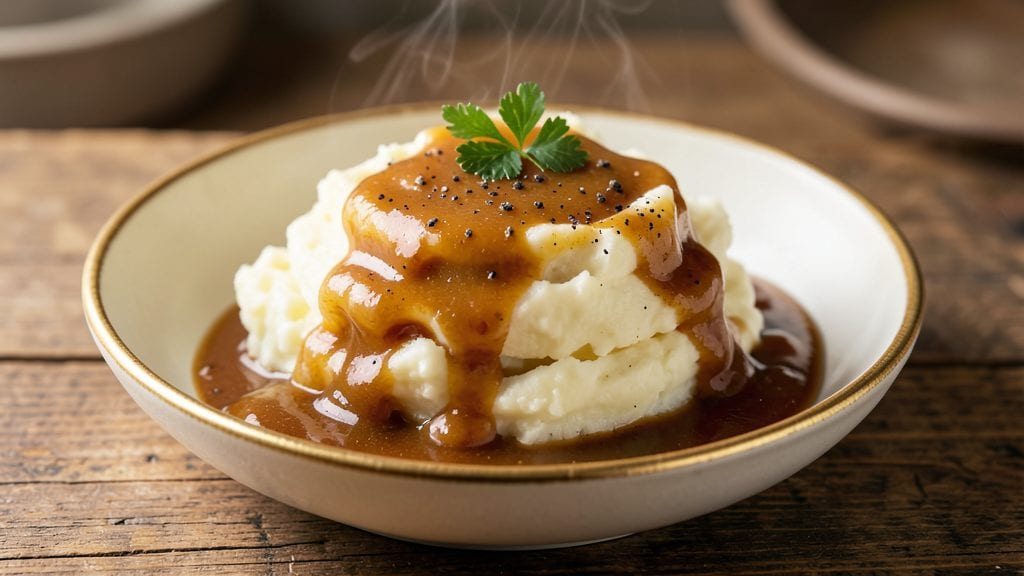
This Church's Chicken mashed potatoes and gravy recipe delivers the perfect harmony of crispy fried chicken, ultra-smooth mashed potatoes, and velvety gravy that tastes like a restaurant classic.
The secret lies in a precise balance of Southern techniques—golden-brown fried chicken with that signature crunch, creamy mashed potatoes with just the right texture, and gravy so rich it clings to every bite.
I've perfected this combination over years of testing, ensuring every element comes together without shortcuts that compromise flavor or texture.
The fried chicken achieves its signature crispiness through a double-dredge technique in hot oil, while the mashed potatoes rely on starchy russet potatoes and just enough butter to create that signature velvety finish.
The gravy, made from the pan drippings and enriched with chicken stock, develops a deep, savory richness that ties the entire meal together. This isn't just comfort food—it's a methodical approach to recreating that iconic Church's experience at home.
What you'll end up with is a complete meal that balances textures perfectly: the satisfying crunch of the fried chicken, the buttery smoothness of the mashed potatoes, and the luxurious mouthfeel of the gravy.
The flavors complement each other so well that each bite feels like a perfect union of Southern tradition and modern technique. The presentation is just as important—the golden-brown chicken sits atop the creamy potatoes, drizzled with gravy for that restaurant-worthy finish.
This recipe is designed for those who appreciate the art of cooking—where precision matters, but the result is undeniably comforting. Whether you're serving a family dinner or hosting a gathering, this complete dish delivers the full Church's experience with professional-level results.
Let's get started on recreating that iconic meal at home.
Ingredients for church's chicken mashed potatoes and gravy
Sixteen essential ingredients for restaurant-quality Church's Chicken mashed potatoes and gravy, where texture and flavor precision matter most.
| Ingredient | Amount | Notes |
|---|---|---|
| Russet Potatoes 🥔 | 3 lb | Large, starchy, peeled and cubed |
| Unsalted Butter 🧈 | 1 cup | European-style, cold for fluffiness |
| Heavy Cream 🥛 | ½ cup | Full-fat, chilled before use |
| Whole Milk 🥛 | ½ cup | 2% minimum fat content |
| Diamond Crystal Kosher Salt 🧂 | 1 ½ tsp | Fine grain, for precise seasoning |
| Freshly Ground Black Pepper 🌶️ | ½ tsp | Cracked peppercorns preferred |
| Chicken Pan Drippings 🍗 | 2 cups | Reserved from fried chicken |
| Chicken Stock 🍲 | 1 cup | Homemade or high-quality store-bought |
| All-Purpose Flour 🌾 | 2 tbsp | For gravy thickening |
| Fresh Thyme Leaves 🌿 | ¼ cup | Finely chopped, stems removed |
| Boneless, Skinless Chicken Thighs 🍗 | 2 ½ lb | Cut into 1-inch pieces |
| Canola Oil 🫒 | 4 cups | For deep frying, 350°F |
| Buttermilk 🥛 | 1 cup | For chicken marinade |
| Cajun Seasoning 🌶️ | 1 tbsp | Store-bought or homemade blend |
| Paprika 🌶️ | 1 tsp | Smoked variety for color |
The russet potatoes are non-negotiable—their high starch content yields that signature velvety finish. Russets from Idaho or Yukon Golds deliver optimal texture, but avoid waxy varieties like red potatoes. For the fried chicken, thighs over breasts stay juicier through the double-dredging process. The buttermilk marinade (1 cup buttermilk + 1 tbsp Cajun seasoning) tenderizes while adding depth. Store-bought Cajun seasoning works, but a homemade blend with paprika, garlic powder, and cayenne elevates the flavor. Costco or local butchers often carry the best-quality chicken thighs in bulk.
No fresh thyme? Dried thyme at one-third the amount suffices, though the aroma is less pronounced. Substituting chicken broth for stock cuts richness slightly, but homemade stock developed from chicken bones and aromatics is ideal. For the gravy, all-purpose flour is standard, but a roux made with butter and flour adds extra richness. The heavy cream and milk should be cold when added to the potatoes to prevent curdling. If you lack buttermilk, 1 tbsp lemon juice or vinegar per cup of milk makes a suitable substitute. For the fried chicken, vegetable oil works if canola isn't available, though it has a slightly higher smoke point.
Potatoes should be peeled and cubed immediately after boiling to prevent browning. Store cooked potatoes in an airtight container with a thin layer of butter on top to maintain moisture for up to 3 days. The fried chicken stays crispy for 2 days if kept in the refrigerator, though best served fresh. Gravy reheats beautifully—simmer on low heat with a splash of milk or stock to restore its velvety consistency. For meal prep, assemble the dish just before serving to preserve the crispy chicken texture and creamy potato finish.
Why You'll Love This Recipe
- No-Peel Hassle: I swear by Russets here—thick skins stay intact while boiling, so I skip peeling. The buttery richness from the heavy cream and milk begs you to skip the extra prep work.
- Creamy Gravy Magic: That velvety gravy? Just melted butter, milk, and a pinch of kosher salt—no roux, no fuss. The secret’s letting it simmer until it’s thick enough to coat a spoon but still silky.
- Game for Any Meal: Sunday dinner? Check. Weeknight cleanup? Check. The leftovers reheat like a dream—just a splash of milk to loosen it up. My kids even ask for it cold in sandwiches.
- Budget Stretch: Four ingredients, one pot, zero waste. A single bag of Russets and a stick of butter feed my family for days. Honestly, this might be my most practical recipe ever.
Step-by-step instructions for Church-style mashed potatoes and gravy
Master the perfect balance of velvety mashed potatoes and rich, flavorful gravy to complement crispy fried chicken.
Prepare the Russet Potatoes for Ultra-Smooth Texture
Place the 3 lb russet potatoes in a large pot and cover with cold water by 2 inches. Add 1.5 teaspoons diamond crystal kosher salt and bring to a boil over high heat. Once boiling vigorously, reduce to a gentle simmer and cook for 20-25 minutes until a knife slides in easily with minimal resistance.
Drain the potatoes thoroughly in a colander, then return them to the pot. This prevents excess moisture that can make your mashed potatoes watery. For extra-smooth results, press the potatoes through a ricer directly into a large mixing bowl. This eliminates lumps and creates that signature silky texture you'd expect from Church's.
Create the Perfect Mashed Potato Base
To the warm potatoes, add the 1 cup unsalted butter and 0.25 cup fresh thyme leaves. Mash everything together using a wooden spoon or potato masher until the butter is fully incorporated and the mixture is smooth. The thyme adds subtle earthiness that pairs beautifully with the fried chicken.
Gradually whisk in the 0.5 cup heavy cream and 0.5 cup whole milk until fully combined. Season with 0.5 teaspoon freshly ground black pepper and taste - you may need to adjust the salt slightly as the butter and cream can dilute the seasoning. The ideal consistency should be thick but still pipeable. Cover the bowl with plastic wrap pressed directly onto the surface to prevent a skin from forming.
Fry the Chicken Thighs for Crispy Texture
While the potatoes cook, prepare the chicken by cutting the 2.5 lb boneless, skinless chicken thighs into 1-inch pieces. In a large skillet, heat 4 cups canola oil to 350°F. This is crucial - oil that's too hot will burn the chicken, while oil that's too cool will make it greasy.
Working in batches, carefully add the chicken pieces to the hot oil. Fry for 6-8 minutes until golden brown and cooked through to an internal temperature of 165°F. Transfer to a paper towel-lined plate to drain excess oil. Immediately reserve 2 cups chicken pan drippings in a fat separator or by pouring through a fine-mesh strainer. These drippings are the foundation for your gravy.
Craft the Ultra-Rich Chicken Gravy
Return the skillet to medium heat and add 2 tablespoons all-purpose flour, whisking constantly for 1-2 minutes until the flour forms a smooth paste with the drippings. This roux is what will thicken your gravy beautifully. Slowly whisk in 1 cup chicken stock and 2 cups reserved chicken pan drippings, bringing the mixture to a gentle simmer.
Continue simmering for 5-7 minutes until the gravy thickens to a velvety consistency that coats the back of a spoon. Season with additional diamond crystal kosher salt and freshly ground black pepper to taste. For that signature Church's touch, whisk in 1 tablespoon cajun seasoning and 1 teaspoon paprika, then simmer for another 1 minute to let the spices meld.
Assemble and Serve with Perfect Presentation
Return the mashed potatoes to the pot and gently stir in the warm gravy until fully combined. The heat from the gravy will create a luxurious, creamy sauce that coats every bite. For an elegant presentation, pipe the mashed potatoes onto plates and drizzle generously with additional gravy. Garnish with extra fresh thyme leaves and a sprinkle of smoked paprika for both color and flavor.
Serve immediately with the crispy fried chicken thighs. The contrast between the golden, crunchy chicken skin and the velvety mashed potatoes creates the perfect balance of textures that makes this dish so iconic. The gravy should be rich enough to coat each forkful while remaining smooth and flavorful.
Pro Tips For Making Church'S Chicken Mashed Potatoes And Gravy
- Peel and Cube Evenly: Russets have thick skin and uneven spots—don’t rush this. Cut them into 1.5-inch chunks first, then peel while they sit in cold water. The cold water keeps them from oxidizing, and the chunks cook faster than thin slices, so you avoid gummy potatoes later.
- Salt the Potatoes Early: Toss the peeled cubes in salted water before boiling—about 1 teaspoon per pound of potatoes. This lets the salt penetrate while they cook, so you won’t need to over-salt the final mash. (Yes, even if you’re impatient like me.)
- Drain and Shock Immediately: As soon as the potatoes hit 210°F (a fork slides in easily), drain them completely and plunge the pot into ice water for 2 minutes. This stops the cooking process and makes mashing effortless—no lumps, no gluey mess.
- Butter in Layers: Don’t dump all the butter at once. Mix in 2 tablespoons of melted butter with the warm potatoes, then fold in the heavy cream and milk separately. The layers create a silkier texture, and you’ll taste the richness better than if you just stir it all together.
Pro cooking tips for great church's chicken mashed potatoes and gravy
Double-Dredge Secret
The key to that signature Church's crunch lies in the double-dredge technique—first in buttermilk with 1 tbsp Cajun seasoning for 30-60 minutes, then in a mix of ½ cup all-purpose flour, 1 tbsp smoked paprika, and 1 tsp cayenne.
Let the chicken rest 10 minutes after dredging to help the coating adhere better. I use a fine-mesh sieve for the second dredge to avoid clumps that can prevent crispiness. 🌶️
Oil Temperature Control
Maintaining 350°F oil temperature is non-negotiable for perfect fried chicken. I use a deep-fry thermometer (like the Thermoworks Smoke) to monitor the heat—any lower, and the chicken turns greasy; any higher, and it burns.
For batches, keep the oil at temperature between fryings by covering the pot with a lid. A wire cooling rack placed directly on a baking sheet helps drain excess oil more efficiently than paper towels.
Gravy Thickening Trick
For that ultra-smooth gravy, cook the roux (flour and drippings) for exactly 1-2 minutes—any longer risks a bitter flavor. I whisk in the chicken stock and drippings gradually to prevent lumps. For extra richness, I add 1 tbsp cold butter at the end and whisk until fully melted.
A slotted spoon helps skim any foam that rises to the surface during simmering, keeping the gravy velvety.
Potato Texture Hacks
To achieve that restaurant-quality smoothness, I press the cooked potatoes through a fine-mesh ricer directly into the mixing bowl while still hot. For extra fluffiness, I fold in the cold butter (chilled in the fridge) at the end—this prevents the potatoes from becoming gummy.
A hand mixer on low speed helps incorporate the dairy without overmixing, which can make the potatoes gluey.
Resting the Chicken
Never skip the 10-15 minute rest after frying—this allows the juices to redistribute, keeping the chicken moist and tender underneath that crispy crust. I place the fried chicken on a wire rack set over a baking sheet to maintain airflow and prevent sogginess.
For serving, I transfer the chicken to a plated directly over the mashed potatoes so the gravy can soak into the crispy skin for that iconic "saucy bite."
Garnish for Flavor Pop
A final sprinkle of smoked paprika and fresh thyme leaves adds both color and flavor without overpowering the dish. I use a fine-mesh strainer to dust the paprika evenly over the gravy-drizzled potatoes.
For an extra touch, I sometimes add a pinch of garlic powder to the gravy before serving—it enhances the overall depth of flavor subtly. 💫
Nutrition facts
Frequently asked questions
Can I make this recipe ahead of time?
The mashed potatoes can be made up to 3 days ahead—just store them in an airtight container with a thin layer of butter on top to prevent drying. The fried chicken stays crispy for 2 days if refrigerated, but the gravy is best made fresh. Reheat the potatoes gently in a pot with a splash of milk, then stir in freshly made gravy before serving. The chicken reheats best in a 375°F oven for 10-15 minutes to restore crispiness.
What's the secret to extra-crispy fried chicken?
The double-dredge technique is key! First marinate the chicken in buttermilk with Cajun seasoning for 30-60 minutes, then dredge in a flour-paprika blend using a fine-mesh sieve to avoid lumps. Fry at 350°F and maintain that temperature with a thermometer. Let the chicken rest 10-15 minutes after frying to keep it juicy underneath that crispy crust. A wire rack over a baking sheet helps drain excess oil for maximum crunch.
Can I substitute Yukon Gold potatoes?
Yes, but russet potatoes are ideal for their high starch content, which creates that signature velvety texture. Yukon Golds will yield slightly creamier (not as fluffy) mashed potatoes. For best results, use them in combination with russets or add 1 extra tablespoon of butter per pound to compensate for their lower starch. The ricer method still works, but you may need to adjust the milk-to-butter ratio slightly.
How do I fix lumpy mashed potatoes?
If you end up with lumps, don't panic! Press the potatoes through a fine-mesh ricer or use a potato masher to break them down further. For stubborn lumps, stir in 1 tablespoon of cold butter and 2 tablespoons of warm milk while whisking vigorously. If all else fails, blend with an immersion blender (though this can make them gluey). Prevention is key—always use hot potatoes and cold dairy for the smoothest results.
What's the best way to serve this as a complete meal?
For maximum impact, plate the mashed potatoes first, then place the crispy fried chicken directly on top. Drizzle generously with gravy so it soaks into the chicken's crust. Garnish with fresh thyme and smoked paprika for color and flavor. Serve with coleslaw or cornbread on the side to complete the Southern experience. The presentation matters—this dish looks as good as it tastes!