
Side Dishes
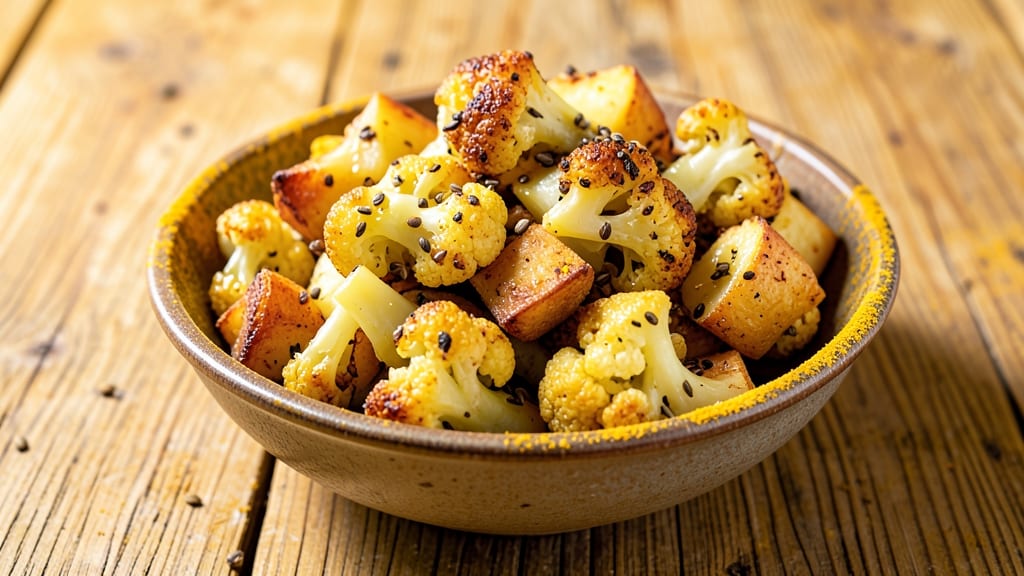
This cauliflower potato Indian recipe transforms humble vegetables into a restaurant-worthy dish with crispy edges and tender hearts—just like my grandmother used to make. The secret lies in the perfect balance of spices and a dry roast that caramelizes the vegetables while keeping their centers soft.
I’ve refined this recipe over years, ensuring every bite delivers that satisfying contrast of textures and bold, aromatic flavors.
What sets this dish apart is the tempering (tadka)—a technique where whole spices like cumin and mustard seeds are toasted in hot oil until fragrant, infusing the vegetables with layers of warmth.
The spices aren’t just sprinkled on; they’re cooked into the dish, creating depth that elevates simple potatoes and cauliflower into something extraordinary. This method is foolproof, requiring just 30 minutes of active time and minimal cleanup.
By the end, you’ll have a dish that’s golden, fragrant, and impossible to resist—the crispy edges give way to tender, flavorful centers, all coated in a light, spiced oil that clings to every bite.
It’s the kind of side that turns into the main event, perfect for serving alongside rice, naan, or even as a standalone vegetarian meal. The aroma alone will have everyone at the table asking for seconds.
Whether you’re hosting a dinner or meal prepping for the week, this recipe delivers authentic Indian flavors with a modern twist—no complicated techniques required. Let’s bring this classic dish to your kitchen with just a few simple steps and the right spices. The results will surprise you.
Ingredients for cauliflower potato indian
These humble vegetables and bold spices transform into a golden, fragrant roast with crispy edges and tender hearts.
| Ingredient | Amount | Notes |
|---|---|---|
| Cauliflower Florets 🥬 | 4 cups | Cut into even-sized pieces |
| Russet Potatoes 🥔 | 2 lbs | Cut into 1-inch cubes |
| Extra-Virgin Olive Oil 🫒 | ½ cup | High-quality for roasting |
| Ground Cumin Seeds 🌿 | 1 ½ tbsp | Toasted for deeper flavor |
| Mustard Seeds 🌶️ | 1 tbsp | Whole seeds for tadka |
| Turmeric Powder 🧂 | 1 tsp | Freshly ground preferred |
| Ground Coriander 🌿 | 1 tsp | Freshly ground for brightness |
| Garam Masala 🌶️ | ¾ tsp | Homemade or store-bought |
| Salt 🧂 | 1 ½ tsp | Diamond Crystal kosher |
| Red Chili Powder 🌶️ | ½ tsp | Adjust for heat preference |
| Fresh Lemon Juice 🍋 | 1 tbsp | Brightens the flavors |
| Fresh Cilantro Leaves 🌿 | ¼ cup | Chopped for garnish |
The cauliflower and potatoes are the stars here—Russets hold up best to roasting, while cauliflower florets should be cut to even sizes for consistent crispiness. Whole Foods or local Indian markets usually carry the best quality for spices like mustard seeds and garam masala. If you can't find whole cumin seeds, toast and grind them fresh—it makes all the difference. The key is in the tadka, where whole spices are toasted in hot oil until fragrant, infusing the vegetables with layers of warmth that elevate them from ordinary to extraordinary.
No garam masala? Mix equal parts ground cinnamon, cardamom, and cloves for a close substitute. Fresh turmeric is ideal, but if you're using powder, toast it lightly in the oil first to deepen its flavor. The red chili powder can be swapped for Kashmiri chili powder if you prefer a milder heat with a vibrant color. For extra richness, add 1 tbsp of Greek yogurt to the oil before tossing the vegetables—it keeps them tender while adding a subtle tang. If you're short on time, microwave the potatoes for 5 minutes before roasting to speed up the process.
This dish reheats beautifully—just toss with a splash of water and warm in the oven for 10 minutes at 400°F. Store leftovers in an airtight container for up to 5 days, though I find it’s best enjoyed fresh. For meal prep, portion into containers with a drizzle of extra olive oil on top to keep the vegetables crispy. The spices keep their potency for 3 months if stored in a cool, dark place—just make sure your containers are sealed tightly.
Why You'll Love This Recipe
- One-Pan Magic: I swear by this recipe when I’m too tired to scrub pans—just toss chopped potatoes and cauliflower on a sheet, drizzle with olive oil, and let the cumin and mustard seeds work their spice. Twenty minutes later, you’ve got dinner without the cleanup.
- Earthy Crunch Factor: That first bite where the cauliflower meets crispy? It’s the star. The cumin toasts into nutty warmth while the mustard seeds pop like tiny fireworks—simple spices that pack a punch without needing a spice rack.
- Lunchbox Hero: Between us, this is my go-to for meal prep. The flavors get even better the next day (yes, really), and it reheats like a dream—perfect for throwing in a thermos or packing for work when you’re sick of sad salads.
- Budget Stretch: Russet potatoes and cauliflower are the ultimate pantry players. A single head of each feeds four, and the spices cost pennies. I’ll be real: this is how I stretch grocery money without sacrificing flavor—especially when paired with store-brand yogurt or a cheap can of chickpeas.
Step-by-step instructions for spiced roasted cauliflower and potatoes
Here's how to achieve that perfect balance of crispy edges and tender centers in this aromatic Indian-inspired roast.
Prepare the Vegetables for Maximum Crispiness
Preheat your oven to 425°F with racks positioned in the upper and lower thirds. This two-tier approach ensures even browning. While it heats, cut the 4 cups cauliflower florets into even-sized pieces—about 1.5-inch florets—and the 2 lbs russet potatoes into 1-inch cubes. Real talk: uniform size is everything for even cooking.
Spread the cut vegetables on two separate baking sheets lined with parchment paper. Arrange them in a single layer with no overlapping—this prevents steaming and guarantees crispy edges. Give them a gentle toss with 0.25 cup extra-virgin olive oil (half the total amount) to ensure even coating. The oil should glisten on each piece, not pool.
Create the Spice Blend and Toss
In a small bowl, combine the 1.5 tbsp ground cumin seeds, 1 tbsp mustard seeds, 1 tsp turmeric powder, 1 tsp ground coriander, 0.75 tsp garam masala, 1.5 tsp salt, and 0.5 tsp red chili powder. This blend is the heart of the flavor—don't skimp on the measurements. The spices should look like a fine, even powder with no visible seeds.
Transfer the spice mixture to a large bowl and add the oiled cauliflower and potatoes. Using your hands or a large spoon, toss vigorously until every surface is coated with the spice-oil mixture. You'll see the spices cling to each piece—this ensures maximum flavor penetration. Don't worry if it looks like too much spice; trust me, it'll distribute perfectly during roasting.
Roast in Two Batches for Perfect Texture
Divide the spiced vegetables evenly between the two prepared baking sheets. Place one sheet on the upper rack and the other on the lower rack. Roast for 25 minutes, then carefully flip each piece using tongs. This flip is crucial—it ensures all sides develop that beautiful golden-brown crust. You'll notice the edges starting to crisp and the aroma filling your kitchen.
After flipping, roast for another 20-25 minutes until the potatoes are fork-tender and the cauliflower has crispy edges with slightly charred spots. The potatoes should be golden brown with caramelized edges, while the cauliflower should have a deep golden hue. Your oven might run hot, so start checking at the 20-minute mark—every oven behaves differently.
Finish with Brightness and Garnish
Remove the roasted vegetables from the oven and transfer them to a large serving bowl. Immediately drizzle with 1 tbsp fresh lemon juice and toss gently to distribute. This final step brightens the flavors and cuts through the richness of the spices. The lemon juice should sizzle slightly from the residual heat—this is your signal that it's working.
Garnish with the 0.25 cup chopped fresh cilantro leaves, adding a pop of color and freshness. The cilantro should be finely chopped so it distributes evenly throughout the dish. Serve immediately while the edges are still crisp and the hearts remain tender. This dish tastes best straight from the oven when the contrast between textures is at its peak.
Pro Tips For Making Cauliflower Potato Indian
- Cut Potatoes in Uniform Slices: Use a sharp knife or mandoline for even ½-inch rounds—this guarantees they cook at the same rate. I learned this the hard way when my first batch had some mushy centers and others still raw; consistency is everything for that perfect tender-crisp texture.
- Bloom Spices in Oil: Heat the olive oil until shimmering (not smoking) before adding mustard and cumin seeds—let them sizzle for 10 seconds until fragrant. Skipping this step means missing that nutty, toasty depth that ties the dish together.
- Parboil Cauliflower First: Blanch the florets in salted boiling water for 3 minutes before stir-frying; this keeps them from turning to mush in the oil. I was skeptical until I tried it—now it’s non-negotiable for holding their shape.
- Finish with Lemon Juice: A splash of fresh lemon juice at the end brightens the flavors and cuts through the richness of the oil. Sounds simple, but it’s the thing that makes this dish feel fresh and restaurant-worthy instead of heavy.
Regional styles of this recipe
Punjabi Aloo Gobi
In Punjab, this dish is known as Aloo Gobi—a staple in homes and restaurants alike. The key difference here is the use of whole spices like cumin and mustard seeds for a deeper, toastier flavor.
I like to add 1 tbsp of yogurt to the spice blend before tossing the vegetables, which keeps them extra tender while adding a subtle tang. Serve it with butter naan or jeera rice for the full Punjabi experience. 🌶️
South Indian Style
In South India, this dish often incorporates coconut milk for a creamier texture. After roasting, I stir in ½ cup coconut milk and simmer for 5 minutes to infuse the vegetables with a gentle sweetness.
The spices shift slightly too—curry leaves and black pepper become essential. Garnish with toasted coconut flakes for added crunch. This version pairs beautifully with steamed rice and rasam.
Goan Curry Twist
Goan cuisine brings bold, tangy flavors to this dish. Start by sautéing 1 tbsp of Goan red chili powder and ½ tsp of fennel seeds in the oil before tossing the vegetables.
After roasting, finish with 1 tbsp of vinegar (I use coconut vinegar) and a sprinkle of sesame seeds. The result is a dish that’s both spicy and slightly sweet—a perfect match for Goan bread or steamed rice.
North Indian Tadka Variations
For a richer tadka, North Indian cooks often use ghee instead of oil. I melt 2 tbsp of ghee with the spices and toss the vegetables in this fragrant mixture. Add 1 tsp of kasuri methi (dried fenugreek leaves) at the end for an earthy depth.
This version is especially popular in Delhi and UP, where it’s served with roti or dal. The ghee adds a luxurious touch that’s hard to resist. 💛
Modern Fusion Approach
For a contemporary twist, I blend Indian spices with smoked paprika and a dash of maple syrup in the final toss. The smoked paprika adds depth, while the maple syrup caramelizes slightly, giving the edges a sticky, sweet contrast.
This version works beautifully as a vegan main dish when paired with quinoa or farro. It’s unexpected but utterly delicious—perfect for impressing guests with a fusion-style dish. ✨
Nutrition facts
Frequently asked questions
Can I use sweet potatoes instead of regular potatoes?
Sweet potatoes work beautifully in this recipe! Their natural sweetness pairs well with the spices, but they take slightly longer to roast—about 5-10 extra minutes. Cut them into 1-inch cubes and roast at 400°F until fork-tender. The result will be even sweeter and caramelized.
How do I make this dish less spicy for kids?
Reduce the red chili powder to ¼ tsp or omit it entirely. For extra mildness, add ½ tsp of sugar to balance the spices. Kids love the crispy texture, so focus on the roasting technique—it’s the star of this dish! You can also serve it with plain yogurt or raita on the side to cool the heat.
Can I make this recipe in an air fryer?
Preheat the air fryer to 400°F and cook in batches for 12-15 minutes, shaking halfway. Use 1 tbsp of oil per batch and toss with spices as directed. The air fryer creates crispy edges faster, but check frequently—it can overcook quickly. Perfect for smaller portions or when you're short on oven space!
Why did my cauliflower turn mushy instead of crispy?
Overcrowding or uneven heat are the most common culprits. Always roast in a single layer with space between pieces, and use two baking sheets for even browning. Also, avoid cutting cauliflower too small—1.5-inch florets hold their shape best. If it’s still mushy, try roasting at 425°F for 20 minutes before flipping.
What’s the best way to store leftovers?
Let the roasted vegetables cool completely, then store in an airtight container for up to 5 days in the fridge. For reheating, spread on a baking sheet and warm at 375°F for 10 minutes to restore crispiness. Alternatively, microwave for 1-2 minutes with a damp paper towel over the top to prevent drying. The flavors actually improve after resting overnight!