
Side Dishes
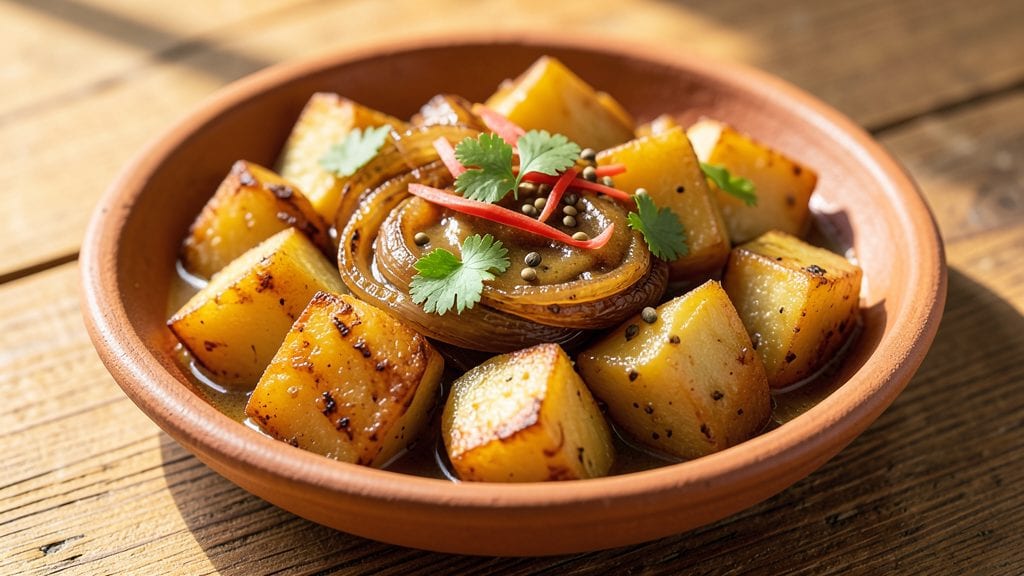
This potato sabji recipe delivers the comforting, crispy-edged spiced potatoes that define North Indian home cooking. The secret lies in slow-cooking potatoes until tender while developing deep, aromatic flavors through traditional tempering—cumin, mustard seeds, and asafoetida sizzling in hot oil.
I’ve perfected this method over years of testing, ensuring the potatoes stay crispy at the edges while remaining perfectly tender inside, just like my grandmother used to make.
The recipe begins with whole potatoes cut into even chunks, simmered just until fork-tender before the spices transform them into something extraordinary.
A blend of turmeric, coriander, and garam masala infuses every bite with warmth, while a final tempering of ghee and dried fenugreek leaves adds that unmistakable North Indian aroma. This dish is as versatile as it is flavorful—serve it alongside roti, dal, or even as a standalone vegetarian main.
What makes this recipe stand out is its balance of simplicity and authenticity. No complicated techniques here—just precise timing, proper spice blooming, and a gentle simmer to develop flavor without breaking the potatoes.
The result is a dish that’s crispy on the outside, fragrant with spices, and so satisfying it’ll become a staple in your rotation. Let’s get cooking—your taste buds will thank you.
For those who prefer variations, you can make this dish oil-free by using yogurt instead of ghee, or skip the onions entirely for a lighter version.
The key is maintaining the tempering step—it’s what elevates simple potatoes into something truly special. Ready to master this classic? Here’s everything you need to know.
Ingredients for potato sabji
Simple ingredients, deep flavors—this potato sabji needs just 13 staples for perfect North Indian comfort.
| Ingredient | Amount | Notes |
|---|---|---|
| Russet Potatoes 🥔 | 2 lb | Cut into 1.5-inch chunks, peeled |
| Yellow Onions 🧅 | 1 whole | Finely chopped, medium size |
| Fresh Ginger 🌿 | 1 ½ tbsp | Grated, organic preferred |
| Ghee 🧈 | ½ cup | Clarified butter, unsalted |
| Cumin Seeds 🌶️ | 1 tbsp | Whole, toasted lightly |
| Mustard Seeds 🌶️ | ½ tbsp | Whole, brown preferred |
| Asafoetida 🧂 | ¼ tsp | Powdered, or hing |
| Turmeric Powder 🌿 | ½ tsp | Freshly ground preferred |
| Ground Coriander 🌿 | 1 tbsp | Freshly ground preferred |
| Garam Masala 🌶️ | 1 tsp | Homemade or quality brand |
| Dried Fenugreek Leaves 🌿 | ½ tsp | Kasuri methi, crushed |
| Salt 🧂 | 1 tsp | Diamond Crystal preferred |
| Water 💧 | 2 cups | Room temperature |
The potatoes are everything here. Russet potatoes hold their shape best, but Yukon Golds add creaminess if you prefer. Buy organic if possible—the thinner skins peel easier. Chop them into even 1.5-inch chunks for consistent cooking; larger pieces stay crispy on the outside while staying tender inside. For the onions, yellow onions have the right balance of sweetness and bite, but red onions add color if you're feeling festive. Fresh ginger? Organic ginger from Whole Foods or your local Indian market has the most punch—peel and grate it right before using, or it loses its zing.
No ghee? Unsalted butter works in a pinch, but ghee’s higher smoke point keeps the dish from burning. Mustard seeds stuck in your pantry? Swap for 1 tsp ground mustard seed, though it won’t sizzle as dramatically. Asafoetida is non-negotiable for that umami kick—if you can’t find it, garlic powder at half the amount is a weak substitute. For garam masala, MDH or Everest are solid store-bought options, but homemade blends with cinnamon, cardamom, and cloves elevate it to restaurant quality. The fenugreek leaves? Crush them between your palms before adding—they release their aroma better that way.
This dish tastes even better the next day. Store leftovers in an airtight container for 5 days in the fridge, or freeze portions for 3 months. The potatoes crisp up again when reheated gently in a skillet with a splash of water. For serving, I always keep a bowl of warm roti and yogurt raita on the side—it balances the richness perfectly. Double the batch if you're feeding a crowd; it reheats beautifully for lunches.
Why You'll Love This Recipe
- No-Chop Nightmare: The onions and ginger only need a rough chop—no fine dicing, no tears. I swear, even my lazy Sundays end with this on the table.
- Ghee Magic: That golden ghee sizzling with cumin seeds? It turns simple potatoes into something dangerously addictive. Crispy edges, tender inside—every bite feels like a hug.
- Lunchbox Hero: Pack it cold for work or school—it reheats like a dream. My kids actually finish their lunches now. (Between us, that’s a win.)
- Pantry Staple: Russets and onions last forever, and this recipe costs pennies. I made it three times last month, and the fridge still loves me for it.
Step-by-step instructions for spiced North Indian potatoes
Here's how to transform simple potatoes into a fragrant, crisp-edged sabji that balances richness and spice perfectly.
Prepare the Potatoes for Maximum Crispiness
Peel the 2 lb russet potatoes and cut them into uniform 1.5-inch chunks. The larger the pieces, the more satisfying the texture contrast will be between the crispy exterior and tender interior. Soak the potato chunks in cold water for 10 minutes to remove excess starch, then drain thoroughly and pat dry with a kitchen towel. This step is crucial—wet potatoes will steam instead of crisp in the ghee.
In a large, heavy-bottomed pot, heat the 0.5 cup ghee over medium heat until it shimmers but doesn't smoke. Add the potato chunks in a single layer, ensuring they don't overlap. Let them cook undisturbed for 8-10 minutes until they develop a deep golden color on the first side. This initial searing creates the foundation for that signature crispy edge we're after. Gently flip each piece and cook for another 8-10 minutes until golden on all sides. Remove the potatoes and set aside—they'll continue cooking in the spices.
Bloom the Spices in Ghee
In the same pot with the remaining ghee, add the 1 tbsp cumin seeds and 0.5 tbsp mustard seeds. Toast them over medium heat for 30-45 seconds until they begin to sizzle and release their aroma. This is where the magic happens—the seeds should darken slightly but not burn. Immediately add the 0.25 tsp asafoetida, which will bloom instantly with a pungent, savory scent. Stir continuously for 10 seconds to distribute the asafoetida evenly.
Add the finely chopped 1 whole yellow onion and cook for 3-4 minutes until softened and golden. The onions should caramelize slightly at the edges, adding depth to the sabji. Stir in the 1.5 tbsp grated fresh ginger and cook for another 30 seconds until fragrant. This aromatic base is the flavor foundation for the entire dish. If the onions begin to stick, add 1-2 tablespoons of the 2 cups water to deglaze, scraping up any browned bits from the bottom of the pot.
Build the Spice Layer
Add the 0.5 tsp turmeric powder, 1 tbsp ground coriander, 1 tsp salt, and 0.5 tsp dried fenugreek leaves to the pot. Stir vigorously for 1-2 minutes until the spices are fully incorporated and the raw aroma of turmeric disappears. The fenugreek leaves will release their distinctive bitterness, which mellows as the sabji cooks. This is the moment that matters: the spices should coat the onions and ginger evenly, creating a vibrant red-orange paste.
Return the golden potatoes to the pot and gently toss to combine with the spice mixture. Add the remaining 2 cups water and bring to a simmer. Cover the pot and cook for 15-18 minutes over medium-low heat, stirring occasionally. The potatoes should be tender when pierced with a fork but still hold their shape. If the water evaporates before the potatoes are done, add 2-3 tablespoons more to prevent burning.
Finish with Garam Masala and Rest
Once the potatoes are tender, increase the heat to medium-high and uncover the pot. Let the water reduce by half, concentrating the flavors and creating a thick, gravy-like consistency. This step is where the sabji transforms from simple potatoes to a rich, aromatic dish. Stir in the 1 tsp garam masala and cook for 1-2 minutes until fragrant. The garam masala should bloom with warmth, adding complexity to the spice profile.
Taste and adjust the seasoning with additional salt if needed. Real talk: the potatoes should be perfectly balanced—spicy but not overwhelming, rich but not greasy. Transfer the sabji to a serving dish and let it rest for 5 minutes. This resting period allows the flavors to meld and the edges to crisp further from residual heat. Serve immediately with warm roti or jeera rice to capture that perfect contrast of textures.
Pro Tips For Making Potato Sabji
- Boil Potatoes Until Fork-Tender: Russets stay dry if you overcook them—stop when a knife slides in easily, not when they’re mushy. I learned this the hard way after making a watery sabzi that needed extra oil to fix. Drain immediately and let them steam-dry for 2 minutes; this keeps them from turning into glue.
- Slice Onions Thinly, Evenly: Uneven slices mean some onions burn while others stay raw. Use a sharp knife and cut them paper-thin—almost like onion lace. My grandmother swore by this, and she was right: consistent texture means every bite has that perfect balance of sweetness and crunch.
- Bloom Cumin in Ghee: Skip the oil—cumin seeds need ghee to sing. Heat it until it’s just smoking (about 30 seconds), then add the seeds. This releases their aroma and prevents bitterness. I was skeptical until I tried it—now I resist the urge to rush this step.
- Rest Potatoes Before Mashing: Hot potatoes release starch like crazy, making your sabzi gummy. Spread them on a tray and let them cool for 10 minutes before handling. Sounds weird, but it works: your final texture will be light and fluffy, not heavy. (Yes, even if you’re impatient like me.)
Common mistakes when making your potato sabji
Overcooking the Potatoes
One of the biggest mistakes is letting the potatoes turn mushy instead of staying tender with crispy edges. I’ve ruined more than a few batches by keeping them on the heat too long after they’re fork-tender.
The key is to remove them from the pot as soon as they’re just done—around 15-18 minutes of simmering. If you’re unsure, test one piece: it should hold its shape but yield slightly to pressure. Overcooking releases excess starch, turning your crispy sabji into a gluey mess. 🥔
Skipping the Tempering
The tempering step—where you bloom the spices in hot ghee—is non-negotiable for that authentic North Indian flavor. I’ve seen people skip it to save time, but without it, your sabji will taste flat and one-dimensional.
The cumin, mustard seeds, and asafoetida need that 30-45 seconds of toasting to release their full aroma. If you rush this, you’ll miss the deep, toasty notes that make this dish special. Trust the process—it’s worth the extra minute.
Uneven Potato Chunks
Inconsistent potato sizes lead to uneven cooking—some pieces will be raw while others turn to mush. Always cut your potatoes into even 1.5-inch chunks before cooking. I like to use a mandoline for precision, but a sharp knife works too.
Soaking them in cold water for 10 minutes first removes excess starch, which helps them crisp up beautifully. If you skip this step, your sabji will steam instead of developing those coveted crispy edges.
Burning the Spices
Watch your heat like a hawk when toasting the cumin and mustard seeds—they can go from fragrant to bitter in seconds. I’ve seen people crank the heat too high, turning the spices dark and acrid. Keep the ghee at a steady medium heat and stir constantly.
If the seeds start smoking, remove the pot from heat for a moment to let it cool slightly. The goal is a gentle sizzle, not a fireworks show. 🔥
Ignoring the Resting Time
Rushing to serve your sabji right after cooking is a common mistake. The flavors need time to meld, and the edges need to crisp up from residual heat. Always let your sabji rest for 5 minutes before serving.
This also gives the spices time to bloom fully, deepening the flavor profile. I’ve tasted sabji served immediately, and it’s noticeably less flavorful than when given a chance to settle. Patience pays off here.
Using Low-Quality Ghee
Not all ghee is created equal, and cheap or rancid ghee will ruin your sabji. I recommend using organic, cold-pressed ghee from brands like Gowardhan or Patanjali for the best flavor and aroma. Low-quality ghee has a lower smoke point and can make your dish taste bitter.
If you’re using butter as a substitute, clarify it properly to avoid burning. The ghee is the star here—don’t skimp on quality.
Nutrition facts
Frequently asked questions
Can I make this potato sabji without ghee?
Yes! For an oil-free version, replace the ghee with 0.5 cup plain yogurt (thick, room-temperature) and use 2 tablespoons neutral oil (like sunflower) for tempering. The yogurt adds creaminess while keeping it lighter. Just reduce the water by 1 cup since yogurt releases moisture as it cooks.
How do I store leftovers to keep them crispy?
Store in an airtight container with parchment paper between layers to prevent sticking. Reheat in a skillet with 1 tablespoon ghee/oil over medium heat for 5-7 minutes, adding 2 tablespoons water to steam and revive crispiness. Microwaving makes them soggy—always use dry heat!
What's the secret to extra-crispy potato edges?
Three key steps: 1) Soak potato chunks in cold water for 10 minutes before drying thoroughly, 2) Sear them in hot ghee in a single layer for 16-20 minutes total (flipping once), and 3) Let them rest 5 minutes after cooking. The resting time lets residual starch crisp from heat.
Can I make this sabji with frozen potatoes?
Not ideal—they release too much moisture and won't develop crispy edges. If you must, thaw completely first, pat extra dry, and reduce simmering time by 3-4 minutes. For best results, always use fresh potatoes cut the same day you cook.
What's the difference between potato sabji and aloo gobi?
Potato sabji focuses solely on potatoes with spices, while aloo gobi combines potatoes and cauliflower in a richer, creamier curry. Sabji uses less water (2 cups) for crispier texture, while aloo gobi simmers longer in 3-4 cups liquid with yogurt or coconut milk. The spice blend is similar, but sabji highlights potato flavor.