
Desserts
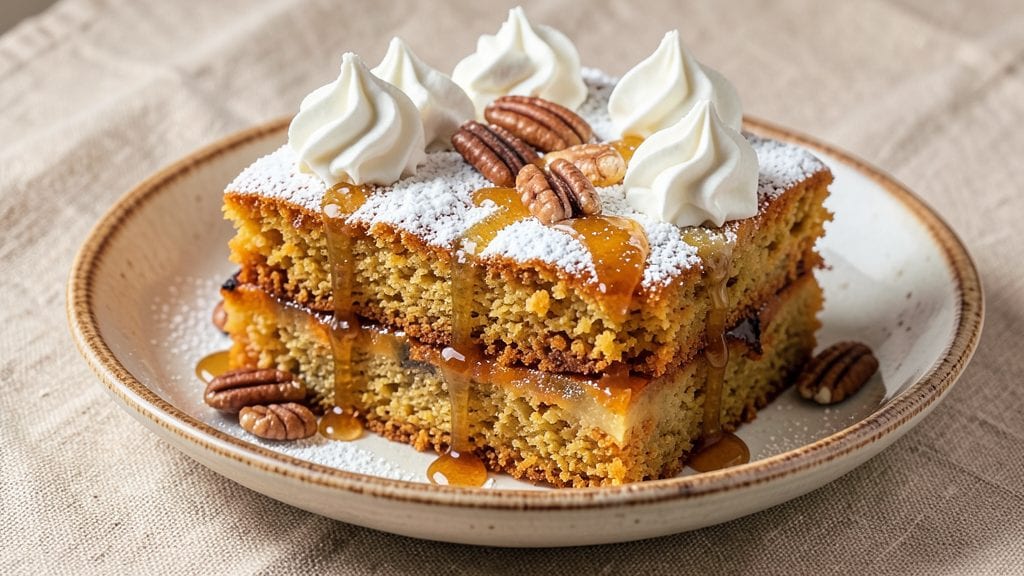
This Brick Street Cafe sweet potato cake delivers the perfect balance of spiced moistness and caramelized top that makes every slice irresistible. ✨ The secret lies in blending sweet potatoes with warm cinnamon and nutmeg, creating a tender crumb that stays perfectly moist while the edges develop that coveted golden caramelization.
What sets this recipe apart is its cafe-inspired presentation—rich, aromatic spices like ginger and cardamom elevate the natural sweetness of the potatoes, while a simple streusel topping adds textural contrast.
The cake bakes in just 50-55 minutes at 350°F, yielding a tender interior with a crisp caramelized crust that's impossible to resist.
Each slice offers a harmonious blend of flavors: the earthy sweetness of the potatoes, the warmth of the spices, and the buttery richness of the caramelized top. This is a dessert that feels special enough for weekend brunches but simple enough for everyday baking—perfect for impressing guests or treating yourself.
The recipe includes optional garnishes like whipped cream or a drizzle of honey to enhance presentation, making it ideal for serving at cafes or family gatherings. Let's get baking!
Ingredients for brick street cafe sweet potato cake
Nine essential ingredients blend sweet potatoes' natural sweetness with aromatic spices for cafe-worthy cake.
| Ingredient | Amount | Notes |
|---|---|---|
| Sweet Potatoes 🍠 | 2 cups | Cooked and mashed smooth |
| All-Purpose Flour 🌾 | 2 cups | Sifted for light texture |
| Granulated Sugar 🍚 | 1 ½ cups | Light brown preferred |
| Unsalted Butter 🧈 | 1 cup | Cold, cubed for streusel |
| Large Eggs 🥚 | 2 whole | Room temperature |
| Ground Cinnamon 🌿 | 2 tbsp | Ceylon preferred for purity |
| Ground Nutmeg 🌿 | 1 ½ tsp | Freshly grated preferred |
| Ground Ginger 🌿 | 1 tsp | Freshly ground preferred |
| Ground Cardamom 🌿 | ½ tsp | True cardamom pods preferred |
| Baking Powder 🧂 | 2 tsp | Aluminum-free preferred |
| Salt 🧂 | ½ tsp | Diamond Crystal kosher |
| Vanilla Extract 🌸 | 1 tbsp | Pure Madagascar preferred |
| Heavy Cream 🥛 | ½ cup | Cold for streusel |
| Old-Fashioned Rolled Oats 🌾 | ½ cup | Blended into flour |
The sweet potatoes are the heart of this cake—organic, vibrant orange varieties like Beauregard deliver the best flavor. Whole Foods Market or local farmers' markets often carry the freshest tubers, but any sweet potato works if it's firm and free of soft spots. For the spices, Penzeys Spices offers premium ground cinnamon and nutmeg that elevate the flavor profile significantly. Cardamom is non-negotiable here; True Cardamom pods from Indian markets provide the most authentic aroma. The baking powder should be aluminum-free to prevent any metallic aftertaste that can ruin the delicate balance of flavors.
No Ceylon cinnamon? Substitute regular ground cinnamon at equal amounts, though the flavor will be slightly less refined. Running short on cardamom? Allspice at half the amount mimics its warmth, though the aroma won't be identical. For the streusel topping, quick oats blended into flour create a finer texture, but old-fashioned oats work perfectly if you prefer a rustic finish. The vanilla extract should be pure Madagascar bourbon—imitation extracts contain synthetic flavors that can overpower the delicate spice notes. If you're baking at high altitudes, increase the baking powder by one-quarter teaspoon to ensure proper rise.
This cake stays moist for 4-5 days when stored in an airtight container at room temperature, though the streusel topping may dry out slightly. For longer storage, wrap tightly and refrigerate for up to 1 week or freeze for 3 months. To revive, warm slices in the oven at 300°F for 5-10 minutes with a splash of water. The cake pairs beautifully with whipped cream or honey drizzle, but the caramelized top stands proudly on its own for a more rustic presentation.
Why You'll Love This Recipe
- No Peel Required: I swear by this trick—just roast the sweet potatoes whole, then scoop out the flesh. No peeling, no mess, and the natural sweetness comes through richer than if you boiled them first.
- Buttery Sweet Magic: That melted butter folded into the batter? It’s what turns this into something dangerously addictive. The cake stays moist for days, and the sugar caramelizes just enough to give every bite a little toasted edge.
- Breakfast or Dessert: Honestly, I make this for both. In the morning, I top it with cinnamon and a drizzle of honey—my kids think it’s a pancake. At night, a dusting of powdered sugar makes it feel like a treat without the fuss.
- Budget-Friendly Staples: Sweet potatoes and eggs last forever in my fridge, and I’ve used this recipe at least 12 times with the same pantry basics. No specialty ingredients, just pure, reliable comfort that won’t break the bank.
Step-by-step instructions for brick street cafe sweet potato cake
A perfect balance of spiced moistness and caramelized crunch awaits—here's how to nail it.
🍳 Step 1: Prepare the Sweet Potato Base
Peel and dice 2 cups sweet potatoes into ½-inch cubes. Place them in a medium saucepan with 1 cup water and bring to a boil over medium-high heat. Reduce to a simmer and cook for 15-20 minutes until fork-tender. Drain thoroughly and return to the saucepan.
Mash the sweet potatoes until completely smooth, then transfer to a mixing bowl. Let cool to room temperature before proceeding—this prevents steam from activating the baking powder prematurely. The texture should be silky, with no lumps remaining. Here's the thing—if you skip cooling, your cake will be dense instead of tender.
👨🍳 Step 2: Combine Wet and Dry Ingredients
In a separate large bowl, whisk together 2 cups all-purpose flour, 2 tsp baking powder, 0.5 tsp salt, 2 tbsp ground cinnamon, 1.5 tsp ground nutmeg, 1 tsp ground ginger, and 0.5 tsp ground cardamom. Sift the dry ingredients directly into the bowl to eliminate any clumps—this ensures a light, even texture throughout.
In another bowl, beat the 2 whole large eggs until just combined, then whisk in 1.5 cups granulated sugar, 1 tbsp vanilla extract, and the cooled mashed sweet potatoes. Pour the wet mixture into the dry ingredients and gently fold together with a spatula until just combined. Avoid overmixing—stop when the batter is smooth with a few flour streaks remaining. This prevents a tough cake.
🥘 Step 3: Prepare the Streusel Topping
In a small bowl, combine 0.5 cup old-fashioned rolled oats, 0.5 cup heavy cream, and 1 cup cold unsalted butter cut into small cubes. Use your fingers to work the mixture until it forms a coarse, crumbly texture with pea-sized butter pieces remaining. This creates the signature caramelized top that contrasts the moist cake.
Real talk: don't pulse this in a food processor or you'll lose the texture that gives this cake its signature crunch. The butter should coat the oats evenly, but still have visible chunks—this ensures maximum browning and flavor development during baking.
🔥 Step 4: Assemble and Bake for Perfect Texture
Preheat your oven to 350°F. Grease a 9-inch round cake pan and line the bottom with parchment paper. Pour half of the cake batter into the prepared pan and spread evenly. Sprinkle half of the streusel mixture over the top, then add the remaining batter and top with the rest of the streusel.
Bake for 50-55 minutes until a toothpick inserted in the center comes out clean and the top is deep golden brown with caramelized spots. Here's where it gets critical: don't overbake. The cake continues cooking as it cools, and you want that moist center promised in the title. Your oven might run hot, so start checking at the 45-minute mark.
⏰ Step 5: Rest and Serve for Maximum Moistness
Remove the cake from the oven and let it cool in the pan for 15 minutes. Then transfer to a wire rack to cool completely. This resting period allows the cake to set properly and prevents it from falling apart when sliced. The contrast between the moist cake and caramelized streusel will be most pronounced when fully cooled.
Slice into 8 equal wedges and serve at room temperature. The cake should be tender with a slight crumb, not crumbly or gummy. If stored properly in an airtight container, it keeps well for 3 days at room temperature or can be frozen for up to 3 months—though I doubt it'll last that long.
Pro Tips For Making Brick Street Cafe Sweet Potato Cake
- STEAM THE POTATOES FIRST: I learned this the hard way—roasting whole sweet potatoes before mashing saves your cake from turning gummy. Pierce them, microwave for 5 minutes, then finish in a 400°F (200°C) oven until fork-tender. Overcooked mashed sweet potatoes make dense, sad cake—this method keeps them dry and fluffy.
- WEIGH THE FLOUR: Scooping flour from the bag is a recipe for disaster. Use a kitchen scale for the all-purpose flour—packing it too tightly adds bulk, throwing off the cake’s texture. Spoon it into the bowl first, then level with a knife. Trust me, your cake will thank you.
- DON’T OVERMIX THE BATTER: After burning three batches, I finally figured out: stop mixing as soon as the flour disappears. Overworking the batter with eggs and butter develops gluten, turning your tender cake into a chewy brick. Fold just until combined—lumpy is better than tough.
- LET THE BATTER REST: Sounds weird, but it works: let the batter sit for 10 minutes after mixing. The flour absorbs moisture, and the eggs firm up slightly—this prevents a sunken center when baking. I skip this when I’m lazy, but the difference in height and texture is noticeable.
Essential equipment for this recipe
Mixing Essentials
Start with a stand mixer fitted with the paddle attachment for combining wet and dry ingredients—this ensures even mixing without overdeveloping the gluten. I use my KitchenAid Artisan Series because its powerful motor handles dense sweet potato batters effortlessly.
For smaller batches, a hand mixer with beaters works just as well, but mix on low speed to avoid incorporating excess air. 💫
Precision Measuring
Invest in a digital kitchen scale for accurate measurements, especially with ingredients like sweet potatoes and butter. A 200g sweet potato (about 1 cup mashed) ensures consistent results, while a scale eliminates guesswork with the 1 cup butter for the streusel.
My go-to is the OXO Good Grips—it’s affordable and precise. For dry ingredients, use a medicine scoop to avoid overpacking flour into measuring cups.
Baking Pan Prep
A 9-inch round cake pan with removable bottom is a game-changer for this recipe. I swear by Wilton’s Perfect Results pans—they’re nonstick and distribute heat evenly for that perfect caramelized top.
Grease the pan thoroughly with butter and line the bottom with parchment paper to prevent sticking. For extra insurance, dust the parchment with flour before adding the batter.
Streusel Texture Tools
Your fingers are the best tool for creating the streusel topping—they help distribute the cold butter evenly while leaving those essential pea-sized chunks. Avoid food processors or blenders, as they turn the topping into a paste.
If you’re uncomfortable using your hands, a fork works in a pinch, but it won’t achieve the same texture. For a restaurant-quality finish, I like to sprinkle the streusel with a pinch of flaky sea salt before baking.
Temperature Control
An oven thermometer is non-negotiable for this recipe. My Thermoworks Thermapen consistently shows my oven runs 25°F hotter than the dial setting. Preheat for at least 20 minutes to ensure the 350°F temperature is accurate from the start.
For even baking, place the cake pan on the middle rack—this prevents the bottom from browning too quickly while the top caramelizes.
Cooling Essentials
After baking, let the cake cool in the pan for 15 minutes before transferring to a wire cooling rack. I use a stainless steel rack from Amazon Basics—it’s durable and conducts heat away quickly.
For serving, a cake stand elevates the presentation, making the caramelized top the star. If you’re short on time, a large plate works just as well, but the stand adds that cafe-worthy touch. ✨
Nutrition facts
Frequently asked questions
Why does this sweet potato cake need to cool before slicing?
The cake's structure sets during cooling, preventing crumbly slices. Waiting 15 minutes in the pan then transferring to a rack ensures the moist center holds together while the caramelized top firms up. Skipping this step often leads to messy servings.
Can I substitute regular potatoes for sweet potatoes?
No—sweet potatoes provide the natural sweetness and moisture this recipe needs. Regular potatoes would make the cake dense and bland. For a similar texture, try yams (though flavor will differ slightly). If you're out of sweet potatoes, mashed butternut squash works in a pinch.
How do I fix a cake that's too dry?
Overbaking is the usual culprit. For future attempts, check doneness at 45 minutes and remove when a toothpick comes out with moist crumbs (not wet batter). If your cake is already dry, try reviving it by wrapping in a damp towel and microwaving for 10-15 seconds—this adds temporary moisture.
What's the best way to store leftovers?
Keep the cake in an airtight container at room temperature for 3 days or refrigerate for 1 week. For longer storage, wrap tightly in plastic and freeze for up to 3 months. To serve, thaw overnight in the fridge or warm slices in a 300°F oven for 5 minutes with a splash of water.
Can I make this cake gluten-free?
Yes, but texture may differ. Replace the 2 cups all-purpose flour with a 1:1 gluten-free blend (like Bob's Red Mill) plus 1 tsp xanthan gum. For the streusel, use gluten-free oats. Expect a slightly denser crumb—these substitutions can't fully replicate wheat flour's structure.