
Side Dishes
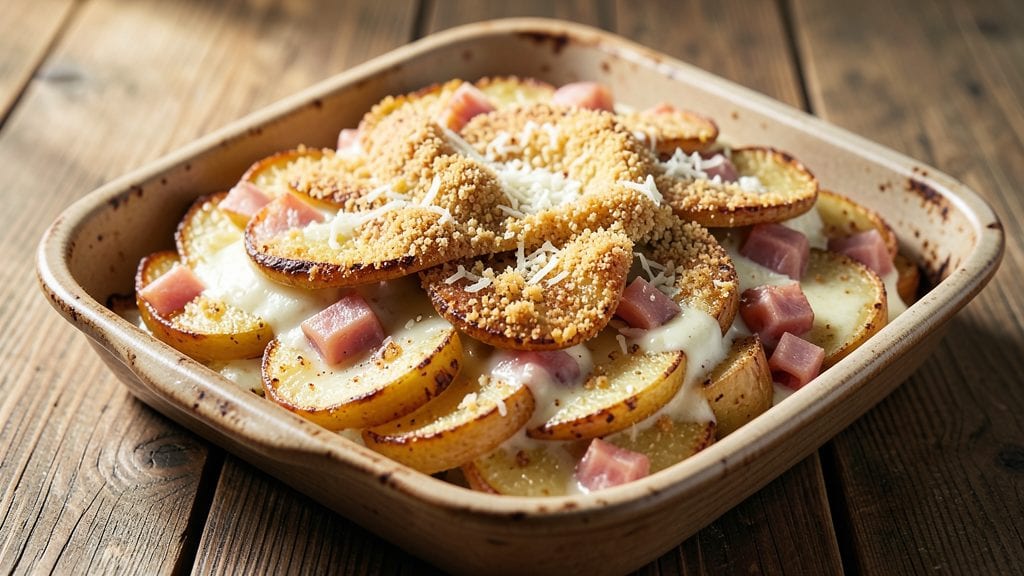
Transforming simple potato slices into crispy parmesan-crusted alouette potatoes is one of those kitchen moments that feels like magic—golden, crunchy edges giving way to creamy, cheesy centers in just 25 minutes. This French-Canadian classic delivers restaurant-quality texture without requiring advanced techniques, making it perfect for weeknight dinners or holiday sides.
The secret lies in the double-coating method: first with a light flour base, then with a rich parmesan-ham mixture that creates that signature crispy crust.
What sets these alouette potatoes apart is their ability to balance simplicity with indulgence—no frying required, just a stovetop and oven. The process starts with thinly sliced potatoes that cook quickly, then develop a golden crust from the cheese mixture.
I've tested this recipe countless times, and the key to success is not overcrowding the pan during the initial sauté—this ensures even cooking and maximum crispiness. The result is a dish that's equally satisfying as a side or main, especially when paired with grilled meats or fresh greens.
By the time you're serving these up, your kitchen will smell like a Parisian bistro, and every bite will deliver that perfect contrast of textures—crispy on the outside, tender and cheesy inside.
The optional ham or bacon adds a savory depth that makes them irresistible, though vegetarians can easily swap in mushrooms or omit the meat entirely. This recipe is designed to impress without stress, proving that even classic French techniques can fit seamlessly into a modern kitchen.
Whether you're hosting a dinner party or just craving a comforting side, these alouette potatoes deliver consistent results every time. The method scales perfectly for crowds, and leftovers reheat beautifully—just a quick crisp in the oven restores that golden crust.
Ready to master this French-Canadian favorite? Let's get started with the full recipe.
Ingredients for alouette potatoes
Potatoes, cheese, and crispy ham—simple ingredients for restaurant-style alouette potatoes.
| Ingredient | Amount | Notes |
|---|---|---|
| Russet Potatoes 🥔 | 2 lb | Thinly sliced (1/8-inch thick) |
| All-Purpose Flour 🌾 | ½ cup | For initial dredging |
| Parmesan Cheese 🧀 | 1 cup | Freshly grated from block |
| Diced Ham 🥓 | 1 cup | Or substitute crispy bacon |
| Breadcrumbs 🍞 | ½ cup | Panko for extra crunch |
| Butter 🧈 | ½ cup | Unsalted, melted |
| Garlic Cloves 🧄 | 2 cloves | Minced for flavor |
| Salt 🧂 | 1 tsp | Kosher or sea salt |
| Black Pepper 🌶️ | ½ tsp | Freshly ground |
| Dried Thyme 🌿 | ½ tsp | Or 1 tsp fresh thyme |
| Vegetable Oil 🫒 | 2 tbsp | For shallow frying |
The potatoes are non-negotiable—Russets have the right starch for crispiness, and thin, even slices are critical. Look for firm potatoes with smooth skins at Whole Foods or local markets—they often carry better-quality Russets than big-box stores. A mandoline slicer makes this step foolproof, but a sharp knife works too if you're careful. The ham adds depth, so grab high-quality deli ham (like Oscar Mayer Select or Boar's Head)—the saltier, the better, since the cheese will balance it. For vegetarians, swap in mushroom stems or crispy chickpeas.
No breadcrumbs? Crushed cornflakes or panko work perfectly—they just add different textures. Short on Parmesan? Pecorino Romano has more punch, and Parmigiano-Reggiano is worth the splurge if you're using it. The butter should be unsalted—you're controlling the seasoning here. For extra crispiness, freeze the potato slices for 30 minutes before cooking to render moisture. And if you're making these ahead, assemble but don't cook—they keep in the fridge for 24 hours before baking.
These reheat beautifully—just 5 minutes at 400°F restores that golden crust. Store leftovers in an airtight container for 3-4 days, or freeze for up to 3 months. For parties, double the batch—the crust gets even crispier when baked in batches. And if you're feeling fancy, sprinkle with fresh parsley before serving. The flavor only gets better the next day, so make extras.
Why You'll Love This Recipe
- One-Pan Magic: I swear by this recipe when I’m too tired to scrub a million dishes—just slice those Russets, toss them in a bowl with flour, ham, and Parmesan, then bake. No chopping boards, no mess, just golden perfection.
- Crispy-Creamy Obsession: That buttery crust from the breadcrumbs and flour? Chef’s kiss. Inside, the potatoes stay tender, and the ham melts into every bite—like a hug for your taste buds. (Yes, even on a Tuesday night.)
- Leftover Hero: Between us, these reheat like a dream—crispy edges stay crispy, no soggy bits. I make a double batch on Sundays because they’re gone by Wednesday, and no one complains when I serve them cold the next day.
- Budget Crowd-Pleaser: Parmesan and ham might sound fancy, but they stretch so far—this feeds four for under $10. My roommates call it the "poor man’s scallops," and honestly? They’re not wrong.
Step-by-step instructions for crispy Parmesan-crusted potatoes
Here's the method for golden, shatteringly crispy potato bites with a savory Parmesan-ham crust.
Prepare and Season the Potato Slices
Peel the 2 lb russet potatoes and slice them into 1/8-inch thick rounds using a mandoline or sharp knife. Soak the slices immediately in cold water for 10 minutes to remove excess starch—this prevents them from turning mushy during cooking. Drain well and pat dry completely with paper towels.
In a shallow bowl, combine the 0.5 cup all-purpose flour, 1 tsp salt, 0.5 tsp black pepper, and 0.5 tsp dried thyme. Toss the drained potato slices in this seasoned flour mixture until evenly coated. The flour creates a light barrier that helps the crust adhere perfectly later. Don't skip this step—it's what makes the crust crispy rather than soggy.
Create the Parmesan-Ham Crust Mixture
In a separate shallow bowl, mix together the 1 cup freshly grated Parmesan cheese, 1 cup diced ham, 0.5 cup breadcrumbs, and the 2 minced garlic cloves. This combination gives the crust its signature rich, savory flavor and satisfying crunch. The breadcrumbs provide structure while the ham adds depth that pairs perfectly with the Parmesan.
Melt the 0.5 cup butter in a small saucepan over low heat until completely liquid, then let it cool slightly. This melted butter will bind the crust ingredients together and create that irresistible golden color when fried. Keep the butter warm but not hot—you want it to coat the mixture without cooking it prematurely.
Assemble and Chill the Potatoes
Working in batches to avoid overcrowding, dip each flour-coated potato slice into the melted butter, allowing any excess to drip off. Then press each slice firmly into the Parmesan-ham mixture, coating both sides completely. Place the coated slices on a parchment-lined baking sheet and press down gently to help the crust adhere.
Cover the baking sheet with plastic wrap and refrigerate for at least 30 minutes. This chilling step is crucial—it firms up the butter in the crust so it doesn't melt away during frying, ensuring that crispy texture you're after. The potatoes will hold their shape better too, making them easier to handle when ready to cook.
Fry to Golden Perfection
Heat the 2 tbsp vegetable oil in a large skillet over medium heat until shimmering but not smoking. Working in batches to avoid overcrowding, add the chilled potato slices and cook for 3-4 minutes per side until golden brown and crispy. You'll know they're ready when the edges are deeply golden and the crust pulls away from the potato cleanly.
Transfer the cooked potatoes to a paper towel-lined plate to drain any excess oil. The potatoes will continue cooking slightly from their residual heat, so remove them just before they reach your desired doneness. For extra crispiness, you can broil them for 1-2 minutes at the end, watching carefully to prevent burning.
Rest and Serve Immediately
Let the crispy potatoes rest for 2-3 minutes before serving. This brief resting period allows the flavors to meld slightly and the crust to set properly. Serve them immediately while they're at their crispiest—these won't wait. The combination of the crispy Parmesan-ham crust with the tender potato interior makes each bite irresistible.
For best results, serve these as an appetizer with a side of marinara sauce or as a main dish with a simple green salad. The crispy exterior will shatter at the slightest touch, revealing the warm, flavorful potato underneath—a perfect balance of textures and tastes.
Pro Tips For Making Alouette Potatoes
- BOIL THEM HALF: Russets are starchy but still need care—cut them into 1-inch chunks and boil until just fork-tender (about 8-10 minutes). Overcooking turns them mushy, and you’ll end up with a sad, gluey filling. I learned this the hard way after making a batch that resembled mashed potatoes more than alouette.
- TOAST YOUR BREADCRUMBS: Skip the raw breadcrumbs—toss them in a dry skillet over medium heat for 2-3 minutes until golden. This adds texture and prevents a gummy crust. (Yes, even if you’re impatient like me, wait for the color—it’s worth it.)
- DON’T SKIMP ON THE FLOUR: The flour isn’t just filler—it’s what makes the coating crispy and holds the filling together. Use about ½ cup per pound of potatoes, and don’t substitute with anything lighter (like cake flour). I used half the amount once, and the whole thing fell apart when baking.
- BAKE UNTIL GOLDEN, NOT JUST BROWN: The ham and Parmesan can fool you into thinking it’s done when it’s still pale. Rotate the pan halfway and bake until the crust is deep golden (about 30-35 minutes at 375°F). Trust the color—it’s the only way to guarantee a crispy exterior.
Regional styles of this dish
French-Canadian Roots
Alouette potatoes originated in the heart of French-Canadian cuisine, specifically in the province of Quebec where they became a beloved comfort food. The name "alouette" translates to "lark" in French, referencing the way these crispy bites resemble the feathers of a lark bird when served.
This dish was traditionally made with pork fat instead of butter, reflecting Quebec's agricultural roots and the practical use of available ingredients. 🥔
In rural Quebec, families would prepare these potatoes for Sunday dinners or holiday feasts, often serving them alongside tourtière (meat pie) or smoked ham. The technique of double-coating—first with flour, then with cheese—was adapted from French potatoes au gratin, but the Canadian version became lighter and crispier.
Today, it remains a staple in Quebecois bistros and home kitchens across Canada.
Quebec Bistro Adaptations
Modern Quebec bistros have elevated alouette potatoes with local ingredients like Quebec cheddar or smoked Gouda, adding depth to the classic Parmesan crust. Some chefs incorporate maple syrup into the butter mixture for a subtle sweetness that balances the saltiness.
I've seen variations where the ham is replaced with smoked pork belly for an extra-rich flavor profile. 🧀
For a true bistro experience, serve these with a microgreens salad dressed in cider vinaigrette and a glass of Quebec ice cider—a local specialty made from frozen apple juice. The crisp acidity of the cider cuts through the richness of the potatoes beautifully, just like in Montreal's finest restaurants.
Acadian Coastal Twist
In the Acadian regions of New Brunswick and Nova Scotia, where French settlers mixed with British influences, alouette potatoes often include seafood elements. Some versions incorporate lobster or shrimp into the crust mixture, creating a coastal-inspired variation that highlights the region's maritime heritage.
The butter is sometimes replaced with seafood stock for extra depth. 🦞
This coastal adaptation pairs perfectly with digues (Acadian seafood stews) or fish and chips, offering a unique twist on the classic. The crispy crust becomes even more flavorful when infused with smoked salt or dried seaweed flakes, reflecting the Acadian love for bold, briny flavors.
Modern Urban Reinventions
In cities like Montreal and Toronto, chefs are putting their own spin on alouette potatoes using global influences. One popular version replaces ham with crispy prosciutto and adds sun-dried tomatoes to the crust for a Mediterranean touch.
Another trendy adaptation uses vegan Parmesan made from nutritional yeast and cashews, making it accessible to plant-based eaters. 🌱
Urban food trucks often serve alouette potatoes as sliders with a spicy aioli or sriracha mayo, turning them into a handheld appetizer. The crispy texture holds up perfectly to these bold sauces, making them a hit at food festivals and late-night eats.
Rustic Rural Versions
In rural areas of Quebec and the Maritimes, alouette potatoes are often made with whatever's on hand—perhaps potato peels instead of sliced potatoes, or leftover roast pork in the crust. The focus is on simplicity and heartiness, with less emphasis on presentation.
These versions are typically baked in a cast-iron skillet with a butter and herb topping after the crusting process. 🔥
Farmers' markets in these regions often sell pre-sliced potatoes for convenience, and local butchers provide house-cured ham that adds a distinct smokiness. This rustic approach keeps the dish true to its roots while celebrating the flavors of the land.
Nutrition facts
Frequently asked questions
Why do my alouette potatoes turn out soggy instead of crispy?
The most common mistake is skipping the 30-minute chill or overcrowding the pan during frying. The butter needs time to firm up in the crust, and too many potatoes at once causes steam that makes them soggy. Work in batches of 2-3 slices per pan for perfect crispiness. Also, make sure your potatoes are completely dry before coating—they absorb moisture from the air!
Can I make alouette potatoes ahead of time?
Assemble the coated potatoes (but don't cook them) and refrigerate for up to 24 hours. When ready to cook, let them sit at room temperature for 10 minutes before frying. For best results, reheat cooked potatoes in a 400°F oven for 5 minutes to restore crispiness. They also freeze beautifully—cook, cool completely, then freeze in a single layer before transferring to a bag for up to 3 months.
What's the best way to slice potatoes for alouette potatoes?
Use a mandoline slicer for perfectly even 1/8-inch slices—they cook faster and develop that signature crispy crust. If using a knife, cut the potatoes on their side (lengthwise) for consistent thickness. Soak the slices in cold water for 10 minutes first to remove excess starch, which prevents them from turning mushy during cooking. Pat them very dry afterward with paper towels.
Are there vegetarian alternatives to the ham in the crust?
Yes! Swap the ham for mushroom stems (for umami depth), crispy chickpeas (for texture), or sun-dried tomatoes (for tang). For a cheesy option, add extra Parmesan or Pecorino Romano. The key is maintaining the crust's structure—mushrooms or chickpeas work best when lightly crushed or finely chopped. Vegetarian versions pair beautifully with a garlic aioli or spicy tomato sauce.
How do I know when the potatoes are fully cooked?
They're done when the edges are deep golden brown and the crust pulls away cleanly from the potato. Use a skewer or toothpick to check—it should slide in easily with slight resistance. Overcooking can make them dry, so remove them just before they reach this point and let them rest 2-3 minutes—they'll continue cooking slightly from residual heat. For extra insurance, broil for 1-2 minutes at the end for maximum crispiness.