
Main Courses
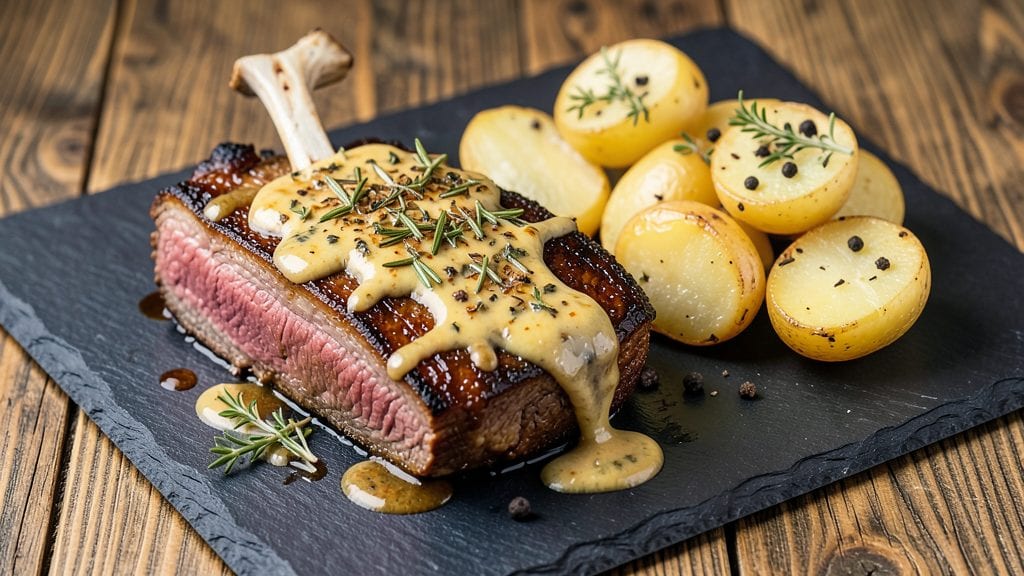
This prime rib and potatoes recipe delivers restaurant-quality results with a herb-crusted roast and buttery garlic smashed potatoes that transform a special occasion into a showstopper. The key lies in precise seasoning, a high-heat sear, and the perfect resting time—technique that elevates a simple dinner into something truly memorable.
I’ve perfected this method over years of holiday feasts, ensuring tender meat that practically melts in your mouth and crispy, golden potatoes that soak up every flavor.
The herb crust isn’t just decorative—it’s the secret weapon, combining fresh rosemary, thyme, and garlic with Dijon mustard for a balance of earthy and tangy notes that clings to the meat.
Meanwhile, the smashed potatoes develop a crispy exterior while staying creamy inside, thanks to a technique that requires patience but delivers foolproof results every time.
What makes this recipe stand out is how the two components complement each other: the rich, savory prime rib pairs beautifully with the buttery, aromatic potatoes, creating harmony in every bite.
By the time you serve this dish, your table will be set for an unforgettable meal—juicy prime rib slices with a crust that’s both flavorful and visually impressive, alongside potatoes that are crispy on the edges and tender in the center.
The aroma alone will have everyone gathering around the table, and the presentation is elegant enough for a holiday feast but simple enough for a Sunday dinner. This is the kind of recipe that makes cooking feel like a celebration, not a chore.
Whether you’re hosting a holiday gathering or treating yourself to a luxurious meal, this combination delivers restaurant-quality results with minimal effort. The instructions are clear, the techniques are tested, and the outcome is consistently impressive.
Let’s get started on creating a dish that will leave your guests asking for the recipe—and maybe even a second helping.
Ingredients for prime rib and potatoes
Sixteen ingredients to transform a holiday centerpiece into a showstopper with restaurant-quality technique.
| Ingredient | Amount | Notes |
|---|---|---|
| Prime Rib Roast (Bone-In) 🥩 | 4 lb | Center-cut, 1.5-inch thickness preferred |
| Fresh Rosemary 🌿 | ½ cup | Finely chopped, stems removed |
| Fresh Thyme 🌿 | 2 tbsp | Leaves only, stems discarded |
| Garlic Cloves 🧄 | 8 cloves | Peeled, minced for crust |
| Dijon Mustard 🍯 | 2 tbsp | High-quality, smooth variety |
| Kosher Salt 🧂 | 1 ½ tbsp | Diamond Crystal preferred |
| Freshly Ground Black Pepper 🌶️ | 1 ½ tbsp | Coarse grind for texture |
| Unsalted Butter 🧈 | ½ cup | Cold, cubed for crust |
| Russet Potatoes 🥔 | 3 lb | Large, firm, unpeeled |
| Garlic Cloves 🧄 | 6 cloves | Whole, for potato smashing |
| Unsalted Butter 🧈 | ¾ cup | Melted, for potatoes |
| Heavy Cream 🥛 | ¼ cup | Full-fat for richness |
| Fresh Parsley 🌿 | ¼ cup | Chopped, for garnish |
| Red Wine 🍷 | ½ cup | Cabernet Sauvignon, room temp |
| Beef Stock 🥫 | 1 cup | Homemade or high-quality |
The prime rib roast is non-negotiable for this dish—center-cut, bone-in delivers the most flavor and tenderness. Source from a reputable butcher or high-end grocery like Whole Foods or Dartmouth Farms, where they'll trim the roast to your preferred thickness. Look for vibrant color and good marbling; avoid any with grayish hues or excessive fat. The herb crust relies on fresh rosemary and thyme, so inspect the stems for wilting and choose bundles with tightly packed leaves. If using dried herbs, reduce to one-third the amount, but fresh is ideal for that aromatic punch. The Dijon mustard should be smooth and robust—Maille or Bonne Maman are excellent choices for consistent quality.
Substitutions are possible but may alter the final outcome. For the herb crust, fresh sage or parsley can replace thyme at a 1:1 ratio, though rosemary is irreplaceable for its piney depth. No red wine? Beef stock with a splash of balsamic vinegar mimics the acidity and richness. The potatoes can be substituted with Yukon Golds for a creamier texture, though Russets hold their shape best during smashing. If you're short on time, pre-peeled baby potatoes work in a pinch, but they won't yield the same crispy exterior. For the butter, European-style cultured butter adds extra flavor, but unsalted works perfectly fine. Always measure the kosher salt precisely—Diamond Crystal is less dense than table salt, so use the amount specified rather than converting.
Prime rib and potatoes both benefit from advance preparation. The roast can be trimmed and seasoned up to 24 hours ahead, then refrigerated uncovered to dry-brine. Potatoes should be scrubbed and stored in a cool, dark place for up to 5 days—avoid refrigerating them until ready to use. The herb crust mixture can be prepped in advance and stored in an airtight container for up to 3 days, though the butter may soften slightly. Once cooked, the prime rib reheats beautifully in a 275°F oven for 10-15 minutes, wrapped in foil with a splash of beef stock. The smashed potatoes can be made ahead and reheated in the oven at 350°F for 15-20 minutes, covered with foil to retain moisture, then broiled for 2-3 minutes to restore crispiness.
Why You'll Love This Recipe
- One-Pan Magic: I swear by this trick—just sear the bone-in rib, toss in garlic and herbs, then let the oven do the heavy lifting while you chop potatoes. Minimal chopping, zero fuss, and that bone-in magic keeps everything juicy.
- Herb-Crusted Perfection: The rosemary and thyme clinging to the crust? Chef’s kiss. A smear of Dijon mustard before roasting adds a tangy depth that makes every bite taste like a fancy dinner. (Yes, even on a Tuesday night.)
- Leftovers That Shine: This isn’t one of those meals where leftovers turn sad. Slice the rib thin, reheat with a splash of red wine, and suddenly you’ve got a killer sandwich filling or pasta topping. The potatoes? Crisp up beautifully in the pan.
- Weeknight Crowd-Pleaser: Honestly, this is my go-to for game days or when my in-laws drop by unexpectedly. The bone-in rib feeds a crowd without breaking the bank, and the potatoes soak up all the juices—no one ever leaves hungry. (Or with a doggy bag.)
Step-by-step instructions for herb-crusted prime rib and potatoes
This method delivers a perfectly crusty prime rib with tender, aromatic potatoes—every element timed for maximum flavor.
Prepare the Herb Crust and Season the Prime Rib
In a food processor, pulse the 0.5 cup fresh rosemary, 2 tablespoons fresh thyme, 8 cloves garlic, 1.5 tablespoons kosher salt, and 1.5 tablespoons freshly ground black pepper until finely chopped but not pasty. Add the 0.5 cup unsalted butter and 2 tablespoons Dijon mustard, then pulse until the mixture forms a coarse, pea-sized crumb. The texture should resemble wet sand—this ensures even adhesion to the meat.
Remove the 4 lb prime rib roast from the refrigerator and let it sit at room temperature for 30 minutes while you prepare the crust. Pat the roast dry with paper towels, then rub the herb butter mixture evenly over all surfaces, pressing firmly to create a uniform coating. This step is critical—the crust locks in moisture and delivers intense herb flavor with every bite. Let the roast rest uncovered for an additional 15 minutes before roasting to allow the seasoning to penetrate slightly.
Roast the Prime Rib to Medium-Rare Perfection
Preheat your oven to 450°F and place a wire rack on a rimmed baking sheet. Position the roast fat-side up on the rack—this allows the rendered fat to baste the meat during cooking. Roast for 20 minutes to sear the crust, then reduce the heat to 325°F and continue roasting for 20-25 minutes per pound, or until the internal temperature reaches 125°F for medium-rare.
Here's where precision matters: Use a meat thermometer inserted into the thickest part of the roast (avoiding the bone). The 125°F target ensures tender, juicy meat with a perfect pink center. If your oven runs hot, start checking at the 20-minute mark—every oven behaves differently. Remove the roast from the oven and tent loosely with aluminum foil. Let it rest for 30 minutes before slicing—this allows the juices to redistribute, preventing dryness.
Create the Buttery Garlic Smashed Potatoes
While the prime rib roasts, wash the 3 lb russet potatoes and boil them in salted water for 15-20 minutes until fork-tender. Drain and return them to the pot, then let them steam-dry for 2 minutes to remove excess moisture. This step is essential—wet potatoes won't crisp properly when smashed.
Preheat a large skillet over medium heat and add the 0.75 cup melted unsalted butter. Peel the potatoes (if desired) and place them in the skillet, cut-side down. Press firmly with a potato masher or heavy pan until flattened to ½-inch thickness. Cook for 3-4 minutes per side until golden brown and crispy. Remove from the skillet and keep warm.
Prepare the Red Wine Reduction
In the same skillet used for the potatoes, pour the 0.5 cup red wine and bring to a simmer over medium-high heat. Reduce by half—this takes about 3-4 minutes—until the liquid thickens slightly. Add the 1 cup beef stock and 0.25 cup heavy cream, then simmer for another 2 minutes until the sauce coats the back of a spoon. Season with additional kosher salt and freshly ground black pepper to taste.
Return the smashed potatoes to the skillet and toss gently to coat in the sauce. Sprinkle with the 0.25 cup chopped fresh parsley and serve immediately alongside the sliced prime rib. The potatoes should be warm, crispy-edged, and infused with rich garlic-butter flavor that complements the herb-crusted roast.
Pro Tips For Making Prime Rib And Potatoes
- SEAR THE RIB FIRST: I used to skip this step and relied on the oven to brown the meat—big mistake. Get that pan screaming hot, add 1 tablespoon of oil, and sear each side of the rib for 3-4 minutes until it’s deep golden. The crust locks in flavor and makes the difference between "good" and "showstopper."
- CHOP POTATOES UNIFORM: Large chunks turn to mush, tiny ones burn. Aim for 1.5-inch cubes—big enough to stay intact but small enough to cook through in the same time as the rib. (Yes, I know it’s tedious, but your potatoes won’t be soggy.)
- DON’T SKIP THE REST: The rib needs 15-20 minutes under foil after pulling it from the oven—this is the only time it actually rests properly. I learned this after slicing into a dry, sad roast; now I set a timer and walk away. (Your knife will thank you.)
- USE BUTTER FOR POTATOES: Toss the potatoes with melted butter, salt, and a pinch of thyme before roasting—it’s the shortcut that makes all the difference. The butter bastes as they cook, giving them a crispy edge and creamy center. (No, olive oil won’t cut it here.)
Best sauces and condiments for this dish
Classic Horseradish Cream
This tangy, slightly spicy sauce cuts through the richness of prime rib beautifully. Mix ½ cup sour cream, 2 tablespoons prepared horseradish, 1 tablespoon Dijon mustard, 1 teaspoon fresh lemon juice, and ½ teaspoon kosher salt until smooth.
Serve chilled—it pairs perfectly with the herb crust and adds a refreshing contrast to the buttery potatoes. 🌶️
Red Wine Jus
Use the drippings from your prime rib to create a luxurious red wine jus. After removing the roast, place the pan on the stovetop over medium heat and deglaze with ½ cup red wine (same as used for potatoes).
Scrape up any browned bits, then add 1 cup beef stock and simmer for 5-7 minutes until reduced by half. Strain through a fine-mesh sieve and season with salt and pepper. This jus elevates the dish to restaurant-quality elegance. 🍷
Garlic-Herb Butter
For an extra touch of luxury, prepare a simple garlic-herb butter to drizzle over the sliced prime rib. Mix ½ cup softened butter, 2 minced garlic cloves, 1 tablespoon chopped fresh parsley, and a pinch of salt.
Shape into a log, wrap in parchment paper, and chill until ready to use. Slice thinly and place on top of each serving for a burst of flavor. 🧈
Creamy Horseradish Sauce
For a richer alternative, blend ½ cup sour cream, 2 tablespoons crème fraîche, 1 tablespoon horseradish cream, and 1 teaspoon Worcestershire sauce until smooth.
Adjust seasoning with salt and pepper to taste. This sauce adds a velvety texture that complements the crispy herb crust and buttery potatoes. 💫
Balsamic Glaze
For a sweet and tangy finish, simmer ¼ cup balsamic vinegar in a small saucepan over medium heat until reduced by half. Drizzle lightly over the sliced prime rib or potatoes just before serving. The glaze adds a sophisticated touch that balances the richness of the dish. 🍇
Whipped Butter Sauce
For a lighter option, whip ½ cup softened butter with 1 tablespoon fresh lemon juice, 1 teaspoon honey, and a pinch of salt until fluffy.
Spoon over the prime rib slices or potatoes for a bright, buttery finish. This sauce is quick, elegant, and pairs beautifully with the herb crust. 🥄
Nutrition facts
Frequently asked questions
How long should I let the prime rib rest before slicing?
Always let the prime rib rest for 30 minutes after removing it from the oven. This crucial step allows the juices to redistribute throughout the meat, ensuring tender slices instead of dry ones. Skipping this step is the #1 reason prime rib turns out tough.
Can I substitute Yukon Gold potatoes for russets?
Yes, but expect different results. Yukon Golds will yield creamier potatoes that hold their shape slightly better than russets, but they won't develop the same crispy exterior when smashed. For best results, stick with russets—their high starch content creates that perfect golden crust.
What's the best way to reheat leftover prime rib?
Slice the prime rib and reheat in a 275°F oven for 10-15 minutes, wrapped in foil with a splash of beef stock. This method keeps the meat moist without overcooking. For potatoes, reheat at 350°F for 15 minutes, then broil for 2-3 minutes to restore crispiness.
Do I need to trim the fat cap on prime rib?
Not necessarily! The fat cap helps baste the meat during cooking, but if you prefer less fat, trim it to about ¼-inch thickness before roasting. Just leave enough to create flavorful drippings for your red wine sauce.
Can I make this dish ahead of time?
The prime rib can be seasoned and refrigerated 24 hours ahead, while the potatoes should be prepped and stored in the fridge for up to 5 days. The herb crust mixture can be made 3 days ahead—just let it sit at room temperature before using. Reheat both components separately before serving.