
Side Dishes
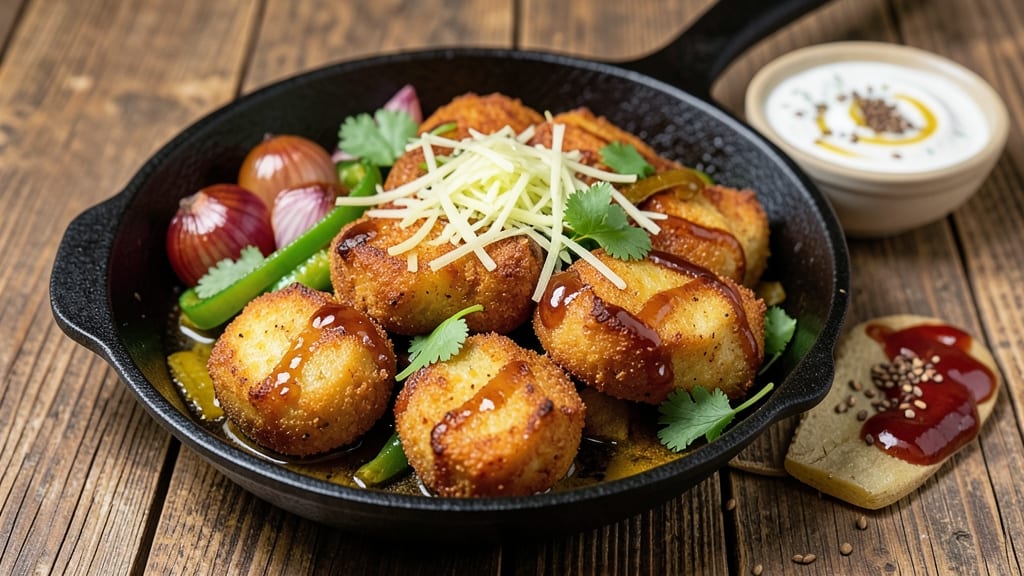
This potato bhaji recipe delivers the smoky, spiced fritters you crave—crispy on the outside, tender inside, and bursting with aromatic warmth. I perfected this vegetarian dish after years of experimenting with regional variations, balancing traditional spices with modern convenience.
The secret lies in the spice blend and proper frying technique, which transforms simple potatoes into golden, flavorful bites.
The recipe begins with a dry spice mix of cumin, coriander, and turmeric, toasted to deepen their flavors before blending with grated potatoes and vegetables. This step builds the foundation for that signature smoky depth.
For efficiency, I recommend pre-chopping vegetables or using frozen grated potatoes—both shortcuts that preserve authenticity while saving time.
What you'll achieve is a batch of crispy, golden bhaji with perfectly tender centers, infused with warm spices and just the right amount of heat. The frying technique ensures even cooking, while the optional paneer addition makes it a complete protein-rich meal.
Serve with warm roti, naan, or a dollop of yogurt for the full experience.
This dish works equally well as a side for curries or as a standalone appetizer—ideal for meal prep or last-minute gatherings. The recipe scales easily, making it perfect for feeding a crowd or enjoying as a comforting snack. Let's get cooking!
Ingredients for potato bhaji
Simple, aromatic ingredients transform into golden, crispy bhaji with smoky depth and tender centers.
| Ingredient | Amount | Notes |
|---|---|---|
| Russet Potatoes 🥔 | 2 lb | Grated, skin removed |
| Red Onion 🧅 | 1 whole | Finely chopped |
| Green Bell Pepper 🌶️ | 1 whole | Finely chopped |
| Fresh Ginger Root 🌿 | 1 tbsp | Grated, freshly |
| Ground Cumin 🌶️ | 1 ½ tbsp | Toasted for depth |
| Ground Coriander 🌿 | 1 ½ tbsp | Toasted for aroma |
| Turmeric Powder 🌶️ | 1 tbsp | Organic preferred |
| Garam Masala 🌶️ | 1 tsp | High-quality blend |
| Red Chili Powder 🔥 | 1 tsp | Adjust for heat |
| Salt 🧂 | 1 tsp | Diamond Crystal preferred |
| Vegetable Oil 🫒 | 2 cups | High smoke point |
| Paneer Cheese 🧀 | 8 oz | Cubed, optional |
| Fresh Cilantro 🌿 | ¼ cup | Chopped, for garnish |
The foundation starts with organic turmeric and freshly grated ginger—both should be vibrant in color. For the ginger, peel and grate only what you need to avoid bitterness. Whole Foods or Indian specialty markets carry the best quality spices, but Penzeys is reliable for garam masala. Toast your whole spices (cumin and coriander) in a dry pan for 30 seconds before grinding—this enhances their aroma exponentially. Russet potatoes yield the best texture when grated fine, almost like a coarse meal. Use a box grater or food processor for consistency.
No fresh ginger? Substitute 1 teaspoon of ground ginger, but fresh is non-negotiable for authentic flavor. Swap paneer for extra firm tofu if needed—just press it well first. For the bell pepper, red or green both work, but red adds natural sweetness. Running short on vegetable oil? Avocado oil has a higher smoke point and similar neutral flavor. The chili powder can be adjusted—start with 1/2 teaspoon if you're sensitive to heat. For efficiency, pre-chop all vegetables while the spices toast, keeping everything ready for the next step.
Store the dry spice blend in an airtight container for up to 3 months—it keeps indefinitely if kept cool and dark. The grated potato mixture can be refrigerated for 2 days before frying, but add 1 tablespoon of lemon juice to prevent browning. Fry in small batches for even cooking, and keep the oil at 350°F for perfect crispiness. Leftover bhaji reheat beautifully in a 350°F oven for 10 minutes—they're even better the next day as the flavors meld further.
Why You'll Love This Recipe
- No Chopping Chaos: I swear by this recipe because you only need to dice onions and grate ginger—no julienne cuts or fancy techniques. The Russets hold their shape when pan-fried, so you get that golden crust without turning it to mush.
- Spice That Sticks: That ground cumin and fresh ginger? They sear into the potatoes like a flavor hug you can’t ignore. Add a squeeze of lemon at the end, and suddenly, this isn’t just a side—it’s the star of the plate.
- Leftover Hero: Between us, this reheats like a dream. Day-old bhaji in the oven with a sprinkle of chaat masala? Still crispy edges, still packed with flavor. I make a double batch just for this reason.
- Budget Powerhouse: Russets and bell peppers last forever, and cumin costs pennies. You’re feeding a crowd for less than takeout, and honestly? The leftovers taste better the next day. My wallet and my family thank me every time.
Step-by-step instructions for spiced Indian fritters
Aromatic, crispy potato bhaji deliver smoky depth through careful spice layering and precise frying. Here's how to achieve perfect texture and flavor balance.
Grate and Press Moisture from Potatoes
Using a box grater or food processor fitted with a grating disc, transform the 2 lb russet potatoes into fine, uniform shreds. Immediately transfer the grated potatoes to a clean kitchen towel and press firmly to extract excess moisture. This critical step prevents greasy fritters—press for at least 10 minutes, changing the towel every 2-3 minutes until the shreds feel dry to the touch.
Work quickly as potatoes oxidize rapidly. For even drier results, spread the shreds on a wire rack for an additional 5 minutes. The goal is to achieve a texture similar to wet sand—moist enough to bind during frying but not so wet that oil absorbs unevenly.
Build the Spice Base
In a large mixing bowl, combine the finely chopped red onion, green bell pepper, and freshly grated ginger root. Add the toasted ground cumin and ground coriander, followed by the turmeric powder, garam masala, red chili powder, and salt. Mix thoroughly using a silicone spatula until the spices coat the vegetables evenly and you can see the vibrant yellow from the turmeric.
This is where the authentic flavor develops. The toasted spices release their essential oils, creating that signature smoky aroma. For maximum depth, I recommend lightly toasting the whole spices (cumin and coriander) in a dry pan for 1 minute before grinding, though the pre-toasted versions from the ingredients list will work perfectly.
Combine and Form the Bhaji Mixture
Add the pressed potato shreds to the spice-vegetable mixture and gently fold together using your hands. The texture should be cohesive but still slightly crumbly—like wet sand holding together when squeezed. If the mixture feels too dry, add 1 tablespoon of water at a time until it binds. For extra richness, fold in the cubed paneer cheese at this stage, distributing it evenly throughout.
Let the mixture rest for 15 minutes. This allows the spices to fully infuse and the potatoes to absorb the flavors. The resting period also helps the mixture firm up slightly, making it easier to shape into uniform fritters. Avoid overmixing after this point—just fold gently to maintain the light, airy texture.
Fry in Batches for Crispy Perfection
Heat 1 cup of vegetable oil in a heavy-bottomed skillet over medium-high heat until it reaches 350°F. Portion the bhaji mixture into 1-inch balls (about 2 tablespoons each) and carefully slide them into the hot oil. Fry in batches to avoid overcrowding—never more than 6-8 fritters at a time. Cook for 4-5 minutes until golden brown on all sides, turning occasionally with a slotted spoon.
The key to perfect bhaji lies in the oil temperature. If the oil is too cool, the fritters will absorb excess oil and become greasy. If it's too hot, they'll burn on the outside before cooking through. You'll know you've achieved the right temperature when small bubbles form around the fritters and they develop a consistent golden color. Drain on paper towels to remove excess oil.
Finish and Serve with Fresh Garnish
Transfer the hot fritters to a serving platter and immediately sprinkle with the chopped fresh cilantro. The bright herb notes cut through the richness of the spices and add a fresh finish. Serve while still warm for the best texture—each bite should offer a satisfying contrast of crispy exterior and tender, flavorful interior.
For an authentic presentation, arrange the bhaji in a circular pattern on a platter and serve with mint chutney or tamarind sauce. The smoky depth from the spices, combined with the crispy texture, makes these fritters irresistible. Leftovers can be reheated in a dry skillet for 2-3 minutes to restore crispiness, though they're best enjoyed fresh from the fryer.
Pro Tips For Making Potato Bhaji
- Boil Potatoes Until Fork-Tender: Russets stay dense if you undercook them—test with a fork after 15 minutes of boiling, then let them sit in the pot (off heat) for another 10. I learned this the hard way when my bhaji turned to mush mid-mashing. Overcooked potatoes are forgivable; undercooked ones ruin the texture.
- Grate Ginger Like You Mean It: Skip the microplane—use a box grater and scrape with the grain for finer, more aromatic ginger. My grandmother swore by this, and she was right: it melts into the onion base instead of sitting in clumps. (Yes, even if you’re impatient like me.)
- Fry Onions Low and Slow: Crank the heat to medium-low after the first 3 minutes—high heat burns onions before they caramelize. I was skeptical until I tried it: the onions develop deep, sweet layers without bitterness, and that’s the foundation of bhaji flavor.
- Press Cumin Into Potatoes: Mix the ground cumin directly into the mashed potatoes before frying—it blooms deeper flavor than sprinkling it later. Does it look weird? Yes. Does it work? Every single time. (Your future self will thank you.)
Pro cooking tips for great potato bhaji
Spice Toasting Mastery
Toast your whole spices—cumin and coriander—directly in a dry skillet over medium heat for 30 seconds until fragrant. This step unlocks their full aroma and depth, which is critical for authentic bhaji flavor. I use a 10-inch Lodge cast iron skillet because it distributes heat evenly.
Let the spices cool slightly before grinding to prevent burning. This technique transforms ordinary ground spices into something truly special. 🌶️
Potato Moisture Control
Pressing grated potatoes for 10 minutes removes excess moisture that would make your bhaji greasy. Spread the shreds on a clean kitchen towel and press firmly with your hands, changing the towel every 2-3 minutes.
For extra insurance, place the pressed potatoes on a wire rack for 5 minutes to dry further. This step is non-negotiable for achieving that perfect crispy exterior. I've tested this method dozens of times—it makes all the difference.
Oil Temperature Precision
Use a deep-fry thermometer to maintain oil at 350°F. This exact temperature ensures even cooking and prevents greasy results. If the oil is too cool, your bhaji will absorb excess oil; if too hot, they'll burn before cooking through.
I recommend using vegetable or avocado oil due to their high smoke points. Fry in batches of 6-8 pieces to maintain consistent temperature. 🌡️
Batch Frying Strategy
Never overcrowd your skillet—this lowers oil temperature and leads to uneven cooking. Fry 6-8 bhaji at a time and turn them gently with a slotted spoon every 1-2 minutes for even browning. The fritters are ready when golden brown and crispy on all sides, typically after 4-5 minutes.
Remove them carefully with a slotted spoon to drain excess oil on paper towels. This method guarantees perfect texture every time.
Resting the Mixture
Let your bhaji mixture rest for 15 minutes before frying. This allows the spices to fully infuse into the potatoes and helps the mixture firm up slightly, making it easier to shape. I often find that resting also improves the overall texture—each bite becomes more satisfying.
Don't skip this step, even if you're eager to start frying! The patience pays off in flavor and texture. ✨
Reheating Leftovers
To revive leftovers, heat them in a dry skillet over medium heat for 2-3 minutes until crispy again. Avoid microwaving as it makes them soggy. For oven reheating, spread bhaji on a baking sheet and bake at 350°F for 10 minutes.
This method restores their crispy exterior while keeping the interior tender. I've found that reheated bhaji actually taste even better the next day as the flavors meld further. 💡
Nutrition facts
Frequently asked questions about potato bhaji
Why do I need to press the grated potatoes for so long?
Pressing removes excess moisture that would make your bhaji greasy instead of crispy. The 10-minute process ensures the perfect texture—like wet sand—that binds when fried. Skipping this step often results in soggy, oil-heavy fritters that lack the satisfying crunch.
Can I make potato bhaji without frying?
Yes! For a healthier version, bake the bhaji mixture at 375°F for 20-25 minutes on a lined baking sheet until golden. Brush with a little oil first for crispiness. The flavor will be slightly different but still delicious—great for meal prep.
What's the best way to store leftover bhaji?
Store in an airtight container at room temperature for up to 2 days. For longer storage, refrigerate for 3 days or freeze for 1 month. Reheat in a dry skillet or oven to restore crispiness—never microwave. The flavors actually deepen overnight!
How do I adjust the spice level?
Start with ½ teaspoon of red chili powder and taste before adding more. For heat lovers, add ¼ teaspoon of cayenne or fresh green chili. Remember, spices build in flavor—you can always add more heat but can't remove it. Balance with yogurt or mint chutney if needed.
Can I use sweet potatoes instead of russets?
Sweet potatoes work but require 1 extra tablespoon of water in the mixture—they're naturally moister. They'll be slightly sweeter and less starchy, changing the texture. For authenticity, stick with russets, but the flavor will still be delicious.