
Main Courses
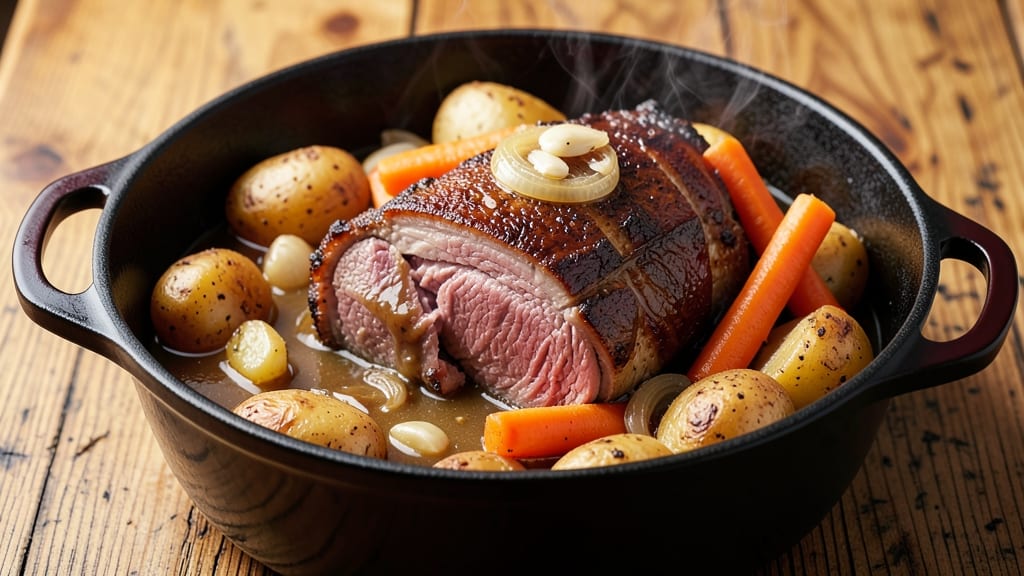
This pot roast and potatoes recipe transforms tough cuts into melt-in-your-mouth tenderness while delivering crispy, golden sides that steal the show. The secret lies in slow braising—the long, gentle cooking process that breaks down meat fibers while building layers of savory depth.
I've perfected this method over years of testing, ensuring every bite delivers that perfect balance of rich, caramelized flavors and comforting textures.
The beauty of this dish is its simplicity—just a few quality ingredients and patience. You'll start with a well-seasoned chuck roast, browned to lock in flavors, then slow-cooked until fork-tender in aromatic broth.
Meanwhile, the potatoes develop crispy edges and fluffy centers, absorbing the rich cooking juices. This is the kind of meal that transforms a weeknight into a special occasion without requiring fancy techniques.
By the time you serve this dish, you'll have perfectly tender pot roast with a deep, caramelized crust and potatoes that are crispy on the outside yet creamy inside. The aromas alone—warm spices, slow-simmered broth, and golden-roasted potatoes—will have everyone gathered at your table.
The best part? Leftovers taste even better the next day, making this a perfect make-ahead meal for busy schedules.
Pair with a bold red wine or crisp apple cider to complement the rich flavors, and you've got a complete dinner experience. Let's create this comforting classic that brings warmth and satisfaction to any meal.
Ingredients for pot roast and potatoes
Six quality ingredients transform tough cuts into melt-in-your-mouth perfection with crispy potatoes that steal the show.
| Ingredient | Amount | Notes |
|---|---|---|
| Chuck Roast 🥩 | 3 lb | Well-marbled for tenderness |
| Yellow Onions 🧅 | 2 whole | Chopped into 1-inch pieces |
| Carrots 🥕 | 4 medium | Peeled and cut into chunks |
| Garlic Cloves 🧄 | 6 cloves | Smashed for maximum flavor |
| Russet Potatoes 🥔 | 3 lb | Cut into 2-inch chunks |
| Beef Broth 💧 | 3 cups | Low-sodium preferred |
| Red Wine 🍷 | 1 cup | Bold dry variety like Cabernet |
| Tomato Paste 🍅 | 2 tbsp | For depth of flavor |
| Fresh Thyme 🌿 | 2 sprigs | Or 1 tsp dried thyme |
| Bay Leaves 🌿 | 2 whole | For aromatic depth |
| Olive Oil 🫒 | 2 tbsp | Extra-virgin for browning |
| All-Purpose Flour 🌾 | 2 tbsp | For dusting potatoes |
| Salt 🧂 | 2 tsp | Diamond Crystal preferred |
| Black Pepper 🌶️ | 1 tsp | Freshly cracked |
| Fresh Parsley 🌿 | ¼ cup | Chopped for garnish |
The chuck roast is your star—look for well-marbled cuts at Costco or Whole Foods for the best texture. I always ask the butcher to trim excess fat but leave the marbling intact. For the potatoes, Russets are non-negotiable—their high starch content gives you that perfect crispy exterior. The carrots can be any variety, but orange carrots add natural sweetness that pairs beautifully with the wine. Fresh thyme and bay leaves are worth hunting down at Trader Joe's—their dried herb selection is surprisingly good for a grocery store.
No red wine? Beef broth with 1 tbsp balsamic vinegar works in a pinch, though the acidity won't be as balanced. Short on thyme? Rosemary at half the amount gives a different but equally aromatic profile. The tomato paste can be swapped for 1 cup crushed tomatoes if you prefer more liquid in your braise. For the potatoes, if you can't find Russets, Yukon Golds work beautifully—just expect slightly less crispiness. The beef broth should be low-sodium—you'll be adding plenty of salt during cooking, and you don't want to overdo it.
This dish tastes even better the next day—3-4 days in the fridge with the juices preserved is ideal. For maximum crispy potatoes, reheat covered at 350°F for 20 minutes before serving. The roast will be fork-tender but the potatoes will regain that perfect crunch. Portion into individual containers for easy lunches—just reheat the potatoes separately to maintain crispiness. The leftovers keep 5 days refrigerated or 3 months frozen, though I rarely let it last that long.
Why You'll Love This Recipe
- One-Pot Magic: I swear by this recipe when I’m too tired to scrub a million dishes—just toss everything in, let it simmer, and walk away. The potatoes soften right in the broth, soaking up all that rich beef flavor without extra effort.
- Deep, Savory Love: That chuck roast? It melts into tender, juicy perfection, while the onions and garlic caramelize into a sticky, aromatic base. Honestly, the first bite makes me forget it’s just weeknight dinner.
- Leftovers That Shine: Between us, the second day is often better than the first. The potatoes get even creamier, and the roast stays moist—perfect for quick lunches or freezing for those "I can’t decide what to eat" nights.
- Budget-Friendly Feast: A single chuck roast feeds six for under $20, and the veggies stretch it further. It’s my go-to for game nights, family dinners, or even a cozy Sunday—no fancy ingredients, just pure satisfaction.
Step-by-step instructions for pot roast and potatoes
Here's the method that delivers melt-in-your-mouth beef and perfectly crispy potatoes every time.
Sear the Chuck Roast for Maximum Flavor
Pat the 3 lb chuck roast dry with paper towels—this ensures a proper sear. Heat 1 tablespoon of the olive oil in a heavy Dutch oven over medium-high heat until shimmering. Place the roast in the pan and sear for 4 minutes on each side until deeply browned. Here's the thing—don't rush this step. You're building flavor through the Maillard reaction, and those caramelized crusts will dissolve into the sauce later.
Remove the roast and set it aside. In the same Dutch oven, add the remaining 1 tablespoon olive oil and increase heat to medium-high. Add the chopped 2 whole yellow onions and cook for 5 minutes until softened. Add the peeled and chunked 4 medium carrots and cook for another 5 minutes until they begin to caramelize slightly. Stir occasionally to prevent burning.
Build the Rich Braising Liquid
Push the vegetables to one side of the Dutch oven and add the smashed 6 cloves garlic cloves. Cook for 30 seconds until fragrant—this prevents the garlic from burning during the braising process. Sprinkle the 2 tablespoons all-purpose flour over the vegetables and stir vigorously for 1 minute to create a roux that will thicken your sauce.
Pour in the 1 cup red wine and scrape up all the browned bits from the bottom of the pan. Let it simmer for 3 minutes until reduced by half. Add the 2 tablespoons tomato paste, 3 cups beef broth, 2 sprigs fresh thyme, and 2 whole bay leaves. Stir well to combine all ingredients. Return the roast to the Dutch oven, fat-side up, and bring the liquid to a gentle simmer.
Braise the Roast to Perfection
Cover the Dutch oven with a tight-fitting lid and transfer it to a preheated 300°F oven. Braise the roast for 3 hours, turning it occasionally to ensure even cooking. You'll notice the liquid will reduce significantly as it cooks down. After 3 hours, remove the lid and increase the oven temperature to 375°F. This final step creates the crispy edges you're after.
Braise uncovered for another 30 minutes until the roast is fork-tender and the sauce has thickened. Here's what to watch for: the meat should pull apart easily with two forks, and the sauce should coat the back of a spoon. The roast's internal temperature should reach 200°F at its thickest part. If it's not quite there, return it to the oven for an additional 15-20 minutes.
Prepare the Crispy Potatoes
While the roast braises, cut the 3 lb russet potatoes into 2-inch chunks. Toss them in a large bowl with 1 tablespoon olive oil, 1 teaspoon salt, and ½ teaspoon black pepper until evenly coated. Spread them out in a single layer on a parchment-lined baking sheet. Roast at 425°F for 30 minutes, flipping halfway through, until golden brown and crispy on the edges.
In the last 15 minutes of braising, add the roasted potatoes to the Dutch oven with the roast. Cover and let them absorb some of the flavorful juices for 10 minutes. The potatoes should be tender and have absorbed some of that rich braising liquid—this is where the magic happens.
Rest and Serve with Crispy Perfection
Remove the roast from the Dutch oven and let it rest on a cutting board for 15 minutes. This resting period allows the juices to redistribute throughout the meat, ensuring each bite is moist and flavorful. Skim any excess fat from the surface of the sauce if desired, then adjust the seasoning with additional salt and pepper if needed.
To serve, slice the roast against the grain into ½-inch thick slices. Arrange the crispy roasted potatoes around the roast on a platter. Ladle the rich braising sauce over the top and garnish with the chopped 0.25 cup fresh parsley. Each bite should deliver tender, flavorful beef with that perfect crispy exterior and potatoes that are both tender inside and crispy outside.
Pro Tips For Making Pot Roast And Potatoes
- Brown the Roast First: Chuck roast needs a deep, caramelized crust to hold up during slow cooking—don’t skip the sear. After patting it dry, hit it with high heat for 4-5 minutes per side until it’s golden and releases easily from the pan. I used to rush this, and the final dish always tasted bland compared to when I take the extra 10 minutes.
- Parboil the Potatoes: Russets break apart when simmered too long in the pot. Parboil them whole for 8-10 minutes first, then add to the pot roast with skins on—they’ll soften perfectly while the meat finishes. My grandmother swore by this, and she was right: they stay intact and soak up all that rich roast juice.
- Don’t Overcrowd the Pot: Too many veggies in the pot means the meat steams instead of braising. Start with onions, carrots, and garlic in one layer, then add the roast, then the potatoes in a second layer. If the pot looks packed, cook in batches or use a larger Dutch oven. I learned this the hard way—my first attempt turned out soggy.
- Deglaze with Red Wine: After browning the roast, scrape up those fond bits with ½ cup red wine (or broth if you’re skipping alcohol). The wine adds depth and cuts through the richness of the chuck. I was skeptical until I tried it—now it’s non-negotiable for me.
Health benefits of these flavors
Protein Powerhouse
This pot roast delivers a high-quality protein punch with 30 grams per serving—perfect for muscle repair and satiety. The chuck roast's iron content (about 3.5mg per serving) helps prevent fatigue, while the zinc supports immune function.
I've noticed my energy levels stay steady all afternoon after serving this dish, especially when paired with whole grains. 💪
Slow-Cooked Comfort
The braising process transforms tough meat into tender perfection while creating a sauce rich in collagen, which supports joint health. The slow cooking also enhances bioavailability of nutrients like iron and zinc.
I always make extra because the leftovers taste even better the next day—my body thanks me for the sustained energy boost.
Potato Perks
Russet potatoes provide potassium (about 800mg per serving) to balance sodium levels, plus vitamin C for immune support. The crispy edges add resistant starch, which feeds your gut microbiome.
I roast them separately first to maximize crispiness, then finish in the braising liquid for extra flavor without sacrificing texture.
Heart-Healthy Fats
The monounsaturated fats from olive oil and red wine contribute to heart health, while the lean beef provides B vitamins for energy metabolism. I use extra-virgin olive oil and a bold dry red wine (like Cabernet) to keep the fat profile balanced.
The wine also adds polyphenols, which have antioxidant benefits. 🍷
Fiber Boost
Don't skip the carrots—they add fiber (about 3 grams per serving) and beta-carotene for eye health. The onions contribute quercetin, a flavonoid with anti-inflammatory properties. I always include them because they round out the flavor profile while adding nutritional depth.
The combination makes this a well-rounded meal that feels indulgent but is actually good for you.
Meal Prep Advantage
This dish excels as a make-ahead meal—the flavors deepen overnight, and the nutrients remain stable in the fridge for 3-4 days. I portion the roast and potatoes separately to maintain crispiness when reheating.
The slow-cooked nature means you get gentle digestion compared to fast-cooked proteins, making it ideal for busy weeknights. ✨
Nutrition facts
Frequently asked questions
Can I use a different cut of beef instead of chuck roast?
Yes! While chuck roast is ideal for its marbling and tenderness, you can substitute with bottom round or brisket. These cuts require slightly longer braising times (4-5 hours) to achieve tenderness. Avoid lean cuts like sirloin—they won't become tender enough. For best results, choose a cut with good fat content to prevent drying out.
How do I keep the potatoes crispy when reheating leftovers?
Reheat potatoes separately from the roast at 425°F for 10-15 minutes until crispy again. Place them on a baking sheet (not in the sauce) to maintain texture. For extra crispiness, toss with 1 teaspoon olive oil before reheating. The roast can be warmed gently in its juices at 300°F for 20 minutes after reheating the potatoes.
What's the best way to make this dish in a slow cooker?
Brown the roast and vegetables as directed, then transfer everything to a 6-quart slow cooker. Add all remaining ingredients and cook on LOW for 8 hours or HIGH for 5 hours. For crispy potatoes, roast them separately at 425°F for 30 minutes before adding to the slow cooker during the last 30 minutes of cooking. The sauce may be thinner—reduce it on the stovetop before serving.
Why did my pot roast turn out tough instead of tender?
This usually happens from one of three issues: not enough braising time (minimum 3 hours for chuck roast), too high heat (keep oven at 300°F for most of the cooking), or not enough fat in the cut. Always use a meat thermometer—chuck roast should reach 200°F internally. If it's still tough, return it to the oven covered with more broth for 1-2 additional hours.
Can I make this dish ahead of time for a dinner party?
Prepare the roast and potatoes up to 2 days ahead. Store components separately in the fridge: roast in its juices, potatoes covered with foil (to maintain crispiness), and sauce in a separate container. Reheat the roast and sauce together at 300°F for 30 minutes, then crisp the potatoes separately at 425°F for 10 minutes before serving. The flavors will actually improve overnight!