Side Dishes
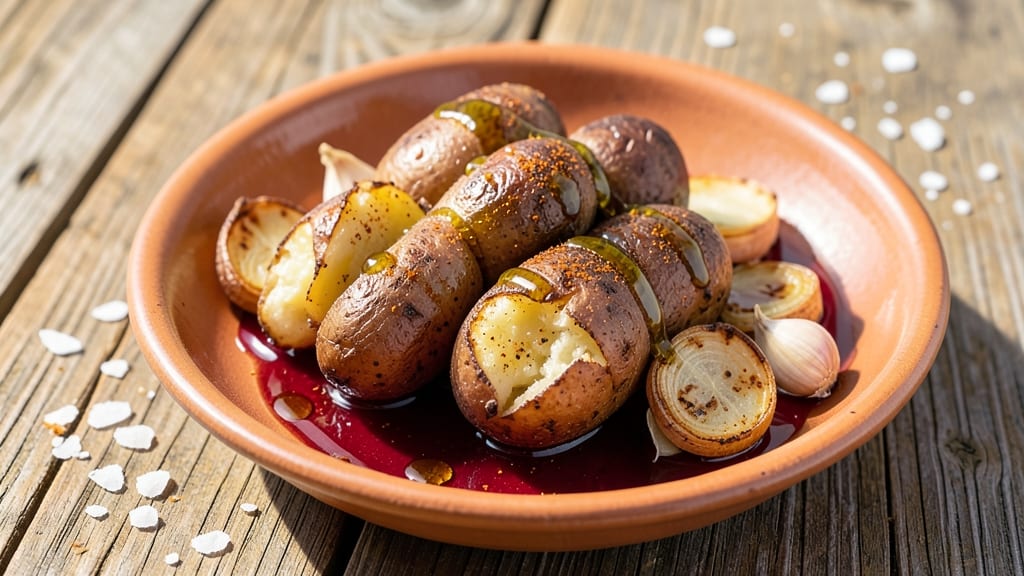
This Portuguese potatoes recipe transforms humble spuds into a vinegar-kissed, garlicky masterpiece that belongs at any table. 🌟 Growing up, I'd watch my Portuguese neighbors toss potatoes with olive oil and vinegar, creating a dish so simple yet packed with flavor it became a staple in our home.
The secret lies in the balance of acidity and garlic, which cuts through the richness and leaves your kitchen smelling like a Lisbon tavern.
The recipe starts with thinly sliced potatoes—no peeling required—cooked until golden and crispy on the edges while staying tender inside. Garlic and white wine vinegar infuse every bite with bright, tangy depth, while smoked paprika adds a subtle warmth that ties everything together.
It's a foolproof method that delivers restaurant-quality results in under 45 minutes, making it perfect for weeknight dinners or holiday spreads.
What makes this dish truly special is how it elevates any meal—whether paired with grilled fish, roasted meats, or even as a standalone side. The crispy edges give way to tender, flavorful centers, all coated in a garlicky olive oil that makes every bite irresistible.
This isn't just a side dish; it's a taste of Portugal that transforms ordinary potatoes into something extraordinary.
For an extra touch of authenticity, finish with a sprinkle of flaky sea salt and fresh parsley. The dish keeps well in the fridge for up to 3 days, so you can make it ahead and reheat for a quick, flavorful meal.
Let's bring a little Portugal to your kitchen—one crispy, garlicky potato at a time.
Ingredients for portuguese potatoes
Eight simple ingredients transform ordinary potatoes into Portugal's crispy, garlicky masterpiece.
| Ingredient | Amount | Notes |
|---|---|---|
| Russet Potatoes 🥔 | 2 ½ lb | Thinly sliced, no peeling |
| Extra-Virgin Olive Oil 🫒 | ½ cup | Light variety for crispiness |
| White Wine Vinegar 🍷 | ¼ cup | Dry, not balsamic |
| Garlic Cloves 🧄 | 6 cloves | Thinly sliced, not minced |
| Smoked Paprika 🌶️ | 1 tbsp | Sweet or hot variety |
| Flaky Sea Salt 🧂 | 1 ½ tsp | For finishing |
| Fresh Parsley 🌿 | ¼ cup | Chopped, for garnish |
| Ground Black Pepper 🌶️ | ½ tsp | Freshly cracked |
The potatoes are everything here. Russets slice best—their fluffy texture stays crispy when cooked. Grab the smallest ones at the grocery store; they're more uniform. No need to peel—just scrub and slice. For extra authenticity, Trader Joe's or Whole Foods carry the best olive oil, but any light variety works. The vinegar should be dry and crisp, not sweet. If you can't find white wine vinegar, apple cider vinegar is a decent swap, though it adds a slight fruitiness. Thinly slicing the potatoes is key—use a mandoline if you're brave, or a sharp knife and take your time. (Trust me, it's worth it.)
No smoked paprika? Regular paprika plus a pinch of cayenne gets you close. Short on garlic? Garlic powder at half the amount works in a pinch, but fresh is non-negotiable for that authentic flavor. The parsley is optional but adds a bright finish—dried parsley at one-third the amount works if you're fresh out. For extra depth, add a splash of Portuguese red wine (like Vinho Verde) to the vinegar mix. The sea salt should be flaky—Maldon is my go-to, but any good-quality flaky salt does the trick. If you're feeling fancy, toast the sliced potatoes in the oven for 10 minutes before frying for even more crispiness.
These keep beautifully for 3 days in the fridge, reheating perfectly in a skillet with a splash of water. For make-ahead magic, cook the potatoes completely, then store them in a single layer on a baking sheet. Reheat in the oven at 400°F for 10 minutes—they'll crisp up like fresh. The flavors only get better as they sit, so make extra and save it for lunches. (They're even better cold the next day, honestly.)
Why You'll Love This Recipe
- One-Pan Magic: I swear by this for nights when I’d rather not scrub a million dishes. Toss the potatoes in olive oil, smoked paprika, and garlic, roast until golden, then hit ‘em with that bright vinegar finish—done. The pan’s still warm when I’m done.
- Smoky-Sweet Crave: That smoked paprika and roasted garlic? It’s like a hug in bite form. The potatoes get this crispy skin that shatters, while inside they’re buttery and just tender enough—plus, the vinegar cuts through the richness so it’s never heavy.
- Leftovers? No Problem: Honestly, I make this twice in one week. The flavor actually improves the next day—those potatoes soak up the vinegar and garlic like a sponge. Reheat in the oven or cold in salads, and it’s still the star of the meal.
- Budget Hero: Russets are cheap, olive oil lasts forever, and a little vinegar goes a long way. I feed my whole family (plus my dad, who “just drops by”) for under $8, and it’s still the dish everyone asks for. No fancy ingredients, just pure satisfaction.
Step-by-step instructions for vinegar-kissed Portuguese potatoes
Here's how to transform simple russets into crispy, garlicky Portuguese potatoes that pack a tangy punch.
🍳 Step 1: Slice and Soak the Potatoes
Cut the 2.5 lb russet potatoes into ¼-inch thick slices using a mandoline or sharp knife. I like to work in batches—this keeps the slices even and prevents the knife from getting clogged. Arrange the slices in a single layer on a baking sheet and immediately pour over the 0.25 cup white wine vinegar. Let them soak for 5 minutes—you'll see the edges start to soften slightly and the vinegar will infuse the potatoes with bright acidity.
This soaking step is what makes these potatoes special. The vinegar not only tenderizes the edges but also creates that signature tangy depth. Don't skip it—it's the secret to authentic Portuguese flavor. After soaking, pat the slices dry with paper towels. You want them damp but not wet, so they'll crisp up nicely in the oven.
👨🍳 Step 2: Season and Toss with Oil and Spices
In a large bowl, combine the dried potato slices with the 0.5 cup extra-virgin olive oil, 1 tbsp smoked paprika, and 0.5 tsp ground black pepper. Toss everything together with your hands or a silicone spatula until every slice is evenly coated. The potatoes should glisten with oil but not be swimming in it—if they look too wet, add a few more paper towels to absorb any excess moisture.
Here's where the magic happens: the smoked paprika adds depth while the olive oil ensures crispiness. I like to press the spices into the potatoes gently as I toss them—this helps them adhere better. The garlic will come in later, but we're building flavor layer by layer. Spread the seasoned potatoes on a second baking sheet in a single layer, making sure they don't overlap.
🔥 Step 3: Roast Until Golden and Crispy
Preheat your oven to 425°F and position a rack in the middle position. Roast the potatoes for 20-25 minutes, flipping them halfway through with a spatula. You're looking for deep golden brown edges and a crisp texture—almost like potato chips. The vinegar-soaked potatoes will caramelize beautifully, creating that perfect balance of crispy exterior and tender interior.
Real talk: don't walk away during this step. Check them at the 20-minute mark—your oven might run hot, and you want to catch them before they burn. If they're browning too quickly, reduce the heat to 400°F and continue roasting. The potatoes should be tender enough to pierce with a fork but still hold their shape when flipped.
🍳 Step 4: Add Garlic and Finish with Parsley
Remove the potatoes from the oven and immediately sprinkle the 6 thinly sliced garlic cloves evenly over the top. Return them to the oven for just 2-3 minutes—this is enough time for the garlic to soften and infuse its aroma without burning. Watch carefully; garlic can go from perfect to bitter in seconds.
Once the garlic is fragrant, transfer the potatoes to a serving platter. Sprinkle with the 1.5 tsp flaky sea salt and 0.25 cup chopped fresh parsley, tossing gently to distribute evenly. The salt enhances all the flavors while the parsley adds a fresh finish. Serve immediately while still crispy—these potatoes lose their texture as they cool.
Pro Tips For Making Portuguese Potatoes
- CUT POTATOES EVENLY: Use a mandoline for uniform slices—no, I’m not kidding. Thick chunks (about ¼-inch) crisp up faster than thin shreds, but they still hold their shape when tossed. If you’re slicing by hand, angle the knife the same way every time—your future self will thank you for not dealing with a pot of mushy potatoes.
- SALT THE POTATOES FIRST: Toss the sliced Russets with a generous pinch of salt before hitting the pan. This draws out moisture, so they brown instead of steam. I learned this the hard way—skipping it leaves you with sad, limp potatoes that clump together like wet paper.
- LOW AND SLOW FOR GARLIC: Add minced garlic to the pan after the potatoes have browned, then immediately lower the heat. Smoked paprika and vinegar will burn fast, but garlic? It’s delicate. A gentle simmer for 2 minutes is all it needs—no need to rush.
- DEGLAZE WITH VINEGAR LAST: Wait until the potatoes are almost done before adding the white wine vinegar. The acid cuts through the oil and garlic, but if you toss it in too early, you’ll end up with a watery mess. A splash at the end brightens the whole dish—trust me, it’s worth the patience.
Common mistakes when making this dish
Skipping the Soak
Here's a rookie mistake I see all the time: skipping the 5-minute vinegar soak. That step isn't just about flavor—it's about texture. The vinegar tenderizes the potato edges while creating that signature tangy depth.
Without it, your potatoes will turn out flat and lack the bright acidity that makes this dish special. I once made this recipe without soaking (don't ask why), and the result was disappointing—lifeless and bland. Trust me, those 5 minutes make all the difference. 🌟
Overcrowding the Pan
When it comes time to roast, I've seen home cooks pack potatoes too tightly on the baking sheet. This leads to uneven cooking—some slices stay raw while others burn. The key is a single layer with no overlapping.
If you're working with a large batch, roast them in two batches if needed. I use two half-sheet pans to ensure even browning. Overcrowding also traps steam, which makes the potatoes soggy instead of crispy. Give them space to breathe!
Using Wrong Potato Type
Not all potatoes are created equal. Russets are your best bet because their high starch content creates that perfect crispy exterior while staying fluffy inside. I've tried this recipe with Yukon Golds, and while they work, they lack the crispiness Russets provide.
If you only have Yukons, slice them ⅛-inch thick instead of ¼-inch to compensate. And for heaven's sake, don't use waxy potatoes like reds—they'll turn out gummy. The texture difference is night and day. 🥔
Burning the Garlic
This is where things go wrong for many cooks. The final 2-3 minutes with garlic requires close attention. Garlic burns faster than you think, turning from fragrant to bitter in seconds. I've had my share of batches where the garlic turned black—completely ruining the dish.
Keep a close eye on them and remove the potatoes as soon as you smell that beautiful aroma. If you're nervous, try adding the garlic just 1 minute before the final roast time instead of returning to the oven.
Underseasoning the Potatoes
Many cooks hold back on the smoked paprika and salt, thinking they can add more later. But once those potatoes are roasted, the flavors have already developed. Taste them after roasting but before adding the final salt and parsley.
You might need an extra ½ tsp smoked paprika or ½ tsp salt to bring everything into balance. I always double-check seasoning before serving—it's better to be safe than sorry. The goal is that perfect harmony of smoky, tangy, and garlicky flavors working together. 💫
Not Patting Dry Enough
After the vinegar soak, potatoes need to be dry to crisp up properly. I've seen people skip this step or only dab them with a towel, leaving excess moisture that turns the oil into a steam bath. The result? Soggy potatoes instead of crispy ones.
After soaking, lay the slices on a clean kitchen towel and press down gently with another towel to absorb all the liquid. This might take 5-10 extra minutes, but it's worth it for that perfect texture.
Think of it like making fries—you want that oil to sizzle, not steam. ⚡
Nutrition facts
Frequently asked questions
Why do Portuguese potatoes need vinegar?
The vinegar isn't just for flavor—it tenderizes the potato edges while creating that signature tangy brightness. Without it, the dish loses its authentic Portuguese profile and can taste flat. The acidity also helps balance the richness of the olive oil, making every bite more complex.
Can I make these potatoes ahead of time?
Cook them completely, then store in a single layer on a baking sheet. Reheat in the oven at 400°F for 10 minutes—they'll regain their crispiness. The flavors actually improve overnight, making them perfect for meal prep. Bonus: They taste even better cold the next day!
What's the secret to crispy edges?
Three things: thin slicing (¼-inch or less), pat drying after vinegar soak, and single-layer roasting. Use a mandoline for even slices, and don't skip the paper towel press—moisture is the enemy of crispiness. Roast at 425°F for maximum browning.
Can I substitute white wine vinegar?
Yes, but with adjustments. Apple cider vinegar adds subtle fruitiness, while balsamic vinegar will sweeten the dish. For authenticity, stick with white wine vinegar, but if you're in a pinch, lemon juice (same acidity) works in a bind—just reduce to 2 tablespoons to avoid over-acidifying.
How do I serve these potatoes?
They're versatile! Pair with grilled fish for a seafood feast, or serve alongside roasted meats like chicken or pork. For a Portuguese touch, add olives or chorizo to the pan before roasting. They also make a great standalone side—just pile them high and garnish with extra parsley.