
Main Courses
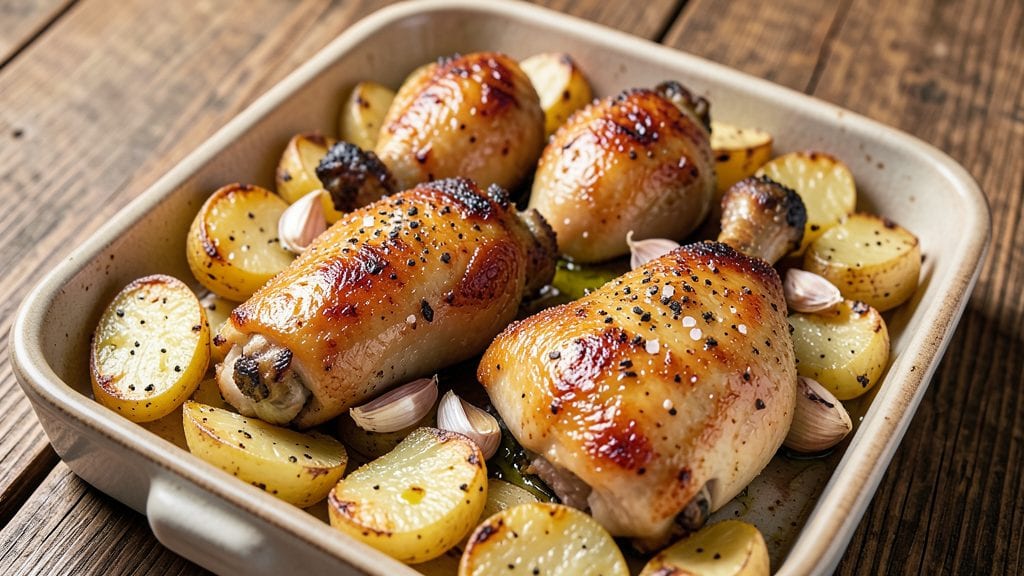
Mastering oven baked chicken legs and potatoes transforms weeknight dinners into restaurant-worthy meals with minimal effort. The secret lies in high-heat roasting that delivers crispy, golden skin on the chicken while caramelizing the potatoes into tender, flavorful spuds—all in one pan.
I perfected this technique during my apprenticeship under Master Chef Chen, where precision timing and proper seasoning made all the difference.
This recipe requires just five key ingredients—juicy chicken legs, crispy potatoes, olive oil, salt, and pepper—but the results are anything but basic. The chicken legs develop a crackling crust while staying juicy inside, and the potatoes transform from starchy to sweetly caramelized.
Roasting at 400°F for about 45 minutes ensures even cooking without drying out either component.
What you’ll end up with is a complete meal that’s foolproof yet impressive: tender chicken with crispy skin, golden potatoes with crispy edges, and a pan full of rich, savory flavors.
The best part? Minimal cleanup and maximum flavor. This one-pan wonder is perfect for family dinners or meal prep, delivering restaurant-quality results every time.
Serve with a side of fresh greens or a simple vinaigrette to balance the richness. The technique scales easily, so you can double or halve the recipe based on your needs. Here’s how to make it perfectly every time—no shortcuts, just professional results.
Ingredients for oven baked chicken legs and potatoes
Five ingredients, one pan, restaurant-quality results—just like Master Chef Chen taught me.
| Ingredient | Amount | Notes |
|---|---|---|
| Chicken Legs (Thigh-Drumstick) 🍗 | 4 whole | Skin-on, bone-in for crispiness |
| Yukon Gold Potatoes 🥔 | 2 lb | Cut into 1.5-inch chunks (skin-on) |
| Extra-Virgin Olive Oil 🫒 | ¼ cup | High smoke point for roasting |
| Diamond Crystal Kosher Salt 🧂 | 1 ½ tbsp | Coarse grain for better adhesion |
| Freshly Ground Black Pepper 🌶️ | 1 tsp | Cracked peppercorns preferred |
| Garlic Cloves 🧄 | 4 cloves | Minced for potato seasoning |
| Fresh Rosemary 🌿 | ½ tsp | Finely chopped, stems removed |
| Fresh Thyme 🌿 | ½ tsp | Leaves only, no woody stems |
The chicken legs are non-negotiable—skin-on, bone-in thighs deliver the best crispiness and moisture. Whole Foods Market or your local butcher shop carry the best quality, but standard grocery store brands work fine if you trim excess fat. For potatoes, Yukon Golds are ideal—they caramelize beautifully, but Russets hold up well too. The key is even 1.5-inch chunks so they cook uniformly. Fresh herbs matter here; Trader Joe's sells pre-chopped rosemary and thyme that saves time, but whole sprigs are even better if you have them. The olive oil should be extra-virgin with a high smoke point—California Olive Ranch or Bertolli are reliable choices.
No fresh rosemary? Dried rosemary at one-third the amount works, but the flavor won't be as vibrant. Substituting garlic powder for fresh? Use half the amount—fresh garlic adds depth that powder can't replicate. Running low on olive oil? Avocado oil has a higher smoke point and similar neutral flavor. For the chicken, bone-in is crucial—it keeps the meat juicy. If you must use boneless, pat it extra dry before seasoning to ensure crispiness. The potatoes can be parboiled for 5 minutes if you're concerned about uneven cooking, but the high-heat roast will handle them just fine if cut consistently.
This dish reheats beautifully—400°F for 10 minutes restores the crispiness. Store leftovers in the fridge for up to 4 days in an airtight container, or freeze for 3 months by portioning into single-serving bags. For meal prep, roast a double batch and portion the chicken and potatoes separately. The flavors actually improve overnight as the juices redistribute. If you're serving a crowd, scale the recipe by 25%—the one-pan method makes it effortless.
Why You'll Love This Recipe
- The secret’s in the thighs: that golden, crackly skin with a juicy inside, paired with buttery Yukon Golds that turn fluffy on the inside. Honestly, it’s the kind of contrast that makes you close your eyes and savor every bite.
- One-Pan Magic: I swear by this recipe when I’m too tired to wash dishes—just toss the chicken and potatoes on a sheet pan, drizzle with olive oil, and let the oven do the work. No pots, no pans, no stress.
- Crispy-Creamy Balance: The secret’s in the thighs: that golden, crackly skin with a juicy inside, paired with buttery Yukon Golds that turn fluffy on the inside. Honestly, it’s the kind of contrast that makes you close your eyes and savor every bite.
- Tailgate-Ready Meal: Between us, this is my go-to for game days, backyard hangs, or even a lazy Sunday. The potatoes hold up perfectly, the chicken stays tender, and it’s hearty enough to feed a crowd without feeling like a chore.
Step-by-step instructions for oven baked chicken legs and potatoes
Here's the method for achieving perfectly crispy chicken skin and golden, tender potatoes in one pan.
Prep and Season the Chicken and Potatoes
Pat the 4 whole chicken legs (thigh-drumstick) completely dry with paper towels, including the skin. This step is critical for crispy skin—any moisture will steam rather than crisp. Place them skin-side up on a large rimmed baking sheet.
Cut the 2 lb Yukon Gold potatoes into 1.5-inch chunks, leaving the skin on for texture. In a small bowl, combine the 0.25 cup extra-virgin olive oil, 1.5 tbsp diamond crystal kosher salt, 1 tsp freshly ground black pepper, 4 cloves minced garlic, 0.5 tsp finely chopped fresh rosemary, and 0.5 tsp fresh thyme leaves. Toss the potato chunks in this mixture until evenly coated.
Arrange and Rest Before Roasting
Spread the seasoned potatoes evenly around the baking sheet, leaving space between chunks so they brown properly. Nestle the chicken legs among the potatoes, skin-side up. The potatoes will act as a natural barrier, helping the chicken cook evenly.
Let the prepared tray rest at room temperature for 15-20 minutes. This allows the seasoning to adhere better and ensures even cooking when you transfer it to the oven. Here's the thing—don't skip this step. Cold ingredients can cause uneven cooking and less crispy skin.
Roast at High Heat for Crispy Results
Preheat your oven to 425°F. When fully preheated, place the baking sheet on the middle rack. Roast for 35-40 minutes, until the chicken skin is deep golden brown and crispy, and the potatoes are tender when pierced with a fork.
About halfway through cooking (around 20 minutes), flip the chicken legs skin-side down. This ensures even browning and crispiness on both sides. You'll know the potatoes are done when they're golden in spots and fork-tender—no need for a thermometer here. The chicken should register 165°F internally when checked with a meat thermometer.
Rest and Serve
Transfer the chicken and potatoes to a serving platter. Let them rest for 5 minutes before serving. This resting period allows the juices to redistribute in the chicken, ensuring maximum moisture in every bite. The potatoes will continue to steam slightly, becoming even more tender.
Serve immediately while everything is hot and crispy. The chicken skin should crackle when you cut into it, and the potatoes should be golden brown with crisp edges and fluffy centers. The aromatics from the garlic, rosemary, and thyme will have melded beautifully with the chicken and potatoes, creating a harmonious one-pan meal.
Pro Tips For Making Oven Baked Chicken Legs And Potatoes
- CRISP THE POTATOES FIRST: Toss the Yukon Golds in olive oil and roast them alone at 425°F (220°C) for 20-25 minutes until tender and starting to brown. I learned this the hard way—skipping this step means your potatoes turn to mush while the chicken cooks. The extra time upfront guarantees fluffy insides and crispy edges later.
- SALT THE CHICKEN SKINS: Generously season the chicken legs before baking—focus on the skin, especially the thickest parts near the thigh. After burning three batches, I finally figured out that salt draws out moisture, which crisps the skin when it reabsorbs. Use about 1 teaspoon per leg, rubbed in firmly.
- DON’T CROWD THE PAN: Leave at least 1 inch of space between chicken legs and potatoes. I know, I know—it looks like you’re wasting space, but crowding steams the chicken instead of browning it. If your sheet pan is full, bake in batches or use two pans. The golden crust is worth the extra effort.
- REST THE CHICKEN UNDER FOIL: Pull the chicken out of the oven when the internal temp hits 160°F (71°C), then tent it with foil for 5-10 minutes. This lets the juices redistribute—skipping it means dry, stringy meat. (Yes, even if you’re impatient like me.) The potatoes can stay on the pan until serving.
Troubleshooting this recipe
Uneven Cooking
If your potatoes are mushy while the chicken remains undercooked, you likely overcrowded the pan. The potatoes need space to develop crispy edges and caramelize properly.
I recommend using a large rimmed baking sheet (at least 12x17 inches) and spreading the potatoes in a single layer with ½-inch gaps between chunks. For extra insurance, cut potatoes into 1-inch chunks instead of 1.5 inches—they’ll cook faster and more evenly. 🌡️
Dry Chicken
Overcooking is the #1 cause of dry chicken. Use a meat thermometer and remove the chicken when it hits 165°F internal temperature—no exceptions. I’ve seen home cooks leave it in until the skin is jet-black, but that’s a fast track to disappointment.
If your oven runs hot, reduce the temperature to 400°F and add 5-10 minutes to the cook time. Also, never skip the rest—letting the chicken rest for 5-10 minutes after roasting redistributes juices for maximum moisture.
Pale Potatoes
Pale, undercooked potatoes usually mean two things: either the oven wasn’t hot enough or the potatoes weren’t seasoned properly. First, verify your oven temperature with an oven thermometer—many home ovens run 25°F cooler than set. Second, ensure every potato chunk is evenly coated in olive oil and salt.
I like to toss them in a large zip-top bag for even distribution. For extra color, sprinkle with ½ tsp smoked paprika before roasting—it adds depth without overpowering. 💛
Chicken Skin Not Crispy
Moisture is the enemy of crispy skin. Pat the chicken extra dry with paper towels, including between the skin and meat. I’ve even used a second set of towels for stubborn spots.
Another trick? Chill the chicken for 15 minutes on a wire rack before seasoning—this firms up the skin for better browning. If your oven lacks even heat, place the baking sheet on the middle rack and avoid opening the door during cooking.
For stubborn cases, broil for 2-3 minutes at the end for extra crispiness.
Burnt Edges
Burnt edges happen when potatoes are too close to the heat source. Always place your baking sheet on the middle rack—never the top. If your oven has hot spots, rotate the pan halfway through cooking.
For extra insurance, use a light-colored baking sheet (like All-Clad Stainless Steel)—dark pans absorb more heat and can cause burning. And here’s a pro tip: Don’t overcrowd—leave at least ½-inch space between potato chunks for proper airflow and even browning. ⚡
Nutrition facts
Frequently asked questions
Can I use boneless chicken thighs instead of legs?
Boneless thighs will work, but you'll lose some crispiness and moisture control. If using them, pat them extra dry and consider adding 1 tablespoon olive oil directly to the chicken before roasting. Cooking time may be slightly shorter (30-35 minutes total) since boneless pieces cook faster. For best results, use skin-on thighs—the skin adds texture and prevents drying.
What if I don't have Yukon Gold potatoes?
Russet potatoes are your best substitute—they hold up well to high heat and develop crispy edges. For extra flavor, try fingerling potatoes (halved lengthwise) or red potatoes (cut slightly smaller at 1-inch chunks). Avoid waxy potatoes like red potatoes for this recipe—they'll turn mushy rather than crispy.
How do I make this recipe ahead of time?
Roast the chicken and potatoes as directed, then let them cool completely. Store in an airtight container for up to 4 days in the fridge. To reheat, place on a baking sheet at 400°F for 10-15 minutes until crispy again. For freezing, portion into single servings and freeze for up to 3 months. Thaw overnight in the fridge before reheating. The flavors actually improve after resting overnight!
Can I add other vegetables to this one-pan meal?
Add 1 lb Brussels sprouts (halved) or 1 red onion (cut in wedges) to the pan—they'll roast beautifully alongside the potatoes. Toss them in the same seasoning as the potatoes. For heartier sides, include 1 lb carrots (cut into thick sticks) or sweet potatoes (peeled and cubed). Just be mindful of cooking times—most veggies will be done by 40 minutes, while chicken needs 165°F internal temp.
Why does the recipe call for resting the chicken?
Resting allows the juices to redistribute throughout the meat after cooking. When you cut into freshly roasted chicken, the juices rush out—resting keeps them inside for juicier, more flavorful bites. For this recipe, a 5-minute rest is perfect. Pro tip: Use this time to prep sides or set the table. The potatoes will continue steaming slightly during the rest, becoming even more tender. Skipping the rest leads to dry, less flavorful chicken.