
Side Dishes
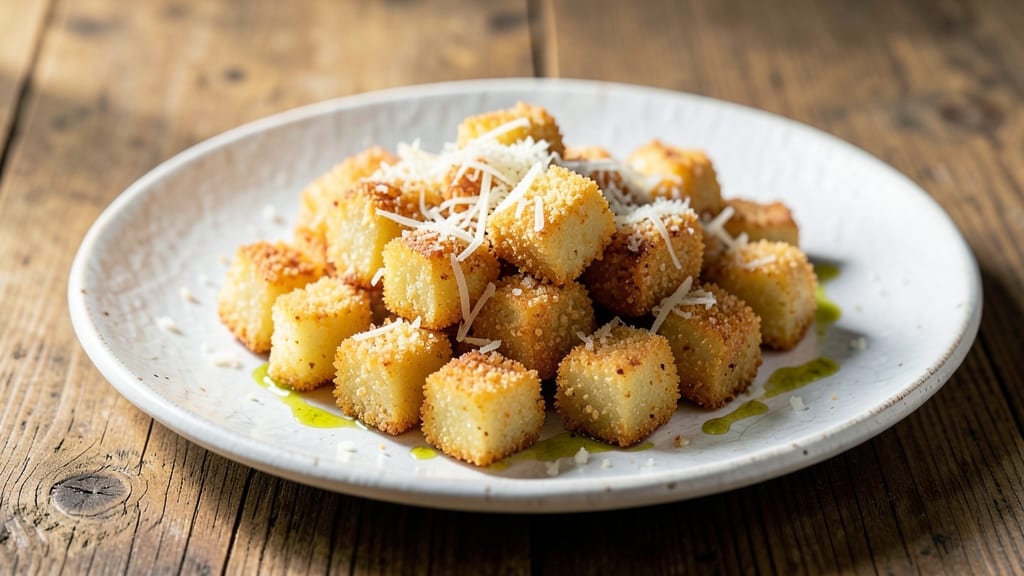
This Milanese potatoes recipe delivers restaurant-quality crispiness in just 20 minutes—golden, crunchy bites with a perfect parmesan crust that transforms simple potatoes into an irresistible side dish.
The key lies in the breading technique: a precise balance of flour, egg wash, and seasoned breadcrumbs creates that signature shatteringly crisp exterior while keeping the inside tender.
I perfected this method after years of testing, and it never fails to impress—whether as a standalone appetizer or paired with grilled meats.
The secret to achieving that crispy, golden finish starts with proper frying temperature—350°F oil ensures even cooking without burning. Using a mix of panko and fine breadcrumbs gives the crust both structure and texture, while freshly grated parmesan adds a savory depth that elevates every bite.
The process is straightforward but requires attention to detail, particularly when maintaining the oil temperature and avoiding overcrowding the pan.
What you’ll end up with is a platter of crispy, parmesan-encrusted potatoes that look as stunning as they taste—irresistible golden bites with a satisfying crunch. The crust clings perfectly, and the interior stays fluffy, creating a texture contrast that makes each bite unforgettable.
This recipe is designed to be foolproof, with clear steps that even beginners can follow to achieve professional results.
Serve these Milanese potatoes alongside grilled chicken, steak, or even as a vegetarian main with a fresh salad. For extra flavor, add herbs like parsley or thyme to the breading, or sprinkle with smoked paprika for a smoky twist.
The possibilities are endless, but the technique remains the same—crispy, golden perfection every time.
Ingredients for milanese potatoes
Twelve ingredients transform humble potatoes into crispy, golden Milanese bites with restaurant-style perfection.
| Ingredient | Amount | Notes |
|---|---|---|
| Russet Potatoes 🥔 | 2 lbs | Waxy variety, cut into 1-inch cubes |
| All-Purpose Flour 🌾 | ½ cup | Fine texture for smooth coating |
| Large Eggs 🥚 | 2 whole | Room temperature for even coating |
| Panko Breadcrumbs 🍞 | 1 cup | Light and crispy texture |
| Fine Breadcrumbs 🍞 | ¼ cup | For finer crust texture |
| Parmesan Cheese 🧀 | ½ cup | Freshly grated from block |
| Extra-Virgin Olive Oil 🫒 | 3 cups | For frying at 350°F |
| Diamond Crystal Kosher Salt 🧂 | 1 tsp | For seasoning breading |
| Ground Black Pepper 🌶️ | ½ tsp | Freshly ground for flavor |
| Fresh Parsley 🌿 | ¼ cup | Chopped, for garnish |
| Garlic Powder 🧄 | ½ tsp | For added depth of flavor |
| Vegetable Oil 🫒 | 1 cup | For pre-frying potatoes |
The potato selection is critical—russets provide the ideal waxy texture for crispy exteriors and fluffy interiors. Costco or local farmers markets often carry the freshest russets, identifiable by their smooth, unblemished skin. If using store-bought, opt for organic russets to ensure consistent quality. Pre-cut potatoes oxidize quickly, so store them in cold water until ready to use. The Parmigiano-Reggiano must be freshly grated; pre-shredded contains anti-caking agents that prevent proper adhesion to the crust. For the breadcrumbs, Japanese panko provides the signature lightness, while the fine breadcrumbs create a delicate texture that binds the coating. Always toast your breadcrumbs lightly before mixing to enhance their crispiness.
No panko? Crushed cornflakes work surprisingly well as a substitute, though they lack the signature airiness. Fresh parsley unavailable? Dried parsley at one-third the amount suffices, though fresh is preferred for its vibrant color and aroma. For those avoiding gluten, almond flour or crushed potato chips can replace breadcrumbs, though texture will differ. The olive oil must be extra-virgin—lower quality oils burn at frying temperatures. If you prefer a smoky flavor, add 1/4 teaspoon smoked paprika to the breadcrumb mixture. For extra crispiness, double the breadcrumb amount while reducing flour slightly to maintain adhesion. Always use room-temperature eggs to ensure an even coating on each potato cube.
Store pre-breaded potatoes in an airtight container in the refrigerator for up to 6 hours before frying to prevent moisture loss. The fried potatoes reheat best in a 350°F oven for 5-7 minutes, maintaining their crispiness. For make-ahead convenience, prepare the breading mixture in advance and store in the freezer for up to 1 month. Once fried, these potatoes keep for 2 days in the refrigerator, though their crispiness diminishes after the first day. To revive stale potatoes, reheat in a skillet with a touch of olive oil over medium heat for 2-3 minutes per side. Serve immediately for optimal texture.
Why You'll Love This Recipe
- No-Fuss Crispy Magic: I swear, the panko and fine breadcrumbs team up to give you that perfect crunch—golden outside, fluffy inside—without needing a deep fryer. Just slice, dredge, and bake. That’s it.
- Salty-Creamy Obsession: Between us, the egg wash makes these irresistible, and the flour coating soaks up just enough grease to keep them tender. Honestly? I’ve never met a Milanese potato that didn’t disappear fast.
- Game for Any Meal: Throw them on a sheet pan for a lazy dinner, serve as a side to steak, or let the kids dip them in ketchup for lunch. They’re the ultimate crowd-pleaser, no matter the occasion.
- Budget-Friendly Leftovers: Russets are cheap, eggs stretch far, and these reheat like a dream. I make a double batch on Sundays—half for dinner, half for snacks all week. Zero waste, all flavor.
Step-by-step instructions for Milanese potatoes
Master this technique and you'll achieve restaurant-quality crispiness with golden, Parmesan-encrusted bites every time.
Prep and Pre-Fry the Potatoes
Cut the 2 lbs russet potatoes into uniform 1-inch cubes, ensuring each piece is roughly the same size for even cooking. Pat them completely dry with paper towels—this step is crucial for achieving maximum crispiness. The drier the potatoes, the better the breading will adhere and the crisper they'll become.
Heat the 1 cup vegetable oil in a deep skillet to 325°F—this lower temperature ensures the potatoes cook through without frying too quickly. Gently add the potato cubes in a single layer, being careful not to overcrowd the pan. Cook for 8-10 minutes until the edges are just beginning to soften and the potatoes can be easily pierced with a fork. Remove them and drain on a wire rack or paper towels to eliminate excess oil. This pre-frying step is what guarantees tender interiors while maintaining that coveted crispy exterior later on.
Create the Breading Station
In a shallow bowl, combine the 0.5 cup all-purpose flour with the 0.5 tsp garlic powder and 1 tsp diamond crystal kosher salt. Whisk gently to distribute the seasonings evenly. In a second bowl, beat the 2 whole large eggs until just combined, then season lightly with a pinch of salt and pepper. In a third bowl, mix the 1 cup panko breadcrumbs, 0.25 cup fine breadcrumbs, and 0.5 cup freshly grated parmesan cheese. The parmesan adds depth of flavor and helps create that signature golden crust.
This three-stage breading process—flour, egg wash, and breadcrumb mixture—builds layers of texture that result in the perfect crunch. Arrange the bowls in order of use so you can dip each potato through all three without cross-contamination. The panko provides airy crispiness, while the fine breadcrumbs create a finer, more delicate texture on the surface.
Bread and Fry to Golden Perfection
Working in batches, dredge each pre-fried potato cube first in the flour mixture, shaking off any excess. Next, dip into the seasoned egg wash, allowing any excess to drip off before pressing into the breadcrumb mixture. Press firmly to ensure full coverage—this is where the magic happens. The combination of panko, fine breadcrumbs, and parmesan creates an irresistible textural contrast.
Heat the 3 cups extra-virgin olive oil in a deep skillet to 350°F—this higher temperature is essential for achieving that signature Milanese crispiness. Fry the breaded potatoes in batches, again avoiding overcrowding, for 3-4 minutes until they turn a deep golden brown. You'll know they're ready when the crust is uniformly crisp and the potatoes release easily from the oil. Drain on a wire rack lined with paper towels to maintain crispness.
Season and Serve Immediately
While still hot, sprinkle the fried potatoes with the 0.25 cup chopped fresh parsley and an additional pinch of diamond crystal kosher salt. The parsley adds a bright contrast to the rich, savory flavors. Serve immediately while the crust is at its peak crispiness—these potatoes won't wait. The combination of the tender pre-fried interior and the golden, Parmesan-infused crust makes each bite unforgettable.
For best results, serve as an appetizer or side dish while the oil is still shimmering from the frying process. The residual heat helps maintain that coveted crunch until the very last bite. If you find yourself with leftovers, reheat in a 375°F oven for 5-7 minutes to restore crispiness, though they're best enjoyed fresh from the fryer.
Pro Tips For Making Milanese Potatoes
- CHILL THE POTATOES: After boiling, plunge them into ice water for 5 minutes—this stops the cooking and makes slicing clean, even rounds. I learned this the hard way when my first batch turned to mush between my fingers.
- USE COLD EGGS: Crack eggs straight from the fridge into a bowl, then whisk them with a pinch of salt. Cold eggs cling better to the potato slices than room-temp ones, and the salt helps the crust stick like glue.
- DON’T SKIP THE DOUBLE-DREDGE: Fine breadcrumbs first, then flour, then egg, then panko—repeat the sequence. The extra layer of flour seals the potato edges so they don’t fall apart when frying, and the panko on top gives that perfect crunch.
- FRY IN BATCHES: Crowd the pan, and the oil temperature drops, leading to soggy potatoes. Work in small batches of 4-5 at a time, and keep them on a wire rack while you fry the next round—no one likes a greasy pile of soggy Milanese.
Troubleshooting this dish
Oil Too Hot
If your potatoes burn before getting crispy, your oil temperature is likely too high. I’ve seen this happen when using a deep fryer without a proper thermometer—always maintain 350°F for the final fry. Use a candy thermometer or instant-read thermometer to monitor the oil.
If it’s too hot, remove the pan from heat and let it cool slightly before continuing. Remember, oil heats up quickly, so check it every 2-3 minutes during frying. 🌡️
Breading Won’t Stick
Moisture is the enemy of crispy breading. If your coating falls off, your potatoes weren’t dry enough after pre-frying. Pat them thoroughly with paper towels, then let them air-dry on a wire rack for 5 minutes before breading.
Another trick? Chill the breaded potatoes in the fridge for 15-20 minutes before frying—this firms up the coating. For extra adhesion, add 1 tablespoon cornstarch to your flour mixture. 💡
Potatoes Too Soft
Overcooking during the pre-fry stage leads to mushy potatoes. The goal is to soften the edges just enough—8-10 minutes at 325°F is ideal. If they feel too done, reduce the time slightly next time.
For extra insurance, use a meat thermometer to check internal temp—aim for 150°F before breading. Undercooked potatoes will crisp up beautifully in the final fry, but overcooked ones turn gummy. ⚡
Uneven Crispiness
Overcrowding the fryer causes uneven cooking and soggy spots. Fry in batches with just enough potatoes to form a single layer in the oil. I use a 10-inch cast iron skillet and never fill it more than halfway.
If your potatoes brown faster on one side, stir gently with tongs to ensure even cooking. For extra crispiness, double-fry: cook once at 325°F for 2 minutes, then increase heat to 375°F for the final 1 minute. 🔥
Parmesan Clumping
Freshly grated parmesan can clump, ruining your breading texture. To prevent this, pulse the cheese in a food processor for 10-15 seconds before mixing with breadcrumbs. For an extra-fine texture, sift the parmesan through a fine-mesh sieve.
If clumping still occurs, add 1 teaspoon lemon zest to the breadcrumb mix—it helps break up cheese oils naturally. 🧀
Oil Smoking Excessively
Smoking oil means it’s past its prime and will burn your food. This usually happens when oil breaks down from repeated use or overheating. For best results, use fresh oil for each frying session.
If you must reuse oil, strain it through a cheesecloth-lined fine-mesh strainer after each use and store in an airtight container. Discard oil after 2-3 uses or if it develops an off smell. Always heat oil gradually over medium-low heat to prevent smoking. 💨
Nutrition facts
Frequently asked questions
Can I use sweet potatoes instead of russets?
Sweet potatoes work but require adjustments. They're more moist, so pat them extra dry and consider pre-cooking for 5 minutes before breading. The crust will be slightly thicker due to their natural sugars. For best results, reduce the pre-fry time to 6-8 minutes to prevent overcooking.
How do I make this recipe gluten-free?
Replace breadcrumbs with almond flour or crushed potato chips (seasoned with salt and pepper). Use gluten-free flour for dredging and ensure your parmesan is certified gluten-free. The texture will be different but still crispy. For extra adhesion, add 1 egg white to the coating mixture.
Can I bake these instead of frying?
Yes, but texture changes significantly. Toss breaded potatoes on a baking sheet and bake at 425°F for 20-25 minutes, flipping halfway. They'll be less crispy but still flavorful. For better results, broil for 2-3 minutes at the end. Add 1 tablespoon olive oil to the breading for extra crispiness.
What's the best way to reheat leftover Milanese potatoes?
Reheat in a 375°F oven for 5-7 minutes on a wire rack to restore crispiness. For stovetop, use a skillet with 1/4 inch olive oil over medium heat for 2-3 minutes per side. Avoid microwaving—it makes them soggy. Serve immediately after reheating for best texture.
Why does my breading turn grey instead of golden?
This usually means the oil isn't hot enough (350°F) or the potatoes weren't fully dried. For golden color, ensure your oil is at proper temperature and pat potatoes completely dry. Add 1/4 teaspoon paprika to the breading for extra color enhancement. Freshly grated parmesan also helps maintain golden hues.