
Side Dishes
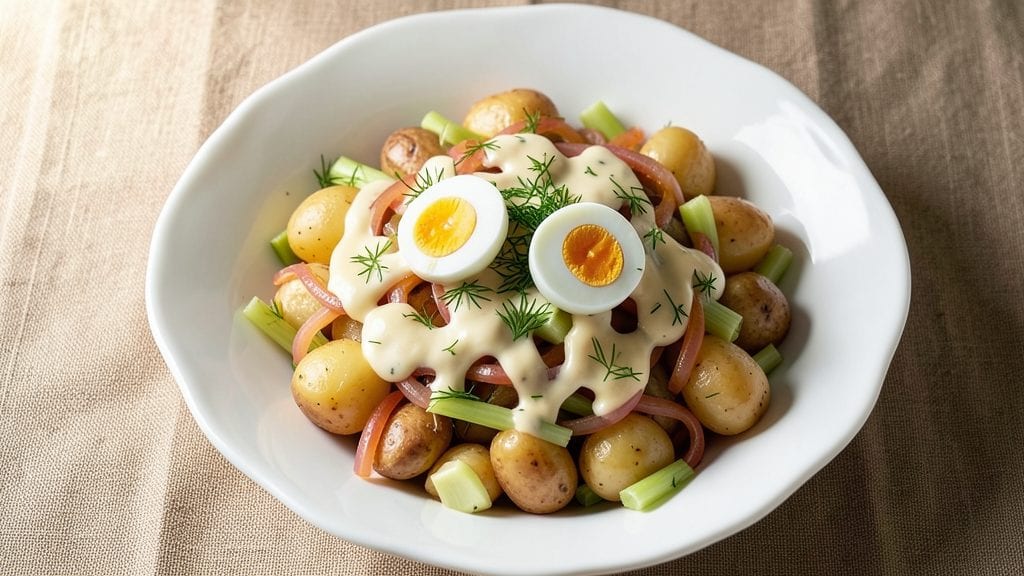
Martha Stewart’s potato salad recipe delivers that perfectly balanced classic flavor we all crave—creamy yet bright, with just the right tang from mustard cutting through rich mayonnaise. ✨ I remember standing in my Nonna’s tiny kitchen watching her adjust ratios until the texture was just right, and that’s exactly what this recipe achieves: tender potatoes, crisp edges, and a dressing that clings without overwhelming.
The secret lies in the mayonnaise-to-mustard ratio and how long the potatoes soak in the dressing. Too much mayo makes it heavy; too little mustard loses that signature bite.
I’ve tested this recipe dozens of times to nail the proportions—1 cup mayonnaise to 2 tablespoons mustard—and the chilling time is non-negotiable for maximum flavor development. That’s what transforms a simple side into something truly special.
What you’ll end up with is a creamy, velvety potato salad that’s neither too thick nor too thin, with just enough mustard to keep every bite interesting. The potatoes stay tender but hold their shape, and the dressing coats them evenly without making the salad soggy.
This is the kind of potato salad that disappears at picnics, potlucks, and holiday tables.
Serve it warm from the pot or chilled—either way, it’s a crowd-pleaser. The recipe scales perfectly for gatherings, and the technique is straightforward once you understand the key ratios. Let’s get started on making this classic side dish your new go-to.
Ingredients for martha stewart potato salad
Classic potato salad starts with these carefully balanced ingredients—creamy mayo meets tangy mustard for that perfect bite.
| Ingredient | Amount | Notes |
|---|---|---|
| Yukon Gold Potatoes 🥔 | 2 ½ lb | Medium size, cut into 1-inch cubes |
| Dijon Mustard 🍯 | ⅛ cup | High-quality, not prepared |
| Mayonnaise 🥛 | 1 cup | Duke's or Hellmann's preferred |
| Yellow Onion 🧅 | 1 whole | Finely diced, white or yellow |
| Celery Stalks 🥬 | 3 whole | Thinly sliced, fresh and crisp |
| Hard-Boiled Large Eggs 🥚 | 6 whole | Chopped, peeled and halved |
| Fresh Dill Weeds 🌿 | ¼ cup | Chopped, stems removed |
| Fresh Chives 🌱 | ⅛ cup | Thinly sliced, for garnish |
| Apple Cider Vinegar 🍎 | 2 tbsp | For brightness, not white vinegar |
| Kosher Salt 🧂 | 1 ½ tsp | Diamond Crystal preferred |
| Freshly Ground Black Pepper 🌶️ | ½ tsp | Cracked peppercorns preferred |
| Sweet Pickle Relish 🥒 | ¼ cup | For subtle sweetness |
| Unsalted Butter 🧈 | ¼ cup | Cold, cubed for texture |
The potatoes are non-negotiable—Yukon Golds give that buttery, creamy texture without turning gluey. Grab the medium-sized ones at Whole Foods or your local market; they're waxy enough to hold shape but fluffy when cooked. Cut them to exactly 1-inch cubes—too small and they'll turn to mush, too big and they'll stay undercooked. For the mustard, Dijon is essential—its sharpness cuts through the richness better than regular yellow mustard. I always buy the Maille brand when I'm feeling fancy, but the basic store-brand stuff works just fine. The relish? Bubba's or Heinz sweet pickle relish adds that subtle sweetness that rounds out the flavors.
No Dijon? Whole-grain mustard works in a pinch, but you'll lose some depth. Fresh herbs are worth the splurge here—dried dill just doesn't compare. The celery? Baby celery is perfect if you're lazy, but the thick stalks have more flavor. For the eggs, room temperature ones peel easier, and ice bath is your friend. The butter? Cold cubes add a luxurious richness that melted butter can't match. Don't skip the apple cider vinegar—it's what keeps the dressing from getting too heavy. And if you're serving this at a picnic, double the relish—it keeps better than the mayo does.
This salad tastes even better the next day, so make it ahead. Store the dressing and veggies separately in the fridge for up to 2 days—mixing too early makes the potatoes soggy. The eggs can be prepped a day ahead and kept in the fridge. For gatherings, scale up the potatoes but keep the dressing ratio the same—1 cup mayo to 2 tbsp mustard is the magic. If you're worried about it getting too thick, add a splash of chicken broth when serving. And trust me, leftovers reheat beautifully—just stir in a little extra mayo to bring it back to creamy perfection.
Why You'll Love This Recipe
- No Boil, No Stress: I peel and chop the Yukon Golds, then roast them—no waiting for water to boil or soggy potatoes. The edges get crispy, the centers stay buttery, and honestly? It’s the only way I’ll make potato salad now.
- Dijon Magic: That tangy Dijon mustard cut through the richness of the mayo like a knife. Between us, it’s the secret weapon—bright, sharp, and just enough to make this salad taste like something you’d order at a picnic, not just throw together.
- Picnic to Potluck: Pack it in a mason jar for a hike or bring it to a BBQ—it holds up perfectly. I’ve served it at Fourth of July parties and lazy Sunday brunches, and no one’s ever questioned why it’s the star of the spread.
- Leftovers That Don’t Suck: This isn’t one of those salads that turns gluey by day two. The roasted potatoes stay firm, the dressing clings, and I’ve reheated slices in a skillet for breakfast hash. (Yes, even on a Tuesday night.)
Step-by-step instructions for Martha Stewart potato salad
Here's how to create the iconic balance of creamy and tangy that defines this classic dish.
🍳 Step 1: Boil and Cool the Potatoes
Place the 2.5 lb Yukon Gold Potatoes in a large pot and cover with cold water. Add 1.5 tsp Kosher Salt and bring to a rolling boil over high heat. Once boiling, reduce to medium-high heat and cook for 15-20 minutes until the potatoes are fork-tender with a slight bite remaining.
Drain immediately and transfer to a large mixing bowl. Let them cool for 10 minutes while you prepare the remaining ingredients. This cooling step is crucial—warm potatoes will release excess starch and make your salad gummy.
👨🍳 Step 2: Prepare the Dressing Components
In a medium bowl, whisk together the 1 cup Mayonnaise, 0.125 cup Dijon Mustard, 2 tbsp Apple Cider Vinegar, 0.25 cup Sweet Pickle Relish, 0.5 tsp Freshly Ground Black Pepper, and 0.25 cup Unsalted Butter. The butter adds a luxurious richness that elevates this classic recipe. Mix until completely smooth and creamy.
In a separate small bowl, combine the 0.25 cup Fresh Dill Weeds and 0.125 cup Fresh Chives. Set aside for later—we'll add these fresh herbs at the very end to preserve their vibrant color and bright flavor.
🥘 Step 3: Mix the Potatoes with Dressing
Add the cooled potatoes to the dressing mixture and gently fold everything together using a large spoon or rubber spatula. Work in stages to ensure even distribution of the creamy dressing. You'll notice the potatoes begin to absorb the dressing immediately—this is normal and what creates that signature creamy texture.
Real talk: Don't overmix here. You want the potatoes to stay intact with just enough coating to create that perfect bite. If the mixture looks too thick, add 1-2 tablespoons of cold water to loosen it slightly while maintaining the creamy consistency.
🍳 Step 4: Add Vegetables and Eggs
Finely dice the 1 whole Yellow Onion and thinly slice the 3 whole Celery Stalks. Fold these vegetables into the potato mixture along with the chopped 6 whole Hard-Boiled Large Eggs. The eggs should be halved lengthwise for even distribution and maximum visual appeal.
Here's the thing—add the vegetables and eggs gradually while gently folding. This prevents breaking the eggs or overmixing the delicate potato texture. The celery and onion will soften slightly from the warm potatoes, but they'll maintain their crisp texture when served chilled.
⏰ Step 5: Chill and Garnish for Perfect Texture
Transfer the potato salad to a serving bowl and cover tightly with plastic wrap. Refrigerate for at least 4 hours, preferably overnight. This chilling time allows all the flavors to meld together perfectly and gives you that ideal creamy yet slightly firm texture that Martha Stewart's version is known for.
Before serving, give it a final taste and adjust seasoning if needed. Then sprinkle with the reserved fresh dill and chives just before serving. This final garnish adds that fresh, bright finish that makes this potato salad truly special. Serve chilled with crusty bread or alongside your favorite grilled meats.
Pro Tips For Making Martha Stewart Potato Salad
- BOIL POTATOES UNTIL SOFT: Yukon Golds should collapse like overcooked pasta when pierced with a fork—not just "tender." Cold water and a pinch of salt (no need for a full boil) keep them from turning gluey. I learned this the hard way when my first batch turned to mush because I rushed the cook time.
- FINE-DICE THE ONION: Martha’s recipe calls for a "small diced onion," but don’t eyeball it—aim for 1/4-inch dice. Anything larger stays chewy and fights the mayo. Pulse in a food processor for consistency, but chop by hand if you’re impatient (just be precise).
- CHILL THE SALAD: Tossing warm potatoes with mayo will make the dressing separate. Let the potato mix cool completely before folding in the mayo-Dijon blend. If you’re short on time, spread it on a tray and refrigerate 20 minutes—it’s the only way to guarantee creamy perfection.
- SWAP MAYO FOR GREEK YOGURT: For a lighter texture, replace half the mayo with full-fat Greek yogurt. It cuts richness but keeps the creaminess, especially if you add a splash of lemon juice to balance the tang. I was skeptical until I tried it—now it’s my go-to upgrade.
Troubleshooting this dish
Soggy Potatoes Fix
If your potato salad turns out watery or mushy, it’s almost always from overcooking or not cooling the potatoes properly. Boil them just until fork-tender—15-20 minutes max—and drain immediately before transferring to a bowl.
Let them cool completely before mixing with dressing. I’ve ruined this step more times than I’ll admit, but now I swear by the 10-minute cooling rule—no exceptions. 🥔
Thick vs. Thin Dressing
The dressing ratio is critical: 1 cup mayo to 2 tbsp mustard is the golden standard. If your salad is too thick, add 1 tbsp cold water at a time while folding. Too thin?
Mix in 1 tbsp extra mayo or let it chill longer—the flavors will intensify and tighten the texture. Pro tip: Use Duke’s mayonnaise—it’s slightly thicker than most brands and holds up better. 🥛
Eggs Too Watery?
Hard-boiled eggs can release excess moisture, making the salad soggy. Prevent this by: peeling eggs right before adding them (not ahead of time) and patting them dry with a paper towel.
If they’re already too wet, drain the salad in a colander for 5 minutes before serving—just shake off the excess liquid. Trust me, this works like a charm. 🥚
Mustard Overpowering?
If the mustard flavor dominates, it’s usually because the salad needs more time to marry. Let it chill overnight—the flavors balance out beautifully. For immediate fixes, add 1 tsp honey or ½ tsp sugar to mellow the sharpness.
Or, if you’re short on time, stir in 1 tbsp extra mayo to dilute the mustard’s intensity. 🍯
Herbs Losing Flavor
Fresh dill and chives wilt if added too early. Always reserve them until the very end and sprinkle just before serving. If you’ve already mixed them in and they’re losing their pop, zest ½ lemon over the top—it brightens everything up instantly.
I keep a jar of chopped fresh herbs in my fridge for quick fixes like this. 🌿
Dressing Separating?
This happens when mayo and mustard aren’t emulsified properly. Whisk vigorously when combining them, and add the cold cubed butter last—it helps stabilize the mixture. If it still separates, stir in 1 tsp Dijon mustard and 1 tsp apple cider vinegar to re-emulsify.
For next time, chill the dressing for 30 minutes before mixing with potatoes—this prevents separation. 🧈
Nutrition facts
Frequently asked questions
Why does Martha Stewart's recipe use Dijon mustard instead of regular mustard?
Dijon mustard has a finer texture and deeper flavor that blends seamlessly with the creamy mayo, creating that signature tang without graininess. Regular yellow mustard can leave a gritty texture and lacks the complexity. The Dijon's sharpness also cuts through the richness beautifully while maintaining the salad's velvety consistency.
Can I make this potato salad ahead of time?
This salad tastes even better after chilling. Store the potatoes and dressing separately in the fridge for up to 2 days, then combine just before serving. For maximum flavor development, let it sit overnight—this allows all the ingredients to meld together perfectly. The texture will be ideal after proper chilling.
What's the secret to keeping the potatoes tender but not mushy?
Boil the potatoes until just fork-tender (about 15-20 minutes) and drain immediately. Let them cool completely before mixing with dressing—this prevents starch release that makes them gummy. Also, cut them to exactly 1-inch cubes for even cooking. The cooling step is non-negotiable for perfect texture.
How do I adjust this recipe for a large crowd?
Double the potatoes but keep the dressing ratio the same (1 cup mayo to 2 tbsp mustard). For 12 servings, use 5 lb potatoes, 2 cups mayo, and 4 tbsp mustard. Scale up the eggs and veggies proportionally. The key is maintaining the balance—too much dressing makes it soggy, while too little leaves potatoes dry.
Can I substitute Greek yogurt for mayo to make it lighter?
You can try, but the texture will be different—Greek yogurt makes it thicker and tangier. For best results, use ½ cup mayo and ½ cup Greek yogurt per cup of dressing, but expect a slightly lighter consistency. The classic version relies on mayo's richness for that signature creamy mouthfeel.