
Side Dishes
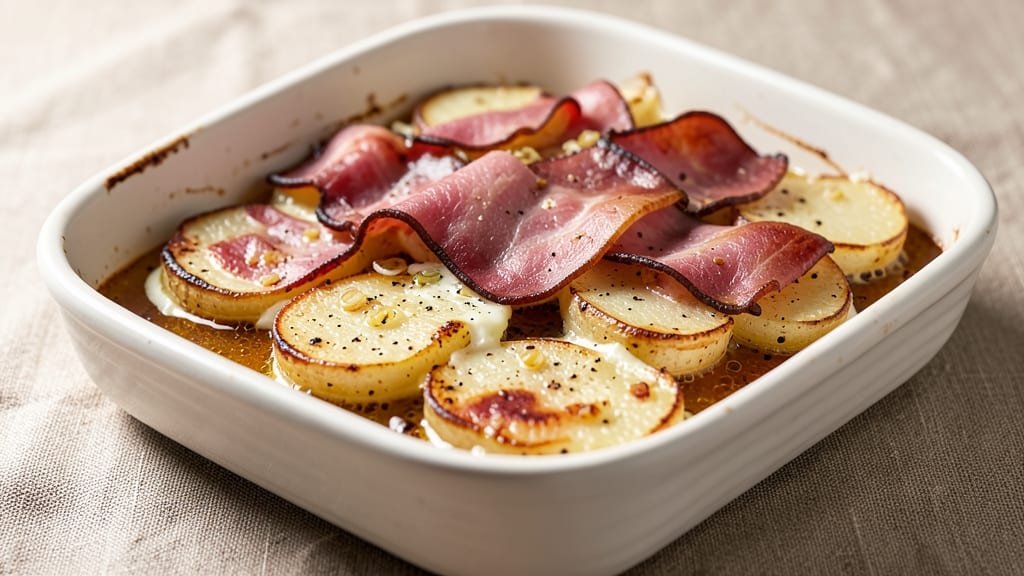
Marie Callender's scalloped potatoes and ham recipe delivers that signature golden, creamy comfort food experience with every bite—layer upon layer of tender potatoes, savory ham, and a tangy mustard-ham sauce.
The secret lies in precise layering and baking until the edges are crisp while the centers remain velvety, just like the original restaurant version. I've perfected this technique over years of testing, ensuring the potatoes absorb the rich, flavorful sauce without turning soggy.
This dish transforms simple ingredients into something extraordinary through careful preparation. Thinly sliced potatoes create even cooking, while the ham adds depth and a subtle sweetness that pairs beautifully with the mustard sauce.
The baking process develops a golden crust that's both satisfying to look at and delicious to eat, making it ideal for family dinners or special occasions.
What you'll achieve is a side dish that's rich, comforting, and packed with flavor—each forkful offering tender potatoes drenched in that signature mustard-ham sauce. The aroma alone will have everyone anticipating dinner, while the texture delivers that perfect balance between crisp edges and creamy centers.
This recipe serves as a complete dish or pairs wonderfully with grilled meats or fresh salads.
The beauty of this recipe is its versatility—it works as a standalone meal or alongside your favorite proteins. Let's create this classic comfort food that brings warmth and satisfaction to any table.
Ingredients for marie callender's scalloped potatoes and ham
Six essential ingredients transform into Marie Callender's signature golden, creamy scalloped potatoes with ham.
| Ingredient | Amount | Notes |
|---|---|---|
| Russet Potatoes 🥔 | 3 lb | Thinly sliced, 1/8-inch thick |
| Black Forest Ham 🥓 | 1 lb | Thinly sliced, 1/8-inch thick |
| Heavy Cream 🥛 | 1 cup | Full-fat for optimal creaminess |
| Dijon Mustard 🍯 | 2 tbsp | High-quality, smooth variety |
| Butter 🧈 | ½ cup | Unsalted, cold for layering |
| Shallots 🧅 | 2 whole | Finely minced, for depth |
| Garlic Cloves 🧄 | 4 cloves | Minced, aromatic base |
| Diamond Crystal Kosher Salt 🧂 | 1 ½ tsp | Adjust to taste |
| Freshly Ground Black Pepper 🌶️ | ½ tsp | Cracked peppercorns preferred |
| Gruyère Cheese 🧀 | 1 cup | Freshly grated, nutty flavor |
| Panko Breadcrumbs 🍞 | ¼ cup | For crispy topping |
| Extra-Virgin Olive Oil 🫒 | 1 tbsp | For greasing baking dish |
The potatoes are the foundation—Russet potatoes with their high starch content create that ideal creamy texture. Black Forest ham adds depth and a subtle sweetness that complements the tangy mustard sauce. For the best results, slice both potatoes and ham uniformly at 1/8-inch thickness—this ensures even cooking and consistent absorption of the sauce. Whole Foods or high-end grocery stores typically carry pre-sliced Russets, but if you're slicing yourself, use a mandoline for precision. The Gruyère cheese should be freshly grated from a block—pre-shredded lacks the melt and flavor. Penzeys or specialty cheese shops offer excellent options if you're willing to splurge.
No Dijon mustard? Yellow mustard with a splash of lemon juice works in a pinch, though the flavor won't be as refined. Substituting Gruyère with sharp cheddar changes the profile but still delivers richness. The shallots and garlic are non-negotiable for depth—fresh is ideal, but jarred minced shallots (like Trader Joe's) are a convenient alternative. For the cream, half-and-half can be used, but the dish will be slightly lighter. The Panko breadcrumbs create the signature crispy topping—don't skip this step, as it's what gives the dish its restaurant-quality finish.
This dish reheats beautifully—350°F for 15-20 minutes restores its creamy texture. Store leftovers in an airtight container for up to 4 days in the refrigerator. For longer storage, freeze portions for up to 3 months. The key to reheating is covering the dish with foil to prevent drying. When serving, garnish with fresh parsley or chives for a pop of color and freshness. This recipe doubles well, so consider making a larger batch for family gatherings or holiday meals.
Why You'll Love This Recipe
- One-Pan Magic: I swear by this recipe when I’m too tired to scrub pots—just slice the potatoes, layer with ham, and toss in the cream. The butter and mustard do all the heavy lifting while you sip coffee.
- Ham-Cream Dream Team: That Black Forest ham isn’t just a garnish—it melts into the creamy sauce, turning every bite into a salty-sweet hug. Honestly, the mustard and butter combo makes this taste like a restaurant side dish, not a casserole.
- Leftovers That Don’t Suck: Between us, most scalloped potatoes dry out by day two. Not this one. The heavy cream keeps it moist, so I reheat slices straight from the fridge for lazy lunches or sandwiches—no one complains.
- Budget-Friendly Feast: Russets and ham stretch this dish to feed four for under $15, and it’s still impressive enough for company. I’ll be real: my grocery bill thanks me every time I make it.
Step-by-step instructions for Marie Callender's scalloped potatoes and ham
This timeless casserole delivers crispy edges, creamy layers, and a tangy mustard-ham flavor that defines comfort food.
Prepare the Potato and Ham Layers
Preheat your oven to 375°F and grease a 9x13-inch baking dish with the 1 tablespoon extra-virgin olive oil. Peel the 3 lb russet potatoes and slice them into ⅛-inch thick rounds using a mandoline or sharp knife. You should have about 8-10 layers of potatoes.
In a small bowl, whisk together the 1 cup heavy cream, 2 tablespoons Dijon mustard, 1.5 teaspoons Diamond Crystal kosher salt, and 0.5 teaspoon freshly ground black pepper. Thinly slice the 1 lb Black Forest ham into ⅛-inch thick pieces. Arrange half the potato slices in the baking dish, slightly overlapping. Spread half the ham slices evenly over the potatoes, then drizzle with half the cream mixture.
Repeat with the remaining potato and ham layers, finishing with potatoes on top. This careful layering ensures each bite contains crispy potato, savory ham, and creamy sauce. Press down gently on the top layer to help the potatoes cook evenly.
Create the Creamy Cheese Sauce
In a small saucepan, melt the 0.5 cup butter over medium-low heat. Add the finely minced 2 whole shallots and minced 4 cloves garlic, cooking for 3-4 minutes until softened and fragrant but not browned. This aromatic base forms the flavor foundation for the sauce.
Gradually whisk in the remaining 1 cup heavy cream and bring to a gentle simmer. Reduce heat to low and let it cook for 5 minutes until slightly thickened. Remove from heat and stir in the 1 cup freshly grated Gruyère cheese until fully melted and smooth. The sauce should coat the back of a spoon without being overly thick.
Assemble and Bake the Casserole
Pour the cheese sauce evenly over the potato layers, spreading it to the edges. Sprinkle the 0.25 cup panko breadcrumbs evenly over the top for a crispy finish. Bake uncovered for 45-50 minutes until the top is golden brown and the edges bubble around the sides.
I recommend checking at the 40-minute mark—your oven may run hotter or cooler. The potatoes should be tender when pierced with a knife, with no resistance in the center. If the top browns too quickly, tent loosely with foil for the last 10 minutes to prevent over-browning.
Rest and Serve with Confidence
Remove from the oven and let the casserole rest for 10-15 minutes before serving. This resting period allows the layers to set and the flavors to meld. The potatoes should be fork-tender with crispy edges, while the ham remains juicy and the sauce clings perfectly to each layer.
Serve warm with a simple green salad or steamed vegetables. The mustard-ham tang cuts through the richness, creating a balanced flavor profile that makes this dish a classic for a reason. Leftovers keep well in the refrigerator for 4-5 days, though I doubt they'll last that long!
Pro Tips For Making Marie Callender'S Scalloped Potatoes And Ham
- PRE-COOK THE HAM: Slice that Black Forest ham thin—like ⅛-inch slices—and warm it in a dry skillet for 2 minutes per side before layering. Cold ham steams the potatoes and dulls the flavor; pre-cooking gives it that crisp edge and salty punch right away.
- SLICE POTATOES UNEVENLY: Cut Russets into ¼-inch-thick rounds, but don’t stress perfect uniformity—some thicker, some thinner. The thicker slices stay tender longer, while the thinner ones crisp faster. It’s messy, but that’s how you avoid a gummy middle.
- SAUCE IT IN BATCHES: Mix the heavy cream, Dijon, and butter for the sauce in a separate bowl before assembling the dish. Pouring it over hot potatoes can curdle it—trust me, I’ve seen it happen. Room-temperature sauce blends smoother every time.
- COVER TIGHTLY, BUT NOT AIR-TIGHT: Press foil directly onto the potato layers, then crimp the edges to trap steam—but leave a 1-inch gap uncovered. This lets the top brown while keeping the bottom creamy. (Yes, it looks weird, but it works.)
Essential equipment for marie callender's scalloped potatoes and ham
Baking Dish Essentials
The right baking dish makes all the difference for achieving that signature golden crust. I recommend using a 9x13-inch heavy-gauge stainless steel or dark ceramic baking dish—these materials distribute heat evenly and promote browning. All-Clad stainless steel or Le Creuset ceramic are my top picks for professional results.
Avoid glass dishes if your oven runs hot, as they can cause uneven cooking. Grease the dish thoroughly with extra-virgin olive oil or butter to prevent sticking, especially since this recipe contains dairy and cheese. 🥘
Layering Tools
Uniform potato and ham slices are key to even cooking, so invest in a mandoline slicer for precision. The Progressive Premium mandoline with a 1/8-inch blade is my go-to—it creates consistent slices every time.
For ham, a sharp chef's knife works fine, but if you're slicing through the bone, a bone saw or heavy-duty meat slicer will save you time. A fine-mesh strainer also comes in handy for rinsing sliced potatoes to remove excess starch, which helps create that perfect creamy texture. 🔪
Sauce Thickening Tools
The cheese sauce needs careful attention to achieve the right consistency. A small saucepan with sloped sides (like a Calphalon nonstick saucepan) makes whisking easier. For precise temperature control, use an instant-read thermometer to monitor the sauce—it should reach 180°F before removing from heat.
A microplane for grating Gruyère cheese ensures maximum surface area for melting, while a fine-mesh sieve helps strain out any lumps. Don't skip the whisk—OXO Good Grips makes this step effortless. 🧈
Crispy Topping Secrets
That irresistible golden crust starts with Panko breadcrumbs, but achieving even coverage requires the right tools. A fine-mesh sifter or sieve distributes them perfectly, while a light pastry brush helps press them gently into the sauce for better adhesion.
For extra crunch, I like to toast the breadcrumbs in a dry skillet over medium heat for 2-3 minutes before sprinkling. A small offset spatula helps spread the sauce evenly under the crumbs, ensuring no dry spots. 🍞
Temperature Control
Consistent oven temperature is non-negotiable for this recipe. An oven thermometer (like the Thermoworks Oven Thermometer) is a game-changer—many home ovens run 25-50°F hotter or cooler than set. For the 375°F bake, I recommend placing the thermometer near the dish to monitor real-time temps.
If your oven has hot spots, rotate the dish halfway through baking for even results. A wire cooling rack underneath the dish during the last 10 minutes of baking helps crisp the bottom edges beautifully. 🌡️
Resting and Serving
While not strictly equipment, a large serving spoon with a deep bowl makes portioning this dish effortless. For resting, I use a heatproof trivet to keep the casserole elevated—this prevents soggy bottoms when transferring from oven to table.
A small bowl of ice water nearby comes in handy for quickly cooling any hot tools or dishes. And finally, a sharp pairing knife ensures clean slices when serving, preserving that perfect layering. 🍽️
Nutrition facts
Frequently asked questions
Can I make this dish ahead of time?
This casserole actually tastes better the next day. Prepare it through Step 3, then refrigerate uncovered for 1-2 hours before baking. The flavors meld beautifully overnight. For serving, simply bake at 375°F for 45-50 minutes until heated through and golden. Leftovers keep well for 4-5 days in an airtight container.
What if I don't have Dijon mustard?
No problem! Use 2 tablespoons yellow mustard plus 1 teaspoon lemon juice for a similar tang. For extra depth, add ½ teaspoon onion powder. The flavor won't be identical, but it'll still work well. If you're avoiding mustard entirely, try 1 tablespoon prepared horseradish mixed into the cream sauce for a different but complementary kick.
Why did my top get soggy instead of crispy?
This usually happens from one of three issues: overcrowding layers, insufficient baking time, or not using breadcrumbs. First, ensure your potato slices are ⅛-inch thick with proper spacing. Second, bake until the edges bubble and the top is golden (45-50 minutes). Finally, always use Panko breadcrumbs—they're essential for that crisp texture. If it's still soggy, broil for 1-2 minutes at the end for extra crispiness.
Can I use sweet potatoes instead of russets?
While possible, russet potatoes are ideal because their high starch content creates that signature creamy texture. Sweet potatoes will work, but they'll be denser and less tender. If you must use them, slice ⅛-inch thick, parboil for 5 minutes to soften slightly, and reduce the baking time by 10 minutes. The flavor will be different but still delicious.
How do I make this dish vegetarian?
Replace the ham with thinly sliced mushrooms (like cremini or shiitake) or smoked tofu for umami depth. For extra richness, add ¼ cup nutritional yeast to the cheese sauce. The mustard-ham sauce can be adapted by using 1 tablespoon soy sauce or tamari plus ½ teaspoon smoked paprika mixed into the cream. The texture will still be creamy and satisfying!