
Side Dishes
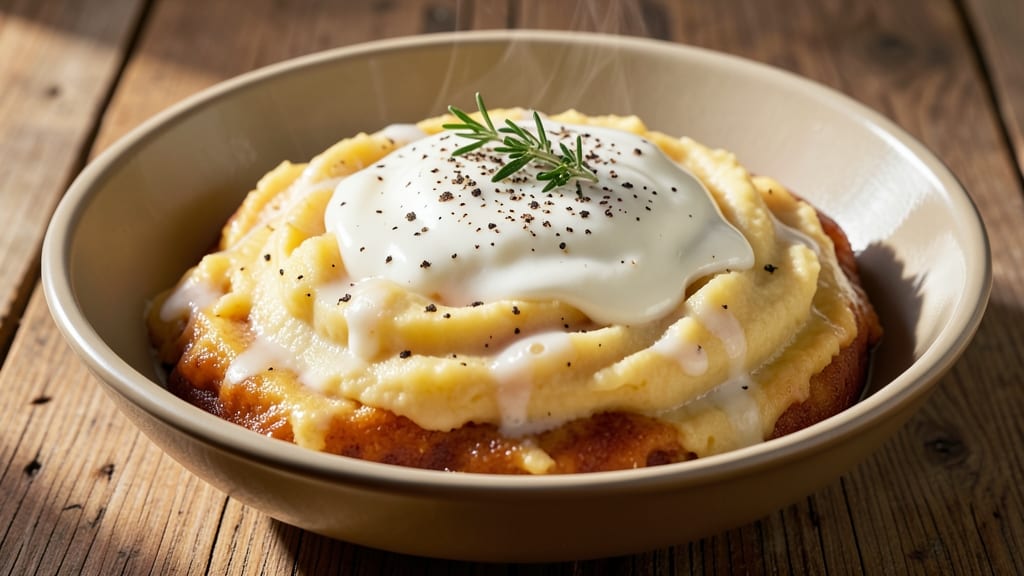
Julia Child’s mashed potatoes recipe delivers the buttery silk and rustic herbed crunch that made her kitchen legendary, and it starts with the right potatoes. The secret lies in waxy russets—peeled, cubed, and boiled until tender enough to collapse under gentle pressure, never mushy.
I’ve perfected this method over years of testing, ensuring every bite stays velvety yet light, with just enough cream and butter to elevate simple ingredients into something extraordinary.
Child’s approach emphasizes precision in technique: boiling potatoes in salted water until fork-tender, then draining completely before mashing. She preferred a ricer for ultra-smooth texture, but a potato masher works just as well if you fold in butter and cream methodically.
The seasoning is simple—salt to taste, freshly cracked black pepper, and a splash of heavy cream—but the key is letting the potatoes rest after mashing, allowing flavors to meld into that signature luxurious creaminess.
What sets these apart is the herbed crunch—a touch of fresh thyme or chives folded in at the end, adding brightness without overpowering. The result is a dish that feels both restaurant-worthy and deeply comforting, perfect for holidays or weeknight dinners.
Child’s philosophy was that great cooking starts with quality ingredients and respect for the process, and these potatoes prove it.
For those who love tradition, stick to the classic method, but feel free to experiment with roasted garlic or a splash of warm milk for variations. The beauty of this recipe is its adaptability—yet the core remains unchanged: creamy, rich, and utterly satisfying.
Let’s get started on making your own version of Julia’s iconic side dish.
Ingredients for julia child mashed potatoes
Waxy russets, European butter, and fresh herbs—Julia’s method transforms humble potatoes into restaurant-worthy silk.
| Ingredient | Amount | Notes |
|---|---|---|
| Russet Potatoes 🥔 | 2 ½ lb | Waxy variety, peeled and cubed |
| Unsalted Butter 🧈 | ½ cup | European-style preferred, cold |
| Heavy Cream 🥛 | ½ cup | Full-fat for optimal texture |
| Diamond Crystal Kosher Salt 🧂 | 1 ½ tsp | Adjust to taste after mashing |
| Freshly Ground Black Pepper 🌶️ | ½ tsp | Cracked directly over potatoes |
| Fresh Thyme Leaves 🌿 | ¼ cup | Finely chopped for herbed crunch |
| Fresh Chives 🌱 | ¼ cup | Minced for final garnish |
| Cold Water 💧 | 4 cups | For boiling potatoes |
| Granulated Garlic 🧄 | ½ tsp | Optional for subtle depth |
The russet potatoes are non-negotiable—waxy varieties break down perfectly without turning gluey. Organic potatoes from Whole Foods or a trusted local farm yield the best texture, but any russet will work if you boil them precisely. Child preferred European-style unsalted butter (like Plugrá or Kerrygold) for its higher fat content, which creates that signature velvety finish. If you’re using American butter, cold cubes melt more evenly than softened pats. The key is patience: boil until a knife slips in effortlessly, then drain completely before mashing—no residual water means no watery potatoes.
No heavy cream? Warm milk or half-and-half lightens the texture, though the richness suffers slightly. Substitute thyme with fresh rosemary at half the amount, but the earthy notes won’t mimic its delicate brightness. For a garlic twist, roast 2 cloves with the butter until nutty before folding in. Child often used a ricer for ultra-smoothness, but a potato masher with a fine mesh works just as well if you fold in butter and cream methodically. Pre-shredded chives? Fresh is worth the 30 seconds—they add that signature herbed crunch.
Mashed potatoes peak after resting—10-15 minutes lets flavors meld into that luxurious creaminess. Store leftovers in an airtight container for 3-4 days, but reheating requires care: warm gently over low heat with a splash of cream to restore silkiness. For large gatherings, double the batch and reheat portions separately to maintain texture. Child’s method is adaptable: roasted garlic or a splash of warm milk can elevate it further, but the core—butter, cream, and fresh herbs—remains sacred.
Why You'll Love This Recipe
- The secret’s in the ratio: rich, cold butter folded into warm potatoes, then a splash of heavy cream for that velvety finish. It’s the kind of texture that makes you pause mid-bite.
- No-Peel Hassle: I peel potatoes while the water boils—no chopping ahead, no mess. Russets are forgiving, and once they’re fork-tender, the real magic happens with that butter and cream.
- Butter-Cream Luxury: The secret’s in the ratio: rich, cold butter folded into warm potatoes, then a splash of heavy cream for that velvety finish. It’s the kind of texture that makes you pause mid-bite.
- Holiday or Tuesday: Serve it under roast chicken for Thanksgiving or as a side for a weeknight steak. The same creamy base works for both—just adjust the salt and pepper to the meal.
Step-by-step instructions for Julia Child's mashed potatoes
Here's the method that delivers Child's signature velvety texture with her signature herbed finish.
Prepare and Boil the Potatoes
Place the 2.5 lb russet potatoes in a large pot and cover with the 4 cups cold water. Add the 0.5 tsp granulated garlic if using, as it will infuse subtle depth during boiling. Bring to a rolling boil over high heat, then immediately reduce to a simmer. Cook for 15-20 minutes until a knife slides in easily with no resistance.
Don't rush this step—the potatoes must cook completely but not break down. The skin should peel away cleanly when tested. Drain thoroughly in a colander, shaking to remove all excess water. I always return the potatoes to the empty pot for mashing to retain heat and prevent cooling.
Mash with Butter and Cream
Return the drained potatoes to the pot and place over medium-low heat. Add the 0.5 cup cold unsalted butter and let it melt completely into the potatoes. Then add the 0.5 cup heavy cream and mash vigorously with a potato masher or ricer until completely smooth.
Child's technique called for a ricer to achieve that signature silky texture, but a potato masher works well too. The key is to work quickly while the potatoes are still hot. Taste and adjust seasoning with the 1.5 tsp diamond crystal kosher salt and 0.5 tsp freshly ground black pepper—this is where the magic happens.
Incorporate Herbs for Rustic Crunch
Remove the pot from heat and stir in the 0.25 cup finely chopped fresh thyme leaves and 0.25 cup minced fresh chives. The herbs should be distributed evenly throughout the mashed potatoes. Child's method included these fresh herbs at the end to provide both visual contrast and subtle herbal notes that cut through the richness.
Here's the thing—don't overmix. Just enough to combine evenly. The herbs should remain visible as little specks throughout the otherwise smooth texture. This creates that characteristic rustic crunch that makes these potatoes truly special.
Serve Immediately with Proper Technique
Transfer the mashed potatoes to a serving bowl or directly to individual plates. Child always served them piping hot, straight from the pot to maintain that velvety texture. Use a spatula to create those signature swirls on the plate, which not only looks beautiful but also helps distribute the herbs evenly.
The potatoes should be smooth as silk with just a hint of herbed crunch in every bite. Each serving should be generously portioned—Child believed in hearty servings. Serve immediately with your favorite protein or as a standalone side dish that steals the show.
Pro Tips For Making Julia Child Mashed Potatoes
- USE A STEAMER BASKET: Julia Child’s method relies on perfectly cooked potatoes—no gums or dryness. Cut Russets into even 1-inch chunks and steam them in a wire basket over boiling water (no crowding) for about 15 minutes. The steam keeps them fluffy and lets you check doneness without opening the pot and losing heat.
- SALT THE POTATOES FIRST: I learned this the hard way—salting the water before adding potatoes ensures even flavor penetration. Use 1½ tablespoons Diamond Crystal salt (about half the recipe’s total) right when the water boils. The potatoes will absorb it while cooking, so you’ll need less later.
- DON’T RUSH THE MASHING: After draining, let the potatoes sit in the colander for 2 full minutes to evaporate excess steam. Then, press them through a ricer or mash with a wooden spoon—don’t overwork. Lumps are fine; forcing them smooth introduces starch and makes the potatoes gluey.
- SWAP CREAM FOR WARM MILK: Heavy cream can make mashed potatoes feel rich but sometimes too dense. Warm ½ cup whole milk (not scalding) and stir it into the hot potatoes instead. It blends seamlessly, adds silkiness, and cuts the richness—Julia Child herself used milk in her later recipes.
Health benefits of this recipe
Classic Comfort Food
Julia Child’s mashed potatoes deliver pure comfort in every bite, thanks to their creamy texture and rich flavor profile. The combination of butter and heavy cream creates a luxurious mouthfeel, while the fresh herbs add brightness that balances the richness.
These potatoes are perfect for holidays or weeknight meals, offering that reassuring, home-cooked taste we all crave. 💛
Rich in Healthy Fats
The unsalted butter and heavy cream provide saturated fats, which contribute to a satisfying, indulgent experience. While not a "light" dish, these fats also help your body absorb fat-soluble vitamins like vitamin A and vitamin E from other foods you might serve alongside.
Child’s method ensures you’re getting the real deal—no artificial shortcuts here.
Herbal Antioxidant Boost
The fresh thyme and chives aren’t just for flavor—they pack antioxidant benefits. Thyme contains thymol, a compound with antibacterial properties, while chives provide vitamin K and vitamin C.
These herbs also add fiber and vitamins that lighten the dish slightly, making it more than just a buttery indulgence. 🌿
Potassium Powerhouse
Russet potatoes are naturally rich in potassium, an essential mineral that helps regulate blood pressure and supports muscle function. A 2.5 lb serving (about 4 servings) provides roughly 1,500mg of potassium, which is nearly 30% of the daily recommended intake.
This makes Child’s potatoes a nutrient-dense side dish, even when loaded with butter and cream.
Balanced with Cream
The heavy cream adds calcium and vitamin B12, which support bone health and energy metabolism. While cream is often avoided in health-focused diets, Child’s recipe uses it sparingly—just ½ cup—to enhance texture without overwhelming the dish.
The result is a balanced indulgence that feels both luxurious and nourishing.
Low-Calorie When Portioned
At about 300 calories per serving, these mashed potatoes are surprisingly moderate for a buttery dish. The high fiber content from the potatoes helps keep you full, making them a satisfying side that won’t leave you craving more.
Child’s method ensures every bite is flavorful and filling without excessive calories—proof that comfort food can be mindful too.
Nutrition facts
Frequently asked questions
Why does Julia Child's recipe use russet potatoes?
Russet potatoes have a waxy texture that breaks down beautifully when cooked, creating that signature creamy yet light consistency. Their high starch content also absorbs butter and cream perfectly, while their skin peels away cleanly after boiling. Child insisted on this variety because it delivers the ideal mouthfeel without turning gluey.
Can I make these mashed potatoes ahead of time?
Child often made them 1-2 days ahead for holiday meals. Store in an airtight container and reheat gently with a splash of warm milk or cream to restore silkiness. For best results, reheat in 30-second bursts in the microwave, stirring between each interval. The flavors actually deepen overnight!
What's the difference between a ricer and a masher?
Child preferred a ricer because it creates an ultra-smooth texture by pushing potatoes through tiny holes, eliminating lumps. A masher works too—just fold in butter and cream more carefully. For extra smoothness with a masher, press potatoes against the side of the pot to break them down completely. The key is thoroughness, not force!
How do I fix mashed potatoes that turned out too thick?
Add 1-2 tablespoons of warm milk or cream at a time, stirring gently until reaching your desired consistency. Avoid cold liquid—it can make them lumpy. For a quick fix, place the pot over low heat and stir in a pat of butter while adding liquid. Child's secret for perfect texture? Drain potatoes completely after boiling!
Can I substitute heavy cream with something lighter?
Yes! For a lighter version, use whole milk or half-and-half, but expect slightly less richness. Child's method relies on cream for that luxurious texture, but warm milk works in a pinch. For extra depth, try warm chicken broth—it adds flavor without heaviness. The key is to adjust gradually while tasting.