
Side Dishes
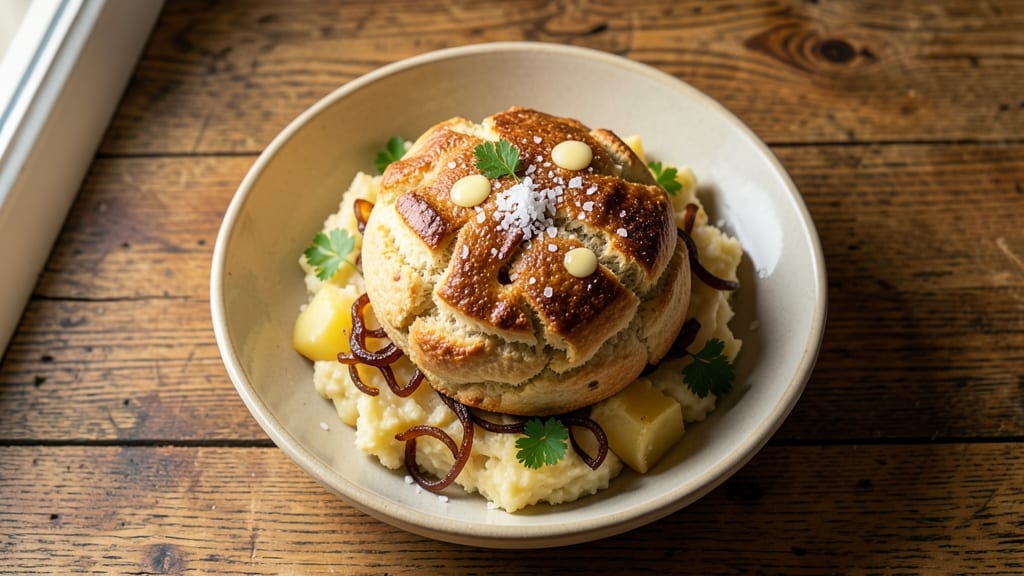
Hungarian potato bread delivers a savory, crumbly loaf that’s as comforting as it is versatile—a staple in Hungarian cuisine that transforms simple ingredients into something extraordinary.
The secret lies in blending grated potatoes with flour and yeast, creating a dough that yields a rustic, slightly dense texture with a crisp crust when baked with steam. I first discovered this recipe while exploring traditional Central European baking, and it quickly became a weekly staple in my kitchen.
What makes this bread truly special is its unexpected tenderness despite its humble ingredients. The potatoes add moisture and structure, while the yeast and warm milk create a dough that’s easy to handle but develops deep, savory flavors during baking.
Unlike many breads, this one doesn’t require fancy techniques—just patience for proofing and a steady hand when shaping. The result? A loaf with a golden, crackly crust and a crumb that’s slightly dense yet satisfyingly soft.
This bread pairs beautifully with hearty Hungarian soups like goulash or chicken paprikash, but it’s also perfect as a side for roasted meats or even as a base for open-faced sandwiches.
The rustic charm lies in its simplicity—no butter or sweeteners, just flour, potatoes, and a touch of salt to enhance the natural flavors. Once you bake a loaf, you’ll understand why it’s a beloved tradition in Hungarian kitchens.
The key to success is controlling the steam during baking, which ensures that crust without drying out the interior. Let’s walk through the steps to achieve that perfectly balanced loaf every time—crisp outside, tender inside, and packed with authentic flavor.
Ingredients for hungarian potato bread
Nine simple ingredients transform into a rustic, savory loaf with perfect crust and tender crumb.
| Ingredient | Amount | Notes |
|---|---|---|
| All-Purpose Flour 🌾 | 3 ½ cups | Unbleached preferred for texture |
| Russet Potatoes 🥔 | 2 lb | Unpeeled, grated fine (about 3 cups) |
| Active Dry Yeast 🍞 | ¼ oz | 1 packet or 2.25 tsp |
| Warm Whole Milk 🥛 | ½ cup | 110°F for ideal yeast activation |
| Granulated Sugar 🍚 | 1 tbsp | Feeds yeast for fermentation |
| Diamond Crystal Kosher Salt 🧂 | 1 ½ tsp | Adjust to taste |
| Cornmeal 🌽 | ¼ cup | For dusting work surface |
| Large Egg 🥚 | 1 whole | For egg wash |
| Water 💧 | ½ cup | For dough hydration |
| Vegetable Oil 🫒 | 1 tbsp | For dough softness |
| Semolina Flour 🌾 | ¼ cup | For bread basket lining |
The potatoes are the secret weapon here—Russet potatoes yield the finest, drier grate for that perfect texture. Buy organic if possible to avoid wax coatings, and grate them fresh (the boxed pre-grated kind won't work). For the yeast, Fleischmann's or Red Star are reliable brands, but check the expiration date—yeast loses potency fast. The milk needs to be warm but not hot (110°F is ideal)—just warm it in the microwave for 30 seconds and test with your wrist. If you're in a pinch, whole milk powder reconstituted with warm water works too, though fresh milk gives better flavor.
No Russet potatoes? Yukon Golds or Idaho potatoes are your next best bet—just make sure they're starchy, not waxy. Running short on time? Instant potato flakes can replace grated potatoes at half the weight, but the texture will be slightly denser. For the flour, King Arthur or Gold Medal are my go-tos—they've got the right protein content for this recipe. The egg wash can be skipped if you're avoiding eggs, but it gives that gorgeous golden crust. Need a gluten-free version? Swap the all-purpose flour for a 1:1 gluten-free flour blend (like Bob's Red Mill), but expect a denser texture.
This dough is a beast—it needs at least 1 hour of proofing at room temperature, then another hour in the fridge if you're baking later. The grated potatoes will keep in the fridge for 3 days before the dough starts to get gummy. For best results, bake within 24 hours of mixing. The loaf reheats beautifully—wrap it in foil and warm in a 350°F oven for 10 minutes to revive that fresh-baked texture. Leftovers? Slice and toast—it makes perfect open-faced sandwiches for the next day.
Why You'll Love This Recipe
- No Peel, No Stress: I’ll be real—peeling potatoes is a chore I skip whenever possible. This recipe lets you grate raw Russets straight into the dough, saving me 10 minutes and the hassle of peeling. The skin’s starch actually makes the bread extra tender, so why bother?
- Sweet-Savory Magic: That little spoonful of sugar in the dough? It’s not just for flavor—it feeds the yeast and balances the earthy potatoes like a secret handshake. Warm milk and yeast create this cozy, slightly sweet crumb that’s oddly addictive, especially when toasted with butter.
- Weeknight Hero: Between us, this is my lazy-days bread. Make a double batch on Sunday, slice it thick, and freeze it—no reheating needed. Toss it in a sandwich, dip it in soup, or serve it alongside goulash. It’s the kind of bread that makes you look like you planned dinner.
- Pantry Staple Power: Flour, potatoes, yeast, milk—these are ingredients you already own. No specialty flours, no obscure spices, just reliable, budget-friendly basics. And because it keeps well for days (or freezes perfectly), I’m always covered when I forget to grocery shop.
Step-by-step instructions for Hungarian potato bread
Here's how to craft this rustic loaf with a tender crumb and golden crust.
Prepare the Potato Purée for Dough Moisture
First, peel the 2 lb russet potatoes and cut them into even chunks. Place them in a pot of cold water and bring to a boil over high heat. Once boiling, reduce to medium-high and cook for 15 minutes until fork-tender. Drain thoroughly and return them to the pot.
Using a potato masher or ricer, break down the potatoes into a smooth purée with no lumps. Let it cool completely before using—this ensures your dough won't become too warm and kill the yeast. The purée replaces some liquid in traditional bread recipes, creating that signature moist yet tender texture. Here's the thing—if you skip this step, your bread will lack that signature potato flavor and crumbly yet moist texture that makes Hungarian potato bread special.
Activate the Yeast and Mix the Dough
In the bowl of a stand mixer fitted with the dough hook, combine the 3.5 cups all-purpose flour, 1 tbsp granulated sugar, and 1.5 tsp diamond crystal kosher salt. Add the cooled potato purée, 0.5 cup warm whole milk, 1 tbsp vegetable oil, and 0.25 oz active dry yeast (or 2.25 tsp).
Mix on low speed until the ingredients just begin to come together, about 2 minutes. The dough will be sticky—this is normal due to the potato purée. With the mixer running on medium speed, gradually add the 0.5 cup water until the dough pulls away from the sides of the bowl. You want a soft, slightly tacky dough that's just shy of being too wet. If it feels too sticky, add 1-2 tablespoons more flour, but don't overdo it or your bread will be dense.
Knead Until Elastic and Smooth
Continue kneading with the dough hook on medium speed for 8-10 minutes until the dough becomes smooth and elastic. You'll know it's ready when it forms a windowpane—press your fingers into the dough and gently pull apart. If it stretches thin enough to see light through without tearing, you're good to go.
Shape the dough into a smooth ball and place it in a lightly oiled bowl. Cover with a clean kitchen towel and let it rise in a warm place for 1-1.5 hours, or until doubled in size. Real talk—your kitchen might not be warm enough, so if it's taking longer, just be patient. The dough should feel light and springy when pressed gently with one finger.
Shape and Proof the Loaf
Punch down the risen dough to release air, then turn it out onto a surface lightly dusted with the 0.25 cup cornmeal. Divide the dough into 4 equal portions and shape each into a smooth oval loaf about 8 inches long. Place them on a baking sheet lined with parchment paper, spacing them 2 inches apart.
Cover the loaves with the towel again and let them proof for another 30-45 minutes until they've risen about 50% and look slightly puffy. Here's where it gets fun—give each loaf a gentle pinch test. If it springs back slowly, it's ready. If it springs back quickly, give it 10 more minutes. Overproofing leads to dense bread, so don't let them rise too long.
Bake to Golden Perfection
Preheat your oven to 375°F. In a small bowl, whisk together the 1 whole large egg and 1 tablespoon water to make an egg wash. Brush this generously over each loaf, then sprinkle with a pinch of diamond crystal kosher salt. Bake for 25-30 minutes until the crust is deep golden brown and the internal temperature reaches 190°F.
For that classic Hungarian touch, transfer the loaves to a wire rack and let them cool for at least 15 minutes before slicing. The bread should have a crisp crust that gives way to a tender, slightly crumbly interior with just the right amount of moisture. Don't skip the cooling step—cutting too soon makes the bread gummy. Serve warm with butter or your favorite jam for the ultimate rustic experience.
Pro Tips For Making Hungarian Potato Bread
- Boil Potatoes Until Fork-Tender: Russets can get gummy if you rush them—aim for a knife sliding in like butter. Overcooked mash is better than undercooked grit; if they’re still holding shape after 15 minutes, they need more time. (Yes, even if you’re impatient like me.)
- Dissolve Yeast in Warm Milk: Skip the dry yeast in flour pitfall—mix it with that sugar and warm milk first, then let it sit for 5 minutes until frothy. Cold milk kills yeast faster than you can say "sour dough," and you’ll smell it before you taste it.
- Don’t Over-Knead the Dough: This isn’t pizza dough—handle it just enough to combine. Overwork it, and the gluten tightens up, making the bread dense instead of light and airy. Two minutes by hand or 4-5 minutes in a mixer is plenty.
- Use a Baking Sheet, Not a Pan: Hungarian potato bread needs room to rise and crisp—crowd it in a skillet, and you’ll end up with a sad, flat mess. Line a baking sheet with parchment, shape the loaves, and let them puff up like they mean it. (Your future self will thank you.)
Serving suggestions for this dish
Soup Pairings
This bread was born to pair with rich, hearty Hungarian soups like chicken paprikash or goulash. The slightly dense crumb soaks up the flavorful broth beautifully while the crisp crust holds up to the thick, savory stews.
For a lighter option, try it with creamy mushroom soup—the potato bread's subtle sweetness balances the earthy mushrooms perfectly. 🥘
Meat Complements
Hungarian potato bread makes an excellent side for roasted or grilled meats. Pair it with beef brisket or pork shoulder to create a satisfying meal. The bread's sturdy texture can even hold up to smoked sausages or duck confit, making it a versatile addition to any meat-centric spread.
I love serving it warm with a schmaltz (rendered chicken fat) drizzle for extra richness.
Cheese Boards
Transform your bread into a cheese board centerpiece by serving it alongside Hungarian cheeses like túró rúgás or fehér sajt. The bread's mild flavor lets the tangy, briny cheeses shine while providing a sturdy base for spreading.
Add a few dried figs, walnuts, and a drizzle of honey for a sweet-savory contrast that feels distinctly Central European.
Open-Faced Sandwiches
Toast a slice of this bread and top it with smoked salmon, avocado, and a sprinkle of dill for a brunch-worthy open-faced sandwich. The potato bread's moisture content prevents it from becoming soggy, making it ideal for hearty toppings.
For a classic Hungarian touch, try liver pâté with a slice of pickled cucumber and a dollop of sour cream. 🥪
Dessert Contrasts
While this bread is savory, its subtle sweetness makes it perfect for dessert pairings. Serve warm slices with Hungarian plum jam or quince paste for a traditional pairing. The contrast between the savory bread and sweet preserves creates a delightful balance.
For a modern twist, pair it with dark chocolate spread and a sprinkle of sea salt—trust me, it's a game-changer.
Wine and Beer Pairings
Complement your meal with a Hungarian red wine like Egri Bikavér (Bull's Blood) or a crisp Tokaji dessert wine if serving with sweet toppings. For beer lovers, a Hungarian-style pilsner or a sour wheat beer balances the bread's richness.
The effervescence of the beer cuts through the bread's density, cleansing your palate between bites. 🍷
Nutrition facts
Frequently asked questions
Why does Hungarian potato bread have such a unique texture?
The potatoes create a moist yet tender crumb while the lack of butter keeps it slightly dense but satisfying. The steam during baking forms that signature crisp crust, while the grated potato purée adds natural sweetness and structure without heaviness. It's designed to be rustic yet substantial—perfect for soaking up rich soups or pairing with hearty meats.
Can I make this bread without a stand mixer?
The dough is sticky but manageable by hand. Use a wooden spoon to mix the ingredients first, then knead on a lightly floured surface for 10-12 minutes until smooth and elastic. Work in short bursts to avoid overheating your hands. The key is patience—the dough will come together, even without a mixer.
What's the best way to store leftover potato bread?
Wrap cooled loaves tightly in plastic wrap or foil and store at room temperature for 2-3 days. For longer storage, freeze slices between parchment paper for up to 3 months. To revive, warm in a 350°F oven for 5-10 minutes or toast until crispy. The bread actually tastes better the next day!
Why did my bread turn out dense instead of crumbly?
Overproofing or underkneading are the most common culprits. Make sure the dough rises until just doubled (1-1.5 hours) and doesn't spring back too quickly when pressed. Also, check your yeast—if it's old, it won't activate properly. For extra insurance, proof the dough in a warm oven (70°F) with a bowl of hot water nearby.
Can I add herbs or spices to this recipe?
Traditionally, this bread stays simple, but you can experiment! Try adding 1 tsp dried rosemary or ½ tsp caraway seeds to the dough for subtle depth. For a smoky twist, mix ½ tsp smoked paprika into the flour before mixing. Just remember: the potatoes already contribute natural sweetness, so don't overpower with strong flavors.