Desserts
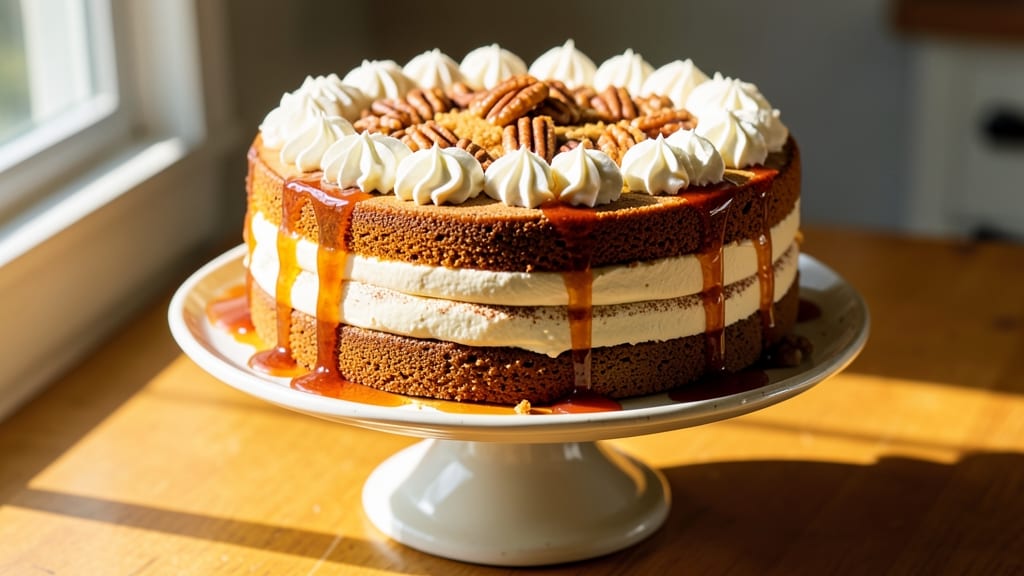
Grandma's famous sweet potato butter cake recipe delivers layers of moist perfection with a signature buttery swirl that makes every slice irresistible. The secret lies in blending sweet potatoes with brown sugar and butter, creating a tender crumb that stays fresh for days.
I first tasted this cake at my grandmother's kitchen table, where the scent of vanilla and cinnamon always signaled dessert time.
What sets this recipe apart is the foolproof technique for achieving that signature swirl—thin layers of cake separated by rich buttercream, baked just until golden. The sweet potatoes add natural moisture and depth, while the warm spices (cinnamon, nutmeg) elevate each bite.
This isn't just dessert; it's a taste of nostalgia wrapped in buttery layers.
By the time you pull this cake from the oven, you'll have a golden-domed masterpiece with tender layers that crumble just enough to hold thick swirls of buttercream. The aroma alone will have everyone gathering around the table, and the first bite delivers that perfect balance of sweetness and spice.
Trust me—this is the kind of cake that disappears quickly.
Serve warm with vanilla ice cream or dusted with powdered sugar for a classic touch. The recipe scales beautifully for gatherings, and leftovers stay moist for days when stored properly. Let's bring Grandma's tradition to your kitchen.
Ingredients for grandma's famous sweet potato butter cake
Sweet potatoes, brown sugar, and butter create magic—this cake stays moist for days.
| Ingredient | Amount | Notes |
|---|---|---|
| Sweet Potatoes 🍠 | 2 cups | Cooked and mashed smooth |
| All-Purpose Flour 🌾 | 2 ½ cups | Sifted for light texture |
| Granulated Sugar 🍚 | 1 ½ cups | For structure and sweetness |
| Packed Brown Sugar 🍚 | 1 cup | For moisture and caramel notes |
| Unsalted Butter 🧈 | 1 ½ cups | Room temperature, full-fat |
| Large Eggs 🥚 | 4 whole | Room temperature, separated |
| Pure Vanilla Extract 🍯 | 2 tsp | Bottled, not imitation |
| Ground Cinnamon 🌿 | 2 tsp | Freshly ground preferred |
| Ground Nutmeg 🌿 | ½ tsp | Freshly grated nutmeg |
| Baking Powder 🍞 | 2 tsp | Aluminum-free preferred |
| Salt 🧂 | ½ tsp | Fine sea salt |
| Powdered Sugar 🍚 | 2 cups | For buttercream frosting |
| Heavy Whipping Cream 🥛 | 1 cup | Cold for stiff peaks |
| Vanilla Bean Paste 🍯 | 1 tsp | For deeper vanilla flavor |
The sweet potatoes are the star here—canned or fresh works, but fresh gives that deeper flavor. Libby's brand is my go-to for canned, but if you're using fresh, roast them first for smooth mashing. The butter needs to be room temperature—cold butter makes the cake dense. I always grab Land O'Lakes unsalted from the dairy case, but any good brand works. The vanilla extract matters too—Nielsen-Massey is my favorite, but any pure extract will do. For the nutmeg, freshly grated from a whole nutmeg makes a difference, but pre-ground is fine in a pinch.
No vanilla bean paste? Double the vanilla extract—it's not the same, but you'll still get that warm vanilla flavor. Running low on heavy cream? Whipped topping works, but it won't be as stable. The buttercream can be made ahead—just whip it up and store it in the fridge, then re-whip before using. For the cake layers, don't overmix the batter—just combine everything until it's smooth. And if you're worried about the cake sinking, underbake it slightly—it'll keep rising as it cools. The powdered sugar should be confectioners' sugar, not fine white sugar, for that smooth frosting texture.
This cake stays moist for 5 days if wrapped tightly in plastic and stored at room temperature. For longer storage, freeze the layers (unfrosted) for up to 3 months. The buttercream can be stored separately in the fridge for 1 week—just give it a good whip before reassembling. To reheat, wrap the cake in foil and warm in a 200°F oven for 10 minutes. The aroma alone will bring everyone back to Grandma's kitchen—trust me, it's worth the extra effort.
Why You'll Love This Recipe
- Sweet Potato Swap Magic: I swear by this trick—roasting the sweet potatoes first turns them into the easiest mash ever. No peeling, no fuss, just caramelized edges that blend into the batter like a dream. My lazy Sundays thank me.
- Butter-Sugar Bliss: That combo of brown sugar and butter? It’s dangerously good. The cake stays moist for days, with just the right chew—like a hug for your taste buds. Honestly, I’ve tried cutting back on sugar, but this one’s worth the splurge.
- Crowd-Pleaser Any Day: Bring this to a potluck, holiday brunch, or even a Monday morning coffee break. It’s rich enough for dessert but hearty enough to pass as breakfast. My in-laws still ask for seconds every time.
- Budget-Friendly Staples: Sweet potatoes and flour? Pantry basics that won’t break the bank. A single batch feeds six, and leftovers reheat beautifully. I’ll be real—this is my go-to when I need to feed a house without stressing the grocery budget.
Step-by-step instructions for Grandma's famous sweet potato butter cake
Here's how to bake that legendary moist cake with buttery swirls that'll have everyone asking for seconds.
Prepare the Sweet Potato Base
Start by cooking the 2 cups of sweet potatoes until tender. Pierce them with a fork, microwave for 8-10 minutes, or boil for 15-20 minutes until a knife slides in easily. Drain well and mash them smooth with a potato masher or fork—no lumps allowed. Let the mash cool completely before using, as warm sweet potatoes can make your cake gummy.
While the sweet potatoes cool, measure out all your dry ingredients: the 2.5 cups of all-purpose flour, 1.5 cups of granulated sugar, 1 cup of packed brown sugar, 2 teaspoons of ground cinnamon, 0.5 teaspoon of ground nutmeg, 2 teaspoons of baking powder, and 0.5 teaspoon of salt. Sift them together in a large bowl to remove any lumps and create a light, airy base for the cake.
Mix the Wet Ingredients and Create the Swirl
In a separate large bowl, beat the 1.5 cups of room-temperature unsalted butter until light and fluffy—about 3-4 minutes with an electric mixer. Add the 4 whole room-temperature eggs one at a time, mixing well after each addition. Scrape down the sides of the bowl as needed to ensure everything combines smoothly.
Gradually add the 2 teaspoons of pure vanilla extract and 1 teaspoon of vanilla bean paste to the butter-egg mixture, mixing until fully incorporated. Then, slowly incorporate the cooled sweet potato mash, mixing just until combined. This is where the magic happens—don't overmix or you'll lose that tender, moist texture we're after.
Now for the swirl: divide the wet mixture into two equal parts. In one half, gently fold in half of the sifted dry ingredients. In the other half, fold in the remaining dry ingredients. This creates two distinct layers that will give your cake those beautiful buttery swirls.
Assemble and Bake the Cake Layers
Preheat your oven to 350°F and grease two 9-inch round cake pans. Line the bottoms with parchment paper for easy removal. Pour one half of the wet mixture into one pan and the other half into the second pan. Quickly swirl each pan with a knife or skewer to create those signature butter swirls—this is where the fun happens, so don't rush it.
Bake the cakes for 25-30 minutes, or until a toothpick inserted into the center comes out clean. The cakes should be golden brown on top and spring back when gently pressed. Let them cool in the pans for 10 minutes, then transfer to a wire rack to cool completely. This cooling step is crucial for slicing clean layers later.
Prepare the Buttercream Frosting
While the cakes cool, beat the 1 cup of cold heavy whipping cream until stiff peaks form. In a separate bowl, beat the 1.5 cups of room-temperature unsalted butter until smooth and creamy. Gradually add the 2 cups of powdered sugar, mixing on low speed until combined. Add the 2 teaspoons of pure vanilla extract and 1 teaspoon of vanilla bean paste, mixing until fully incorporated.
Gently fold the whipped cream into the buttercream mixture until smooth and fluffy. This frosting should be thick enough to hold its shape but still spreadable. If it's too thick, add a splash of milk (not in our ingredients, but you can use a bit of the sweet potato mash if needed) to achieve the perfect consistency.
Assemble and Frost the Cake
Once the cakes are completely cool, level the tops if needed. Place one cake layer on a cake stand or plate and spread a thin layer of frosting on top. Place the second cake layer on top and spread another thin layer of frosting over the entire cake. This "crumb coat" helps prevent crumbs from getting into the final frosting.
Spread the remaining frosting over the entire cake, creating smooth sides. Use a spatula to create swirls or rosettes on the sides for a decorative touch. Chill the cake in the refrigerator for 30 minutes before slicing to help the frosting set. This cake is best enjoyed at room temperature, so let it sit for 10-15 minutes before serving to bring out all those rich flavors.
Pro Tips For Making Grandma'S Famous Sweet Potato Butter Cake
- Boil Sweet Potatoes Till Fork-Tender: I learned this the hard way—undercooked sweet potatoes turn your cake dense and gummy. Cut them into even 1-inch cubes, drop into salted boiling water, and cook until they collapse like overripe fruit when pierced. No peeling needed; the skin adds texture and keeps the cake moist.
- Whip Butter Until Pale: That unsalted butter isn’t just fat—it’s the cake’s backbone. Beat it with the sugars until it’s light, fluffy, and almost white, not just creamy. This step aerates the batter, and skipping it means a heavy, dry crumb. (Yes, even if you’re impatient like me.)
- Sift Flour Over Batter: Dumping flour straight into the bowl creates lumps that ruin the texture. Sift it in gradually while mixing on low, then gently fold in the rest. This keeps the cake tender and prevents that sad, sandy bite. —I know, folding feels weird, but it works.
- Bake Until Internal Temp Hits 205°F: The cake’s done when the center reads 205°F, not when it looks done. Sweet potato cakes sink in the middle if pulled too soon, then spring back like a sad sponge. Let it cool in the pan for 10 minutes first—this guarantees a moist crumb, not a gummy one.
Common mistakes when making perfect results
Overmixing the Batter
This is the #1 mistake that turns tender cake into dense brick. Once you fold in the dry ingredients, stop mixing immediately—just until combined. Overmixing develops gluten, making your cake tough.
I've ruined cakes by beating for an extra 30 seconds past the point of smoothness. The secret is patience: let the ingredients marry naturally. 💡
Skipping the Swirl
The signature butter swirls aren't just decoration—they're what makes this cake special. If you pour both batters together in one pan, you lose that beautiful layering effect. Divide the wet mixture precisely into two equal parts (use a kitchen scale for accuracy) and swirl each pan separately.
The contrast between light and dark layers creates the magic we all love.
Using Cold Ingredients
Cold butter and eggs are the silent cake killers. When ingredients are straight from the fridge, they don't emulsify properly, leading to dense layers. Let your butter sit out for 1-2 hours until it's soft enough to press an indentation with your finger.
Room-temperature eggs blend smoothly and create that perfect airy texture. I keep my eggs in warm water for 10 minutes when I'm in a hurry.
Incorrect Baking Time
Pulling the cake out too early or too late ruins everything. The ideal test is a toothpick that comes out with a few moist crumbs—not wet batter. At 350°F, these cakes need 25-30 minutes.
If your oven runs hot, check at 22 minutes. Overbaking dries out the sweet potatoes, while underbaking leaves the center gummy. The edges should pull away from the pan slightly when done.
Neglecting the Cooling Phase
Rushing to frost warm cakes is a recipe for disaster. Let each layer cool completely in the pan for 10 minutes, then transfer to a wire rack. The cakes continue setting as they cool, preventing crumbling when you slice.
I've seen cakes collapse when people try to frost them too soon. Patience here ensures clean layers and professional results. ⏰
Wrong Frosting Temperature
Cold frosting creates a chilly, stiff mess while warm frosting slides right off. Your buttercream should be at room temperature when you assemble the cake. If it's too thick after mixing, let it sit for 10 minutes before using.
The heavy cream should be whipped to stiff peaks, but not butter-like. Too cold? Microwave for 5 seconds to soften slightly. The frosting should spread like thick pudding, not glue.
Nutrition facts
Frequently asked questions
Can I substitute canned sweet potatoes for fresh ones?
Yes! Use 2 cups of canned sweet potatoes (drained and mashed) as a shortcut. For best flavor, choose no-salt-added varieties like Libby's. Fresh sweet potatoes give a deeper taste, but canned works perfectly when you're short on time. Just make sure they're completely cooled before mixing into the batter.
How do I make this cake without a mixer?
Absolutely possible! Use a sturdy whisk or wooden spoon to beat the butter and eggs until light and fluffy (about 5-7 minutes of vigorous stirring). For the dry ingredients, fold them in gently with a spatula. The swirl technique works the same way—just divide the batter carefully and swirl with a knife. It takes more elbow grease, but the results are just as good!
Why does my cake sink in the middle?
This usually happens from overmixing the batter or opening the oven door too early. The sweet potatoes need to be fully cooled before mixing, and the batter should only be combined until just smooth. Let the cakes cool completely in the pans for 10 minutes before removing. If it still sinks, your oven might run hot—try baking at 325°F instead.
Can I make this cake gluten-free?
Yes, but you'll need a 1:1 gluten-free flour blend (like Bob's Red Mill) plus 1 teaspoon of xanthan gum to replace the structure lost from wheat flour. Reduce the baking powder to 1.5 teaspoons and add 1/4 cup extra powdered sugar to compensate for the denser texture. The moisture from sweet potatoes helps, but expect slightly different texture—more crumbly than traditional.
How far ahead can I make the frosting?
The buttercream can be made 1 day ahead and stored in the fridge in an airtight container. Before using, let it sit at room temperature for 30-45 minutes and re-whip with a hand mixer until smooth. For the whipped cream portion, fold it in fresh just before assembling to maintain those perfect stiff peaks. The frosting keeps its shape beautifully when chilled overnight!