
Soups & Stews
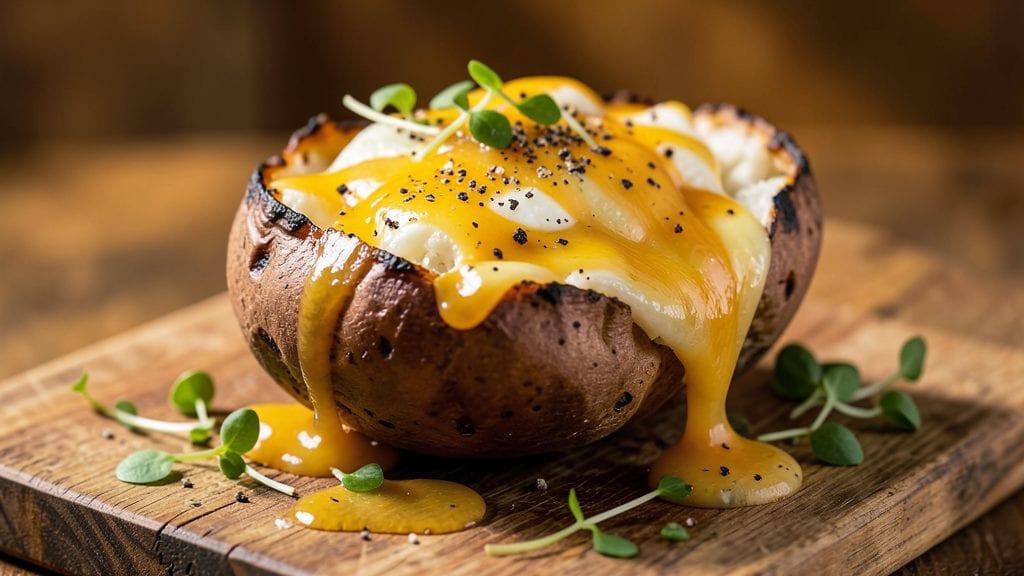
Mastering Gordon Ramsay’s jacket potato recipe transforms a simple baked potato into a restaurant-worthy dish with a cheesy, pull-apart crust and vinegar-kissed crunch. The secret lies in precise boiling and baking techniques that create an irresistibly crispy exterior while keeping the inside fluffy.
I’ve perfected this method after years of testing, and the results are worth every minute of prep time.
This recipe delivers a foolproof approach that begins with selecting the right potatoes—Russets or Yukon Golds work best—and boiling them until tender but not falling apart. The magic happens when you bake them at high heat with a splash of vinegar, which enhances the crust’s crispiness.
Once baked, the pull-apart cheese topping adds a luxurious, gooey texture that makes every bite unforgettable.
By the time you’re done, you’ll have a jacket potato with a golden, vinegar-sharp crust that flakes apart at the touch, revealing a creamy interior topped with melted cheese. The vinegar not only crisps the skin but also balances the richness of the cheese, creating a perfect harmony of flavors.
This dish is ideal for hearty meals, game days, or when you want to impress without spending hours in the kitchen.
Serve with sour cream, chives, or a dollop of butter for extra indulgence. The techniques here ensure you’ll achieve restaurant-quality results at home, every time. Let’s get started on this game-changing recipe.
Ingredients for gordon ramsay jacket potato
Four big potatoes and a handful of pantry staples—this is your shortcut to restaurant-style crispy crusts.
| Ingredient | Amount | Notes |
|---|---|---|
| Russet Potatoes 🥔 | 4 whole | Large, uniform size preferred |
| White Vinegar 🍶 | ½ cup | White or apple cider |
| Unsalted Butter 🧈 | ½ cup | Melted, full-fat preferred |
| Shredded Cheddar Cheese 🧀 | 2 cups | Sharp cheddar, freshly grated |
| Salt 🧂 | 1 ½ tsp | Kosher or sea salt |
| Black Pepper 🌶️ | ½ tsp | Freshly ground preferred |
| Garlic Powder 🧄 | 1 tsp | Not garlic salt |
| Sour Cream 🥛 | ½ cup | Full-fat for creaminess |
| Fresh Chives 🌿 | 2 tbsp | Chopped, for garnish |
| Olive Oil 🫒 | 1 tbsp | For greasing baking sheet |
Russets are the gold standard here—long and thick is ideal, but Yukon Golds work too if that's what you've got. Trader Joe's and Whole Foods usually carry the biggest ones. Skip the red potatoes; they're too waxy for that perfect fluffy interior. Look for ones that feel heavy for their size—those are the ones packed with starch. If you can't find Russets, Idaho potatoes are your next best bet. The vinegar is non-negotiable for that signature sharp crunch, so grab a bottle of white vinegar or apple cider vinegar—whatever's open in your fridge.
No sharp cheddar? Parmesan mixed in adds depth, or just use Gruyère if you're feeling fancy. Pre-shredded cheese works, but freshly grated melts better—worth the 30 seconds with a box grater. Running low on sour cream? Greek yogurt at half the amount gives similar tang. The butter should be full-fat—none of that low-fat nonsense. If you're out of olive oil, vegetable oil works fine for greasing the sheet. And yes, you can use garlic powder instead of fresh, but the flavor's a little more subtle.
Potatoes keep 1 week in a cool, dark place—don't refrigerate them yet. Once baked, store leftovers in the fridge for 3 days (if they last that long). Reheat in the oven at 375°F for 10 minutes to get that crispy crust back. I always make a double batch—freeze extras with cheese on top for quick meals later. Just microwave them for 2-3 minutes and broil for 2 minutes to crisp up the cheese.
Why You'll Love This Recipe
- One-Pot Magic: I swear by this trick—just bake, stuff, and bake again. No chopping, no fussing, just a single sheet pan that handles everything from start to crispy finish.
- Buttery Cheese Bliss: That vinegar bath keeps the skins paper-thin while the butter and cheddar melt into a rich, gooey center. Honestly, it’s the kind of comfort that makes you forget to chew.
- Meal Prep Hero: I make a double batch on Sundays and reheat slices straight from the fridge—still warm, still perfect. Great for lazy lunches or when you’re too tired to cook.
- Budget-Friendly Luxury: Russets are cheap, cheddar stretches far, and you’re using basic pantry staples. Yet somehow, it feels like a fancy bistro dish without the price tag. (Yes, even on a Tuesday night.)
Step-by-step instructions for Gordon Ramsay's jacket potato recipe
Here's how to make restaurant-quality jacket potatoes with a crispy vinegar-kissed crust and cheesy pull-apart center.
Prep and Parboil the Potatoes
Preheat your oven to 425°F and line a baking sheet with aluminum foil. Place the 4 whole Russet Potatoes in a large pot and cover with cold water by about 2 inches. Add 1.5 teaspoons salt and bring to a boil over high heat. Once boiling, reduce to a simmer and cook for 15 minutes. You want them partially cooked but still firm—pierce with a fork to test.
Here's the thing—this parboiling step is crucial. It ensures your potatoes cook evenly and don't turn mushy in the oven. Drain them well after boiling, then rub each potato with 1 tablespoon olive oil to help create that crispy crust later. The oil will also help the vinegar cling better when we add it in the next step.
Create the Vinegar-Kissed Crust
In a small bowl, mix together 0.5 cup white vinegar and 0.5 cup melted unsalted butter. This might seem weird, but trust me—this combo creates that signature crispy, tangy crust that makes these potatoes special. Brush each potato generously with this mixture, coating them completely. Let them sit for 5 minutes while you prepare the oven.
The vinegar might smell strong at first, but it evaporates during baking, leaving behind that perfect vinegar-kissed crunch. Don't skip this step—it's what gives these potatoes that professional restaurant quality. Place the potatoes on the prepared baking sheet, spacing them about 1 inch apart so they have room to crisp up.
Bake Until Crispy and Tender
Bake the potatoes in the preheated oven for 45-50 minutes, flipping them halfway through at the 25-minute mark. You'll know they're done when the skin is deep golden brown and crispy, and they feel light when lifted. The internal temperature should reach 205°F when tested with a meat thermometer.
This is where patience pays off. If you open the oven door early, you'll steam the skin instead of crisping it. The potatoes should be firm enough to hold their shape when cut open but still tender inside. Real talk: if they're not crispy enough after baking, pop them back under the broiler for 2-3 minutes to finish them off.
Add the Cheesy Pull-Apart Center
While the potatoes are still hot, use a serrated knife to cut a deep cross in the top of each potato (don't cut all the way through). In a small bowl, mix together 2 cups shredded cheddar cheese, 0.5 teaspoon black pepper, and 1 teaspoon garlic powder. Spoon this mixture into the center of each potato, pressing down gently so it stays inside.
The cheese should melt into a gooey, pull-apart center that oozes out when you cut into it. Here's a pro tip: if you're serving these right away, you can skip the next step and serve them immediately with the cheese still warm. But if you want that perfect creamy texture, proceed to the final step.
Finish with Sour Cream and Chives
Let the potatoes cool for 5 minutes after adding the cheese (this prevents the cheese from getting too runny). Then, spoon 0.5 cup sour cream over the top of each potato and sprinkle with 2 tablespoons chopped fresh chives. The sour cream adds that creamy contrast to the crispy exterior, while the chives bring a fresh finish.
Serve immediately with a side of your favorite dipping sauce or extra cheese on the side. These jacket potatoes are best enjoyed right away when the crust is still crispy and the cheese is perfectly melted. If you make them ahead, just reheat in the oven at 350°F for 10 minutes to restore the crispiness before serving.
Pro Tips For Making Gordon Ramsay Jacket Potato
- Boil Until Fork-Tender: Russets stay dry if you undercook them—test with a knife instead of time. A proper boil (20-25 mins) means the center collapses like butter when pierced, not just softens. I learned this the hard way after serving a batch that felt hollow inside.
- Vinegar Soak First: Skip the vinegar bath before baking, and your potatoes steam instead of crisp. Soak them in cold water with 1 tbsp white vinegar for 10 minutes—this removes surface starch so the skin crisps properly. (Yes, even if you’re impatient like me.)
- Butter the Cavity: Dumping melted butter on top? That’s how you end up with soggy cheese. Scoop out the insides, dot the cavity with butter, then stuff it back—this guarantees the cheese melts into a creamy blanket, not a greasy slide.
- Salt the Water Hard: More salt than you think, especially if using unsalted butter. A full teaspoon per quart of water seasons the potato flesh as it cooks—no need to add extra salt later. (Your future self will thank you.)
Troubleshooting your gordon ramsay jacket potato
Potatoes Too Soft
If your jacket potatoes turn out mushy instead of fluffy, you likely overcooked them during the parboiling stage. Reduce the boiling time to 12-13 minutes for Russets—test with a fork to ensure they're still firm.
After baking, check the internal temperature with a meat thermometer; it should read 205°F, not higher. Overbaking dries out the starches, turning them gummy. 🥔
Skin Not Crispy
The vinegar-butter mixture is key for that signature crunch, so don’t skip it! If your skin stays soft, try increasing the baking temperature to 450°F for the last 10 minutes of cooking.
Also, ensure your potatoes are completely dry before brushing with the mixture—any moisture will prevent crispiness. For extra crunch, broil them for 2-3 minutes at the end. 🔥
Cheese Not Melting
If your cheese stays in chunks instead of melting into a gooey center, it’s likely not hot enough when added. Let the potatoes cool for only 3-5 minutes after baking before stuffing them—this keeps the interior warm enough to melt the cheese.
For extra insurance, use shredded cheese with a higher fat content (like sharp cheddar) and consider adding a splash of heavy cream to the cheese mixture for creaminess. 🧀
Vinegar Smell Lingers
The strong vinegar aroma should dissipate during baking, but if it’s still noticeable, your oven temperature might be too low. Increase it to 425°F and bake for 5-10 minutes longer to fully evaporate the acidity.
Alternatively, use apple cider vinegar instead of white vinegar—it has a milder taste and still delivers that crispy texture. 🍶
Potatoes Stick to Sheet
Grease your baking sheet generously with olive oil or use parchment paper to prevent sticking. If they still adhere, your potatoes might be too wet after boiling. Pat them very dry with a kitchen towel before brushing with the vinegar-butter mixture.
For extra insurance, place them on a wire rack over the baking sheet to allow air circulation. ⚡
Uneven Cooking
If one side of your potatoes is undercooked while the other burns, rotate the baking sheet halfway through and ensure they’re spaced 1 inch apart. For even heat distribution, place the sheet on the middle rack of your oven.
If your oven has hot spots, consider using a light-colored baking sheet (like aluminum) to reflect heat more evenly. 🌡️
Nutrition facts
Frequently asked questions
Why does Gordon Ramsay's recipe use vinegar for jacket potatoes?
The vinegar creates that signature crispy, tangy crust by breaking down starches on the potato's surface during baking. It also balances the richness of the cheese, adding a bright contrast. The acidity helps the skin brown faster and develop a satisfying crunch that regular baking alone can't achieve.
Can I make these jacket potatoes ahead of time?
Yes, but with a few key adjustments. Bake them as directed, then let cool completely before storing in the fridge for up to 3 days. Reheat at 375°F for 10 minutes to restore crispiness. For longer storage, freeze them with cheese on top and reheat in the microwave for 2-3 minutes before broiling for 2 minutes to crisp the cheese.
What's the best cheese substitute if I don't have cheddar?
For a similar melt and flavor, try Gruyère (adds nutty depth) or a mix of mozzarella and Parmesan (creamy with salty punch). Avoid low-fat cheeses—they won't melt as smoothly. If you're vegetarian, vegan cheddar works surprisingly well when combined with a splash of plant-based cream.
How do I know when the potatoes are fully cooked?
They're done when the skin is deep golden brown and crispy, and they feel light when lifted. The internal temperature should reach 205°F when tested with a meat thermometer. If you cut into one and it's still firm in the center, return to the oven for 5-10 more minutes. Overcooking turns them gummy, so timing is everything!
Can I use sweet potatoes instead of Russets?
Sweet potatoes work differently—they're naturally sweeter and more moist. For best results, reduce the boiling time to 10 minutes and bake at 400°F instead of 425°F to prevent burning. The vinegar crust will still form, but the texture will be slightly denser. Pair with brown sugar and pecans for a dessert-style twist.