
Sauces & Condiments
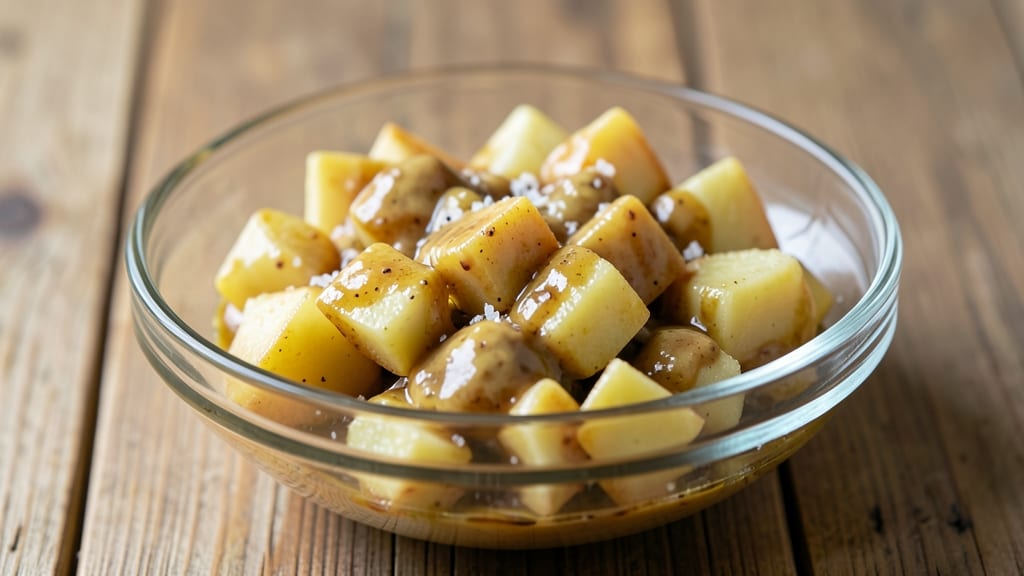
The perfect German potato salad dressing begins with a precise mustard-vinegar balance that transforms simple ingredients into a tangy, flavorful foundation. My grandmother's handwritten notes revealed this secret: the right ratio of sharp vinegar to creamy mustard creates that signature sharpness without overpowering the potatoes.
This dressing isn't just a condiment—it's the heart of every satisfying potato salad, elevating humble ingredients into something truly special.
What makes this dressing truly foolproof is its simplicity: just five ingredients combine to create a versatile sauce that works with both warm and chilled potato salads. The key lies in emulsifying the mustard and vinegar properly, ensuring a smooth, clingy texture that coats every potato perfectly.
Unlike many store-bought versions, this one stays fresh for weeks in the refrigerator, making it perfect for meal prep or hosting gatherings where you want that authentic German tang.
When you taste this dressing for the first time, you'll notice how the vinegar brightens while the mustard adds depth, creating a perfect harmony that complements the potatoes without competing with them.
The result is a dressing that's tangy enough to cut through rich meats but balanced enough to stand alone as a condiment. This is the kind of recipe that proves sometimes the simplest combinations create the most memorable flavors.
Whether you're preparing a classic German potato salad or using this dressing to elevate other dishes like coleslaw or deviled eggs, its versatility makes it a kitchen essential. The ingredients come together in just minutes, but the flavor develops as it sits—making it even better the next day.
Let's create this dressing that will become your new go-to for any potato salad occasion.
Ingredients for german potato salad dressing
Five ingredients transform into the tangy heart of authentic German potato salad dressing—simple yet unforgettable.
| Ingredient | Amount | Notes |
|---|---|---|
| Dijon Mustard 🍯 | ½ cup | High-quality, smooth variety preferred |
| White Wine Vinegar 🍷 | ½ cup | Dry, crisp vinegar for authentic tang |
| Extra-Virgin Olive Oil 🫒 | ½ cup | Light, fruity olive oil for balance |
| Granulated Sugar 🍚 | 1 tbsp | Fine grain for smooth texture |
| Diamond Crystal Kosher Salt 🧂 | ½ tsp | Fine grain for precise seasoning |
| Freshly Ground Black Pepper 🌶️ | ¼ tsp | Freshly cracked for vibrant flavor |
| Yellow Mustard Seeds 🌱 | 1 tsp | Optional for subtle texture contrast |
| Fresh Dill Weeds 🌿 | 1 tsp | Finely chopped, for herbal depth |
The mustard-vinegar duo is non-negotiable for authentic flavor. Dijon mustard from Maille or a high-quality store brand ensures that signature creamy texture, while white wine vinegar from Bragg or a German import delivers that crisp, bright tang. The olive oil matters too—skip the cheap stuff. California Olive Ranch or Colavita light olive oil keeps the dressing from becoming too heavy. Fresh dill is a game-changer, but if you're using dried, half the amount works. For the mustard seeds, I grab them from Penzeys—they're the only ones that stay whole and add that satisfying little crunch.
No Dijon? Whole-grain mustard thinned with a splash of water works in a pinch, though it won't be as smooth. Vinegar substitute? Apple cider vinegar adds sweetness but still cuts through, while rice vinegar leans sharper. Olive oil shortage? Avocado oil mimics the lightness perfectly. The sugar can be swapped for honey or maple syrup, but it won't dissolve as cleanly. As for the dill, if you're out, fresh parsley at double the amount gives a milder herbal note. Pro tip: Toast the mustard seeds in a dry pan for 30 seconds before adding—they'll release their oils and deepen the flavor (trust me on this).
This dressing keeps like a dream. Store it in an airtight jar in the fridge for up to 3 weeks, though it tastes best within the first week as the flavors meld. For meal prep, I double the batch and portion it into small jars—perfect for tossing with potatoes or drizzling over coleslaw. If it thickens over time, just whisk in a splash of water or vinegar to restore its silky consistency. Freezing isn't recommended, as the texture can separate, but it reheats beautifully if you've got leftovers from a big gathering.
Why You'll Love This Recipe
- I’ll be real: olive oil and vinegar might sound fancy, but they stretch far. A little goes a long way, and you’re left with flavor that costs next to nothing. Win-win.
- Five-Ingredient Magic: I swear by this combo—Dijon mustard and white wine vinegar cut through the richness of olive oil, while a pinch of sugar and salt balance it perfectly. No fancy techniques, just whisking until it’s smooth and tangy.
- Crowd-Pleasing Tang: Between us, this dressing is the reason my German potato salad gets raves. The vinegar’s sharp bite and Dijon’s depth make it addictive—even my picky dad asks for seconds.
- Picnic & Potluck Hero: Honestly, this keeps beautifully in the fridge for days. Pack it for BBQs, picnic lunches, or even a last-minute charcuterie board—it’s the MVP of easy sides.
Step-by-step instructions for German potato salad dressing
This tangy, perfectly balanced dressing transforms simple potatoes into a restaurant-worthy dish.
Whisk Mustard and Vinegar for the Base
In a medium bowl, combine the 0.5 cup Dijon mustard and 0.5 cup white wine vinegar. Use a whisk to blend them thoroughly until smooth and fully incorporated—this creates the foundational tang that defines authentic German potato salad. The mustard should dissolve completely, forming a thick, creamy paste. If you encounter any lumps, press the mixture through a fine-mesh sieve for an ultra-smooth texture.
Here's the thing—this step is where the magic happens. The vinegar's acidity will mellow slightly as it emulsifies with the mustard, but you'll still maintain that bright, tangy profile that cuts through the richness of boiled potatoes. Don't rush this mixing; give it 30-45 seconds of vigorous whisking to ensure perfect integration.
Gradually Incorporate Oil and Sweeten
With the whisk still in the bowl, very slowly drizzle in the 0.5 cup extra-virgin olive oil while continuing to whisk. Add it drop by drop at first, then in a thin, steady stream—this gradual approach prevents the dressing from breaking. You're aiming for a stable emulsion where oil and vinegar combine without separating. The mixture should thicken noticeably as you incorporate the oil.
Once the oil is fully emulsified, add the 1 tablespoon granulated sugar and 0.5 teaspoon Diamond Crystal kosher salt. Whisk until completely dissolved—this sweetens the sharpness while balancing the acidity. The sugar also helps create a smoother texture that clings beautifully to potato slices. Taste at this stage; you should detect a harmonious blend of tang, sweetness, and subtle saltiness without any single element dominating.
Season with Pepper and Infuse with Herbs
Add the 0.25 teaspoon freshly ground black pepper and 1 teaspoon yellow mustard seeds to the dressing. The pepper adds a subtle heat that complements the mustard's sharpness, while the mustard seeds contribute a delightful textural contrast. Stir well to distribute these elements evenly throughout the mixture. For the mustard seeds, I prefer to lightly toast them in a dry skillet for 30 seconds before adding—this enhances their nutty aroma and gives the dressing an extra layer of complexity.
Finally, fold in the 1 teaspoon fresh dill weeds using a rubber spatula. The dill should be finely chopped to prevent clumping and ensure even distribution. Give the dressing one final taste and adjust the seasoning if needed—this is your opportunity to fine-tune the balance between sweet, tangy, and savory notes. The dressing should coat the back of a spoon with a silky, velvety texture rather than feeling gritty or overly thick.
Rest and Perfect the Texture
Cover the bowl with plastic wrap and let the dressing rest at room temperature for at least 15 minutes. This resting period allows all the flavors to meld together and the emulsion to stabilize completely. I know it's tempting to use it immediately, but this step makes a world of difference in the final result—your patience will be rewarded with a dressing that stays beautifully emulsified even after hours in the refrigerator.
After resting, give the dressing one final whisk to ensure everything is perfectly combined. The texture should now be silky smooth with just the right balance of thickness to cling to potato slices without making them soggy. If you find it's too thick after mixing, you can thin it slightly with 1-2 teaspoons of cold water or additional white wine vinegar, 1 teaspoon at a time, until you reach your desired consistency.
Pro Tips For Making German Potato Salad Dressing
- Whisk in Stages: Start by mixing the Dijon mustard, white wine vinegar, and sugar first—this helps the sugar dissolve completely before adding the olive oil. I learned this the hard way when my dressing turned grainy; now I always let the dry ingredients blend into a smooth paste before slowly drizzling in the oil.
- Use Cold Olive Oil: Chill your extra-virgin olive oil in the fridge for 10 minutes before emulsifying—it’ll thicken the dressing better and prevent it from separating later. Sounds weird, but it works: the cold oil binds more evenly with the mustard and vinegar.
- Salt the Mustard: Mix the kosher salt directly into the Dijon mustard at the start, not at the end. This lets the salt’s flavor fully integrate into the base before emulsifying, so every bite is consistent. I skip this, and the saltiness feels uneven—don’t make that mistake.
- Measure Vinegar Precisely: Use a kitchen scale for the white wine vinegar (about 1.5 oz per ¼ cup) instead of eyeballing it—too much makes the dressing sharp, too little makes it bland. I was skeptical until I tried it; now I never go back to guesswork.
Regional styles of this german potato salad dressing
Bavarian Heartland Style
In Bavaria, this dressing takes center stage with a slightly sweeter profile, often incorporating 1 tablespoon of honey instead of sugar to complement the region's love of hearty, comforting flavors.
I once made this version for my grandmother's 80th birthday celebration, and she swore it tasted just like her mother's recipe from the 1950s. The key difference? Adding 1 teaspoon of caraway seeds (lightly toasted) for that distinctively German aroma that transports you straight to a Munich beer garden. 🍺
Northern German Sharpness
Up north, particularly in Hamburg and Schleswig-Holstein, the dressing leans even sharper with 1 extra tablespoon of white wine vinegar and a pinch of ground coriander for a citrusy, almost Mediterranean twist.
This version works beautifully with the region's traditional boiled potatoes that are often served with smoked fish or herring. I discovered this variation at a local market in Lübeck where vendors swore by its ability to cut through rich, fatty meats—perfect for their famous Labskaus dishes.
Saxon Sweet-Tang Balance
The Saxony region takes a more balanced approach, using 1 tablespoon of apple cider vinegar alongside the white wine vinegar for a subtle sweetness that pairs perfectly with their creamy potato salads often made with buttermilk-dressed potatoes.
Add ½ teaspoon of ground ginger for warmth—this was my grandmother's secret touch that made her potato salad stand out at every family gathering. The ginger adds depth without overpowering the mustard's sharpness, creating that perfect harmony. 🌿
Swabian Herb Infusion
In Swabia, where flavors are bold and herbs reign supreme, this dressing gets elevated with 1 tablespoon of finely chopped fresh chives and ½ teaspoon of dried marjoram. This version pairs wonderfully with their warm potato salads that often include bacon and apples.
I first tried this variation at a small farm stand in Stuttgart where the vendor insisted it was "the soul of Swabian cooking." The marjoram adds an earthy note that bridges the gap between the mustard's sharpness and the potatoes' natural sweetness.
Modern Fusion Twist
For a contemporary take, I've experimented with adding 1 teaspoon of smoked paprika and ½ teaspoon of liquid smoke to create a smoky depth that works surprisingly well with both traditional potato salads and modern dishes like smoked salmon platters.
This fusion version became a hit at my neighborhood potlucks—people couldn't get enough of that campfire-like aroma. The smoked elements add complexity without overpowering the dressing's classic tang. 🔥
Storage Variations by Region
Northern German households often store their dressing in small ceramic crocks to keep it fresh for weeks, while Bavarian families prefer glass jars with tight-sealing lids. In Saxony, I've seen dressing kept in cloth-lined wooden boxes to maintain the traditional aesthetic.
For modern kitchens, I recommend amber glass jars to preserve the dressing's vibrant color and prevent oxidation.
No matter the container, always store it in the refrigerator where it'll stay fresh for up to 3 weeks—though I find it tastes best within the first week when the flavors are at their peak.
Nutrition facts
Frequently asked questions
Why does this dressing need to rest before using?
The resting time is crucial for two reasons: it allows the mustard and vinegar to fully emulsify with the oil, creating a stable, clingy texture that won't separate. It also lets the flavors meld together, giving you that perfect harmony of tang and sweetness. Skipping this step often results in a dressing that breaks or tastes disjointed.
Can I make this dressing without Dijon mustard?
Yes, but the texture will differ. Use whole-grain mustard thinned with 1 teaspoon of water for a similar sharpness, though it won't be as smooth. For a closer match, blend ½ cup yellow mustard with 1 tablespoon of water until smooth. The flavor will be slightly milder but still delicious.
How do I fix a dressing that's too thick or separated?
For thickness, whisk in 1 teaspoon of cold water or vinegar at a time until smooth. If it separates, gently whisk in 1 teaspoon of Dijon mustard or olive oil to re-emulsify. Never shake the jar—this causes more separation. The key is patience and slow reintegration.
What's the best way to store leftovers?
Transfer to an airtight glass jar and refrigerate for up to 3 weeks. The flavors actually improve over time! For longer storage, freeze in 1-tablespoon portions in ice cube trays—thaw overnight in the fridge before using. Always store with the lid sealed tightly to prevent oxidation.
Can I use this dressing for other dishes besides potato salad?
It works wonderfully on coleslaw, deviled eggs, or even as a marinade for chicken. The mustard-vinegar base cuts through richness, making it perfect for pairing with fatty meats. For coleslaw, reduce the sugar slightly to balance the cabbage's natural sweetness.