
Side Dishes
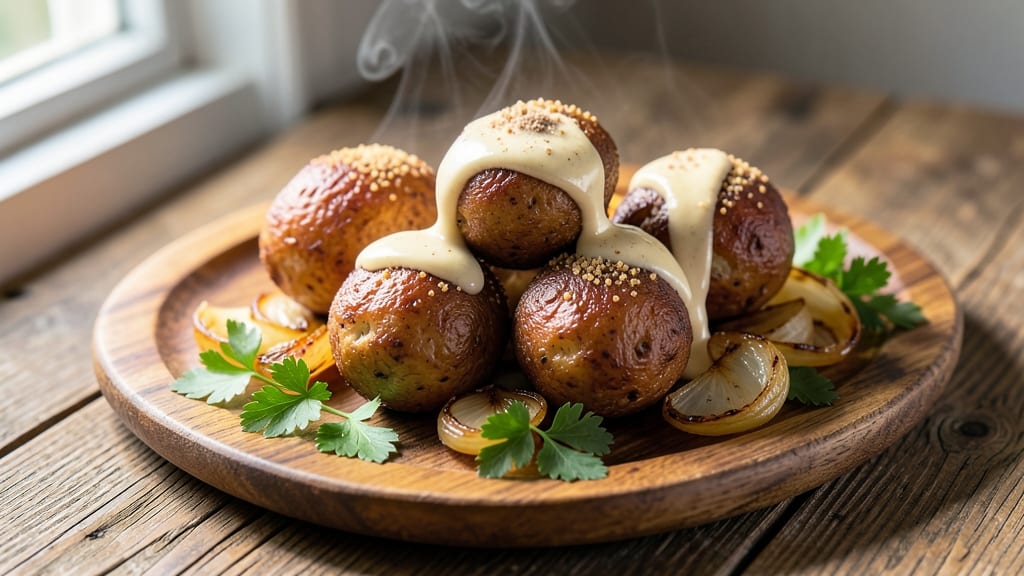
This German potato balls recipe delivers the kind of comfort food I grew up craving—crispy cornmeal shells wrapped around tender, fluffy centers, then finished with a rich beer braise. 💛 The secret lies in the texture contrast: the golden, crunchy exterior gives way to pillowy potato inside, while the beer adds depth that transforms a simple side into something special.
I first made these after discovering how my Nonna would shape them with care, knowing they’d become the star of any meal.
The process starts with boiling and mashing potatoes until they’re perfectly smooth, then binding them with egg and flour for structure. The cornmeal coating creates that signature crunch, while the beer braise infuses flavor without overpowering.
This method works for both pan-frying and deep-frying—your choice depends on how crispy you like them. The result? A dish that’s hearty enough to stand alone or elegant enough to complement roasted meats.
What makes these potato balls truly unforgettable is the balance of textures and flavors—crispy shells, tender centers, and a rich beer-infused finish. They’re the kind of recipe that feels like a hug in food form, perfect for family dinners or holiday gatherings.
Whether you serve them with applesauce, gravy, or as a side to roasted chicken, they’ll disappear faster than you can say Kartoffelbällchen. Let’s get cooking!
Fair warning: once you try these, store-bought versions won’t cut it. The technique is straightforward, but the payoff is restaurant-quality comfort that tastes like home. And if you’re feeling adventurous, try swapping the beer for a light ale or even apple cider—just don’t skip the braising step.
That’s where the magic happens.
Ingredients for german potato balls
Pantry staples meet German tradition—crispy cornmeal shells hide fluffy potato centers, all braised in rich beer.
| Ingredient | Amount | Notes |
|---|---|---|
| Russet Potatoes 🥔 | 2 lbs | Peeled and boiled until tender |
| All-Purpose Flour 🌾 | ½ cup | For binding potato mixture |
| Large Eggs 🥚 | 2 whole | Beaten for binding |
| Yellow Cornmeal 🌽 | 1 cup | Fine grind for crispy coating |
| Yellow Onion 🧅 | 1 medium | Finely chopped for braise |
| Yellow Onion 🧅 | 1 whole | Finely chopped for braise |
| Garlic Cloves 🧄 | 4 cloves | Minced for flavor base |
| Light Beer 🍺 | 2 cups | Lager or pilsner preferred |
| Chicken Broth 🍲 | 1 cup | Low-sodium for balance |
| Unsalted Butter 🧈 | 2 tbsp | For richness in braise |
| Salt 🧂 | 1 ½ tsp | Adjust to taste |
| Black Pepper 🌶️ | ½ tsp | Freshly ground preferred |
| Vegetable Oil 🫒 | 2 cups | For frying potato balls |
| Fresh Parsley 🌿 | ¼ cup | Chopped for garnish |
The potatoes are non-negotiable. Russets have the starch for that perfect mash—Yukon Golds work but won't be as light. Boil them until fork-tender, then mash smooth while hot. The beer matters too—light lagers like Corona or Stella keep the flavor clean. For the cornmeal, Bob's Red Mill is my go-to, but any fine grind works. If you can't find fresh parsley, dried oregano at half the amount gets you close. The onion? Sweet yellow adds sweetness without overpowering the beer.
No beer? Light apple cider or extra chicken broth works in a pinch. The cornmeal coating can be swapped for panko breadcrumbs if you're in a rush, but it won't be as crispy. Short on butter? Olive oil or bacon fat adds richness too. For the potato mixture, don't skip the egg—it's what holds everything together. If your mashed potatoes are too wet, add a splash more flour. The braise can be made ahead and reheated—it actually tastes better the next day as flavors meld.
These keep for 3 days in the fridge, though they're best fresh. Reheat gently in the oven with a splash of broth to restore crispiness. For freezing, shape the balls first, then freeze on a tray before transferring to a bag. 6 months works, but they're best used within 3. The cornmeal coating absorbs oil fast, so store them in a single layer until ready to fry. Leftovers reheat beautifully—just pop them in a 350°F oven for 10 minutes.
Why You'll Love This Recipe
- No Peel, No Stress: I swear by these—just grate the raw Russets (skin and all) straight into the bowl. No peeling, no fuss, and the texture? Still buttery and perfect.
- Crispy-Creamy Magic: That cornmeal crust gives them a golden crunch while the inside stays tender—like biting into a warm hug. The onion adds just enough depth to make them feel fancy, not basic.
- Game for Any Meal: Toss them in a hearty soup for extra heft, serve as a side with gravy, or even pan-fry them for a quick snack. My kids ask for them at breakfast sometimes. (Yes, really.)
- Budget-Friendly Staple: A single bag of Russets and a box of flour stretch for weeks. Freeze extras for lazy nights, and they reheat like they just came out of the oven—no fancy ingredients, just pure satisfaction.
Step-by-step instructions for German potato balls
Here's how to make these hearty, crispy potato balls with a rich beer-braised finish.
🍳 Step 1: Boil and Mash the Potatoes
Peel the 2 lbs russet potatoes and cut them into even chunks. Place them in a pot of cold, salted water and bring to a boil over medium-high heat. Cook for 15-20 minutes until they're fork-tender and can be easily pierced with a knife.
Drain the potatoes thoroughly, then return them to the pot. Using a potato masher or fork, mash them until smooth but still slightly chunky. Let them cool slightly while you prepare the next ingredients. This texture ensures your potato balls hold together without being gluey.
👨🍳 Step 2: Make the Potato Ball Mixture
In a large mixing bowl, combine the mashed potatoes with the 0.5 cup all-purpose flour, 2 whole large eggs, and 1 cup yellow cornmeal. Add 1.5 tsp salt and 0.5 tsp black pepper. Mix everything together with your hands until you have a smooth, cohesive dough that holds its shape when pressed.
Here's the thing—this mixture needs to be just right. If it's too wet, your potato balls will fall apart when frying. If it's too dry, they'll be dense and heavy. I like to add a splash of cold water (about 1 tablespoon at a time) if it feels too dry, mixing until it comes together perfectly.
🔥 Step 3: Fry the Potato Balls
Heat 2 cups vegetable oil in a deep skillet or Dutch oven to 350°F. Using a spoon or small ice cream scoop, carefully drop tablespoon-sized portions of the potato mixture into the hot oil. Fry in batches, turning occasionally, until they're golden brown on all sides, about 3-4 minutes per batch.
Don't overcrowd the pan—they need room to crisp up properly. You'll know they're ready when they float to the surface and develop a beautiful golden crust. Remove them with a slotted spoon and drain on paper towels. Keep them warm in a single layer while you prepare the braising sauce.
🥘 Step 4: Prepare the Beer-Braised Sauce
In the same skillet (with any remaining oil), melt the 2 tbsp unsalted butter over medium heat. Add the 1 medium and 1 whole yellow onion, chopped, and cook for 5-6 minutes until softened. Stir in the 4 cloves minced garlic and cook for another 30 seconds until fragrant.
Pour in the 2 cups light beer and scrape up any browned bits from the bottom of the pan. Add the 1 cup chicken broth and bring to a gentle simmer. Let it reduce by about half, about 5-7 minutes, until it's thickened enough to coat the back of a spoon. Season with an additional pinch of salt if needed.
⏰ Step 5: Braise and Serve
Return the fried potato balls to the skillet with the braising sauce. Spoon the sauce over them and let it simmer together for 5-7 minutes until everything is heated through and the potato balls are nicely coated. Garnish with the 0.25 cup chopped fresh parsley just before serving.
These potato balls are best served warm, with the crispy cornmeal shells contrasting beautifully against the rich, beer-infused sauce. They're hearty enough to stand alone or pair perfectly with a simple green salad and crusty bread for a comforting meal.
Pro Tips For Making German Potato Balls
- Boil Until Fork-Tender: Russets stay dense if you cut them too big—aim for 1.5-inch cubes and boil them until a knife slides in like butter. I learned this the hard way when my first batch turned to mush; now I test one piece early and adjust time if needed.
- Sweat the Onion Low: Sauté that yellow onion in 1 tablespoon oil over medium-low heat until it’s translucent but not brown—about 8 minutes. Rushing this step makes the potato balls taste dull instead of rich, and nobody wants that.
- Chill the Dough: After mixing flour, egg, and cornmeal into the mashed potatoes, pop the bowl in the fridge for 15 minutes. This prevents sticky, uneven balls and guarantees a crispier crust when frying—trust me, your future self will notice.
- Fry in Batches: Crowd the pan, and the oil temp drops like a rock, giving you greasy, soggy potato balls. Work in 6-8 balls max per batch, and keep a thermometer handy—aim for 350°F to get that perfect golden crunch without burning.
Essential equipment for great german potato balls
Deep-Fry Essentials
You’ll need a deep skillet or Dutch oven with at least 3-quart capacity—I use my All-Clad Stainless Steel Dutch Oven because it handles high heat without warping. A deep-fry thermometer (like the Thermoworks Dot) is non-negotiable for maintaining 350°F—fluctuations ruin texture.
For oil, vegetable or canola oil works best (avoid olive oil—it burns too easily). 🔥
Handy Tools
A slotted spoon (I love the OXO Good Grips) helps lift potato balls without breaking them. For shaping, try a small ice cream scoop or cookie dough scoop—it keeps portions even.
A fine-mesh strainer catches stray cornmeal bits when draining fried balls. Don’t skip the paper towels—they absorb excess oil so the braise stays light.
Braising Gear
Use the same skillet for frying and braising to maximize flavor. A wooden spoon (like Lodge Cast Iron) prevents sticking when deglazing with beer. For chopping onions and garlic, my Victorinox 8-inch chef’s knife is a game-changer.
A fine-mesh sieve strains any lumps from the reduced sauce if needed. 🍲
Optional Upgrades
For extra crispiness, a cornmeal dredge station (a shallow plate) keeps coating dry before frying. A meat thermometer (like Thermoworks Smoke) ensures internal temps hit 165°F if you’re nervous.
If you hate mincing garlic, pre-minced garlic (from the jar) works—no shame here! For storage, glass Pyrex containers keep leftovers fresh for days.
Budget-Friendly Swaps
No Dutch oven? A heavy-bottomed saucepan does the trick. Skip the thermometer? Use the cold-water test—drop a tiny potato ball in oil; if it sizzles and floats, it’s ready. No cornmeal? Panko breadcrumbs add crunch (though not the same texture).
A sharp paring knife works for garlic if you’re pinched. My Nonna swore by cast iron—it’s cheap, durable, and holds heat like a dream. 💪
Nutrition facts
Frequently asked questions
Can I make these potato balls without cornmeal?
If you're out of cornmeal, swap it for 1 cup panko breadcrumbs for a similar crispy texture. For extra crunch, mix in 1 tablespoon flour with the panko. Just note that cornmeal gives them that classic German crunch—panko will be slightly lighter but still delicious.
What's the best beer to use in the braise?
Light lagers like Corona, Stella Artois, or Heineken work perfectly—they add flavor without overpowering. For a non-alcoholic version, use light apple cider or extra chicken broth. Avoid dark beers like stouts, as they can make the sauce too bitter. The key is a clean, crisp beer that complements the potatoes.
Why did my potato balls fall apart when frying?
This usually happens if the potato mixture is too wet or the oil isn't hot enough. Make sure your mashed potatoes are smooth but not gluey—add a splash of flour if needed. Heat the oil to 350°F and fry in small batches so they don't cool the oil. Also, don't overmix the dough—just combine until it holds together.
Can I bake these instead of frying?
Yes! For a lighter version, shape the balls and bake at 400°F for 20-25 minutes on a parchment-lined tray, flipping halfway. Brush with melted butter and sprinkle with cornmeal before baking. The texture will be softer than fried, but still flavorful. Pair with the beer braise for extra richness.
How do I store leftovers?
Keep them in an airtight container for up to 3 days in the fridge. To reheat, warm in a 350°F oven for 10 minutes with a splash of broth or beer to restore crispiness. For freezing, shape the balls first, then freeze on a tray before transferring to a bag. They'll keep for 3 months—thaw overnight in the fridge before reheating.