
Side Dishes
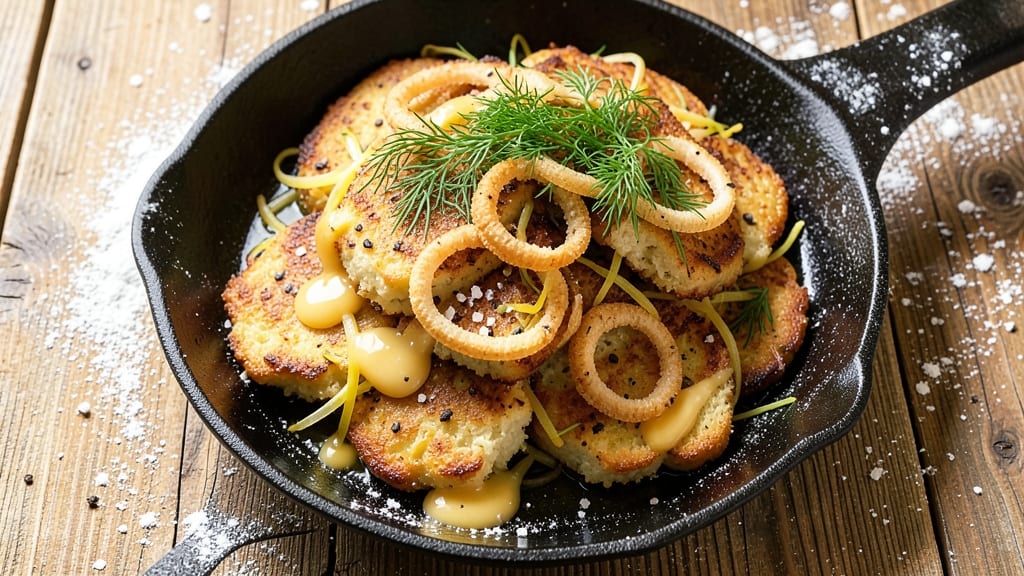
This fried potato latkes recipe delivers the golden, crispy bites you crave with that perfect onion tang that makes them irresistible. The secret lies in grating the potatoes correctly and frying them at the right temperature—350°F to 375°F—to achieve that signature crunch without burning.
I’ve perfected this technique over years of testing, and the results are always restaurant-quality.
The key to great latkes starts with proper potato preparation: grating them fine, draining the excess moisture, and mixing in onions for that essential sweetness. A little flour or matzo meal helps bind the mixture, ensuring the latkes hold together while frying.
The oil must be hot enough to create that crispy exterior, but not so hot that it burns before the inside cooks through.
Once fried to a golden brown, these latkes are crispy on the outside and tender inside, with a subtle onion flavor that balances the richness.
Serve them hot with traditional toppings like sour cream, applesauce, or even vegan alternatives for a crowd-pleasing side dish that’s perfect for Hanukkah or any cozy meal.
This recipe is foolproof, whether you’re making latkes for the first time or looking to elevate your traditional dish. The technique is straightforward, and the results are always impressive—crispy, flavorful, and impossible to resist.
Ingredients for fried potato latkes
Nine essential ingredients for crispy, golden latkes with perfect onion tang every time.
| Ingredient | Amount | Notes |
|---|---|---|
| Russet Potatoes 🥔 | 3 large | Peeled, grated fine |
| Yellow Onions 🧅 | 1 large | Grated, sweet variety |
| All-Purpose Flour 🌾 | ¼ cup | For binding mixture |
| Large Eggs 🥚 | 2 whole | Beaten for binding |
| Salt 🧂 | 1 tsp | Kosher or sea salt |
| Black Pepper 🌶️ | ½ tsp | Freshly ground preferred |
| Vegetable Oil 🫒 | 2 cups | High smoke point preferred |
| Matzo Meal 🍞 | ¼ cup | Optional for texture |
| Fresh Parsley 🌿 | ¼ cup | Chopped, for garnish |
| Lemon Juice 🍋 | 1 tbsp | Freshly squeezed |
The potatoes are the star, so Russet potatoes are your best bet—they’re starchy and hold up well to grating. Sweet yellow onions like Vidalia add natural sweetness without overpowering. Look for firm, unbruised potatoes and onions at Whole Foods or your local grocery store’s fresh produce section. The key is to grate them as fine as possible—use the large holes on a box grater or the shredding disk on a food processor. If you’re short on time, pre-grated hash browns work in a pinch, but they won’t be as crispy.
No matzo meal? All-purpose flour or crushed cornflakes work just as well for binding. Fresh parsley is ideal for garnish, but dried parsley at one-third the amount will do. The eggs are crucial for holding the latkes together—don’t skip them. If you’re watching your cholesterol, you can reduce the egg to just one and add an extra tablespoon of flour. For the oil, vegetable oil or canola oil are both great choices—they have high smoke points and won’t impart a strong flavor. Avoid olive oil, as it burns too easily.
Grated potatoes release a lot of moisture, so drain them well before mixing with other ingredients. Keep the mixture cold until frying to prevent browning. These latkes are best served immediately, but you can reheat them in a 350°F oven for 5-10 minutes if needed. For storage, place them on a wire rack to cool completely, then transfer to an airtight container. They’ll keep for up to 3 days in the fridge, though they’re best enjoyed fresh.
Why You'll Love This Recipe
- Here’s what sold me: the golden, shatteringly crisp edges and the fluffy interior. The egg and flour binding does all the work—no soggy latkes here. Honestly, I’ll take this over any takeout hash browns.
- Five-Ingredient Magic: I swear by this lineup—no fancy pantry items, just potatoes, onions, flour, eggs, and salt. That’s it. The starch from the Russets and the crunch of the onions fried in the same pan? It’s the kind of simplicity that makes me feel like a genius.
- Crispy-Creamy Obsession: Here’s what sold me: the golden, shatteringly crisp edges and the fluffy interior. The egg and flour binding does all the work—no soggy latkes here. Honestly, I’ll take this over any takeout hash browns.
- Weeknight or Holiday: Between us, I make these for lazy Mondays and Hanukkah dinners. Serve them with applesauce for a kid-friendly meal or top with smoked salmon and sour cream for a fancy spread. One recipe, zero regrets.
Step-by-step instructions for golden crispy potato latkes
Here's the method for achieving perfectly golden, crispy latkes with a satisfying onion tang every time.
Grate and Squeeze Moisture from Potatoes and Onions
Using a box grater or food processor, grate the 3 large russet potatoes and 1 large yellow onion into a large bowl. I prefer using a box grater for better control over the texture. Immediately press the grated mixture through a clean kitchen towel or cheesecloth to remove excess moisture—this is crucial for crispy latkes. Work in batches if needed, twisting the towel tightly to wring out as much liquid as possible.
Real talk: Skipping this step results in soggy latkes. The towel should feel damp but not dripping wet after squeezing. Spread the grated mixture on a clean surface and let it sit for 5 minutes to dry out further before proceeding. This resting period helps create that perfect crispy exterior we're after.
Combine and Season the Potato Mixture
In a large mixing bowl, combine the squeezed potato and onion mixture with the 0.25 cup all-purpose flour, 0.25 cup matzo meal, 1 tsp salt, and 0.5 tsp black pepper. Using your hands, gently mix everything together until just combined—avoid overworking the mixture. I like to press the dough lightly to ensure the flour and matzo meal are evenly distributed throughout.
Next, add the 2 whole large eggs, one at a time, mixing gently after each addition. The dough should hold together when pressed but still be workable. If it feels too dry, add 1 tablespoon of cold water at a time until it reaches a consistency that holds when scooped. The mixture should be firm enough to shape into patties without falling apart.
Chill the Dough for Better Texture
Cover the bowl with plastic wrap and refrigerate for at least 30 minutes. This chilling step is essential—it firms up the dough, making it easier to handle and preventing the latkes from spreading too much in the hot oil. I often chill mine for up to 1 hour if I have time, which also helps develop more flavor.
While the dough chills, preheat 1 inch of vegetable oil in a deep skillet or Dutch oven to 350°F. Use a deep-fry thermometer to monitor the temperature—this precision is what guarantees consistent crispiness. If you don't have a thermometer, test the oil by dropping in a small piece of dough; it should sizzle and float immediately.
Fry the Latkes Until Golden and Crispy
Using a ¼-cup measuring cup or ice cream scoop, portion the chilled dough into 4-ounce balls and gently flatten each into a ½-inch thick patty. Carefully slide the patties into the hot oil, working in batches to avoid overcrowding. Fry for 3-4 minutes per side until golden brown and crispy—you'll see bubbles forming around the edges, and the underside should have a beautiful brown crust.
Don't be tempted to press down on the latkes with a spatula; this makes them dense instead of crispy. Instead, let them cook undisturbed until they release easily from the pan. Transfer the cooked latkes to a paper towel-lined plate to drain excess oil. Maintain the oil temperature at 350°F between batches by adding small amounts of oil as needed.
Serve with Classic Garnishes
While still warm, transfer the crispy latkes to a serving platter. Sprinkle generously with the 0.25 cup chopped fresh parsley and drizzle with the 1 tablespoon freshly squeezed lemon juice. The parsley adds a fresh contrast to the richness of the latkes, while the lemon juice cuts through the fat for a bright finish.
Serve immediately while they're at their crispy best. Each latke should have a golden, crackly exterior with a tender interior. The onion flavor should be noticeable but not overpowering, and the texture should be light and fluffy. For extra authenticity, serve with applesauce or sour cream on the side—this classic pairing balances the richness of the latkes perfectly.
Pro Tips For Making Fried Potato Latkes
- GRATE FRESH, DON’T MUSH: Russet potatoes release starch like crazy when grated, and pre-shredded bags are a disaster—too wet, too gummy. Use a box grater or food processor, but work in batches and shake off excess moisture before mixing with flour. I learned this the hard way after ending up with gluey latkes that stuck to the pan.
- SALT THE POTATOES BEFORE RINSING: Toss grated potatoes with 1-2 teaspoons of salt before rinsing the starch. This draws out moisture while keeping them crispy, not soggy. Skip this, and your latkes will steam instead of sizzle—trust me, I’ve made that mistake enough times.
- PRESS HARD, FLATTEN EVENLY: Don’t just drop spoonfuls of batter into the pan—press each latke firmly with a spatula to create an even, thin center. This ensures they cook through without turning into potato pancake blobs. Uneven thickness = one side burnt, one side raw. (Yes, I’ve cried over those.)
- USE COLD OIL, NOT HOT: Fill your pan with about ¼-inch of oil and let it heat slowly over medium-low. Cold oil at first prevents immediate burning and gives the latkes time to set before crisping. I used to blast the heat and ended up with blackened outside, raw inside—now I wait, and the results are worth it.
Regional styles of this dish
Ashkenazi Tradition
The latkes we know today originated in Eastern Europe, particularly among Ashkenazi Jewish communities. These crispy potato pancakes became a Hanukkah staple because they’re fried in oil—a nod to the miracle of the oil that burned for eight days in the Temple.
I’ve always loved how this dish connects us to history while delivering comfort in every bite. 🕎
Yiddish Influences
Traditional Yiddish latkes often include a mix of potatoes, onions, and matzo meal, creating a lighter texture than modern versions. The secret? Using sweet yellow onions like Vidalia for natural sweetness that caramelizes beautifully.
In some communities, a pinch of cinnamon was added for warmth—a nod to the spice trade routes of Eastern Europe.
American Adaptations
When Jewish immigrants brought latkes to America, they adapted the recipe to local ingredients. Russet potatoes became the standard (instead of waxy varieties), and all-purpose flour replaced matzo meal for easier access.
I’ve noticed that American-style latkes tend to be slightly thicker, almost like hash browns, while the original versions were thinner and more delicate. 🍽️
Israeli Variations
In Israel, latkes take on a Middle Eastern twist with ingredients like grated zucchini or carrots mixed into the potato base. Some versions even include chili flakes or sumac for a tangy kick.
The oil of choice? Often olive oil instead of vegetable oil, giving them a distinct Mediterranean flavor profile that’s still crispy and satisfying.
Modern Vegan Twists
Today’s latkes can be fully plant-based using flax eggs (1 tbsp ground flaxseed + 3 tbsp water per egg) and olive oil for frying. I’ve tested this version and found that adding 1 extra tablespoon of flour helps bind the mixture without eggs.
The texture stays crispy, and the flavor remains rich—perfect for contemporary diets while keeping the tradition alive. 🌱
Global Fusion Takes
Chefs worldwide are reimagining latkes with bold flavors. In Brazil, mandioca (cassava) latkes replace potatoes for a gluten-free option. In India, some versions include turmeric and coriander for a warm, earthy taste.
Even sweet potato latkes have gained popularity, adding natural sweetness that pairs well with spicy dips like mint chutney. 🌎
Nutrition facts
Frequently asked questions
Why do my latkes turn out soggy instead of crispy?
Soggy latkes happen when excess moisture remains in the potato mixture. Always press grated potatoes and onions through a clean towel to remove liquid, then let the mixture rest for 5 minutes before frying. Also, keep your oil at 350°F—too cool oil absorbs moisture instead of creating crispiness.
Can I make latkes ahead of time?
Freshly fried latkes are best, but you can prep the dough up to 24 hours ahead and refrigerate it. For leftovers, reheat in a 350°F oven for 5-10 minutes—never microwave, as it makes them rubbery. Store cooked latkes on a wire rack to maintain crispness.
What's the best oil for frying latkes?
Use vegetable oil or canola oil—they have high smoke points and neutral flavors. Avoid olive oil (it burns too easily) and peanut oil (can impart a strong taste). For extra crispiness, heat the oil to 375°F—just monitor closely to prevent burning.
How do I make latkes without eggs?
For vegan latkes, replace eggs with 1 tbsp ground flaxseed + 3 tbsp water per egg. Add 1 extra tbsp flour to help bind the mixture. Chill the dough longer (1 hour) to improve texture. The result stays crispy and flavorful!
What's the secret to perfect onion flavor in latkes?
Use sweet yellow onions like Vidalia for natural sweetness that caramelizes beautifully. Grate them fine and mix them directly into the potato dough—don't sauté first, as this removes moisture and changes the texture. A little onion tang is essential for authentic flavor!