
Side Dishes
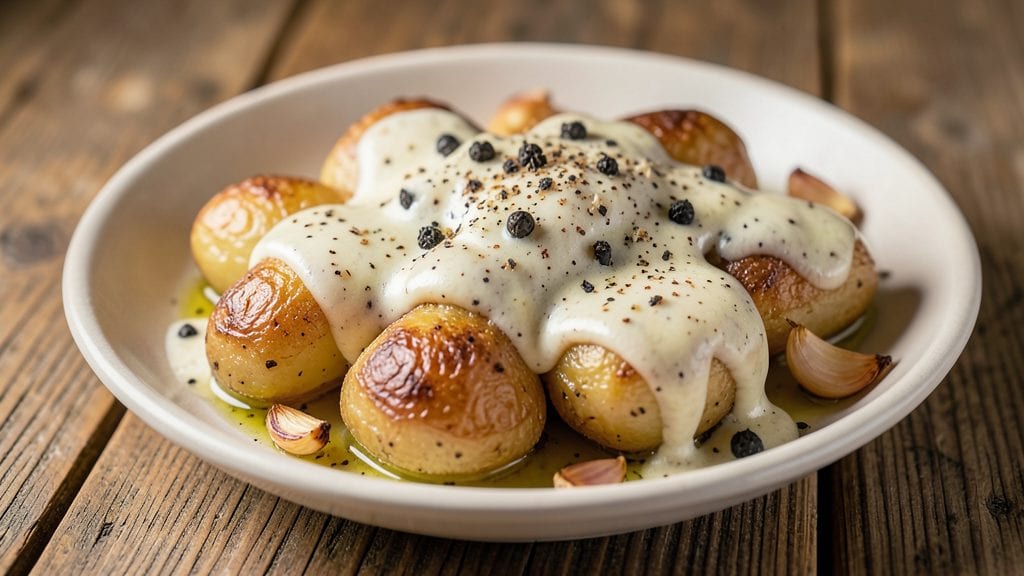
This fondant potatoes with cacio e pepe sauce recipe transforms humble spuds into a luxurious side dish that rivals pasta—creamy, peppery, and impossibly tender.
The secret lies in cooking potatoes until they reach that perfect al dente texture, then blending them into a velvety base for a sauce that clings to every bite. I developed this method after realizing how often restaurant-quality sides get overlooked at home.
The process starts with boiling or roasting potatoes until they're fork-tender but still hold shape—think of them as edible pasta. Then comes the cacio e pepe sauce, where Pecorino Romano and freshly cracked black pepper create a rich, umami-packed sauce that coats each potato perfectly.
This isn't just a side dish; it's a flavor experience that elevates any Italian meal.
What you'll end up with is a dish that's creamy yet light, with a peppery kick that lingers on your palate. The potatoes maintain their structure while absorbing the sauce, creating that satisfying al dente bite in every mouthful.
This recipe delivers restaurant-quality results without requiring fancy equipment or techniques.
Perfect for pairing with grilled meats, roasted vegetables, or even as a standalone main dish when served with crusty bread. The method is flexible enough to accommodate both traditional stovetop techniques and modern oven-roasting shortcuts, making it adaptable to any kitchen.
Let's get started on creating this luxurious side dish that'll have everyone asking for seconds.
Ingredients for fondant potatoes with cacio e pepe sauce
Transform humble potatoes into a luxurious, al dente pasta-like dish with these quality ingredients.
| Ingredient | Amount | Notes |
|---|---|---|
| Yukon Gold Potatoes 🥔 | 2 lb | Medium size, unpeeled for texture |
| Pecorino Romano Cheese 🧀 | 1 ½ cups | Freshly grated, fine texture |
| Freshly Cracked Black Peppercorns 🌶️ | 2 tbsp | Coarsely ground, not pre-ground |
| Extra-Virgin Olive Oil 🫒 | ¼ cup | High-quality, fruity variety |
| Garlic Cloves 🧄 | 4 cloves | Fresh, peeled, rough chopped |
| Diamond Crystal Kosher Salt 🧂 | 1 ½ tsp | For seasoning and cooking |
| Heavy Cream 🥛 | ½ cup | Full-fat for creaminess |
| Unsalted Butter 🧈 | 2 tbsp | Cold, cubed for sauce |
| Freshly Grated Nutmeg 🌿 | ¼ tsp | Fine, aromatic grade |
| Crusty Bread 🍞 | 4 slices | For serving, optional garnish |
| Fresh Parsley 🌿 | ¼ cup | Chopped, for garnish |
| Water 💧 | 4 cups | For boiling potatoes |
The Yukon Gold potatoes are non-negotiable here—their buttery texture and creamy interior create the perfect fondant base. Whole Foods or local farmers' markets offer the freshest varieties, but any medium-sized spuds work in a pinch. Look for firm potatoes with smooth skin and no sprouts. Pecorino Romano must be freshly grated from a block; pre-shredded lacks the sharp, salty punch this dish demands. Eataly or specialty Italian markets are ideal for sourcing authentic Pecorino, but a good deli counter will suffice. Freshly cracked black peppercorns are essential—pre-ground loses its aromatic intensity almost immediately after opening. Toast them lightly in a dry pan before grinding for even more depth of flavor.
No Pecorino Romano? Parmigiano-Reggiano works in a pinch, though it lacks the peppery bite. The heavy cream can be swapped for half-and-half if you prefer a lighter texture, but the dish will be less velvety. Fresh parsley is ideal for garnish, but dried parsley at one-third the amount will do if you're out. The water for boiling should be well-salted—aim for 1.5 tablespoons of kosher salt per gallon. If you're roasting instead of boiling, use 2 tablespoons of olive oil per pound of potatoes to prevent drying. For a vegan adaptation, replace the cheese with nutritional yeast and cashew cream, though the texture will differ significantly.
Potatoes can be boiled up to 3 days ahead and refrigerated, but they'll absorb more water—pat them thoroughly dry before blending. The sauce should be made fresh, as the cheese and cream separate over time. Store leftovers in an airtight container for up to 3 days, though the texture becomes slightly gummy. For best results, reheat gently in a saucepan with a splash of water or milk. The crusty bread should be stored in a paper bag at room temperature for up to 5 days to maintain crispness. Freeze the sauce component (without potatoes) for up to 3 months—thaw and blend with fresh potatoes when ready to serve.
Why You'll Love This Recipe
- One-Pot Magic: I swear by this—just potatoes, olive oil, and garlic roasted until tender, then tossed with pepper and cheese. No extra pans, no fuss, and the sauce clings like it’s meant to be there.
- Peppery Cheese Hug: That moment when the grated Pecorino melts into a creamy, salty blanket over fluffy potatoes? It’s the kind of flavor that sticks with you. The black pepper cracks add this sharp, bright kick that cuts through the richness—like a perfect contrast.
- Weeknight to Dinner Party: Between us, this feeds a crowd without looking like you slaved over it. Serve it alongside grilled steak or even a simple salad—it’s the star, but it won’t steal the show if you’re feeding picky eaters (yes, even my teenager clears her plate).
- Leftovers That Don’t Suck: Honestly, I make extra because reheating these is effortless. Toss them in a skillet with a splash of olive oil, and they’re crispy again in minutes. Plus, the cheese stretches the budget—just a handful turns simple potatoes into something special.
Step-by-step instructions for fondant potatoes with cacio e pepe
Master this technique for restaurant-quality potatoes with a velvety cheese sauce.
Parboil the Potatoes for Structure
Begin by placing the 2 lb Yukon Gold Potatoes in a large pot and covering them completely with the 4 cups water. Add 1 teaspoon of the 1.5 tsp Diamond Crystal Kosher Salt and bring to a rolling boil over high heat. Once boiling vigorously, reduce heat to medium-high and cook for exactly 8 minutes.
This initial parboil creates a firm interior while maintaining a tender exterior—critical for achieving that al dente pasta-like texture. The potatoes should be slightly underdone at this stage; they'll finish cooking in the oven. Drain immediately and return them to the pot.
Create the Fondant Texture with Olive Oil and Nutmeg
Return the drained potatoes to the pot and add the 0.25 cup Extra-Virgin Olive Oil, the 4 cloves Garlic Cloves (roughly chopped), and the remaining 0.5 tsp Diamond Crystal Kosher Salt. Toss gently to coat the potatoes evenly with the oil. Add the 0.25 tsp Freshly Grated Nutmeg and mix once more.
The nutmeg and olive oil work together to create that signature fondant texture—soft on the inside with a slightly crisp exterior. Here's the thing—don't overmix at this stage. You want the garlic to adhere to the potatoes, not break down into a paste. Cover the pot and let it sit at room temperature for 10 minutes while you preheat your oven to 425°F.
Roast to Perfect Fondant Doneness
Transfer the potatoes to a rimmed baking sheet in a single layer, ensuring they're not crowded. Roast in the preheated oven for 25-30 minutes, stirring once halfway through the cooking time. You're looking for potatoes that are tender when pierced with a fork but still hold their shape—they should have a slight resistance, like al dente pasta.
Real talk: Your oven might run hot, so start checking at the 20-minute mark. The potatoes should be golden in spots but still maintain their shape. If they're browning too quickly, tent loosely with foil. The goal is that perfect balance between tender interior and slightly crisp exterior—this is what makes fondant potatoes special.
Prepare the Cacio E Pepe Sauce
While the potatoes roast, melt the 2 tbsp Unsalted Butter in a separate skillet over medium heat. Add the 1.5 cups Pecorino Romano Cheese and stir constantly until it forms a smooth, creamy sauce—this should take about 3-4 minutes. Remove from heat and stir in the 0.5 cup Heavy Cream and the 2 tbsp Freshly Cracked Black Peppercorns.
This sauce is all about technique. Don't rush the melting process—if you cook it too quickly, the cheese will seize and become grainy. The key is low, steady heat. The sauce should be thick enough to coat the back of a spoon but still flow smoothly. Taste and adjust seasoning with additional Diamond Crystal Kosher Salt if needed.
Combine and Serve Immediately
Transfer the roasted potatoes to a serving platter and immediately pour the cacio e pepe sauce over them. Toss gently to coat each potato evenly with the cheese sauce. Garnish with the 0.25 cup Fresh Parsley and serve with the 4 slices Crusty Bread on the side for dipping.
Here's the moment that matters: The potatoes should be hot when served, with that perfect fondant texture—tender inside with a slight resistance, and coated in a velvety cheese sauce that clings beautifully. Each bite should deliver the creamy richness of the pecorino balanced by the peppery heat. Don't let them sit too long after combining, or the sauce may thicken and lose its silky texture.
Pro Tips For Making Fondant Potatoes With Cacio E Pepe Sauce
- Preheat That Pan: I learned this the hard way—cold oil and potatoes is a recipe for soggy, uneven cooking. Get your heavy pan screaming hot over medium-high heat before adding the oil. The potatoes should sizzle immediately; if they hesitate, your heat’s too low.
- Grate the Pecorino Fresh: Pre-shredded cheese is convenient, but it’s also coated in anti-caking agents that dull the sauce. Use a microplane or fine grater right before tossing it with the potatoes—it melts faster and clings better, giving you that velvety, peppery coating.
- Don’t Rush the Fondant: The magic happens when the potatoes are tender and still hold their shape. Test with a fork at 15 minutes—if it slides in like butter but holds together, you’re golden. Overcooking turns them mushy, and no one’s coming back for seconds then.
- Toast the Garlic Low: Sounds weird, but it works: once the potatoes are in the pan, reduce heat to low for the garlic. It infuses the oil without burning, adding depth without bitterness. High heat turns it acrid fast—trust me, I’ve ruined batches.
Wine and beer pairings for this recipe
Italian White Wine
A crisp Vermentino from Sardinia is my go-to pairing—its bright acidity and citrus notes cut through the richness of the pecorino while complementing the peppery sauce.
Look for a 2022 vintage with a 12-13% ABV to balance the dish's creaminess without overpowering it. The mineral finish enhances the potatoes' earthy sweetness. 🍷
Medium-Bodied Red
For those who prefer red, a Chianti Classico with its Sangiovese base works surprisingly well. Opt for a 2019 vintage with 13-14% ABV—the wine's tart acidity and cherry notes stand up to the peppery sauce while the tannins provide structure.
Avoid heavy, oaked wines that would clash with the delicate fondant texture.
Light Lager Pairing
A Peroni or Birra del Borgo lager offers a refreshing contrast to the rich dish. The 4.5-5% ABV keeps the palate clean, while the subtle malt sweetness balances the peppery heat. Serve slightly chilled (45-50°F) to let the wine's effervescence refresh between bites. 🍺
After-Dinner Options
For an elegant finish, a Vin Santo dessert wine adds depth. The nutty, honeyed profile of a 2017 vintage complements the pecorino's umami notes. Serve at room temperature with a small glass alongside the main course—its sweetness lingers beautifully with the peppery sauce.
Non-Alcoholic Choice
For a sophisticated non-alcoholic option, try a sparkling blood orange soda (like San Pellegrino Aranciata Rossa). The citrus acidity mirrors the wine pairings while the bubbles cleanse the palate between bites. Add a splash of orange liqueur for an adult-friendly twist.
Nutrition facts
Frequently asked questions
What makes these potatoes "fondant" instead of mashed?
The key difference is texture—fondant potatoes maintain their shape while achieving a creamy, al dente interior. We parboil them briefly (8 minutes), then roast until tender with resistance, creating that signature pasta-like bite. Traditional mashed potatoes lose all structure, while these hold together beautifully when tossed with sauce.
Can I use regular potatoes instead of Yukon Gold?
Yes, but Yukon Golds are ideal for their buttery texture and creamy interior. Russets will work if peeled and cooked slightly longer (32-35 minutes roasting), but they'll be drier. Red potatoes hold shape better but lack the richness—stick with Yukon Golds for authentic fondant texture.
Why does the sauce sometimes separate when reheating?
The sauce separates because cheese and cream have different densities. Always reheat gently over low heat, stirring constantly, and add a splash of water or milk to help re-emulsify. For best results, make the sauce fresh before serving—it should be silky and coat the back of a spoon immediately.
What's the best way to make this vegetarian?
Replace the Pecorino Romano with nutritional yeast (½ cup) and cashew cream (½ cup), then add 1 tbsp lemon juice for acidity. The texture will be lighter, but the peppery flavor remains. For extra richness, blend in 2 tbsp vegan butter with the sauce.
How do I know when the potatoes are perfectly done?
Pierce with a fork—they should be tender with slight resistance (like al dente pasta), not mushy. The edges should be golden, but the center should still hold shape. If they're browning too quickly, tent with foil and check at 20 minutes—undercooked potatoes will finish when tossed with hot sauce.