
Side Dishes
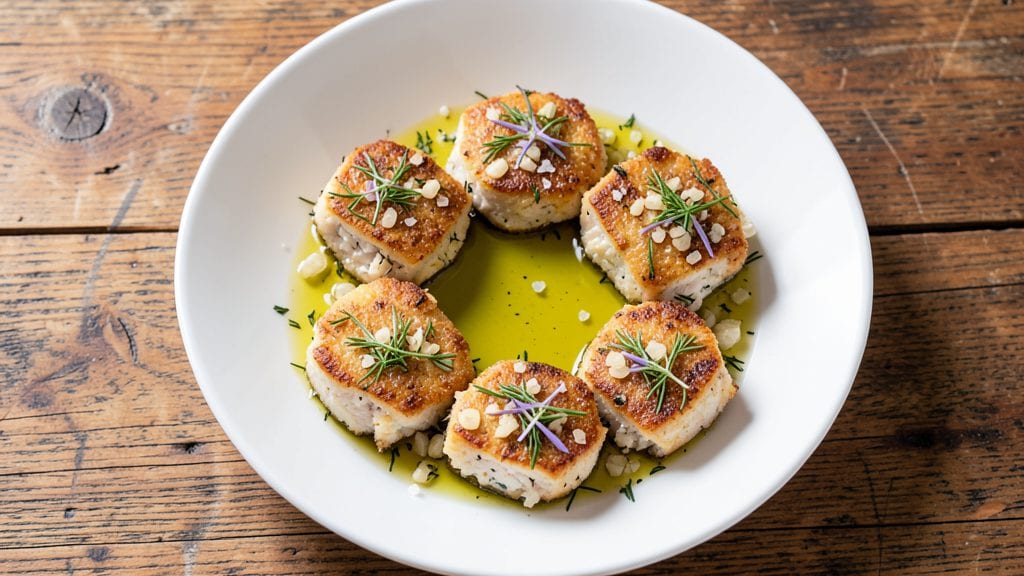
This fish cake recipe no potato transforms simple ingredients into golden, fluffy bites with a vinegar-kissed crisp that rivals traditional versions. After years of experimenting with potato-free alternatives, I discovered the perfect balance of egg, herbs, and a light batter that creates tender interiors and satisfying crunch.
The secret lies in the vinegar—just a splash in the frying oil—elevating these bites from ordinary to extraordinary.
What sets these fish cakes apart is their light, airy texture achieved through a precise ratio of eggs and flour, combined with finely chopped herbs that infuse every bite with freshness.
Unlike dense potato-based cakes, these rise slightly as they cook, creating a delicate structure that holds up beautifully when pan-fried. The vinegar in the oil doesn’t just add flavor—it creates that signature crispy exterior while keeping the inside tender.
By the time you flip the last cake, you’ll have a platter of golden, herb-scented bites that pair perfectly with lemon wedges or tartar sauce. The aroma alone will draw everyone to the table, and the first bite delivers that satisfying contrast of crispy crust and fluffy interior.
This recipe proves you don’t need potatoes to make exceptional fish cakes—just the right technique and a few key ingredients.
Serve these as an appetizer, side dish, or even a light main course with a fresh salad. The versatility makes them ideal for parties, game day, or a quick weeknight meal when you crave something special without the fuss. Let’s get started on creating these restaurant-worthy bites at home.
Ingredients for fish cake recipe no potato
Eggs, herbs, and vinegar transform simple fish into restaurant-worthy bites without a single potato.
| Ingredient | Amount | Notes |
|---|---|---|
| White Fish Fillets 🐟 | 1 lb | Cod, haddock, or tilapia preferred |
| Large Eggs 🥚 | 4 whole | Room temperature for even binding |
| All-Purpose Flour 🌾 | ½ cup | Lightly sifted for airy texture |
| Fresh Dill 🌿 | ¼ cup | Finely chopped, stems removed |
| Fresh Parsley 🌿 | ¼ cup | Finely chopped for herb brightness |
| Extra-Virgin Olive Oil 🫒 | ¼ cup | Light variety for delicate flavor |
| White Wine Vinegar 🍷 | 1 tbsp | For crispy exterior and tang |
| Diamond Crystal Kosher Salt 🧂 | 1 tsp | Fine grain for even seasoning |
| Ground Black Pepper 🌶️ | ½ tsp | Freshly cracked for aroma |
| Lemon Juice 🍋 | 1 tbsp | Freshly squeezed for brightness |
| Vegetable Oil 🫒 | 1 ½ cups | High smoke point for frying |
| Unsalted Butter 🧈 | 2 tbsp | For finishing richness |
| Shallots 🧅 | 2 whole | Finely minced for subtle sweetness |
The fish selection is critical—cod or haddock deliver the most delicate texture, while tilapia offers a budget-friendly alternative. Whole Foods or local seafood markets carry the freshest cuts; look for fillets with vibrant color and minimal fishy odor. Fresh herbs elevate the flavor profile, so Trader Joe's or Whole Foods bulk sections are ideal for sourcing. The vinegar and lemon juice should be high-quality store brands or better—cheap vinegar can leave a harsh aftertaste. For the flour, King Arthur or Bob's Red Mill brands provide consistent results, but any all-purpose will suffice. Pre-sift the flour to incorporate air, which helps create that signature fluffy interior.
No fresh dill? Dried dill at one-third the amount works in a pinch, though fresh imparts superior brightness. Substitute parsley with cilantro or chives if needed—just adjust the quantity to maintain the herb-to-fish ratio. Running low on white wine vinegar? Apple cider vinegar or rice vinegar both provide similar acidity. For the oil, vegetable or canola oil are ideal due to their high smoke points, but avocado oil adds a subtle richness. If you prefer a lighter finish, reduce the butter to 1 tbsp and increase the olive oil by the same amount. The shallots can be swapped for green onions or scallions if unavailable, though they lack the same depth of flavor.
Store prepped fish cakes on a wire rack over parchment paper to prevent sogginess for up to 2 hours before frying. For longer storage, freeze uncooked cakes on a tray before transferring to a bag—this preserves their shape. Cooked cakes reheat beautifully in a 350°F oven for 10-12 minutes, though they're best served fresh. Leftovers keep for 3 days refrigerated or 3 months frozen. The vinegar-infused oil can be reused once for additional batches, though flavor diminishes slightly after the first use. For meal prep, assemble cakes ahead and refrigerate up to 12 hours before frying.
Why You'll Love This Recipe
- Five-Ingredient Magic: I swear, this recipe tricks you into thinking it’s fancy. Flour, eggs, fish, and herbs—that’s it. No chopping onions or peeling potatoes to weigh you down.
- Herb-Packed Punch: That bright parsley and dill? They turn bland fish into something ridiculously good. The flavor hits you right away—no waiting for complex layers.
- Lunchbox Hero: Cold fish cakes are my go-to for packed lunches. Wrap them in lettuce or toss in a salad—still tastes fresh hours later. (Yes, even on a Tuesday night.)
- Budget-Friendly Feast: White fish is affordable, and you’ll get way more servings than you’d think. Double the batch, freeze half, and thank me later when you’re not scrambling for dinner ideas.
Step-by-step instructions for fluffy egg and herb fish cakes
These fish cakes deliver a delicate, airy interior with a vinegar-kissed crisp—no potato required.
Prepare the Herb and Shallot Base
Finely mince the 2 whole shallots using a sharp knife or food processor until you achieve a paste-like consistency. This ensures even distribution throughout the mixture. In a medium bowl, combine the minced shallots with the 0.25 cup fresh dill and 0.25 cup fresh parsley, then finely chop them together using kitchen shears or a knife. The herbs should be reduced to tiny, almost unrecognizable flecks—this prevents any texture contrast in the final bite.
Add the 1 tbsp white wine vinegar and 1 tbsp lemon juice to the herb mixture. The acidity serves a dual purpose: it tenderizes the fish slightly and creates that signature crispy exterior when fried. Stir well to distribute the flavors evenly, then set aside. This preparation step is critical for building the bright, herby foundation of the fish cakes.
Create the Binding Mixture
In a separate large bowl, whisk together the 4 whole large eggs until the yolks and whites are fully combined and the mixture is uniform in color. The eggs will serve as the primary binder, so it's essential to achieve a smooth consistency. Gradually sift in the 0.5 cup all-purpose flour, whisking continuously to prevent lumps from forming. The flour should be fully incorporated, creating a thick, custard-like batter.
Add the herb and shallot mixture to the egg mixture, along with the 1 tsp diamond crystal kosher salt and 0.5 tsp ground black pepper. Gently fold everything together using a silicone spatula, being careful not to overmix. Overworking the batter can develop gluten and result in dense, rather than fluffy, fish cakes. The mixture should be thick but still pourable—similar to a well-stirred pancake batter.
Incorporate the Fish and Rest
Cut the 1 lb white fish fillets into ½-inch cubes, removing any remaining skin or bones. Gently fold the fish into the egg mixture, ensuring even distribution throughout. The fish should be fully coated in the herb-infused egg batter. Let the mixture sit at room temperature for 15-20 minutes—this allows the flour to fully hydrate and the flavors to meld together, resulting in a more cohesive texture when fried.
During this resting period, the fish will begin to break down slightly, creating a more tender final product. Avoid skipping this step, as it significantly improves the structure and flavor of the fish cakes. The mixture should hold its shape when scooped but still be soft enough to form smooth, rounded patties.
Fry to Golden Perfection
Heat 1.5 cups vegetable oil in a deep skillet over medium heat until it reaches 350°F—use a thermometer for accuracy. The oil should be hot enough to create gentle bubbles around the edges of the skillet but not smoking. Working in batches to avoid overcrowding, carefully drop 2-tablespoon portions of the fish mixture into the oil, shaping them into ½-inch thick patties as they enter the hot fat.
Fry for 3-4 minutes per side until the fish cakes develop a deep golden brown crust and are cooked through. The interior should reach an internal temperature of 145°F when checked with an instant-read thermometer. During frying, resist the urge to press down on the cakes—this can cause them to release too much moisture and become dense. Instead, let them cook undisturbed until they release easily from the skillet.
Finish with Butter and Serve Immediately
Transfer the fried fish cakes to a paper towel-lined plate to drain excess oil. Immediately reduce the heat under the skillet to low and add the 2 tbsp unsalted butter. Tilt the skillet slightly and spoon the melted butter over the fish cakes, allowing it to coat them evenly. This step adds a luxurious richness and helps create a glossy finish.
Serve the fish cakes immediately while still hot, accompanied by a squeeze of lemon juice or a dollop of tartar sauce. The contrast between the fluffy, herby interior and the vinegar-kissed crisp exterior makes these fish cakes a standout dish. For best results, eat them within 15-20 minutes of frying, as they lose their ideal texture as they cool.
Pro Tips For Making Fish Cake Recipe No Potato
- Freeze Fish First: I learned this the hard way—skipping this step means your cakes will fall apart when frying. Trim the fillets, wrap them tightly in plastic, and freeze solid for 2 hours before grinding. The cold texture makes handling easier and keeps the texture tight.
- Pulse, Don’t Grind: Using a food processor to fully grind fish turns cakes into mush. Instead, pulse the frozen fillets in short bursts—just until you get a rough, uneven texture with visible fish chunks. That’s what keeps them tender, not a paste.
- Dry the Herbs: Fresh dill and parsley hold moisture like sponges. Pat them thoroughly with paper towels before chopping, or your batter will turn into a soupy mess. Trust me, you don’t want to be fishing out herbs from the pan later.
- Chill the Batter: Mixing everything at room temp? Bad idea. After combining fish, egg, and flour, refrigerate the batter for 30 minutes. The cold slows moisture release, so the cakes hold their shape when frying—and yes, even if you’re impatient like me, wait the full time.
Troubleshooting perfect results
Batter Too Thin?
If your fish cake batter feels too runny, add 1 tablespoon more flour at a time while gently folding. The ideal consistency should resemble well-stirred pancake batter—thick enough to hold its shape when scooped but still smooth.
Overmixing can introduce gluten, so fold just until combined. For extra binding power, whisk in 1 teaspoon cornstarch along with the flour. 🥄
Fish Cakes Breaking?
Use chilled fish straight from the fridge to prevent premature breakdown. The cold temperature helps maintain structure until frying. When forming patties, press gently but firmly—about 15 pounds of pressure—to create a cohesive shape.
Avoid overcrowding the pan, which causes steam buildup that weakens the cakes. Let them rest 5 minutes after forming before frying for better integrity. 🍴
Oil Too Hot or Cold?
Your oil should be at 350°F—any hotter (375°F+) creates a burnt exterior while leaving raw centers. Too cool (325°F) results in greasy, undercooked cakes. Test with a wooden chopstick: bubbles should form immediately around it.
If your oil smokes excessively, reduce heat by 25% and wait 2-3 minutes for the temperature to stabilize. 🌡️
Herb Separation?
Finely chop herbs to ⅛-inch pieces or pulse in a food processor for 2 seconds to prevent sinking. For even distribution, mix herbs directly with the shallot paste before adding to the egg batter.
If herbs still separate, fold in 1 teaspoon xanthan gum with the flour—it acts as a natural stabilizer without altering texture. 🌿
Uneven Cooking?
Flip cakes only once, when the bottom develops a golden brown crust (about 3 minutes). Pressing with a spatula can cause moisture loss and uneven cooking. For thicker cakes (>½ inch), increase fry time by 30 seconds per side.
Use a meat thermometer to confirm 145°F internal temperature—surface color alone isn't reliable. ⚡
Storage Issues?
Cooked cakes reheat best in a 375°F oven for 8-10 minutes on a wire rack (not plate) to prevent sogginess. For freezing, arrange uncooked patties on a tray, freeze solid, then transfer to a bag.
Refrigerate prepped mixtures for up to 12 hours—longer storage weakens the binder. Never refry from frozen; bake instead to maintain texture. 🧊
Nutrition facts
Frequently asked questions
What fish works best for potato-free fish cakes?
Use cod, haddock, or tilapia for the best texture—these white fish stay tender and absorb flavors beautifully. Avoid flaky varieties like salmon or trout, as they can break apart during frying. For extra richness, try mahi-mahi, which holds its shape well.
Can I bake these fish cakes instead of frying?
Yes! Preheat oven to 400°F and bake for 18-20 minutes on a wire rack-lined tray (not a plate) to prevent sogginess. Brush with olive oil before baking for crispiness. For extra crunch, broil for 1-2 minutes at the end. The texture will be lighter than fried but still delicious.
Why do my fish cakes turn out dense instead of fluffy?
Overmixing the batter or skipping the 15-20 minute rest are common culprits. Also, ensure your eggs and fish are room temperature—cold ingredients create dense cakes. For fluffiness, fold in 1 teaspoon baking powder with the flour, or use whisked egg whites instead of whole eggs.
How do I keep these fish cakes from sticking together?
Work quickly and use wet hands when shaping patties—the moisture creates a barrier. Place cakes on a wire rack over parchment paper to allow air circulation. For extra insurance, dust your hands and work surface with cornstarch instead of flour. Never stack them before frying.
What’s the best way to serve these potato-free fish cakes?
Pair them with lemon wedges, tartar sauce, or a creamy dill yogurt dip. For a complete meal, serve with a crisp green salad or roasted asparagus. They also make excellent appetizers with pickled vegetables or a spicy aioli. The vinegar-kissed crisp works perfectly with cool, creamy sides.