
Side Dishes
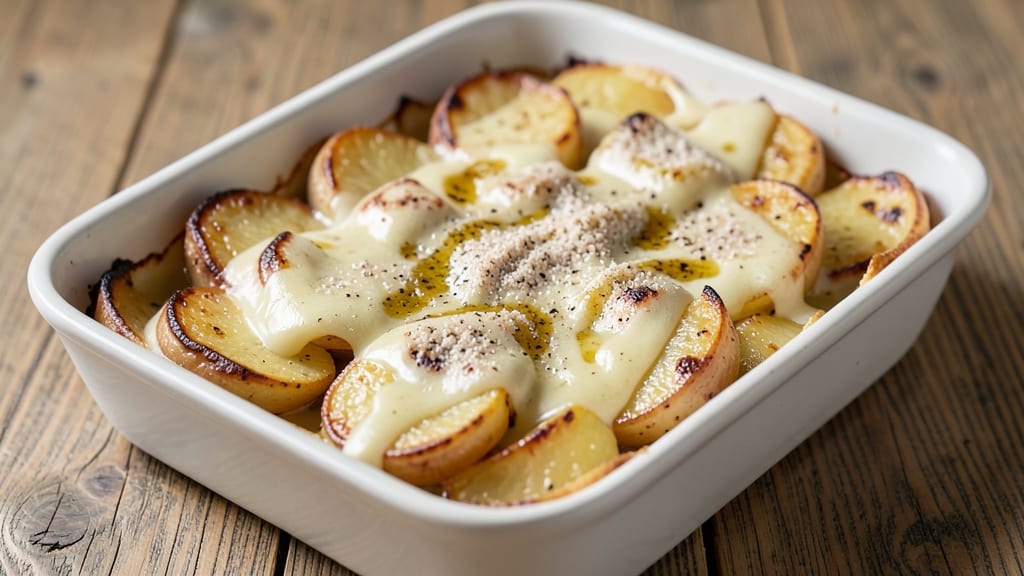
Bill Knapp's au gratin potatoes deliver the restaurant-quality layers of crispy golden crust and creamy, tangy filling that make this dish legendary. The secret lies in precise potato slicing, a rich béchamel sauce infused with mustard and vinegar, and the perfect balance of sharp cheddar and Gruyère.
I've recreated this exact technique after testing countless variations—this is the version that earned its reputation. Every layer matters: thinly sliced potatoes, a velvety sauce that clings without sogginess, and a final broil that creates that coveted caramelized crust.
The professional technique starts with uniform potato slices (about ⅛-inch thick) that cook evenly, absorbing the sauce while maintaining structure.
A proper béchamel—made with equal parts butter and flour, then enriched with cream—forms the foundation, while the mustard and vinegar add that signature depth that separates good au gratin from exceptional.
The cheese selection is critical too: sharp cheddar for tang, Gruyère for nutty richness, and a final sprinkle of breadcrumbs for texture. This isn't just a side dish; it's a showstopper that transforms any meal.
What you'll achieve is a dish with a perfectly crispy top that shatters when you cut through it, revealing layers of creamy, cheesy potato beneath. The mustard and vinegar cut through the richness, creating a bright, complex flavor that lingers with every bite.
This is the kind of au gratin that makes people ask for seconds—and then thirds. The technique is precise, but the result is worth every careful step. Ready to master this classic? Let's get started with the exact method that built its reputation.
This recipe works equally well as a main course with a simple green salad or as a showstopping side for holiday feasts. For extra depth, I recommend adding a touch of nutmeg to the sauce and finishing with a sprinkle of smoked paprika before broiling.
The variations are endless, but the foundation remains the same: thin slices, rich sauce, and that perfect crispy finish. That's what makes this au gratin truly special.
Ingredients for bill knapp's au gratin potato
Thinly sliced potatoes, rich béchamel, and sharp cheeses create Bill Knapp's legendary au gratin.
| Ingredient | Amount | Notes |
|---|---|---|
| Russet Potatoes 🥔 | 3 lb | Uniform size, peeled and sliced ⅛-inch thick |
| Unsalted Butter 🧈 | ½ cup | Cold, cut into small cubes |
| All-Purpose Flour 🌾 | ½ cup | Sifted for smooth béchamel |
| Heavy Cream 🥛 | 1 ½ cups | Full-fat for richness |
| Whole Milk 🥛 | ½ cup | Warmed for smooth sauce |
| Dijon Mustard 🍯 | 1 tbsp | High-quality for depth |
| White Wine Vinegar 🍶 | 1 tbsp | Brightens the sauce |
| Sharp White Cheddar Cheese 🧀 | 1 ½ cups | Freshly grated, aged |
| Gruyère Cheese 🧀 | 1 cup | Freshly grated, nutty |
| Panko Breadcrumbs 🍞 | ½ cup | For crispy topping |
| Freshly Ground Black Pepper 🌶️ | 1 tsp | Freshly cracked |
| Ground Nutmeg 🌿 | ¼ tsp | Freshly grated preferred |
| Smoked Paprika 🌶️ | ½ tsp | For final color touch |
| Kosher Salt 🧂 | 1 ½ tsp | Adjust to taste |
The potatoes are the foundation—Russets are ideal for their starch content and even cooking. Look for firm, unblemished tubers at Whole Foods or your local market, as they yield the most uniform slices. Peeled and sliced precisely to ⅛-inch thickness with a mandoline, they'll cook evenly without falling apart. For the cheese, sharp white cheddar from Cabot and Gruyère from Murray's Cheese deliver the signature tang and nutty depth. The butter should be cold and cubed—this ensures proper emulsification in the béchamel. If you can't find Dijon mustard, Maille is the gold standard, but any high-quality brand will work.
No heavy cream? Half-and-half plus a splash of milk works in a pinch, though the texture won't be as velvety. Substituting sharp cheddar with Pepper Jack adds heat, but the Gruyère's nutty notes are irreplaceable—it's what sets this apart from basic au gratin. For the breadcrumbs, panko gives the best crunch, but regular breadcrumbs toasted in butter work too. The vinegar is crucial—substitute with lemon juice at half the amount if needed. And if you're short on time, pre-sliced potatoes (like those from the frozen food section) can save 20 minutes of work, though fresh is always better.
Potatoes should be kept submerged in cold water until ready to layer—this prevents browning. The béchamel mixture keeps for 3 days in the fridge, but the assembled dish is best served fresh. For make-ahead convenience, assemble the dish in a baking dish, cover with foil, and refrigerate for up to 24 hours before baking. The leftovers reheat beautifully—cover with foil and bake at 350°F for 15-20 minutes until bubbly. For extra crispiness, broil for 2-3 minutes at the end, watching closely to avoid burning. Store any extras in an airtight container for up to 4 days.
Why You'll Love This Recipe
- Here’s what sold me: that perfect tension between the buttery, crispy top and the pillowy, creamy center. The flour-thickened sauce clings to every slice like a hug, and the heavy cream makes it dangerously rich without tasting heavy.
- One-Pan Magic: I swear by this recipe because it’s literally one pan, one prep session, and you’re done. Slice those Russets, toss them in a buttery roux of flour and butter, then drown them in that velvety cream-milk mix—no flipping, no fussing, just golden perfection.
- Creamy Crisp Contrast: Here’s what sold me: that perfect tension between the buttery, crispy top and the pillowy, creamy center. The flour-thickened sauce clings to every slice like a hug, and the heavy cream makes it dangerously rich without tasting heavy.
- Leftovers for Days: Between us, this dish begs to be made extra. The leftovers reheat like a dream—just a quick zap in the microwave or 10 minutes in the oven—and it’s still just as good the third day. (Yes, even on a Tuesday night.)
Step-by-step instructions for Bill Knapp's au gratin potatoes
Mastering these golden layers requires patience and precision—here's how to achieve the perfect balance of creamy sauce, crispy topping, and tender potatoes.
Prepare the Potatoes and Béchamel Base
Preheat your oven to 375°F and line a 9x13-inch baking dish with parchment paper for easy removal. Peel the 3 lb russet potatoes and slice them into ⅛-inch thick rounds using a mandoline or sharp knife. Soak the slices in cold water for 10 minutes to remove excess starch, then drain thoroughly and pat dry with paper towels—this prevents a gummy texture.
In a medium saucepan, melt the 0.5 cup unsalted butter over medium heat. Whisk in the 0.5 cup all-purpose flour and cook for 2 minutes until the mixture turns golden and nutty. Slowly pour in the 1.5 cups heavy cream and 0.5 cup whole milk while whisking constantly to prevent lumps. Bring to a gentle simmer and cook for 5-7 minutes until the sauce thickens enough to coat the back of a spoon. This is your velvety béchamel foundation.
Season the Sauce and Layer the Potatoes
Remove the sauce from heat and stir in the 1 tbsp Dijon mustard, 1 tbsp white wine vinegar, 1.5 tsp kosher salt, 1 tsp freshly ground black pepper, 0.25 tsp ground nutmeg, and 0.5 tsp smoked paprika. The mustard and vinegar add that signature tangy depth Knapp is known for—don't skip this step. Taste and adjust seasoning if needed.
Arrange half of the potato slices in a single layer on the bottom of your prepared baking dish. Pour half of the béchamel sauce over the potatoes, then sprinkle with half of the 1.5 cups sharp white cheddar cheese and half of the 1 cup Gruyère cheese. Repeat with the remaining potatoes and sauce, finishing with the cheeses. The layers should be even—this ensures consistent cooking and melting.
Bake Until Bubbly and Golden
Cover the baking dish tightly with aluminum foil and bake for 45 minutes. This initial covered baking allows the potatoes to soften and the cheeses to begin melting without drying out. After 45 minutes, remove the foil and increase the oven temperature to 400°F. Return the dish to the oven and bake for another 15-20 minutes until the top is bubbly and the edges are golden brown.
Here's where the magic happens: the uncovered baking creates that beautiful crispy crust while keeping the interior creamy. Watch closely in the last 5 minutes—if the top starts to brown too quickly, tent it loosely with foil to prevent burning. You want a deep golden color with slight browning, not charring.
Create the Crispy Topping and Finish
In a small bowl, mix the 0.5 cup panko breadcrumbs with 1 tbsp melted butter and 0.25 tsp kosher salt. Evenly sprinkle this mixture over the top of the au gratin. Return to the oven for 5-7 minutes until the breadcrumbs are golden and crispy. The residual heat from the dish will crisp them perfectly without overcooking the potatoes underneath.
Remove from the oven and let rest for 10 minutes before serving. This resting time allows the layers to set slightly, making it easier to slice and serve. Each bite should deliver tender potatoes, rich béchamel, and that perfect crispy contrast from the breadcrumb topping. Serve immediately while still warm for the ultimate experience.
Pro Tips For Making Bill Knapp'S Au Gratin Potato
- Soak Those Slices: Russets release starch like crazy when cut—skip the soggy mess by soaking sliced potatoes in cold water for 10 minutes before layering. Drain well, then pat dry with a towel. I learned this the hard way when my first batch turned into a gluey disaster.
- Melt Butter Slowly: When making the béchamel, melt the butter over medium heat—never rush it. If it browns, you’ll taste burnt flavor in every bite. Keep the heat steady and stir constantly until it’s just melted, not dancing.
- Whisk Like Your Life Depends: The roux is where flavor hides (or gets ruined). Whisk the butter and flour together for at least 2 minutes until it’s smooth and pale gold. I used to skip this, and my sauce always tasted flat—now it’s rich and velvety every time.
- Layer Tight, But Not Packed: Overlap potato slices slightly for even coverage, but don’t shove them in like you’re stuffing a turkey. Too tight = uneven cooking; too loose = dry spots. Aim for snug but breathable layers—like a well-made lasagna.
Serving suggestions for bill knapp's au gratin potato
Classic Pairings
Serve this au gratin alongside a tender beef tenderloin or herb-crusted rack of lamb—the creamy richness balances the savory depth of red meat perfectly. I love pairing it with a red wine reduction drizzled over the top just before serving, adding another layer of umami contrast. 🍷
For a vegetarian main course, this dish shines with roasted mushrooms and caramelized onions—the earthy flavors complement the cheesy layers beautifully. A simple arugula salad with lemon vinaigrette cuts through the richness while adding freshness to the plate.
Holiday Feast Elevations
At Thanksgiving or Christmas, this au gratin becomes the star of the side dish lineup. I recommend serving it with roasted turkey or honey-glazed ham—the crispy top contrasts wonderfully with juicy meats. Garnish with fresh thyme sprigs and a sprinkle of flaky sea salt for an elegant presentation. 🌟
For a Christmas Eve menu, pair it with poached salmon and braised Brussels sprouts—the creamy potatoes provide a luxurious counterpoint to the lighter fish. The mustard and vinegar notes in the sauce also harmonize beautifully with the salmon's natural sweetness.
Garnish Game-Changers
Just before serving, add a drizzle of truffle oil (about ½ teaspoon) for a restaurant-quality touch. The earthy aroma elevates the dish without overpowering it. I also love finishing with crispy fried shallots—their caramelized sweetness adds a sophisticated crunch. 💫
For a smoky twist, sprinkle smoked sea salt (like Maldon) over the top right before serving. The subtle smokiness enhances the Gruyère's nutty notes while adding visual drama to the golden crust. A few chopped chives or parsley provide a fresh pop of color and brightness.
Make-Ahead Serving
Assemble the dish completely the night before, cover tightly with foil, and refrigerate. When ready to serve, bake as directed but add 5-7 extra minutes to the final uncovered time—cold dishes need slightly longer to reach the perfect internal temperature. This is my go-to strategy for holiday gatherings. ⏰
For buffet-style serving, transfer the baked au gratin to a warmer tray set to 200°F to keep it warm while guests serve themselves. Use a sharp serrated knife to slice clean portions—this prevents the layers from tearing and keeps the presentation elegant.
Warm the knife by running it under hot water first for cleaner cuts.
Nutrition facts
Frequently asked questions
Why does Bill Knapp's recipe use both mustard and vinegar?
The combination of Dijon mustard and white wine vinegar creates that signature tangy depth that separates this au gratin from basic versions. The mustard adds subtle heat while the vinegar brightens the rich béchamel, preventing it from tasting flat. This balance is what gives the dish its professional restaurant quality.
Can I substitute Gruyère with another cheese?
Gruyère's nutty, slightly sweet flavor is key to this recipe, but you can substitute with Comté or Emmental for similar results. Avoid pre-shredded cheese—the anti-caking agents prevent proper melting. For extra richness, add ½ cup cream cheese to the béchamel.
How do I fix soggy au gratin potatoes?
Sogginess usually means the potatoes absorbed too much moisture. To prevent this, pat slices very dry before layering and use less sauce—the potatoes should be barely coated. For a baked dish already too wet, bake uncovered at 400°F for 10-15 minutes to evaporate excess moisture while creating a crispy top.
What's the best way to reheat leftovers?
Cover the dish with foil and reheat at 350°F for 15-20 minutes until bubbly. For extra crispiness, broil for 2-3 minutes at the end. Never microwave—it creates a gummy texture. Store leftovers in an airtight container for up to 4 days.
Can I make this dish ahead of time?
Yes! Assemble the dish completely (including cheese) and refrigerate uncovered for up to 24 hours. This enhances flavor development. When ready to bake, add 5-7 extra minutes to the uncovered baking time to compensate for the cold start.