Side Dishes
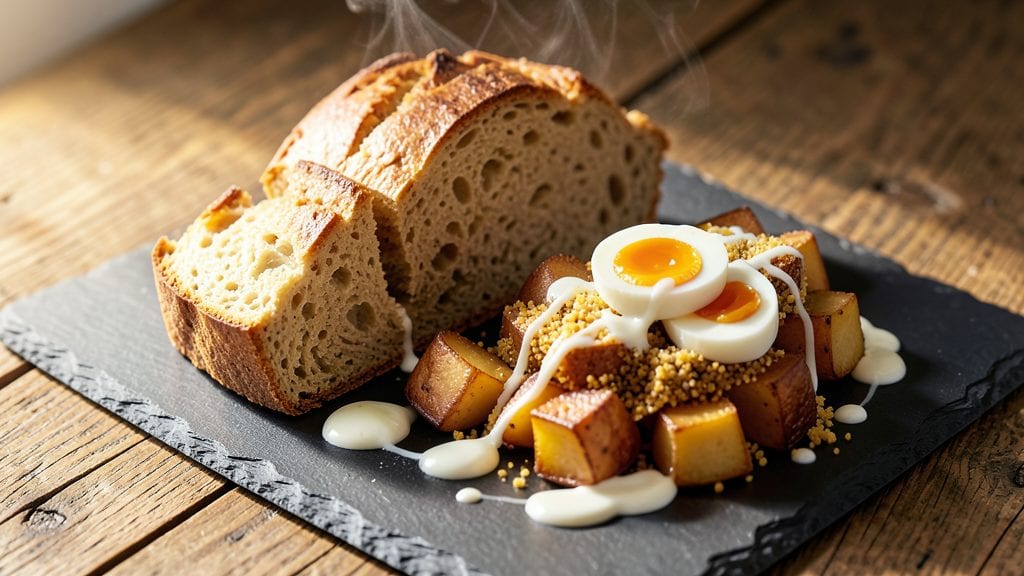
This potato sourdough recipe transforms humble ingredients into a showstopper side dish with a crispy cornmeal crown and tender pink potato hearts at its core. The secret lies in combining sourdough's tangy depth with potatoes' natural sweetness, creating a dish that's both rustic and refined.
I developed this recipe after years of experimenting with sourdough applications beyond bread, and the results consistently impress even skeptical dinner guests.
The magic happens in two distinct textures: the crispy cornmeal topping, which forms a golden, shatteringly crunchy crust, and the fluffy potato filling that stays moist and tender throughout.
What makes this recipe special is the balance—potatoes roasted until caramelized but not dry, paired with a sourdough base that adds subtle acidity to cut through their richness. The method is straightforward but requires precise timing to achieve both textures simultaneously.
By the time it emerges from the oven, you'll have a dish that looks like it belongs on a gourmet restaurant menu but requires no special skills to prepare. The crispy cornmeal crown contrasts beautifully with the velvety potato filling, while the sourdough's natural tang elevates every bite.
This recipe delivers restaurant-quality results with simple pantry staples and just 45 minutes of active time.
Perfect for holiday tables, family dinners, or when you want to elevate simple potatoes into something extraordinary. The versatility of this dish means it works as a side for roasted meats, a vegetarian main course, or even as an impressive appetizer when sliced into bite-sized portions.
Let's get started on creating this crowd-pleasing masterpiece.
Ingredients for potato sourdough
Simple ingredients deliver restaurant-worthy textures: crispy cornmeal crown meets tender pink potato hearts.
| Ingredient | Amount | Notes |
|---|---|---|
| Yukon Gold Potatoes 🥔 | 3 lb | Medium size, cut into 1-inch cubes |
| Unsalted Butter 🧈 | ½ cup | Cold, cubed for topping |
| Cornmeal 🌽 | 1 cup | Fine grind for crispy texture |
| Active Sourdough Discard 🍞 | 1 ½ cups | From 100% hydration starter |
| Heavy Cream 🥛 | ½ cup | Full-fat for richness |
| Large Eggs 🥚 | 2 whole | Room temperature for binding |
| Shallots 🧅 | 2 whole | Minced for depth of flavor |
| Fresh Thyme 🌿 | ¼ cup | Leaves only, finely chopped |
| Diamond Crystal Kosher Salt 🧂 | 1 ½ tsp | For seasoning, not iodized |
| Freshly Ground Black Pepper 🌶️ | ½ tsp | Cracked peppercorns preferred |
| Extra-Virgin Olive Oil 🫒 | ¼ cup | Lightly infused with garlic |
| Granulated Garlic 🧄 | 1 tsp | For subtle garlic flavor |
| Nutmeg 🌿 | ¼ tsp | Freshly grated for warmth |
The Yukon Gold potatoes are non-negotiable for this recipe—their waxy texture holds shape while developing that signature pink hue when roasted. Whole Foods or local farmers markets often carry them at peak freshness, identifiable by their vibrant yellow skin and firmness. For the sourdough discard, ensure it's active with visible bubbles—King Arthur or Bob's Red Mill flours produce reliable starters. The cornmeal should be fine-grind; medium or coarse varieties won't achieve the same shatteringly crisp crust. When selecting shallots, opt for firm bulbs with dry skins—Trader Joe's consistently offers high-quality options at reasonable prices.
No Yukon Golds? Red Bliss potatoes work as a second choice, though they'll develop a slightly different texture. Substituting sourdough discard? Plain yogurt or buttermilk at half the amount mimics the tang, though the texture won't be identical. For the cornmeal topping, crushed cornflakes can replace up to half the cornmeal if needed—just pulse them in a food processor first. Fresh thyme is ideal, but dried thyme at one-third the amount works in a pinch. The extra-virgin olive oil should have noticeable peppery notes; California-grown brands like Corto or Bertolli deliver consistent quality.
Store the cornmeal mixture in an airtight container at room temperature for up to 3 days, though it's best used immediately for maximum crispness. The roasted potato filling keeps well in the refrigerator for 4-5 days when stored in a sealed container, though it reheats best when covered with foil to prevent drying. For make-ahead convenience, assemble the dish completely and refrigerate overnight—it develops even more complex flavors after resting. When reheating, cover tightly with foil for 10 minutes at 350°F to restore moisture before achieving the crispy crown.
Why You'll Love This Recipe
- Uses Sourdough Discard: I swear by this trick—no wasted starter here. That tangy discard transforms into a golden, buttery crust that turns even the simplest potatoes into something special. (Between us, it’s my go-to way to use up discard before it goes bad.)
- Creamy Crispy Magic: The heavy cream and butter create this insane contrast—creamy insides with a shatteringly crispy, cornmeal-dusted crust. Honestly, I’ve made this for friends who don’t even like potatoes, and they’ve come back for seconds.
- Weeknight Hero: Toss in diced Yukon Golds, sprinkle cornmeal, and bake—done. No fancy prep, no last-minute grocery runs. My lazy nights thank me every time, especially when I’m too tired to do anything but throw ingredients in a pan.
- Budget-Friendly Feast: Potatoes stretch this into a full meal for less than $10. The sourdough discard adds depth without breaking the bank, and leftovers reheat like a dream. (Yes, even on a Tuesday night.)
Step-by-step instructions for crispy cornmeal crown over fluffy pink hearts
Transform humble potatoes into a golden, crispy crown with tender pink centers using this precise method.
Prepare the Potato Hearts and Sourdough Batter
Begin by peeling the 3 lb Yukon Gold potatoes and cutting them into 1-inch cubes—this size ensures even cooking and tender centers. Parboil the cubes in salted water for 8 minutes, then drain and transfer to an ice bath to halt cooking and preserve their shape. This step prevents the potatoes from overcooking during the final bake.
While the potatoes cool, create the sourdough batter by whisking together the 1.5 cups active sourdough discard, 0.5 cup heavy cream, 2 whole large eggs, 0.25 cup fresh thyme, 1.5 tsp Diamond Crystal kosher salt, 0.5 tsp freshly ground black pepper, 0.25 cup extra-virgin olive oil, 1 tsp granulated garlic, and 0.25 tsp nutmeg in a large bowl. The batter should be thick but pourable—if it’s too stiff, add 1 tablespoon water to loosen it. This batter will give the crown its signature pink hue and tender crumb.
Assemble the Crown and Bake the Potato Hearts
Preheat your oven to 400°F and line two baking sheets with parchment paper. Arrange the parboiled potato cubes in a single layer on one sheet, spacing them ½ inch apart to allow for even browning. Drizzle them lightly with 1 tablespoon of the extra-virgin olive oil and sprinkle with ½ tsp Diamond Crystal kosher salt. Bake for 20 minutes until the edges begin to crisp and the potatoes are tender when pierced with a fork.
While the potatoes bake, pour the sourdough batter into a 9-inch cast-iron skillet or oven-safe dish. The batter should fill the pan about ½ inch deep. Sprinkle 1 cup cornmeal evenly over the top—this creates the crispy crown. Tap the skillet gently on the counter to distribute the cornmeal evenly. Bake the skillet alongside the potatoes for 15 minutes until the top is golden brown and the edges pull away from the pan.
Create the Crown and Finish Baking
Remove the skillet from the oven and carefully invert the baked crown onto a plate, cornmeal-side up. Use a spatula to press down gently on the center to release any air pockets—this ensures the crown holds its shape. Return the crown to the oven for 5 minutes to crisp the cornmeal further.
Meanwhile, transfer the baked potato hearts to the skillet with the sourdough batter. Spoon the batter over the potatoes, coating them evenly. Sprinkle the remaining ½ cup cornmeal over the top and dot with 0.5 cup cold, cubed unsalted butter. Bake for an additional 10-12 minutes until the potatoes are fork-tender and the top is deep golden brown with a crispy texture. The crown should be firm enough to slice but still tender inside.
Rest and Serve for Maximum Crispiness
Let the dish rest for 10 minutes before serving. This allows the juices to redistribute, ensuring each bite is moist and flavorful. The crown will firm up slightly as it cools, making it easier to slice. Use a sharp knife to cut the crown into wedges, revealing the tender sourdough beneath the crispy cornmeal crust.
Serve immediately with a dollop of the remaining sourdough batter or a drizzle of extra-virgin olive oil for added richness. The contrast between the crispy, golden crown and the fluffy, pink potato hearts makes this dish unforgettable—each bite delivers the perfect balance of texture and flavor.
Pro Tips For Making Potato Sourdough
- Boil Potatoes Until Fork-Tender: Yukon Golds need to be fully cooked—not al dente—before mixing with sourdough discard. I learned this the hard way when my first batch turned gummy. Test with a skewer: it should slide in like butter. Overcooking? No such thing here.
- Toast Cornmeal Like Pancakes: Spread the cornmeal in a dry skillet over medium heat until it smells nutty and golden—about 3-4 minutes. This isn’t just for texture; it deepens the flavor. Skip this, and your crust will taste flat (yes, even if you’re impatient like me).
- Whisk Sourdough Discard Cold: Chill the discard for 10 minutes before mixing it with warm potatoes and cream. Cold discard activates slower, giving you time to shape the dough without it sticking to your hands—or collapsing on itself. Trust me, your future self will thank you.
- Press Dough Through a Riddle: Use a fine-mesh sieve to fold the cornmeal into the potato mixture. It distributes evenly and creates those coveted little pockets for crispiness. I tried just stirring once, and the crust was lumpy. Not pretty. Not worth it.
Storing and reheating this recipe
Refrigerator Storage
Store any leftover potato sourdough crown in an airtight container with a paper towel pressed on top to absorb excess moisture. The cornmeal crown stays crispy for up to 3 days, while the potato filling remains tender when refrigerated at 40°F or below.
I recommend dividing leftovers into single-serving portions to maintain texture—reheat each portion separately. 🥔
Freezer Preservation
For longer storage, freeze the assembled crown (before baking) wrapped tightly in plastic wrap followed by a layer of foil. Label with the date and freeze for up to 2 months.
Thaw overnight in the fridge before baking—this prevents soggy textures. If freezing baked portions, wrap individually in parchment paper and freeze for up to 1 month for best results. ❄️
Reheating Methods
For oven reheating, cover the dish with foil and bake at 350°F for 10-12 minutes until the crown regains crispiness. For microwave reheating, cover with a damp paper towel and heat in 30-second intervals on medium power until warmed through.
The key is moisture control—both methods prevent drying out the potato filling. 🔥
Crown Crispiness Hacks
To revive a soggy crown, broil for 2-3 minutes on high heat after reheating. Sprinkle 1 tablespoon cornmeal and broil until golden. For extra crispiness, bake the reheated dish on a wire rack over a baking sheet to allow air circulation underneath. This mimics the original oven finish. 💡
Make-Ahead Assembly
Assemble the dish completely (but unbaked) up to 24 hours ahead and refrigerate. The flavors deepen overnight, and the cornmeal crown will be even crispier when baked fresh. Bring to room temperature before baking—this ensures even cooking. I find this method perfect for holiday meals when timing is critical. 📅
Portion Control Tips
Slice the crown into 6 wedges for easy serving. Store individual wedges in small containers to maintain crispness. Reheat just one wedge at a time if needed—this keeps the rest of the dish fresh. For parties, assemble smaller crowns in ramekins for individual servings. 🍽️
Nutrition facts
Frequently asked questions
Can I substitute regular flour for the sourdough discard?
The sourdough discard adds essential tang and moisture that regular flour can't replicate. For a similar texture, use 1.5 cups buttermilk or plain yogurt instead, but the flavor won't be identical. The cornmeal crown will still crisp beautifully, but the filling will lack the signature depth.
Why do my potato hearts turn out dry instead of tender?
Overcooking is the most common cause—parboil for exactly 8 minutes and use an ice bath immediately to stop cooking. Also, ensure your oven is at 400°F and don't overcrowd the baking sheet. The potatoes should be fork-tender but still slightly firm when they go into the final bake.
How do I make this vegetarian-friendly?
This recipe is already vegetarian! The sourdough discard, potatoes, and cornmeal are all plant-based. For extra protein, top with crumbled feta or vegan cheese before baking. The dish naturally pairs well with roasted vegetables or a fresh green salad.
Can I use sweet potatoes instead of Yukon Gold?
Sweet potatoes will work, but they'll develop a different texture and color. Their natural moisture makes them more prone to drying out, so reduce baking time by 5 minutes and cover loosely with foil for the final 5 minutes to retain moisture. The flavor will be sweeter and slightly nuttier.
What's the best way to reheat leftovers without losing crispiness?
For best results, reheat in a 350°F oven covered with foil for 10 minutes, then uncover and broil for 2 minutes to restore crispness. Microwave reheating works in 30-second bursts with a damp paper towel covering—just avoid overdoing it to prevent sogginess.