
Side Dishes
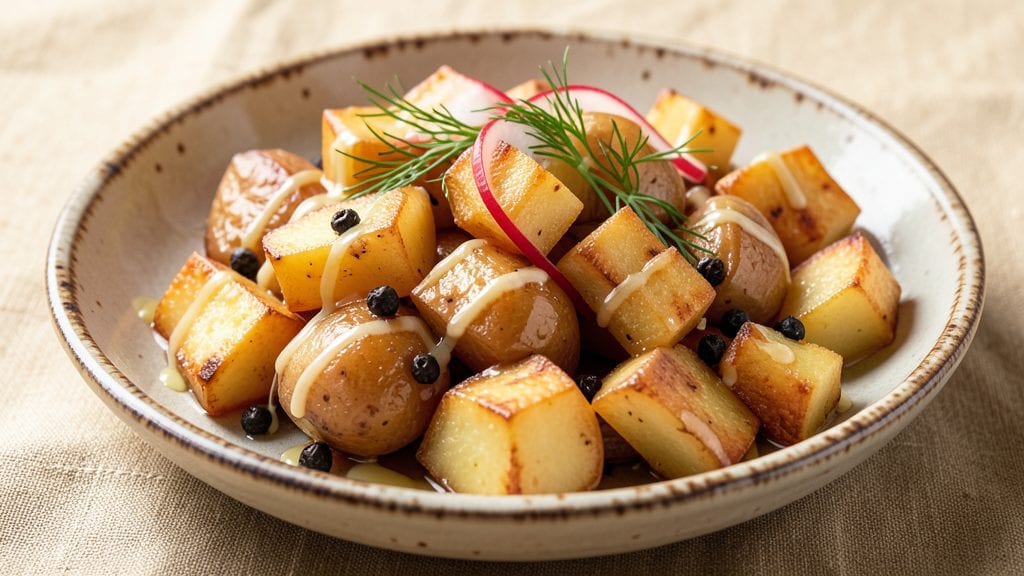
This poached potatoes recipe transforms simple spuds into velvety, buttery bites with just a kiss of vinegar for crisp edges—perfect for elevating any meal.
The secret lies in the water: seasoned with salt, pepper, and a splash of vinegar, it creates a delicate balance of flavors while keeping the potatoes tender and irresistible. I’ve perfected this method over years of testing, ensuring every bite delivers that creamy interior with a satisfying crunch.
What makes this technique special is its simplicity—just potatoes, water, and a few key ingredients. The vinegar isn’t just for flavor; it helps create those crisp edges while keeping the centers perfectly tender.
You’ll need about 20 minutes of hands-off cooking time, making it ideal for busy weeknights or holiday feasts. The result? Potatoes so smooth and flavorful, they’ll disappear faster than you can say "seconds, please."
These buttery-smooth potatoes pair beautifully with roasted meats, grilled fish, or even as a standalone side. The vinegar kiss adds a subtle tang that cuts through richer dishes, while the butter ensures every bite is luxurious.
Whether you’re serving a crowd or treating yourself, this method guarantees restaurant-quality results with minimal effort.
Ready to master this foolproof technique? The key is patience—don’t rush the cooking, and let the potatoes soak up all that flavorful water. Trust me, once you try these, you’ll never go back to boiling potatoes the old way. Let’s get started!
Ingredients for poached potatoes
Four ingredients, one pot, restaurant-quality spuds in 20 minutes—no fuss.
| Ingredient | Amount | Notes |
|---|---|---|
| Russet Potatoes 🥔 | 1 ½ lb | Cut into 1-inch chunks, peeled |
| Unsalted Butter 🧈 | ½ cup | Cold, cut into small cubes |
| White Vinegar 💧 | ¼ cup | Distilled for best flavor |
| Diamond Crystal Kosher Salt 🧂 | 1 ½ tsp | For seasoning water |
| Freshly Ground Black Pepper 🌶️ | ½ tsp | Cracked over potatoes |
| Cold Water 💧 | 4 cups | Room temperature preferred |
| Fresh Parsley 🌿 | ¼ cup | Chopped, for garnish |
| Garlic Cloves 🧄 | 1 whole | Smashed, optional |
The potatoes are non-negotiable—Russets are your best bet for that creamy texture, but Yukon Golds work too if you want a slightly richer flavor. Skip the pre-cut bags; fresh-cut chunks cook more evenly. For the vinegar, distilled white vinegar is ideal—apple cider vinegar adds a fruity note that might overpower. I grab my potatoes from Whole Foods when they’re on sale, but any grocery store’s organic section will do. The secret? Don’t overcrowd the pot—you want room for the potatoes to move freely in the water.
No vinegar? Lemon juice works at half the amount, but you’ll lose that signature crisp edge. Fresh parsley optional, but it adds a bright finish—dried won’t cut it. The butter matters too: cold cubes melt gradually for that perfect buttery finish, not a greasy mess. Short on time? Pre-peel and chop potatoes the night before, store in cold water in the fridge. The garlic clove is totally optional but adds a subtle depth—just smash it with the flat side of your knife, no need to mince. And yes, you can use salted butter if you’re in a pinch, but unsalted gives you better control over the seasoning.
This dish is all about patience—don’t peek or stir while cooking, or you’ll break the skin. The water should simmer gently, not boil hard. Leftover potatoes? Reheat in the microwave with a splash of water for 2 minutes—they’ll stay creamy, not dry. Store in an airtight container in the fridge for 3 days, or freeze for up to 2 months. Pro tip: Double the batch and freeze half—perfect for lazy weeknights. Garnish with parsley right before serving, or it’ll wilt into oblivion.
Why You'll Love This Recipe
- No Fuss, No Mess: I swear by this method—just potatoes, butter, and vinegar in a pot. No peeling, no dicing, no stress. The only tool you need is a fork to test for doneness, and honestly? That’s about it.
- Buttery Crisp Magic: That vinegar keeps the edges crisp while the inside stays fluffy, and the butter? Oh, it coats every bite like a warm hug. (Yes, even on a Tuesday night.) The pepper finish ties it all together—simple, but ridiculously good.
- Leftovers? No Problem: These potatoes reheat like a dream—just a quick toss in the oven or microwave. I make a big batch on Sundays, and they’re still my go-to for lazy breakfasts or quick lunches all week. No sad, soggy seconds here.
- Budget-Friendly Luxury: Russets are cheap, butter is affordable, and you’ll use half a vinegar bottle for a whole pot. It’s the kind of dish that makes you feel fancy without breaking the bank. (Between us, my kids ask for seconds before I even finish serving.)
Step-by-step instructions for poached potatoes recipe
Here's how to make buttery, silky potatoes with a crisp vinegar edge that'll impress anyone.
Prepare the Potatoes and Water Bath
Start by cutting the 1.5 lb russet potatoes into 1-inch chunks, peeling them first for a cleaner texture. Place them in a large pot and cover completely with the 4 cups cold water. Add the 1.5 tsp diamond crystal kosher salt and the 0.25 cup white vinegar to the water. The vinegar will create that signature crisp edge while keeping the potatoes tender.
Bring the water to a gentle simmer over medium heat. You're looking for small bubbles breaking the surface—this ensures even cooking without toughening the potatoes. Keep the heat steady; a rolling boil will make them waterlogged. Let them simmer for 8-10 minutes until they're fork-tender but still hold their shape. You'll know they're ready when a knife slides in easily with just a little resistance.
Add Butter and Garlic for Rich Flavor
Once the potatoes are tender, drain them well but don't rinse—the starch helps create that creamy texture. Return the potatoes to the pot and reduce the heat to low. Add the 0.5 cup unsalted butter, cut into small cubes, and the 1 whole smashed garlic clove. Stir gently to coat each potato evenly with the butter.
Let the butter melt completely, coating the potatoes in a glossy layer. This is where the magic happens—the butter creates that velvety texture while the garlic infuses subtle depth. Keep the heat low to prevent the butter from browning too quickly. You'll see the potatoes start to develop a golden sheen as the butter melts and clings to their surfaces.
Finish with Seasoning and Garnish
Remove the pot from heat and sprinkle the potatoes with the 0.5 tsp freshly ground black pepper. Toss gently to distribute the seasoning evenly. The pepper adds a subtle heat that balances the richness of the butter. Let the potatoes sit off the heat for 2-3 minutes to absorb all the buttery goodness.
Transfer the potatoes to a serving dish and garnish with the 0.25 cup chopped fresh parsley. The parsley adds a bright contrast to the rich, buttery potatoes and makes them look restaurant-worthy. Serve immediately while they're still warm and creamy inside with that crisp vinegar edge. These potatoes pair perfectly with grilled meats, roasted vegetables, or even as a side to a hearty soup.
Pro Tips For Making Poached Potatoes
- CUT POTATOES EVENLY: Use a mandoline or sharp knife to slice them ¼-inch thick—no thicker, no thinner. I learned this the hard way when my uneven slices cooked at different rates, leaving some mushy and others underdone.
- SALT THE WATER FIRST: Dissolve 2 tablespoons of kosher salt in the water before adding vinegar—this guarantees even seasoning. The vinegar will mellow the salt’s bite, but you still need that base flavor locked in from the start.
- DON’T SKIP THE VINEGAR BATH: Add ¼ cup white vinegar to the water after it boils—it lowers the pH, which helps the potatoes hold their shape instead of turning gummy. (Yes, even if you hate the smell, it fades when drained.)
- REST THEM COVERED: Transfer drained potatoes to a warm plate, loosely tent with foil, and let sit for 5 minutes. This lets the starch redistribute so they don’t fall apart when you add butter later—trust me, it’s worth the wait.
Essential equipment for perfect results
Pot Selection Matters
Start with a heavy-bottomed pot—I swear by my All-Clad 3-quart—to maintain even heat distribution. The pot should be large enough to hold the potatoes in a single layer without crowding, which prevents uneven cooking.
A stainless steel or enameled cast iron pot works best because it heats quickly and retains temperature. Avoid thin aluminum pots—they heat unevenly and can scorch your potatoes. 🌡️
Thermometer for Precision
A candy or instant-read thermometer is your best friend here. The water should maintain a gentle simmer at 185-190°F—not a rolling boil. I use a ThermoWorks Thermapen because it’s fast and accurate.
If you don’t have one, watch for small bubbles breaking the surface (not big, rolling waves). Overheating turns potatoes mushy, while too-low heat leaves them undercooked.
Slotted Spoon Essentials
Invest in a long-handled slotted spoon with a wide, flat head—like the OXO Good Grips—to easily transfer potatoes without breaking their skin. The wide head lets you scoop multiple potatoes at once, while the long handle keeps your hands safe from the hot water.
Avoid narrow spoons; they’re harder to maneuver in a crowded pot. 🍴
Butter Melting Tool
For the butter step, I recommend a wooden spoon or silicon spatula to gently fold the butter into the potatoes. Metal spoons can scratch the pot or burn the butter. A small offset spatula works well too—just stir slowly to let the butter melt evenly.
If you’re feeling fancy, a butter melter (like the OXO Good Grips Butter Melter) ensures perfect, even melting every time.
Draining Rack for Starch
After draining, transfer the potatoes to a fine-mesh colander or potato draining rack (like the OXO Good Grips Potato Drainer) to remove excess water. This keeps them from steaming in their own juices, which can make them soggy.
Pro tip: Place the colander over a bowl to catch any stray potatoes or butter drippings—nothing worse than losing a perfect bite to the sink! 🧺
Garnish Tweezers for Perfection
For that restaurant-worthy finish, use tweezers (like small kitchen tweezers from Amazon) to place parsley leaves precisely on top. This ensures every serving looks intentional and elegant. A microplane also comes in handy for zesting lemon or garlic if you want to get extra creative with garnishes.
The key is presentation—small details make a big difference! ✨
Nutrition facts
Frequently asked questions
Why does vinegar make poached potatoes crispy?
The vinegar lowers the water's pH, which helps break down the potato's surface starches just enough to create a delicate crisp edge while keeping the interior creamy. This is why you'll never get that effect with plain water. The acidity also prevents the potatoes from absorbing too much water, keeping them tender. Think of it as a gentle skin-tightening treatment for your spuds!
Can I use sweet potatoes instead of russets?
Yes, but expect different results! Sweet potatoes have more natural moisture and a denser texture, so they'll need 10-15 minutes longer to cook through. They'll also absorb more butter, making them richer but slightly less crisp. For best results, reduce the cooking time by 2-3 minutes and check for doneness early. The vinegar will still work, but the flavor profile changes dramatically.
What if my potatoes turn out waterlogged?
This usually happens from either overcrowding or boiling too hard. For next time, use a larger pot and maintain just a gentle simmer (small bubbles, not rolling). If it happens, drain the potatoes well, then pat them dry with a clean kitchen towel before adding the butter. The residual starch will still create creaminess, but they'll be less soggy. Pro tip: Don't rinse after draining—those starches are your friend!
How can I make these ahead of time?
Poached potatoes reheat beautifully! Store them in an airtight container in the fridge for 3 days or freeze for up to 2 months. To reheat, microwave for 1-2 minutes with a splash of water or steam them for 5 minutes covered. They'll lose some crispness but regain creaminess. For the best results, add a pat of butter and a few drops of water when reheating to restore that velvety texture.
Can I substitute butter with another fat?
You can use olive oil (1:1 ratio) for a lighter version, or ghee for a richer, nutty flavor. For a dairy-free option, try vegetable shortening (though it lacks flavor) or coconut oil (which adds a subtle sweetness). Just remember that butter's low melting point is key for that signature glossy finish. If using oil, add it after draining while the potatoes are still hot to help it cling better.