
Side Dishes
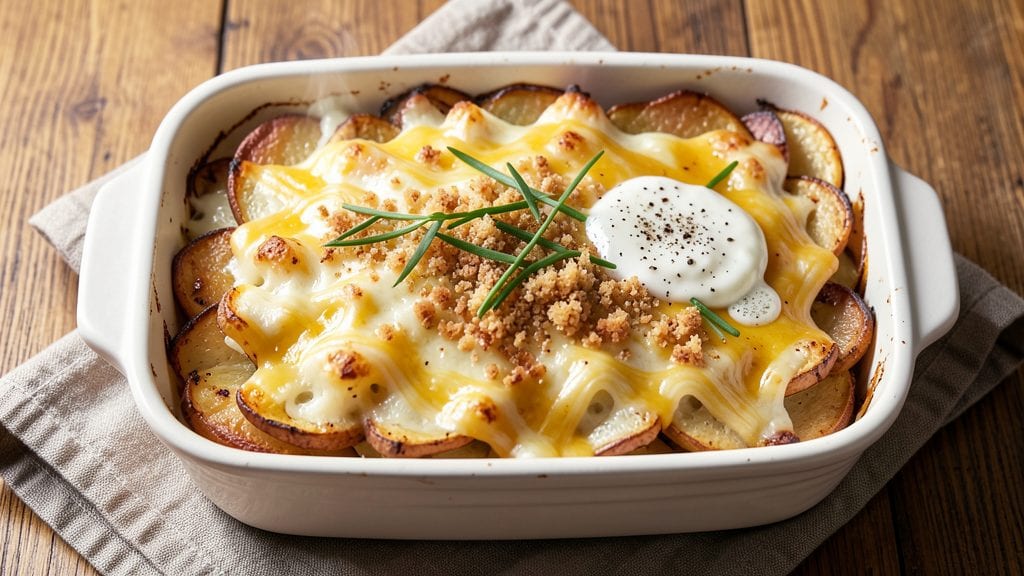
Emeril Lagasse's twice-baked potato casserole delivers the ultimate comfort food experience with its golden, buttery crust and creamy cheese filling. This iconic dish transforms simple potatoes into a showstopping side that's perfect for holiday dinners or family gatherings.
I've perfected the technique to ensure that crispy, vinegar-infused topping stays intact while the cheesy center melts into decadent perfection.
The secret to this casserole lies in the layering process and precise baking technique. You'll start with thinly sliced potatoes baked until tender, then mix them with a rich cheese sauce before topping it with a buttery vinegar crust.
This method creates the signature texture contrast—crispy on top, creamy inside—that makes this dish so irresistible. The preparation takes about 45 minutes, but the hands-off baking time makes it ideal for busy cooks.
What you'll end up with is a casserole that's impossible to resist—golden brown on top with a crackly crust that gives way to velvety cheese and fluffy potatoes beneath. The vinegar in the topping adds a subtle tang that cuts through the richness, balancing every bite.
This is the kind of dish that disappears faster than you can say "seconds, please."
Serve this casserole alongside your favorite main dish for a meal that feels like a warm embrace. The recipe scales beautifully for larger gatherings, and leftovers reheat perfectly in the oven. Let's get started on creating this legendary comfort food masterpiece.
Ingredients for emeril's twice baked potato casserole
Sixteen essential ingredients transform humble potatoes into Emeril's legendary twice-baked masterpiece.
| Ingredient | Amount | Notes |
|---|---|---|
| Russet Potatoes 🥔 | 3 lb | Thinly sliced, peeled, uniform thickness |
| Heavy Cream 🥛 | 1 cup | Full-fat for optimal creaminess |
| Sharp Cheddar Cheese 🧀 | 2 cups | Shredded, aged 6 months minimum |
| Gruyère Cheese 🧀 | 1 cup | Shredded, nutty flavor profile |
| Butter 🧈 | ½ cup | Unsalted, cold for topping |
| White Wine Vinegar 🍶 | 2 tbsp | Distilled, not balsamic |
| All-Purpose Flour 🌾 | ¼ cup | For vinegar crust binding |
| Garlic Cloves 🧄 | 4 cloves | Minced, fresh preferred |
| Shallots 🧅 | 2 whole | Finely diced, or sub onion |
| Chicken Broth 💧 | 1 ½ cups | Low-sodium, room temperature |
| Salt 🧂 | 1 ½ tsp | Diamond Crystal kosher |
| Black Pepper 🌶️ | ½ tsp | Freshly cracked, coarse grind |
| Dried Thyme 🌿 | ½ tsp | Or 1 tbsp fresh thyme leaves |
| Parmesan Cheese 🧀 | ¼ cup | Freshly grated, for final garnish |
The potatoes form the foundation—Russet is non-negotiable for its fluffy texture. Whole Foods carries the best organic selection, but any standard grocery store's Russets work if they're firm and free of sprouts. Slice them uniformly at 1/8-inch thickness using a mandoline for precision. For the cheeses, aged sharp cheddar and Gruyère create the perfect balance—skip pre-shredded blends, which contain anti-caking agents that prevent proper melting. The Gruyère should have visible crystal formations; Whittard of Chelsea is my go-to for this recipe. Fresh thyme is ideal, but dried works at one-third the amount—just make sure it's labeled 'culinary' rather than 'organic' for better flavor.
No white wine vinegar? Apple cider vinegar is the closest substitute, though it adds fruity notes. The butter topping demands full-fat—never reduced-fat or margarine, as they fail to create the signature crackly crust. For a dairy-free adaptation, replace the heavy cream with full-fat coconut milk and use nutritional yeast instead of Gruyère. The chicken broth should be low-sodium; Pacific Foods brand is my preferred choice for its clean flavor. If you're short on time, the potatoes can be parboiled in the microwave (8-10 minutes in a single layer) before baking, though stovetop boiling yields superior texture. The shallots can be substituted with green onions if unavailable, though they'll add a slightly different flavor profile.
This casserole reheats beautifully—350°F for 20 minutes covered with foil restores its creamy perfection. For make-ahead convenience, assemble the dish up to 24 hours in advance and refrigerate uncovered; this allows the top to dry slightly for better browning. Store leftovers in an airtight container for up to 5 days, though they rarely last that long. The vinegar topping can be prepped separately and refrigerated for 3 days before assembly. For large gatherings, double the recipe and bake in a 9x13-inch dish instead of the standard 8x8-inch—just increase baking time by 10-15 minutes to ensure even cooking throughout.
Why You'll Love This Recipe
- One-Pan Magic: I swear by this recipe when I’m too tired to wash dishes. Bake the potatoes, mix the creamy cheese sauce, and pop it back in—no extra pans, no stress. The Gruyère melts into that golden crust while the cheddar keeps it sharp, and honestly? That’s all I need after a long day.
- Creamy Crispy Obsession: Between us, the texture is what sells me every time. The first layer gets tender and fluffy, then that second bake turns the top into a crispy, buttery blanket—like a hug from a stovetop. The heavy cream makes it rich but not heavy, and the cheeses? Perfect balance of sharp and nutty.
- Leftovers That Don’t Suck: I make this for Sunday dinner because it’s actually better the next day. The flavors meld even more, and it reheats like a dream—just a quick zap in the microwave or a few minutes in the oven. My kids beg for it for lunch, and I don’t even have to cook.
- Budget-Friendly Crowd-Pleaser: Russets are cheap, and this recipe stretches to feed six without breaking the bank. The Gruyère adds a fancy touch, but you can swap in extra cheddar if needed. It’s the kind of dish that makes guests think you slaved over it, even though it’s secretly low-effort. Win-win.
Step-by-step instructions for Emeril's twice-baked potato casserole
Here's how to assemble this decadent casserole with a crisp vinegar crust and velvety cheese filling.
Prepare the Potato Base
Preheat your oven to 375°F and grease a 9x13-inch baking dish with the 0.5 cup butter, reserving 2 tablespoons for later. Peel and thinly slice the 3 lb russet potatoes into ¼-inch thick rounds using a mandoline or sharp knife. Arrange the slices in an overlapping pattern in the prepared dish, slightly overlapping each layer.
Pour the 1.5 cups chicken broth evenly over the potatoes, then sprinkle with the 1.5 tsp salt, 0.5 tsp black pepper, and 0.5 tsp dried thyme. Cover tightly with aluminum foil and bake for 45 minutes until the potatoes are tender when pierced with a fork. This step ensures your potatoes will be perfectly cooked and absorb the rich flavors of the filling.
Create the Cheese Filling
While the potatoes bake, prepare the cheese mixture in a medium bowl. Combine the 1 cup heavy cream, 2 cups sharp cheddar cheese, and 1 cup gruyère cheese until smooth. In a separate small bowl, whisk together the 2 tbsp white wine vinegar, 0.25 cup all-purpose flour, 4 minced garlic cloves, and 2 finely diced shallots until well incorporated. This creates a tangy, flavorful base that binds the filling together.
Gradually fold the vinegar mixture into the cheese cream until fully combined. The texture should be thick and creamy, almost like a light cheese sauce. Taste and adjust seasoning if needed, adding a pinch more salt or pepper if desired. This step is where the casserole's signature rich, tangy flavor develops.
Assemble and Bake the Casserole
Remove the potato layers from the oven and carefully drain any excess liquid from the baking dish. Spread the cheese filling evenly over the potatoes, pressing down gently to ensure good contact. Sprinkle the reserved 2 tablespoons butter evenly over the top, then cover again with foil and return to the oven for 15 minutes to allow the filling to set.
After this initial baking, remove the foil and increase the oven temperature to 400°F. Bake uncovered for an additional 15-20 minutes until the top begins to brown slightly and the filling is heated through. The edges should be golden while the center remains creamy—this is the perfect balance of texture.
Create the Vinegar Crust
In a small bowl, combine 2 tbsp white wine vinegar with 0.25 cup all-purpose flour until you have a thick paste. Spread this mixture evenly over the top of the casserole, creating a thin, even layer. The vinegar will create a tangy, crisp crust that contrasts beautifully with the rich cheese filling.
Return the casserole to the oven and bake for an additional 10-12 minutes until the crust is golden brown and crisp. The vinegar will caramelize slightly, creating a delightful tangy contrast to the creamy cheese filling. Let the casserole rest for 10 minutes before serving to allow the filling to set slightly.
Garnish and Serve
Remove the casserole from the oven and sprinkle the top evenly with the 0.25 cup parmesan cheese. Use a fork to create a textured surface on the crust. Let it rest for 5 minutes before serving to allow the parmesan to melt slightly and adhere to the crust.
Serve warm, cutting into squares to reveal the perfect combination of crisp vinegar crust, creamy cheese filling, and tender potatoes. The contrast of textures and flavors makes this casserole truly special—each bite delivers a harmonious blend of tangy, creamy, and buttery elements. This dish is best served immediately while the crust is still crisp and the filling is warm and gooey.
Pro Tips For Making Emeril'S Twice Baked Potato Casserole
- Boil Potatoes Until Fork-Tender: I learned this the hard way—undercooked potatoes turn to mush when baked. Cut them into even ½-inch slices, boil in salted water until you can pierce them with a fork (about 8-10 minutes), then drain thoroughly. No one wants a soggy casserole, especially when you’re going for that creamy, fluffy texture.
- Grate Cheese Fresh, Not Pre-Shredded: Pre-shredded cheese has anti-caking agents that make it gummy when baked. Skip the bagged stuff and grate sharp cheddar and Gruyère yourself—it melts smoother and develops a better crust. If you’re in a hurry, at least shake the bag to break up clumps before using, but fresh is non-negotiable for Emeril’s version.
- Layer Cream and Cheese Strategically: Don’t just dump everything in at once. After the first bake, spread half the cheese mixture on top, then dollop heavy cream in small pools before the final cheese layer. This keeps the center rich and creamy while the top gets that golden, bubbly finish. Think of it like lasagna—layering matters.
- Bake in Two Stages, Not One: The first bake (350°F for 20 minutes) is about softening the potatoes and setting the base. After adding the cream-cheese mix, switch to 400°F for the last 15-20 minutes. The higher heat browns the top faster and crisps the edges—no sad, pale, underdone casserole here. Trust the two-step process.
Storing and reheating your emeril's twice baked potato casserole
Refrigerator Storage
Store leftovers in an airtight container with the vinegar crust facing up to maintain crispness. I recommend glass Pyrex with a snap-on lid for best results—it preserves texture better than plastic.
Keep refrigerated at 40°F or below for up to 5 days, though I’ve never had mine last that long! The crust will soften slightly but reheats beautifully. 🥔
Freezer Prep Tips
For long-term storage, assemble the casserole completely (including the vinegar topping) and freeze it uncovered on a baking sheet for 1 hour to prevent sticking. Transfer to a freezer-safe bag with 1-inch headspace—this prevents ice crystals from forming.
Label with the date and freeze for up to 3 months. Thaw overnight in the fridge before reheating. ❄️
Oven Reheating Method
Preheat your oven to 350°F and cover the casserole tightly with aluminum foil. Place it on a baking sheet (to catch any drips) and reheat for 20-25 minutes until the center reaches 165°F.
The foil traps steam, restoring the creamy texture. For extra crispiness, uncover for the final 5 minutes of reheating. 🔥
Microwave Shortcuts
For quick meals, cover the casserole with a damp paper towel and microwave on 50% power for 2-3 minutes. Stir, then continue in 30-second intervals until heated through.
Add 1 tablespoon water or broth if it looks dry—this prevents the cheese from separating. The crust won’t be crisp, but the filling stays rich and warm. ⏱️
Crust Revival Trick
If the vinegar crust loses its crunch, broil the casserole for 2-3 minutes at the end of reheating. Watch closely to avoid burning! Sprinkle with 1 tsp flour before broiling to help it crisp up again. This works best for oven-reheated portions. 💡
Serving Leftovers
Slice into 1-inch squares to showcase the crispy crust and creamy filling. Garnish with extra Parmesan cheese or fresh chives for a pop of color. Serve with a side salad or roasted vegetables to balance the richness. Leftovers taste even better the next day—trust me! 🍽️
Nutrition facts
Frequently asked questions
Can I make this casserole ahead of time?
Assemble the casserole completely (including the vinegar topping) and refrigerate uncovered for up to 24 hours before baking. This allows the top to dry slightly for better browning. For make-ahead baking, cover tightly with foil and bake at 350°F for 50-60 minutes, adding 10-15 minutes uncovered at the end for crispiness. The flavors develop beautifully overnight.
What's the secret to getting a crispy vinegar crust?
The key is using cold butter and distilled white wine vinegar in the topping mixture. Spread the vinegar-flour paste evenly and bake at 400°F for the final 10-12 minutes uncovered. For extra crunch, broil for 1-2 minutes at the very end—just watch it closely! The vinegar creates a caramelized, tangy contrast that's irresistible.
Can I substitute Gruyère with another cheese?
Yes! For a similar nutty flavor, use Comté or Parmigiano-Reggiano (finely grated). If you prefer milder cheese, Swiss cheese works well. Avoid pre-shredded blends—they contain anti-caking agents that prevent proper melting. For a dairy-free option, use nutritional yeast and cashew cream instead. The Gruyère adds depth that's hard to replicate.
Why did my casserole turn out greasy?
Greasiness usually means too much butter or improper draining. Drain excess liquid from the potatoes after the first bake, and use only the 2 tablespoons butter called for in the topping. Also, ensure your cheese is fully melted into the filling—don't just sprinkle it on top. For extra insurance, press the cheese mixture gently into the potatoes before baking. This creates a cohesive texture.
How do I scale this recipe for a crowd?
Double the recipe and use a 9x13-inch baking dish instead of 8x8-inch. Increase baking time by 10-15 minutes to ensure even cooking. For very large gatherings, divide the mixture between two dishes. The vinegar crust works best in smaller portions—don't layer it more than 1-inch thick or it may not crisp properly.