
Side Dishes
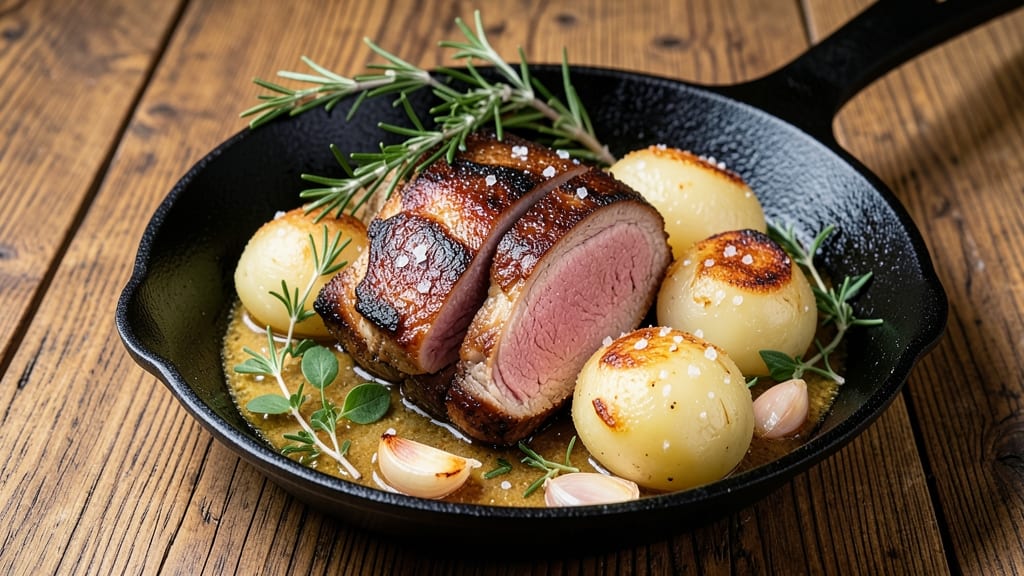
This duck potato recipe transforms simple ingredients into a luxurious side dish that steals the show at any dinner table. The secret lies in rendering duck fat—rich, golden, and packed with flavor—that crisps the potatoes to perfection while infusing them with an irresistible savory depth.
I developed this method after years of experimenting with duck confit, and the results are worth every minute of effort.
What makes this recipe special is the technique: potatoes roasted in their own duck fat until crispy on the edges and tender inside, paired with perfectly seared duck pieces that add a touch of elegance.
The herbed duck fat not only enhances the potatoes but also creates a fragrant aroma that fills your kitchen long before the dish is ready. This method ensures restaurant-quality results without requiring specialized equipment.
By the time you serve this dish, you’ll have golden, crispy potatoes with a caramelized exterior and a creamy interior, all infused with the rich, savory notes of duck fat. The duck pieces, seared to a perfect medium-rare, add a luxurious touch that elevates the entire meal.
It’s a side dish that feels indulgent yet remains simple enough for a weeknight dinner.
Serve this alongside roasted vegetables or a fresh salad for a well-rounded meal, or pair it with a bold red wine to complement the duck’s richness. The leftovers reheat beautifully, making it perfect for meal prep or entertaining guests. Let’s get started!
Ingredients for duck potato
Rich duck fat, crispy potatoes, and aromatic herbs create this luxurious yet simple side dish.
| Ingredient | Amount | Notes |
|---|---|---|
| Duck Fat 🦆 | ¾ cup | Rendered from duck confit or store-bought |
| Yukon Gold Potatoes 🥔 | 2 lb | Cut into 1-inch cubes, unpeeled |
| Fresh Thyme Sprigs 🌿 | ¼ cup | Leaves only, finely chopped |
| Fresh Rosemary Sprigs 🌿 | ⅛ cup | Leaves only, finely chopped |
| Garlic Cloves 🧄 | 6 cloves | Minced, skin-on for extra flavor |
| Sea Salt 🧂 | 1 ½ tsp | Diamond Crystal preferred for purity |
| Freshly Ground Black Pepper 🌶️ | 1 tsp | Cracked, not pre-ground |
| Duck Breast 🦆 | 1 lb | Skin-on, fat cap intact |
| Extra-Virgin Olive Oil 🫒 | 1 tbsp | For searing duck |
| Unsalted Butter 🧈 | 2 tbsp | Cold, cut into small cubes |
| Fresh Parsley 🌿 | 0.1 cup | Chopped, for garnish |
The duck fat is the heart of this recipe—high-quality duck confit fat yields the best results, but store-bought rendered duck fat works in a pinch. For optimal flavor, render your own by slow-cooking duck pieces until fat separates. Whole Foods Market and specialty butchers often carry pre-rendered duck fat, or you can use goose fat as a substitute. The potatoes should be Yukon Gold for their creamy texture and crispy edges. Avoid red potatoes—they turn mushy in high-fat cooking. Fresh herbs are non-negotiable here; Penzeys Spices sells high-quality dried alternatives if you're in a bind, but fresh thyme and rosemary impart the most complex aroma.
No duck fat? Goose fat or rendered chicken fat can stand in, though duck's richness is unmatched. For the duck breast, skin-on, fat-cap intact is crucial—this ensures maximum fat for rendering. If you can't find duck breast, chicken thighs with skin work, though the flavor profile shifts. The garlic should be skin-on for extra depth, but peel it before mincing. For the herbs, dried thyme at one-third the amount is acceptable, but fresh is ideal. The parsley is purely for garnish—skip it if you're short on time, but it adds a bright finish that balances the richness.
Store rendered duck fat in an airtight container in the fridge for up to 6 months, or freeze for 1 year. The potatoes and duck pieces can be prepped ahead and refrigerated for 24 hours before cooking. Once cooked, this dish reheats beautifully—simply warm in a 350°F oven for 10-15 minutes until crispy again. The leftovers keep for 4 days in the fridge, though they're best enjoyed fresh. For meal prep, portion the crispy potatoes into containers and store the duck separately to maintain texture.
Why You'll Love This Recipe
- Same recipe, different vibes: serve it as a side for a fancy dinner or pile it high for a casual Sunday lunch. Honestly, it’s my go-to when I don’t want to think too hard about cooking but still want something impressive.
- One-Pan Magic: I swear by this recipe—just toss everything on a sheet pan, pop it in the oven, and walk away. No chopping boards, no extra pots, just golden potatoes and crispy duck fat doing all the work while you sip your coffee.
- Rich Umami Bomb: That duck fat alone transforms this into something special—deep, savory, and impossible to resist. The garlic and rosemary? They turn it from good to oh-my-god-why-didn’t-I-make-this-sooner.
- Weeknight or Weekend: Same recipe, different vibes: serve it as a side for a fancy dinner or pile it high for a casual Sunday lunch. Honestly, it’s my go-to when I don’t want to think too hard about cooking but still want something impressive.
Step-by-step instructions for crispy pan-seared duck with herbed potatoes
This method delivers perfectly crispy duck skin and golden, herbed potatoes bathed in rendered duck fat.
Render Duck Fat and Sear the Duck Breast
Place a heavy skillet over medium heat and add the 0.75 cup duck fat. Let it melt completely, then increase heat to medium-high until the fat shimmers and reaches 350°F on an instant-read thermometer. Pat the 1 lb duck breast dry with paper towels, then season generously with 1.5 tsp sea salt and 1 tsp freshly ground black pepper.
Place the duck breast skin-side down in the hot fat. Press down gently with a fish spatula for 1 minute to render fat from the skin without moving the meat. You'll hear a sizzling sound as the fat begins to render, creating a golden crust. Flip the duck and sear the other side for 2-3 minutes until it reaches 135°F internally. Remove the duck and rest on a plate, skin-side up, tented loosely with foil.
Par-cook the Potatoes in Duck Fat
In the same skillet (with rendered duck fat), add the 2 lb yukon gold potatoes cut into 1-inch cubes. Cook over medium heat for 10-12 minutes, stirring occasionally, until the potatoes are tender when pierced with a fork but still hold their shape. Remove the potatoes and set aside in a colander.
While the potatoes cook, finely chop the 0.25 cup fresh thyme sprigs and 0.125 cup fresh rosemary sprigs. In a small bowl, mix these herbs with the 6 minced garlic cloves, 0.5 tsp sea salt, and 0.5 tsp freshly ground black pepper. This herb blend will infuse the potatoes with deep flavor.
Finish the Potatoes in Herbed Duck Fat
Return the potatoes to the skillet and reduce heat to medium-low. Add the herb-garlic mixture and toss to coat evenly. Cook for an additional 5 minutes, stirring frequently, until the potatoes are golden brown and the edges begin to crisp. The duck fat will create a glossy, flavorful crust on each potato.
Remove the skillet from heat and stir in the 2 tbsp cold unsalted butter cut into small cubes. Let the butter melt into the potatoes, creating a rich, velvety finish. The butter should be fully incorporated, leaving the potatoes glistening and aromatic. Transfer the potatoes to a serving platter and tent loosely with foil to keep warm.
Rest the Duck and Complete the Dish
Return the duck breast to the skillet over medium heat for 1-2 minutes to render any remaining fat and crisp the skin further. Remove the duck and let it rest for 10 minutes before slicing. The internal temperature should reach 145°F—duck continues to cook slightly as it rests.
Slice the duck breast into ½-inch thick pieces against the grain. Arrange the sliced duck over the herbed potatoes and drizzle any remaining duck fat from the skillet over the top. Garnish with the 0.1 cup chopped fresh parsley. Serve immediately, ensuring each portion has a crispy duck slice and golden, herbed potato.
Pro Tips For Making Duck Potato
- CRISP THE POTATOES TWICE: I learned this the hard way—roasting potatoes in duck fat alone won’t give you that perfect crust. First, parboil them 8-10 minutes until fork-tender, then drain and let them dry completely. After roasting at 425°F (220°C) for 20 minutes, flip them and blast them another 10 minutes at 475°F (245°C) for maximum crisp. The second hit of heat seals the deal.
- USE WHOLE HERBS: Tossing chopped thyme or rosemary into the pan is lazy and dull. Keep the sprigs whole and scatter them directly over the potatoes—they’ll release flavor as they roast without turning the fat bitter. Plus, you can snatch them out before serving for a cleaner bite. (Yes, even if you’re impatient like me.)
- SALT THE DUCK FAT: Unsalted duck fat? Skip the extra salt—it’s already packed with flavor. If using salted, reduce your seasoning by half or you’ll end up with a salty mess. I used to ignore this and wondered why my potatoes tasted flat. A quick taste test of the fat before roasting guarantees balance.
- GARLIC IN THE FAT: Don’t just toss minced garlic on top—infuse it in the duck fat first. Sauté 3-4 whole cloves in the fat over medium heat for 2 minutes until fragrant (but not browned), then remove them. This layers garlic flavor without burning, and you can even reuse the cloves in other dishes. (Your future self will thank you.)
Best sauces and condiments for this duck potato
Duck Fat Magic Sauce
Save any leftover rendered duck fat from cooking—it’s pure liquid gold for this dish. After searing the duck breast, pour the remaining fat (about 2-3 tablespoons) into a small saucepan and heat over low heat.
Whisk in 1 tablespoon heavy cream and ½ teaspoon Dijon mustard until smooth. Drizzle this silky sauce over the finished potatoes and duck just before serving for an extra layer of richness. 🦆
Herb-Infused Olive Oil
For a lighter alternative, infuse ¼ cup extra-virgin olive oil with 2 tablespoons chopped fresh thyme, 1 tablespoon chopped rosemary, and 2 minced garlic cloves. Warm the oil in a small saucepan over low heat for 5 minutes, then strain and drizzle over the herbed potatoes.
This brightens the dish without overpowering the duck’s natural flavors.
Red Wine Reduction
Deglaze the skillet after searing the duck with ½ cup dry red wine (like Cabernet Sauvignon or Pinot Noir) and reduce by half over medium-high heat. Strain out any solids, then whisk in 1 tablespoon butter for a glossy finish.
This reduction pairs beautifully with the duck and adds a sophisticated touch to the potatoes.
Creamy Garlic Aioli
Mix ¼ cup mayonnaise with 1 tablespoon lemon juice, 1 minced garlic clove, and a pinch of salt. Thin with 1 teaspoon warm water if needed, then dollop alongside the duck and potatoes.
This creamy contrast cuts through the richness of the duck fat while complementing the herbed flavors. 🥘
Honey-Mustard Glaze
Simmer 2 tablespoons honey with 1 tablespoon Dijon mustard and 1 teaspoon apple cider vinegar in a small saucepan over low heat until thickened (about 3-4 minutes).
Brush this glaze over the sliced duck just before serving for a sweet-savory balance. The honey caramelizes slightly, adding depth to the dish.
Fresh Herb Butter
Combine 4 tablespoons softened butter with 1 tablespoon chopped parsley, ½ tablespoon chopped thyme, and a pinch of salt. Form into a log, chill for 30 minutes, then slice and place on top of the potatoes.
The butter melts into the hot potatoes, infusing them with fresh herb notes and adding a luxurious finish. ✨
Nutrition facts
Frequently asked questions
Can I substitute duck fat with another type of fat?
The rich flavor of duck fat is key to this recipe, but you can use goose fat or rendered chicken fat in a pinch. For best results, avoid vegetable oils—they won't provide the same depth of flavor or crispy texture. If using a substitute, increase the cooking time by 2-3 minutes to ensure the potatoes crisp properly.
What's the best way to store leftovers?
Store the crispy potatoes and duck separately in airtight containers. Reheat the potatoes in a 350°F oven for 10-15 minutes until crispy again, while the duck reheats best in a skillet over medium heat for 2-3 minutes. Leftovers keep for 4 days in the fridge, though the duck is best enjoyed fresh. Freeze any unused duck fat in an airtight container for up to 1 year.
How do I get the duck skin extra crispy?
Press the duck skin down firmly with a fish spatula for 1 minute when searing to render fat evenly. Keep the heat at medium-high and avoid moving the duck until the skin is golden and crisp. For extra crispiness, finish by searing the duck skin-side down for 1-2 minutes after resting. Pat the duck completely dry before cooking to prevent steam from blocking crispiness.
Can I make this recipe ahead of time?
Yes! Prep the potatoes and duck up to 24 hours ahead by cutting them and storing in separate containers with a sprinkle of salt. Cook the duck and potatoes just before serving to maintain crispiness. For the duck, sear it fresh and rest before slicing. The herb butter or duck fat sauce can be made 1 day ahead and stored in the fridge.
What's the best wine pairing for this dish?
A bold Cabernet Sauvignon or Syrah complements the duck's richness, while a lighter Pinot Noir balances the herbed potatoes. For white wine lovers, a full-bodied Chardonnay with oak notes works beautifully. Avoid overly tannic wines—they can clash with the duck fat's smooth texture.