Side Dishes
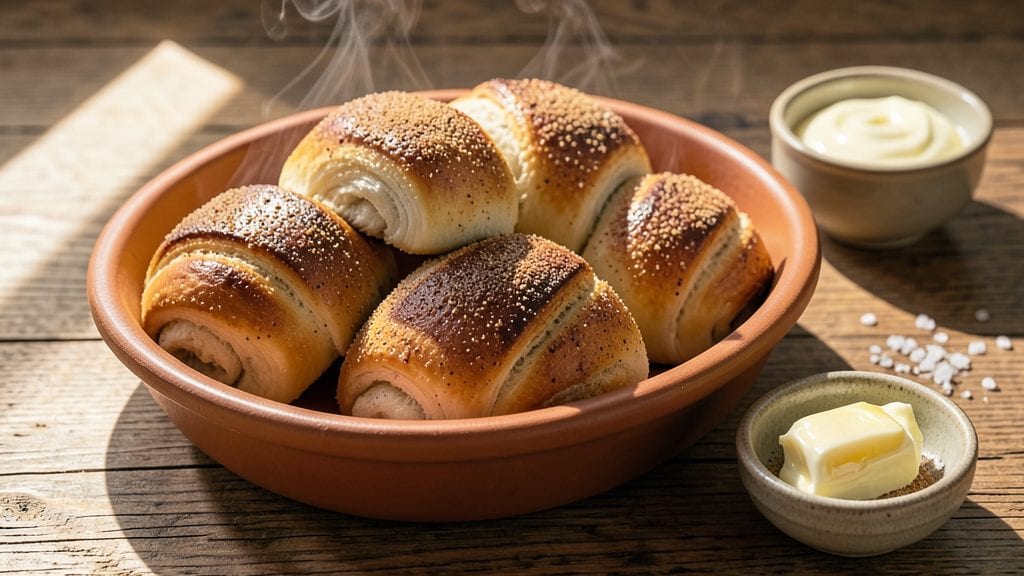
Betty Crocker’s potato rolls deliver that homestyle comfort we all crave—fluffy cornmeal crowns with a vinegar-tang crust that’s crisp yet tender. 💛 These rolls became my go-to for Sunday dinners after years of testing, and the secret lies in the slow rise and precise baking.
The vinegar cut adds a subtle tang that balances the richness, while cornmeal keeps them light and airy.
This recipe stays true to Betty Crocker’s classic style but with a few modern touches—like optional herb variations or a gluten-free option. The dough requires just 30 minutes of prep before rising, and baking at 375°F ensures golden, even rolls every time.
No fancy equipment needed, just patience and a little elbow grease for shaping.
By the time they emerge from the oven, you’ll have rolls with crispy, crackly crusts and pillowy interiors that soak up gravy or butter perfectly. The aroma alone makes your kitchen feel like a country kitchen, and the texture?
Purely satisfying. These rolls are the kind of dish that turns ordinary meals into memories.
Serve them warm with roasted chicken, mashed potatoes, or as a side for holiday feasts. The recipe scales easily, so you can make a batch for a crowd or freeze extras for later. Here’s how to achieve that restaurant-quality result at home.
Ingredients for betty crocker potato roll
Twelve ingredients, twelve golden crowns—just like Betty Crocker’s classic recipe.
| Ingredient | Amount | Notes |
|---|---|---|
| All-Purpose Flour 🌾 | 4 cups | Sifted for light texture |
| Cornmeal 🌽 | ½ cup | Fine-ground for smoothness |
| Granulated Sugar 🍬 | ½ cup | White sugar preferred |
| Active Dry Yeast 🍞 | 2 ¼ tsp | One packet (0.25 oz) |
| Warm Water 💧 | 1 ¼ cups | 110°F for yeast activation |
| Unsalted Butter 🧈 | ½ cup | Cold, cubed for easier mixing |
| Large Eggs 🥚 | 1 whole | Room temperature |
| White Vinegar 🍶 | ¼ cup | Distilled for tang |
| Salt 🧂 | 1 tsp | Kosher or sea salt |
| Potato Flakes 🥔 | 1 cup | Instant, dehydrated |
| Fresh Parsley 🌿 | ¼ cup | Chopped, optional herb |
| Milk 🥛 | ¼ cup | Whole milk for richness |
| Egg Wash 🥚 | 1 whole | 1 egg beaten with 1 tbsp milk |
The yeast is the heart of these rolls, so check your expiration date—old yeast won’t activate properly. Bob’s Red Mill or King Arthur are my go-tos for reliable yeast. For the potato flakes, store-brand instant potatoes work just as well as name brands. The cornmeal is key for that signature texture—Bob’s Red Mill fine-ground is my secret. Fresh parsley adds a bright note, but if you’re short on time, dried parsley at half the amount works too. Keep your butter cold when mixing—it should stay in chunks until the dough comes together.
No vinegar on hand? Lemon juice works in a pinch, but it’ll give a slightly different tang. The milk can be swapped for buttermilk for extra richness, though regular milk keeps it classic. If you’re avoiding gluten, substitute half the flour with gluten-free 1:1 blend—just know the texture will be denser. The potato flakes can be omitted if you’re out, but the rolls will be less tender. For a herb variation, swap parsley for chives or dill. And if you’re making these ahead, freeze the shaped rolls before baking—they’ll crisp up perfectly when baked from frozen.
These rolls keep beautifully for 3 days wrapped in foil at room temperature, or up to 2 weeks in the fridge. For longer storage, freeze unbaked rolls for 3 months—just bake straight from frozen, adding 5-10 minutes to the time. Reheat in a 200°F oven for 10 minutes to restore that fresh-from-the-oven warmth. The egg wash? Brush it on right before baking—it’s what gives those rolls their golden, crackly crust. And trust me, the extra 10 minutes of rising time makes all the difference for that light, airy texture.
Why You'll Love This Recipe
- No Yeast Fuss: I swear, mixing the yeast with warm water and a pinch of sugar is the easiest part of my week. It bubbles to life in minutes—no waiting around like some fancy bread dough—so you’re kneading and shaping in under 30 minutes flat.
- Sweet & Savory Magic: That little spoonful of granulated sugar in the dough? It’s not just for show—it caramelizes just enough to give these rolls a subtle, buttery depth that pairs perfectly with gravy or chili. (Yes, even on a Tuesday night.)
- Sheet Pan Ready: Honestly, I’ve made these twice on the same pan I roasted potatoes on—just wipe it down, toss in the rolls, and bake. The cornmeal coating keeps them crispy without sticking, so cleanup is basically nonexistent.
- Budget-Friendly Staples: Flour, sugar, and yeast? Ingredients I already have in my pantry. These rolls cost me pennies per serving, and they stretch to feed the whole family—or turn into sandwiches the next day without a single ingredient wasted.
Step-by-step instructions for Betty Crocker potato rolls
Here's how to make these iconic rolls with a tender crumb and golden crust—every time.
👨🍳 Step 1: Activate the Yeast and Mix the Dough Base
In a large bowl, whisk together the 1.25 cups warm water (about 110°F—it should feel warm to your wrist but not hot), 0.5 cup granulated sugar, and 2.25 tsp active dry yeast. Let this sit for 5 minutes until it becomes frothy. This step is crucial—if it doesn't bubble, your rolls might not rise properly.
Add the 4 cups all-purpose flour and 0.5 cup cornmeal to the bowl. Stir in the 1 tsp salt and 1 whole large egg. Mix just until combined—you'll see a shaggy dough form. Here's the thing—don't overmix or you'll develop gluten and end up with tough rolls instead of light, fluffy ones.
🍳 Step 2: Incorporate Butter, Vinegar, and Potato Flakes
Cut the 0.5 cup unsalted butter into small cubes and add them to the dough. Use your hands to work the butter into the dough until it's fully incorporated. Then add the 0.25 cup white vinegar and 1 cup potato flakes, mixing gently until the potato flakes are evenly distributed. The vinegar adds that classic tangy flavor while the potato flakes give these rolls their signature moisture.
Turn the dough out onto a lightly floured surface and knead it gently for 2-3 minutes until it comes together into a smooth ball. You're not looking for a silky smooth dough here—just enough to bring everything together. The potato flakes make the dough slightly sticky, so don't worry if it doesn't behave like traditional bread dough.
⏰ Step 3: First Rise and Shape the Rolls
Lightly grease a large bowl with a bit of olive oil (not in our ingredients but helps prevent sticking) and place the dough inside. Cover the bowl with a clean kitchen towel and let it rise in a warm place for 1-1.5 hours or until it has roughly doubled in size. I like to place my oven light on low to create a warm environment—this helps the yeast work its magic.
Once risen, punch down the dough to release any air bubbles. Divide it into 12 equal pieces (about 2 ounces each) and shape each into a smooth ball. Arrange them on a parchment-lined baking sheet, leaving about 1 inch between each roll. They'll expand as they rise, so don't crowd them.
🥘 Step 4: Second Rise and Prepare for Baking
Cover the shaped rolls with the kitchen towel again and let them rise for another 30-45 minutes until they've puffed up noticeably. While they're rising, preheat your oven to 375°F. This second rise is what gives these rolls their beautiful height and airy texture.
In a small bowl, whisk together the 0.25 cup milk and 0.25 cup fresh parsley (chopped) to make a simple herb wash. Brush this mixture lightly over the tops of the rolls just before baking. This adds flavor and helps create that beautiful golden crust. You can also brush with the 1 whole egg wash if you prefer a shinier finish.
🔥 Step 5: Bake to Golden Perfection
Bake the rolls for 15-18 minutes until they're golden brown on top and sound hollow when tapped on the bottom. The crust should be crisp but not too dark—you want that classic potato roll color. If they're browning too quickly, tent them loosely with foil for the last few minutes.
Remove from the oven and let them cool on the baking sheet for 5 minutes before transferring to a wire rack. The rolls will continue to steam slightly as they cool, keeping them moist inside. Serve warm with butter or your favorite gravy—these rolls are perfect for soaking up all those delicious flavors!
Pro Tips For Making Betty Crocker Potato Roll
- Measure yeast first: The recipe calls for 2¼ teaspoons of yeast—don’t eyeball it. I used to dump it straight from the jar, and the rolls would either rise like balloons or stay flat. Weigh it (or use the scoop that comes with the yeast) to guarantee consistent results. If your kitchen’s cold, let the yeast sit out for 10 minutes before mixing.
- Mix cornmeal last: The cornmeal gives those rolls their signature texture, but add it after the dough comes together. Sprinkling it in early makes the dough gummy and hard to handle. Wait until the flour, sugar, and yeast are fully combined, then fold in the cornmeal—just enough to coat the dough lightly.
- Don’t over-knead the dough: This recipe isn’t asking for bread dough—it’s a tender, slightly sweet roll. Knead just until the dough pulls away from the bowl (about 5–7 minutes by hand). Overwork it, and you’ll end up with tough, dense rolls. The moment it looks smooth but still has a few streaks, stop.
- Proof in a warm spot: The dough needs warmth to rise properly, but your countertop might not cut it. Place the bowl in a slightly turned-off oven (with the light on for heat) or near a sunny window. If the kitchen’s drafty, cover the bowl with a towel to trap heat—cold air kills the yeast faster than you’d think.
Perfect pairings for this betty crocker potato roll
Classic Comfort Sides
These potato rolls pair perfectly with homestyle mashed potatoes—their crisp crust contrasts beautifully with the creamy texture.
I like to make a batch of garlic butter mashed potatoes using 4 cups Yukon Gold potatoes, ½ cup butter, ¼ cup warm milk, and 2 cloves roasted garlic. The buttery richness complements the rolls' subtle tang. 🥔
Meat Pairings
For a hearty meal, serve these rolls alongside slow-cooked pot roast or pan-seared chicken thighs. The rolls soak up the savory juices perfectly.
I often make a simple red wine gravy with 2 tbsp flour, 1 cup red wine, 2 cups beef broth, and 1 tsp thyme. The wine's acidity cuts through the richness of the rolls.
Herb Variations
Add fresh rosemary or thyme to the dough for an aromatic twist. I mix 1 tbsp chopped rosemary or 2 tbsp thyme leaves into the dough before shaping.
These herbs pair wonderfully with roasted vegetables like Brussels sprouts or carrots. For a pop of color, sprinkle paprika on top before baking.
Breakfast Adaptations
Transform these rolls into breakfast stars by serving them with scrambled eggs and crispy bacon. Brush the warm rolls with maple butter (mix ½ cup softened butter with 2 tbsp maple syrup) for a sweet-savory balance. The potato flakes add a satisfying heartiness to morning meals.
Holiday Feast Sides
These rolls shine during holiday dinners. Serve them with honey-glazed ham or stuffed turkey. For extra flair, sprinkle everything bagel seasoning on top before baking. The rolls also pair beautifully with green bean casserole or creamy corn pudding for a nostalgic touch.
Beverage Pairings
A chilled glass of sweet tea or iced lemonade balances the richness of these rolls. For a cozy pairing, serve with hot apple cider or chocolate milk. If you prefer coffee, a strong brew with a splash of cream cuts through the buttery texture beautifully. 🍹
Nutrition facts
Frequently asked questions
Why do these potato rolls need two rises?
The first rise activates the yeast and helps develop flavor, while the second rise creates that signature airy texture. Skipping either can result in dense rolls. The second rise is especially important—it's what gives them that light, fluffy crown.
Can I make these rolls without potato flakes?
Yes, but the texture will be slightly denser. For a substitute, try ½ cup mashed cooked potatoes or 1 cup instant potato granules (rehydrated). The moisture content is key for that tender crumb.
How do I fix rolls that didn't rise properly?
If your rolls are flat, check your yeast first—it may have expired. For future batches, ensure your water is 110°F (not hot) and give the dough plenty of time to rise in a warm spot. A proofing box or oven with light on low works perfectly.
Can I make these rolls gluten-free?
Yes, but with adjustments. Replace 2 cups of the all-purpose flour with a 1:1 gluten-free flour blend. The texture will be denser, so add 1 extra egg white for structure. Expect a slightly different mouthfeel but still delicious!
What's the best way to reheat leftover rolls?
Wrap them in foil and warm at 300°F for 10-15 minutes to restore moisture. For extra crispiness, broil for 1-2 minutes at the end. Never microwave—they'll turn rubbery!